Al-Sadr Medical City, Al-Najaf Health Directorate, Al Najaf Al-Ashraf, Iraq.
Department of Pharmacology and Therapeutics, Faculty of Medicine, University of Kufa, Najaf, Iraq.
J Med Life. 2023 May;16(5):682-688. doi: 10.25122/jml-2022-0287.
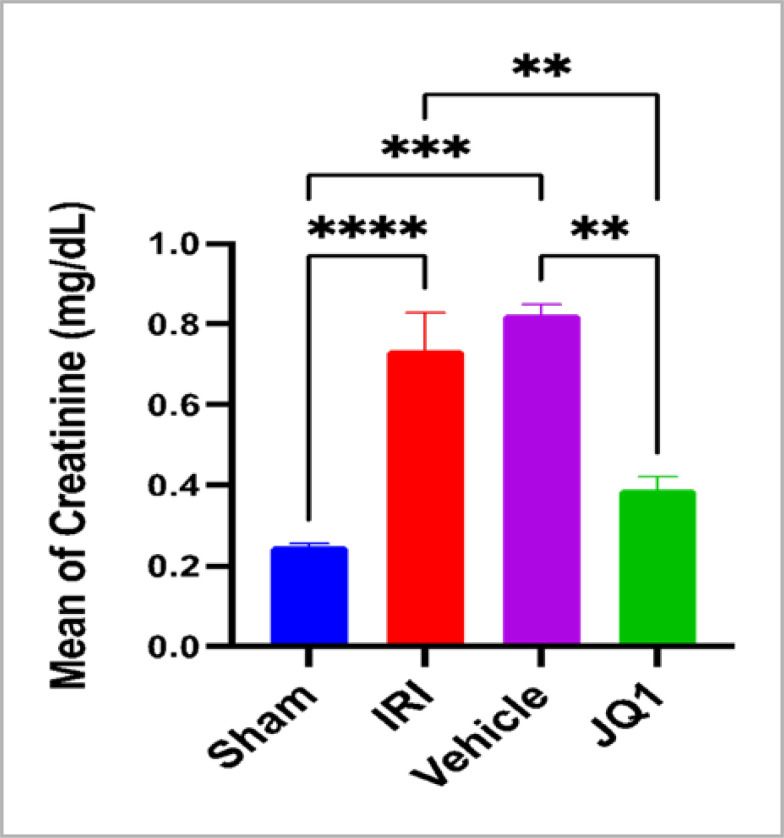
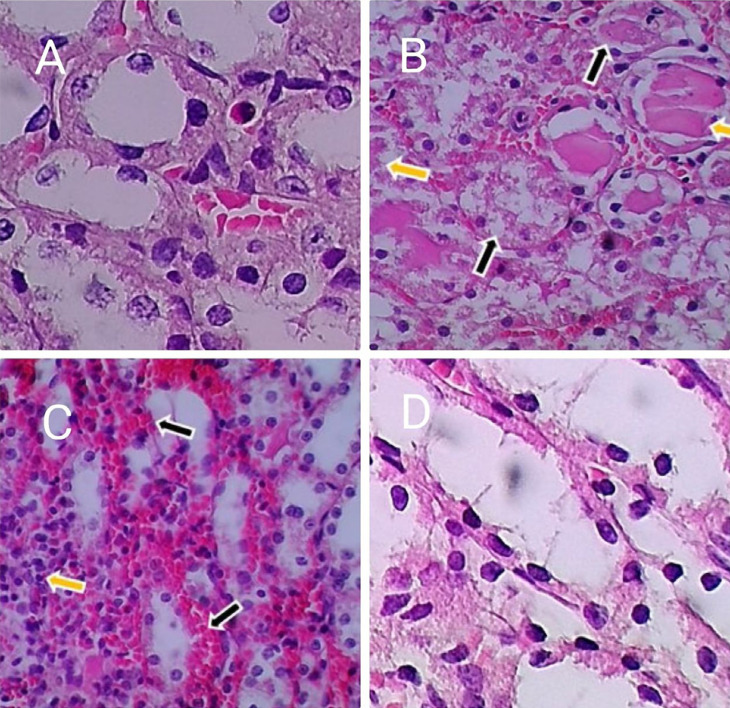
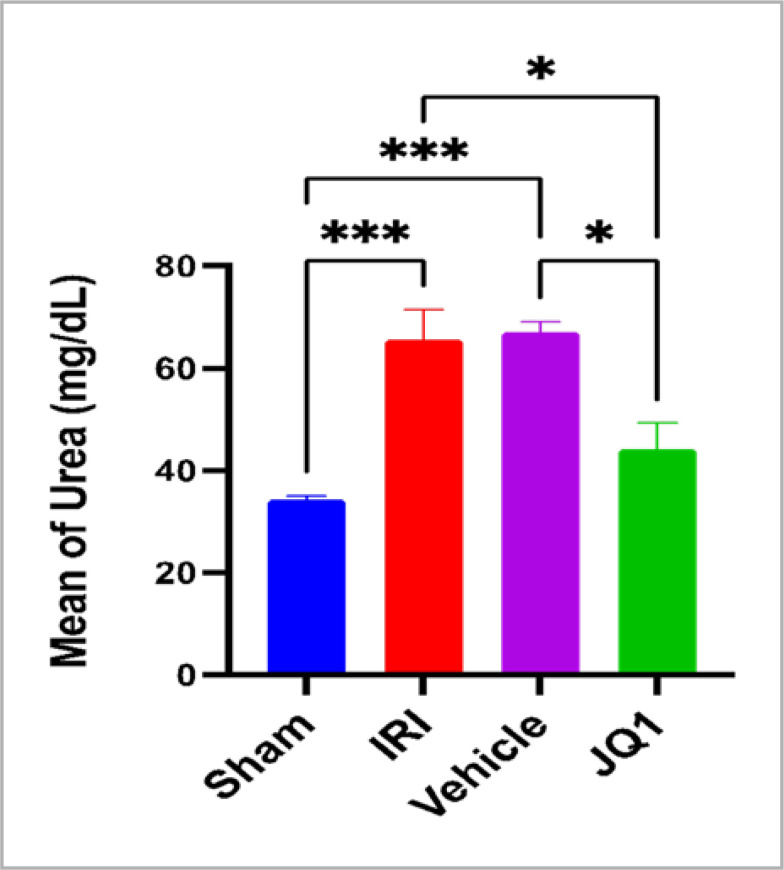
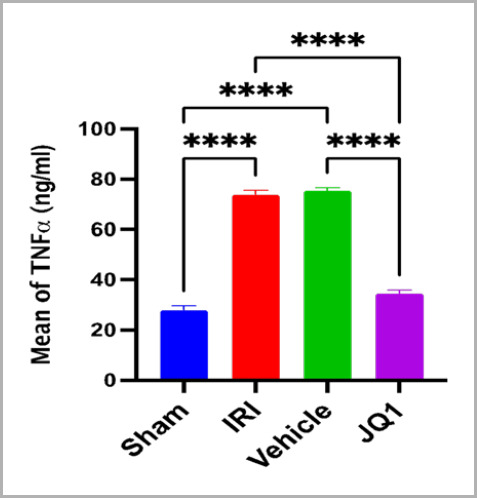
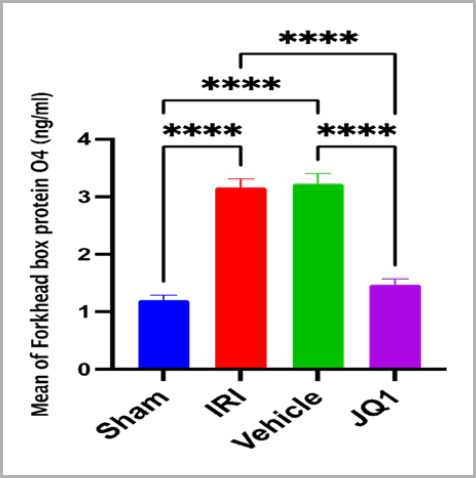
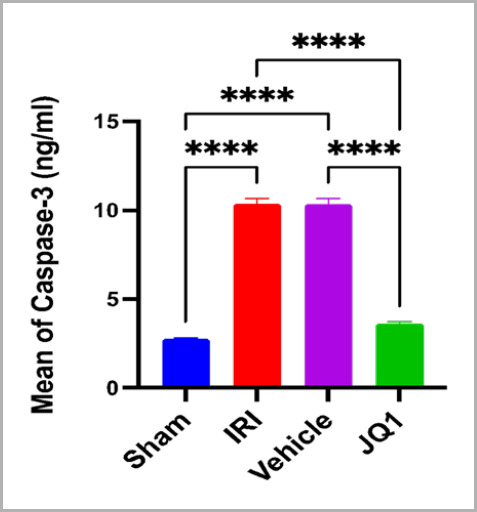
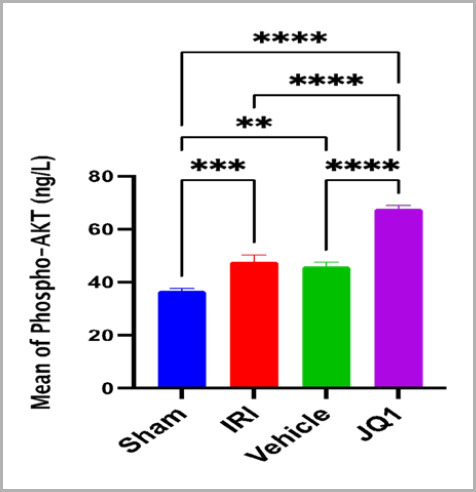
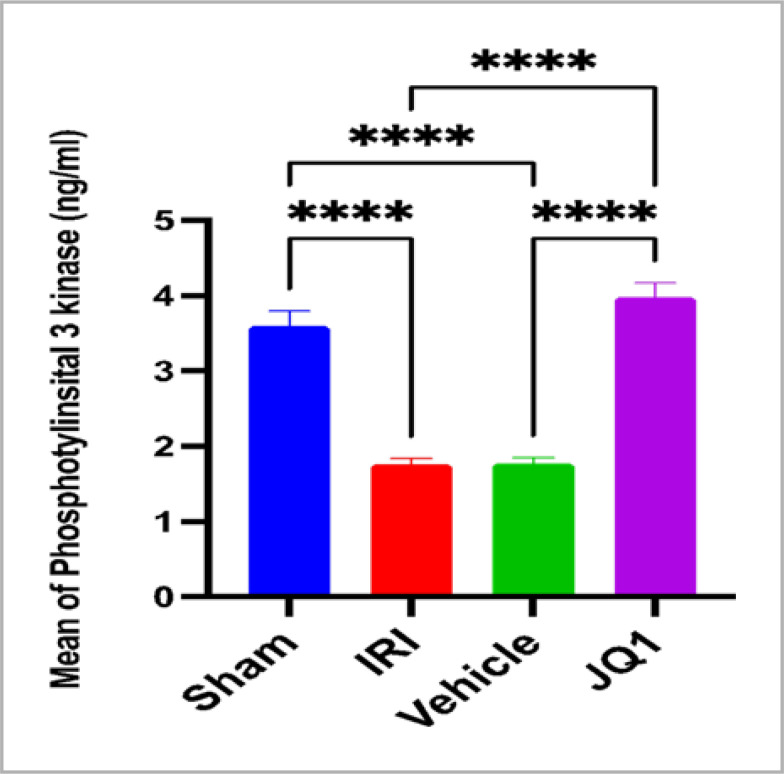
This study aimed to investigate the effects of JQ1 in a renal ischemia-reperfusion (IR) rat model. Twenty-four adult male Wistar Albino rats were randomly divided into four equal groups. The sham group underwent laparotomy without ischemia-reperfusion induction. The control group experienced bilateral renal ischemia for 30 minutes, followed by a 2-hour reperfusion period. The vehicle group (IR group + DMSO) and JQ1 group (same as in control IR + 25 mg/kg JQ1). Kidney and blood samples were collected 2 hours after reperfusion. Blood samples were used to analyze serum creatinine and blood urea nitrogen levels. Renal tissue was assessed for TNF-alpha, caspase-3, FOXO4, PI3K/AKT signaling pathway, and histological analysis. The control group exhibited significantly higher serum creatinine, blood urea nitrogen, caspase-3, TNF-alpha, and FOXO4 levels in renal tissue compared to the sham group. Additionally, the PI3K/AKT signaling pathway was significantly decreased in the control group. Histopathological examination revealed severe kidney damage in the control group compared to the sham group. In rats treated with JQ1, serum creatinine, BUN, caspase-3, TNF-alpha, and FOXO4 levels in renal tissue significantly improved. The PI3K/AKT signaling pathway was substantially increased (p-value 0.01) compared to the Vehicle and Control groups. The tubular severity score was also significantly reduced in the JQ1-treated groups compared to the Control and Vehicle groups. In conclusion, JQ1 significantly ameliorated renal ischemia-reperfusion injury in rats by suppressing apoptosis and inflammatory pathways.
本研究旨在探讨 JQ1 在肾缺血再灌注(IR)大鼠模型中的作用。将 24 只成年雄性 Wistar 白化大鼠随机分为四组。假手术组仅行剖腹术,不进行缺血再灌注诱导。对照组经历双侧肾缺血 30 分钟,随后再灌注 2 小时。载体组(IR 组+DMSO)和 JQ1 组(与对照组相同,IR+25mg/kg JQ1)。再灌注后 2 小时采集肾和血样。血液样本用于分析血清肌酐和血尿素氮水平。评估肾组织中的 TNF-α、caspase-3、FOXO4、PI3K/AKT 信号通路和组织学分析。与假手术组相比,对照组的血清肌酐、血尿素氮、caspase-3、TNF-α和 FOXO4 水平在肾组织中显著升高。此外,对照组的 PI3K/AKT 信号通路明显降低。与假手术组相比,对照组的组织学检查显示严重的肾脏损伤。用 JQ1 处理的大鼠,肾组织中的血清肌酐、BUN、caspase-3、TNF-α和 FOXO4 水平显著改善。与载体组和对照组相比,PI3K/AKT 信号通路显著增加(p 值 0.01)。JQ1 治疗组的管状严重程度评分也明显低于对照组和载体组。综上所述,JQ1 通过抑制细胞凋亡和炎症通路,显著改善了大鼠肾缺血再灌注损伤。