Chatterjee Ritika, Chowdhury Atish Roy, Mukherjee Debapriya, Chakravortty Dipshikha
Department of Microbiology and Cell Biology, Division of Biological Sciences, Indian Institute of Science, Bangalore, Karnataka 560012, India.
Centre for Biosystems Science and Engineering, Indian Institute of Science, Bangalore, Karnataka 560012, India.
ACS Omega. 2023 Jul 14;8(29):25674-25697. doi: 10.1021/acsomega.3c02386. eCollection 2023 Jul 25.
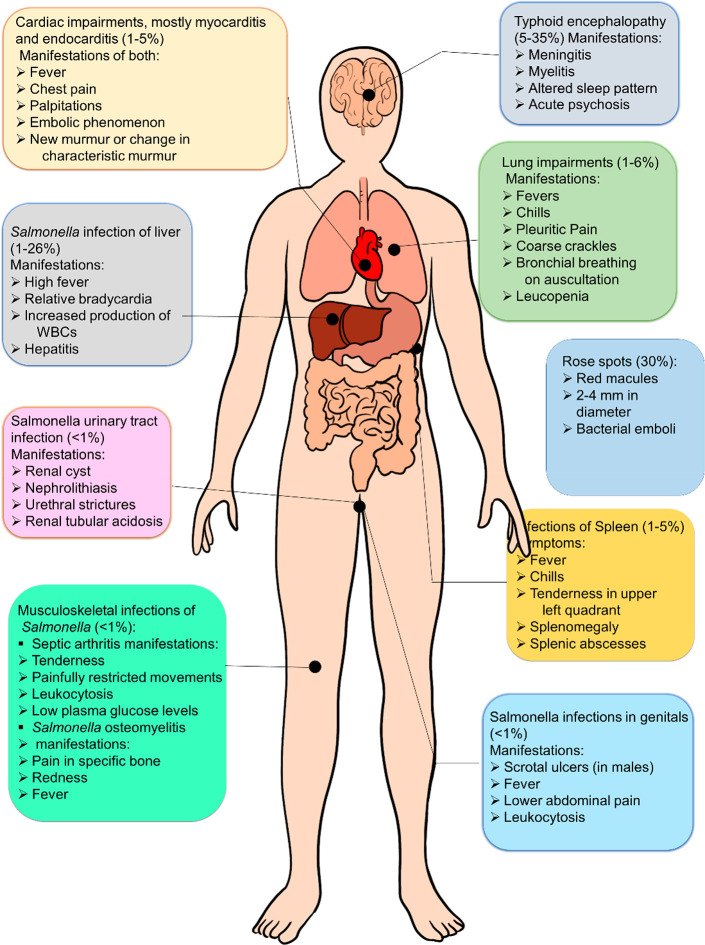
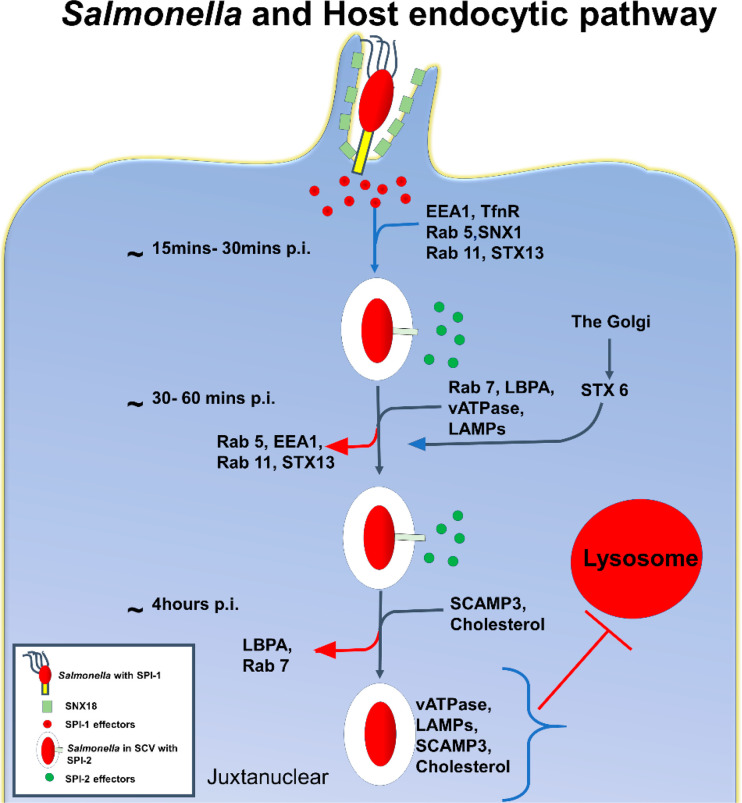
Typhi ( Typhi), the invasive typhoidal serovar of that causes typhoid fever in humans, is a severe threat to global health. It is one of the major causes of high morbidity and mortality in developing countries. According to recent WHO estimates, approximately 11-21 million typhoid fever illnesses occur annually worldwide, accounting for 0.12-0.16 million deaths. infection can spread to healthy individuals by the consumption of contaminated food and water. Typhoid fever in humans sometimes is accompanied by several other critical extraintestinal complications related to the central nervous system, cardiovascular system, pulmonary system, and hepatobiliary system. Pathogenicity Island-1 and Pathogenicity Island-2 are the two genomic segments containing genes encoding virulent factors that regulate its invasion and systemic pathogenesis. This Review aims to shed light on a comparative analysis of the virulence and pathogenesis of the typhoidal and nontyphoidal serovars of
伤寒杆菌(Typhi)是沙门氏菌属中具有侵袭性的伤寒血清型,可导致人类患伤寒热,对全球健康构成严重威胁。它是发展中国家高发病率和高死亡率的主要原因之一。根据世界卫生组织最近的估计,全球每年约有1100万至2100万人患伤寒热,导致12万至16万人死亡。伤寒杆菌感染可通过食用受污染的食物和水传播给健康个体。人类伤寒热有时还伴有其他几种与中枢神经系统、心血管系统、肺部系统和肝胆系统相关的严重肠外并发症。致病岛-1和致病岛-2是两个基因组片段,包含编码调节其侵袭和全身发病机制的毒力因子的基因。本综述旨在对伤寒血清型和非伤寒血清型的毒力和发病机制进行比较分析。