Department of Otolaryngology/Head and Neck Surgery, The University of North Carolina at Chapel Hill, Chapel Hill, NC 27599.
Lineberger Cancer Center, The University of North Carolina at Chapel Hill, Chapel Hill, NC 27599.
Proc Natl Acad Sci U S A. 2023 Aug 8;120(32):e2216532120. doi: 10.1073/pnas.2216532120. Epub 2023 Jul 31.
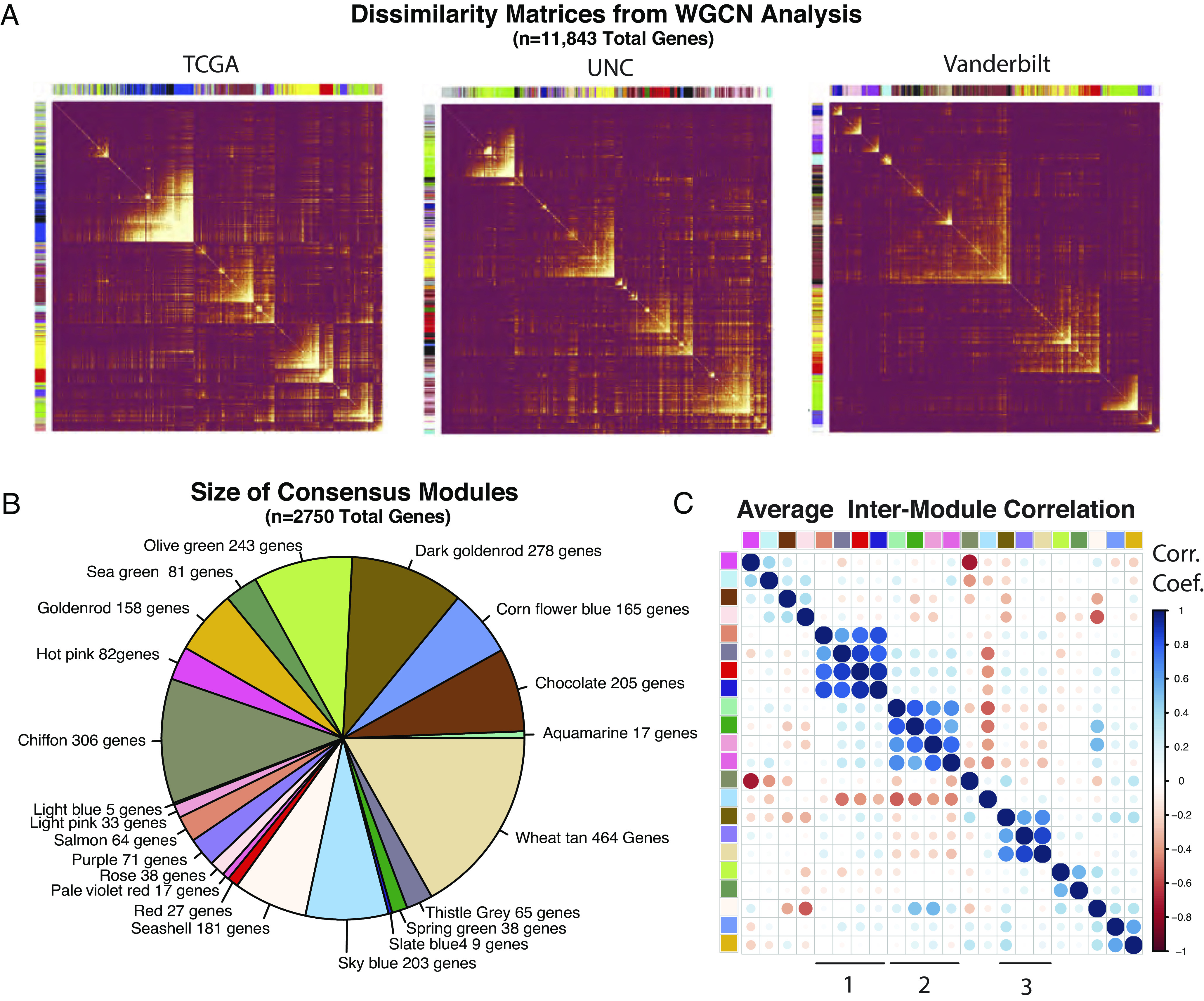
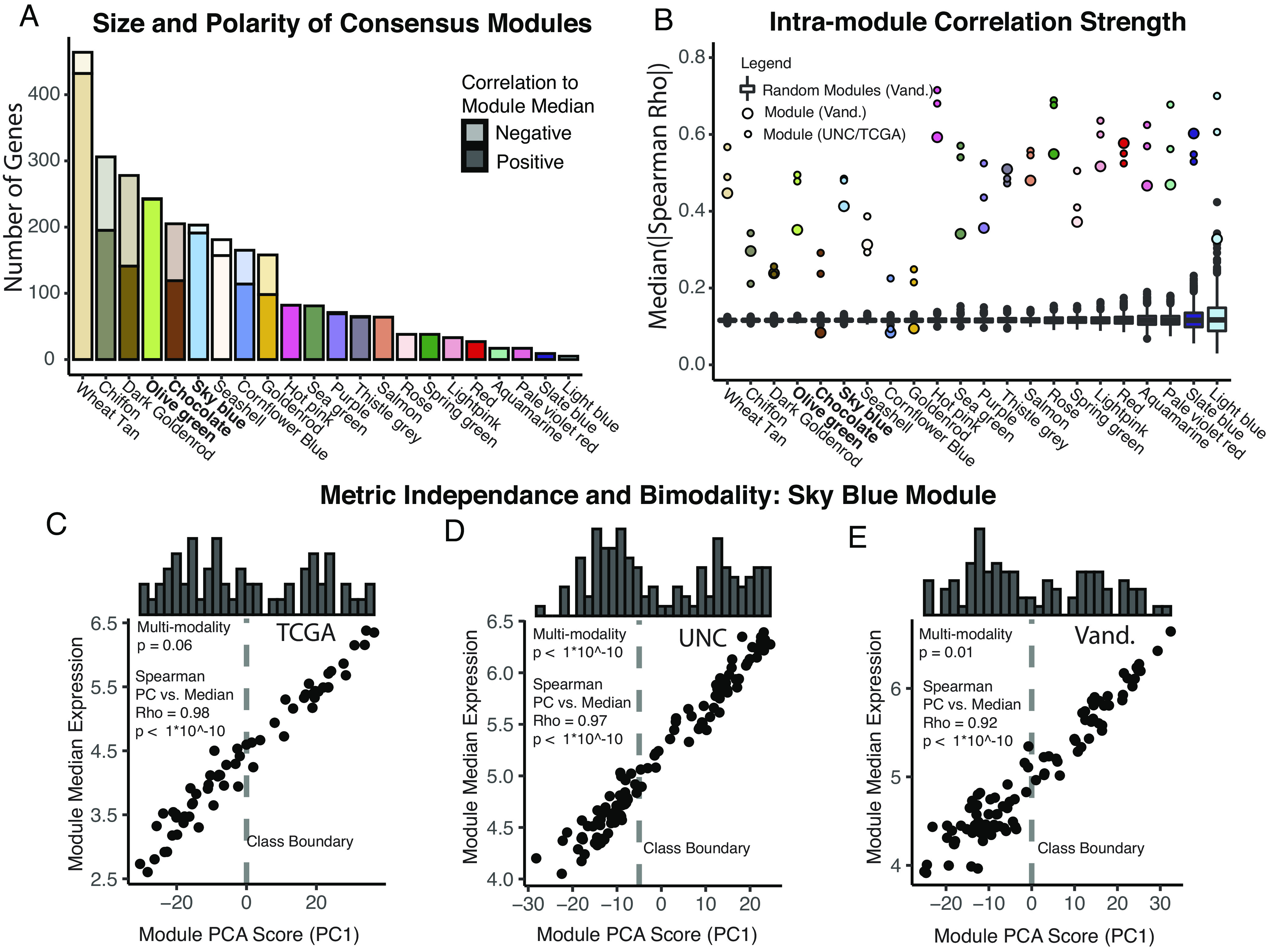
We analyzed transcriptional data from 104 HPV+ (Human papillomavirus) HNSCC (head and neck squamous cell carcinoma) tumors together with two publicly available sources to identify highly robust transcriptional programs (modules) which could be detected consistently despite heterogeneous sequencing and quantification methodologies. Among 22 modules identified, we found a single module that naturally subclassifies HPV+ HNSCC tumors based on a bimodal pattern of gene expression, clusters all atypical features of HPV+ HNSCC biology into a single subclass, and predicts patient outcome in four independent cohorts. The subclass-defining gene set was strongly correlated with Nuclear factor kappa B (NF-κB) target expression. Tumors with high expression of this NF-κB module were rarely associated with activating PIK3CA alterations or viral integration, and also expressed higher levels of HPHPV E2 and had decreased APOBEC mutagenesis. Alternatively, they harbored inactivating alterations of key regulators of NF-κB, TNF receptor associated factor 3 (TRAF3), and cylindromatosis (CYLD), as well as retinoblastoma protein (RB1). HPV+ HNSCC cells in culture with experimental depletion of TRAF3 or CYLD displayed increased expression of the subclass-defining genes, as well as robust radio-sensitization, thus recapitulating both the tumor transcriptional state and improved treatment response observed in patient data. Across all gene sets investigated, methylation to expression correlations were the strongest for the subclass-defining, NF-κB-related genes. Increased tumor-infiltrating CD4+ T cells and increased Estrogen receptors alpha (ERα) expression were identified in NF-κB active tumors. Based on the relatively high rates of cure in HPV+ HNSCC, deintensification of therapy to reduce treatment-related morbidity is being studied at many institutions. Tumor subclassification based on oncogenic subtypes may help guide the selection of therapeutic intensity or modality for patients with HPV+ HNSCC.
我们分析了 104 例 HPV+(人乳头瘤病毒)头颈部鳞状细胞癌(HNSCC)肿瘤的转录组数据,同时结合两个公开的资源,以确定高度稳健的转录程序(模块),这些程序可以在不同的测序和定量方法的情况下一致地检测到。在确定的 22 个模块中,我们发现了一个单一的模块,它基于基因表达的双峰模式,自然地将 HPV+HNSCC 肿瘤分类,将 HPV+HNSCC 生物学的所有非典型特征聚类到一个单一的亚类,并在四个独立的队列中预测患者的预后。定义亚类的基因集与核因子 kappa B(NF-κB)靶基因表达强烈相关。高表达该 NF-κB 模块的肿瘤很少与激活的 PIK3CA 改变或病毒整合相关,也表达更高水平的 HPHPV E2,并且 APOBEC 诱变减少。相反,它们携带 NF-κB 关键调节因子的失活改变,如 TNF 受体相关因子 3(TRAF3)和圆柱瘤(CYLD),以及视网膜母细胞瘤蛋白(RB1)。在培养中用实验方法耗尽 TRAF3 或 CYLD 的 HPV+HNSCC 细胞显示出定义亚类的基因表达增加,以及强大的放射增敏作用,从而再现了患者数据中观察到的肿瘤转录状态和改善的治疗反应。在所研究的所有基因集中,定义亚类的基因与 NF-κB 相关基因的甲基化与表达相关性最强。在 NF-κB 活性肿瘤中,发现肿瘤浸润性 CD4+T 细胞增加和雌激素受体 alpha(ERα)表达增加。基于 HPV+HNSCC 较高的治愈率,许多机构正在研究减少治疗相关发病率的治疗方案的减量化。基于致癌亚型的肿瘤分类可能有助于指导 HPV+HNSCC 患者的治疗强度或方式的选择。