Department of Neurology, The First Affiliated Hospital of Zhengzhou University, Zhengzhou University, Zhengzhou, Henan, China.
Academy of Medical Sciences, Zhengzhou University, Zhengzhou, Henan, China.
BMC Neurol. 2023 Jul 31;23(1):286. doi: 10.1186/s12883-023-03333-0.
As a modulator of the sphingosine 1-phosphate receptor, siponimod is administered as a therapeutic intervention for multiple sclerosis. A previous phase 3 study first reported siponimod-associated macular edema. Since that report, there were only few relevant reports in clinical settings. Here, we report a case of secondary progressive multiple sclerosis developed macular edema after siponimod treatment. We also review the progress of sphingosine 1-phosphate receptor modulators, elaborate on accepted mechanisms in treating multiple sclerosis, and discuss the causation of siponimod-associated macular edema.
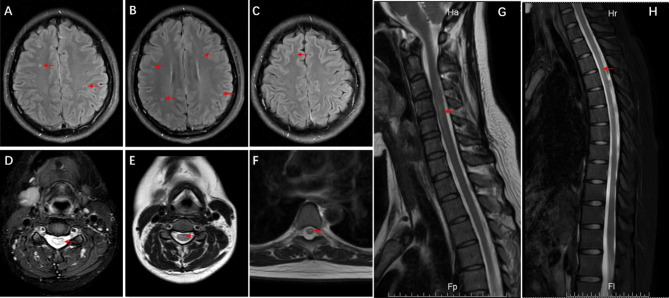
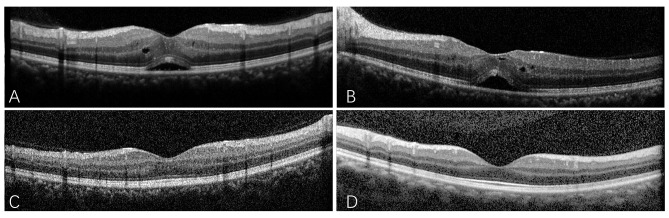
A 38-year-old Chinese female patient with secondary progressive multiple sclerosis, who had recurrent numbness of the limbs and right leg fatigue, developed mild macular edema following 4 months of siponimod treatment. The macular edema resolved after discontinuing the medication, and did not recur after resuming siponimod.
Although siponimod-associated macular edema may be rare, mild, transitory, and manageable, it cannot be ignored and requires ongoing vigilance.
西尼莫德是一种鞘氨醇 1-磷酸受体调节剂,作为多发性硬化症的治疗干预措施。先前的一项 3 期研究首次报道了西尼莫德相关的黄斑水肿。自该报告以来,临床实践中仅有少数相关报告。在此,我们报告了一例继发进展性多发性硬化症患者在接受西尼莫德治疗后发生黄斑水肿的病例。我们还回顾了鞘氨醇 1-磷酸受体调节剂的进展,阐述了其在多发性硬化症治疗中的公认机制,并讨论了西尼莫德相关黄斑水肿的发病机制。
一名 38 岁的中国女性患者,诊断为继发进展性多发性硬化症,曾有四肢麻木和右下肢疲劳反复发作,在接受西尼莫德治疗 4 个月后出现轻度黄斑水肿。停用药物后黄斑水肿消退,再次使用西尼莫德后未再复发。
尽管西尼莫德相关的黄斑水肿可能很少见、轻微、短暂且可治疗,但也不容忽视,需要持续警惕。