Institute of Crop Science and Resource Conservation, University of Bonn, Katzenburgweg 5, 53115, Bonn, Germany.
Department of Agricultural Sciences, University of Helsinki, Koetilantie 5, 00014, Helsinki, Finland.
Sci Rep. 2023 Aug 1;13(1):12462. doi: 10.1038/s41598-023-38921-0.
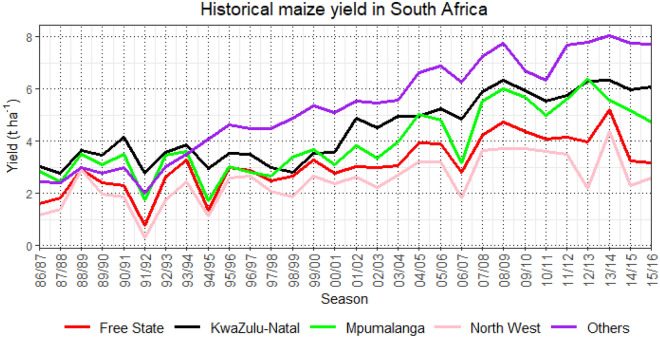
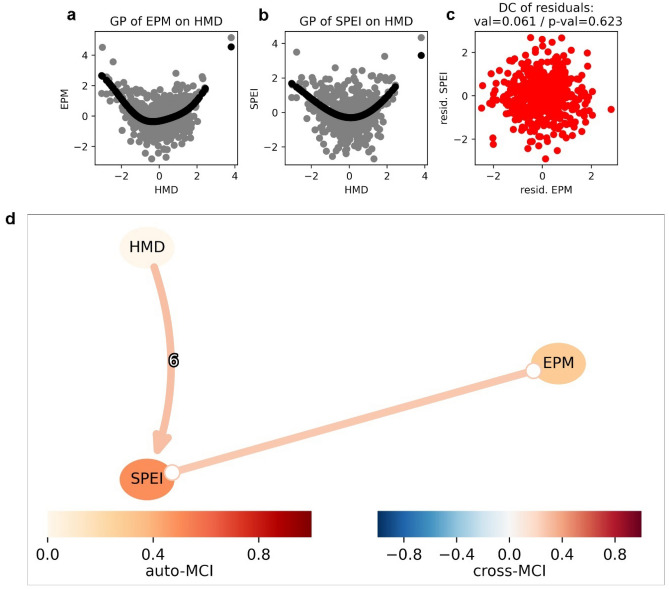
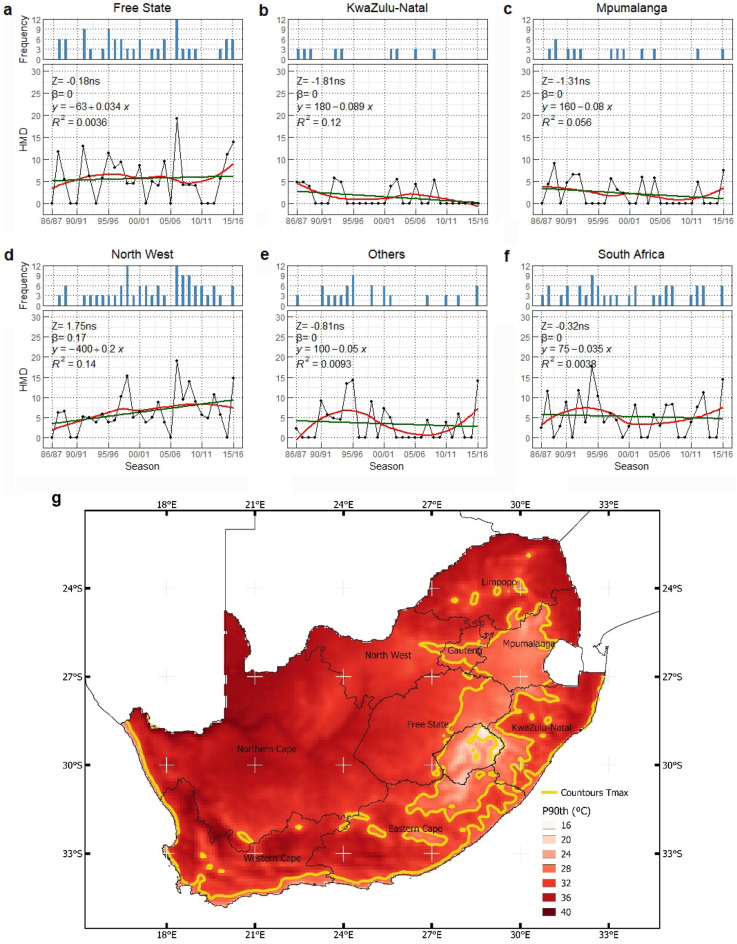
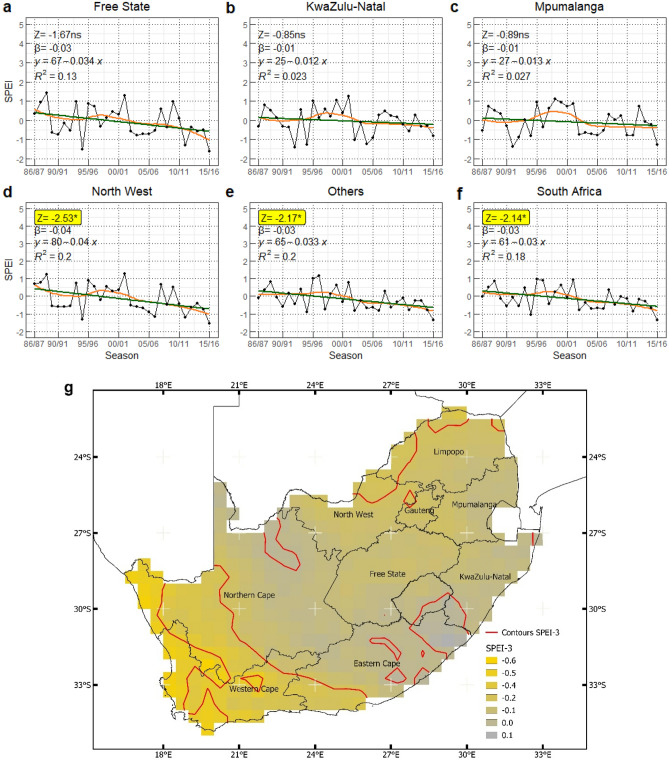
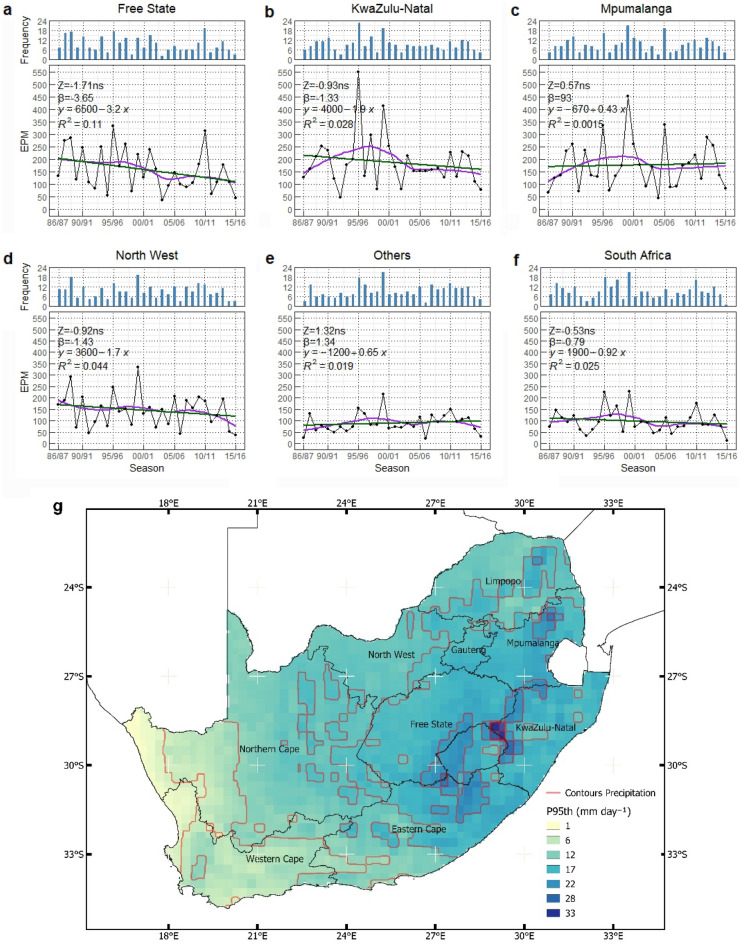
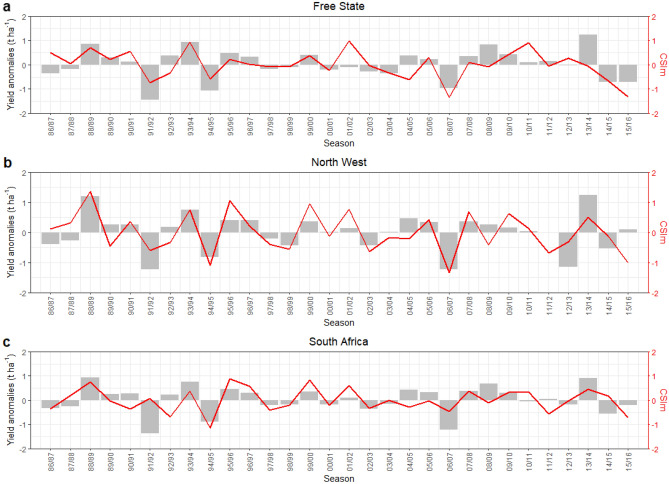
Extreme climate events can have a significant negative impact on maize productivity, resulting in food scarcity and socioeconomic losses. Thus, quantifying their effect is needed for developing future adaptation and mitigation strategies, especially for countries relying on maize as a staple crop, such as South Africa. While several studies have analyzed the impact of climate extremes on maize yields in South Africa, little is known on the quantitative contribution of combined extreme events to maize yield variability and the causality link of extreme events. This study uses existing stress indices to investigate temporal and spatial patterns of heatwaves, drought, and extreme precipitation during maize growing season between 1986/87 and 2015/16 for South Africa provinces and at national level and quantifies their contribution to yield variability. A causal discovery algorithm was applied to investigate the causal relationship among extreme events. At the province and national levels, heatwaves and extreme precipitation showed no significant trend. However, drought severity increased in several provinces. The modified Combined Stress Index (CSIm) model showed that the maize yield nationwide was associated with drought events (explaining 25% of maize yield variability). Heatwaves has significant influence on maize yield variability (35%) in Free State. In North West province, the maize yield variability (46%) was sensitive to the combination of drought and extreme precipitation. The causal analysis suggests that the occurrence of heatwaves intensified drought, while a causal link between heatwaves and extreme precipitation was not detected. The presented findings provide a deeper insight into the sensitivity of yield data to climate extremes and serve as a basis for future studies on maize yield anomalies.
极端气候事件会对玉米产量产生重大负面影响,导致粮食短缺和社会经济损失。因此,需要量化这些事件的影响,以便制定未来的适应和缓解策略,特别是对于依赖玉米作为主食的国家,如南非。虽然已经有几项研究分析了气候极端事件对南非玉米产量的影响,但对于综合极端事件对玉米产量变异性的定量贡献以及极端事件的因果关系知之甚少。本研究使用现有的压力指数,研究了 1986/87 年至 2015/16 年期间南非各省和全国玉米生长季节期间热浪、干旱和极端降水的时空模式,并量化了它们对产量变异性的贡献。应用因果发现算法研究了极端事件之间的因果关系。在省和国家层面,热浪和极端降水没有明显的趋势。然而,几个省份的干旱严重程度有所增加。改进的综合压力指数(CSIm)模型表明,全国玉米产量与干旱事件有关(解释了玉米产量变异性的 25%)。热浪对自由州的玉米产量变异性(35%)有显著影响。在西北省,干旱和极端降水的综合作用使玉米产量变异性(46%)对玉米产量变异性敏感。因果分析表明,热浪的发生加剧了干旱,而热浪和极端降水之间没有因果关系。研究结果提供了对产量数据对气候极端事件的敏感性的更深入了解,并为未来关于玉米产量异常的研究提供了基础。