Wang Yan, Ma Lan, Ma Yan, Tian Tai, Zhang Jing, Wang Hao, Liu Zhenshan, Chen Qing, He Wen, Lin Yuanxiu, Zhang Yunting, Li Mengyao, Yang Shaofeng, Zhang Yong, Luo Ya, Tang Haoru, Wang Xiaorong
College of Horticulture, Sichuan Agricultural University, Chengdu, Sichuan, China.
Institute of Pomology and Olericulture, Sichuan Agricultural University, Chengdu, Sichuan, China.
Front Plant Sci. 2023 Jul 17;14:1190061. doi: 10.3389/fpls.2023.1190061. eCollection 2023.
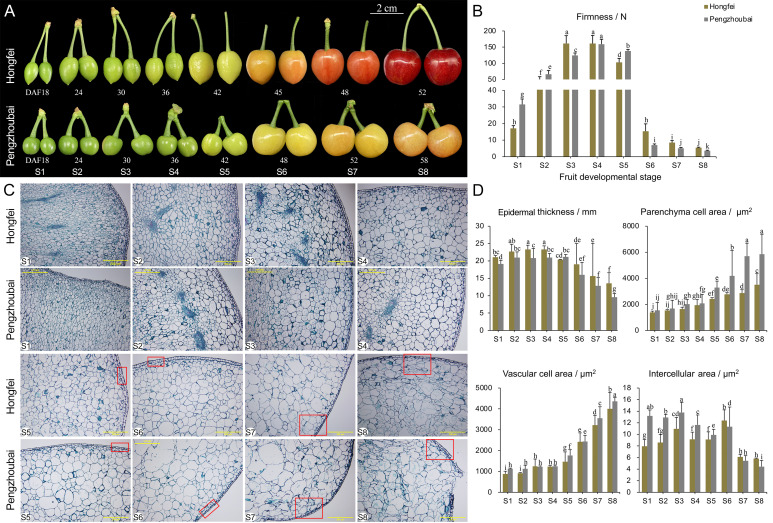
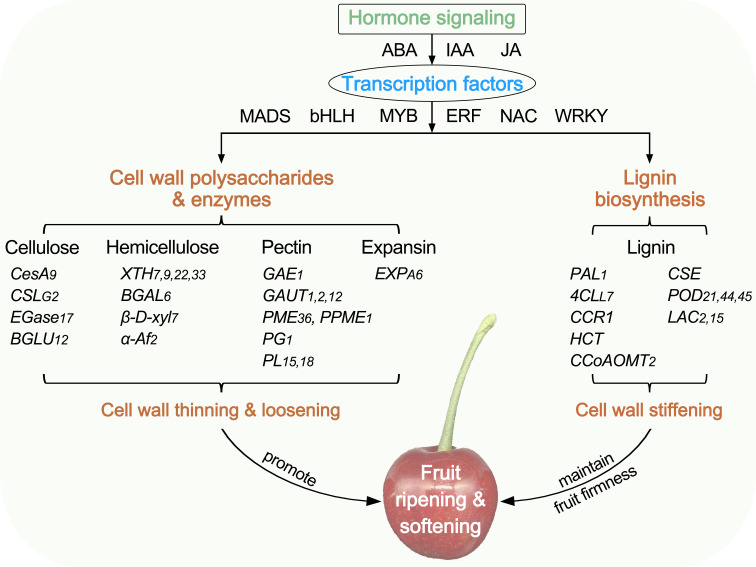
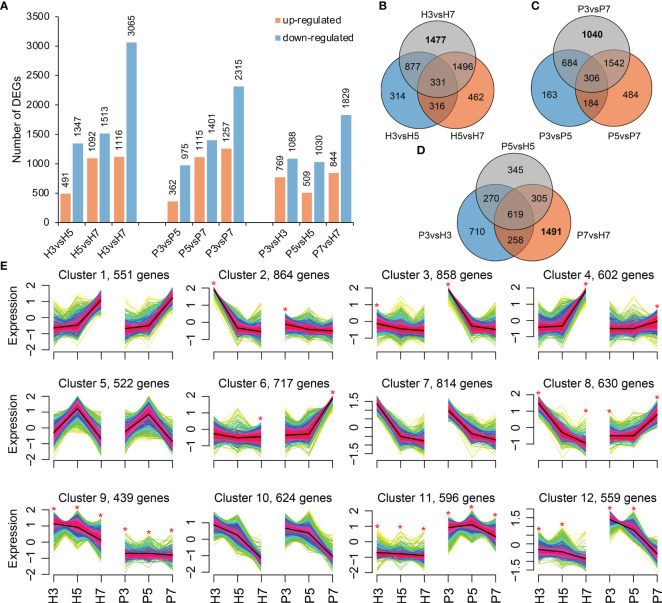
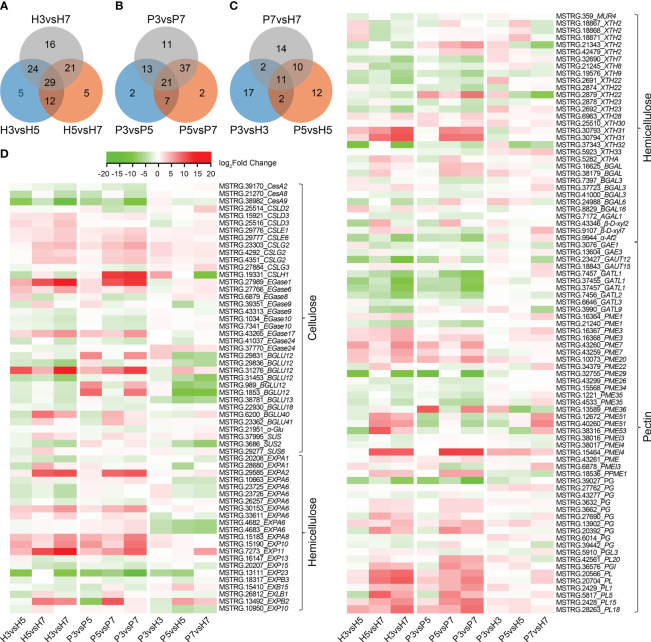
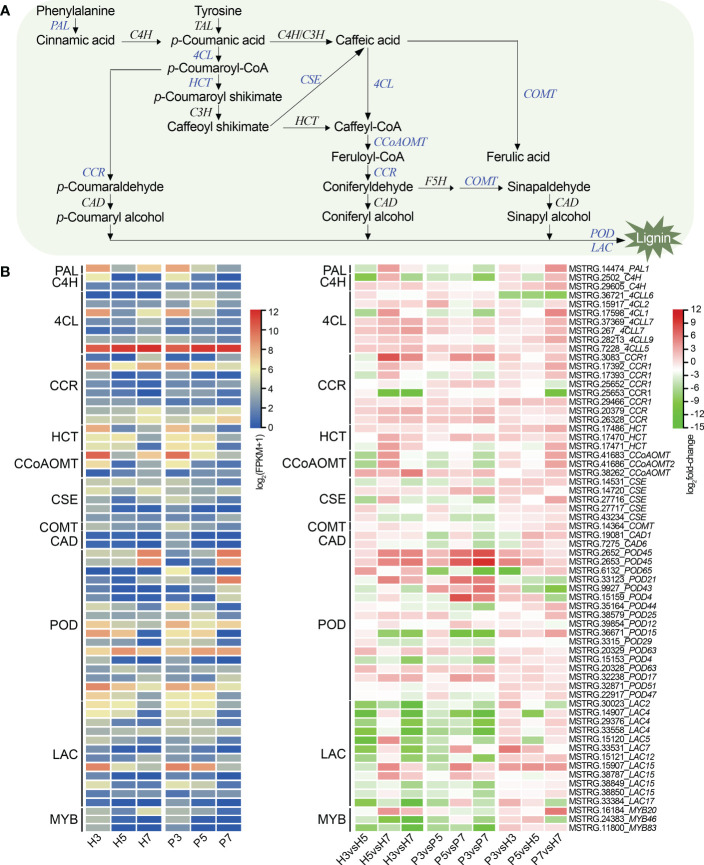
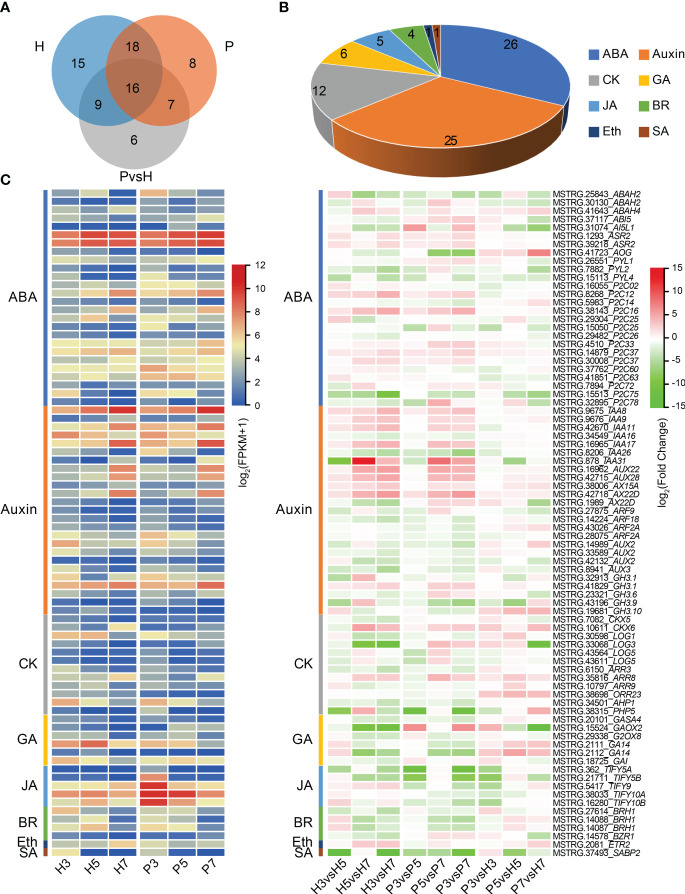
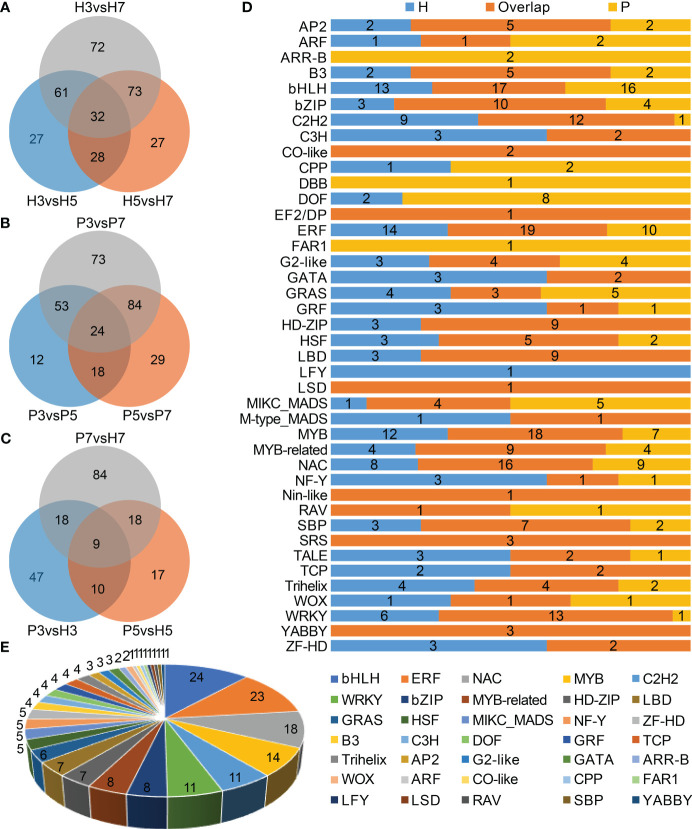
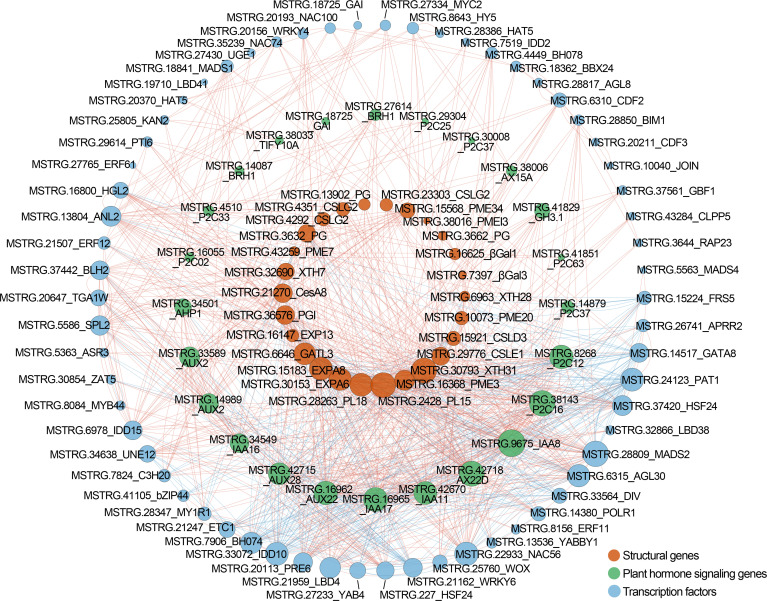
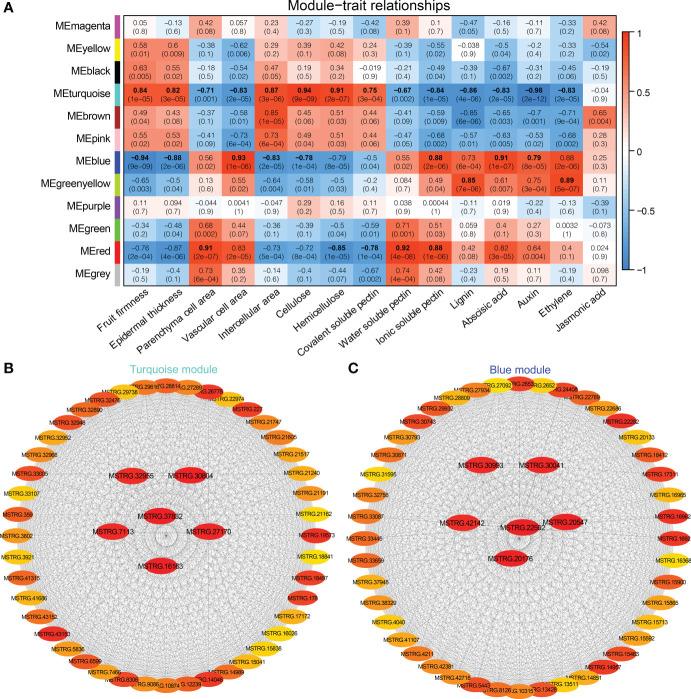
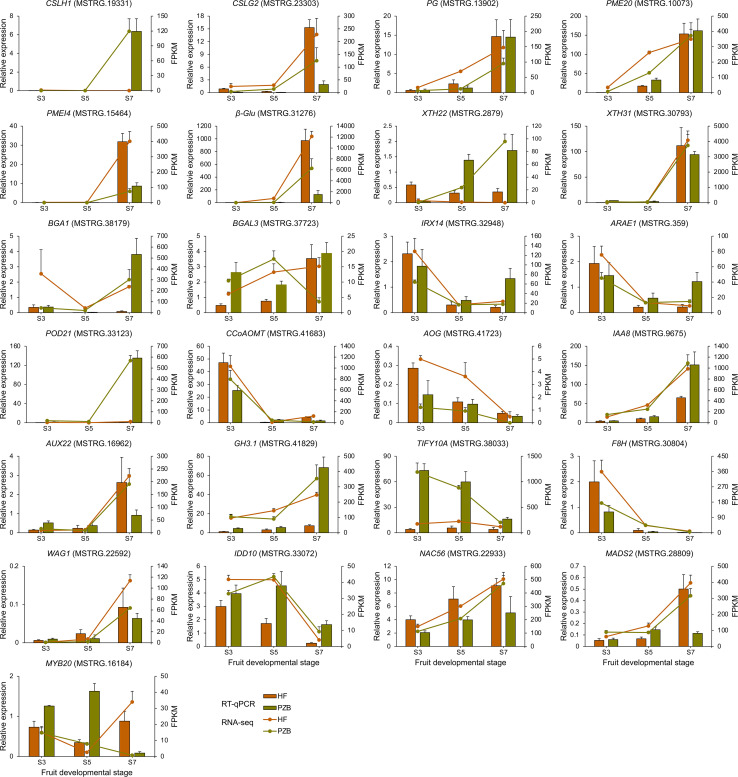
Fruit softening is a complex, genetically programmed and environmentally regulated process, which undergoes biochemical and physiological changes during fruit development. The molecular mechanisms that determine these changes in Chinese cherry [ (Lindl.) G.Don] fruits are still unknown. In the present study, fruits of hard-fleshed 'Hongfei' and soft-fleshed 'Pengzhoubai' varieties of Chinese cherry were selected to illustrate the fruit softening at different developmental stages. We analyzed physiological characteristics and transcriptome profiles to identify key cell wall components and candidate genes related to fruit softening and construct the co-expression networks. The dynamic changes of cell wall components (cellulose, hemicellulose, pectin, and lignin), the degrading enzyme activities, and the microstructure were closely related to the fruit firmness during fruit softening. A total of 6,757 and 3,998 differentially expressed genes (DEGs) were screened between stages and varieties, respectively. Comprehensive functional enrichment analysis supported that cell wall metabolism and plant hormone signal transduction pathways were involved in fruit softening. The majority of structural genes were significantly increased with fruit ripening in both varieties, but mainly down-regulated in Hongfei fruits compared with Pengzhoubai, especially DEGs related to cellulose and hemicellulose metabolism. The expression levels of genes involving lignin biosynthesis were decreased with fruit ripening, while mainly up-regulated in Hongfei fruits at red stage. These obvious differences might delay the cell all degrading and loosening, and enhance the cell wall stiffing in Hongfei fruits, which maintained a higher level of fruit firmness than Pengzhoubai. Co-expressed network analysis showed that the key structural genes were correlated with plant hormone signal genes (such as abscisic acid, auxin, and jasmonic acid) and transcription factors (MADS, bHLH, MYB, ERF, NAC, and WRKY). The RNA-seq results were supported using RT-qPCR by 25 selected DEGs that involved in cell wall metabolism, hormone signal pathways and TF genes. These results provide important basis for the molecular mechanism of fruit softening in Chinese cherry.
果实软化是一个复杂的、受基因编程和环境调控的过程,在果实发育过程中会经历生化和生理变化。目前尚不清楚决定中国樱桃[(Lindl.)G.Don]果实这些变化的分子机制。在本研究中,选择了硬肉‘红灯’和软肉‘彭州白’两个中国樱桃品种的果实,以阐明不同发育阶段的果实软化情况。我们分析了生理特征和转录组图谱,以确定与果实软化相关的关键细胞壁成分和候选基因,并构建共表达网络。在果实软化过程中,细胞壁成分(纤维素、半纤维素、果胶和木质素)、降解酶活性和微观结构的动态变化与果实硬度密切相关。在不同阶段和品种之间分别筛选出了6757个和3998个差异表达基因(DEG)。综合功能富集分析表明,细胞壁代谢和植物激素信号转导途径参与了果实软化过程。两个品种的大多数结构基因随着果实成熟显著增加,但与‘彭州白’相比,‘红灯’果实中主要下调,尤其是与纤维素和半纤维素代谢相关的DEG。参与木质素生物合成的基因表达水平随着果实成熟而降低,而在‘红灯’果实转红期主要上调。这些明显的差异可能会延迟‘红灯’果实细胞壁的降解和松弛,并增强细胞壁的硬化,从而使其果实硬度维持在比‘彭州白’更高的水平。共表达网络分析表明,关键结构基因与植物激素信号基因(如脱落酸、生长素和茉莉酸)以及转录因子(MADS、bHLH、MYB、ERF、NAC和WRKY)相关。通过RT-qPCR对25个参与细胞壁代谢、激素信号途径和转录因子基因的选定DEG进行分析,支持了RNA-seq结果。这些结果为中国樱桃果实软化的分子机制提供了重要依据。