Faculty of Medicine, University of New South Wales, Kensington, New South Wales, Australia.
Department of Ophthalmology, Westmead Hospital, Westmead, New South Wales, Australia.
BMJ Open Diabetes Res Care. 2023 Aug;11(4). doi: 10.1136/bmjdrc-2023-003376.
The aim of this study was to determine the prevalence of diabetic retinopathy (DR) in a low socioeconomic region of a high-income country, as well as determine the diagnostic utility of point-of-care screening for high-risk populations in tertiary care settings.
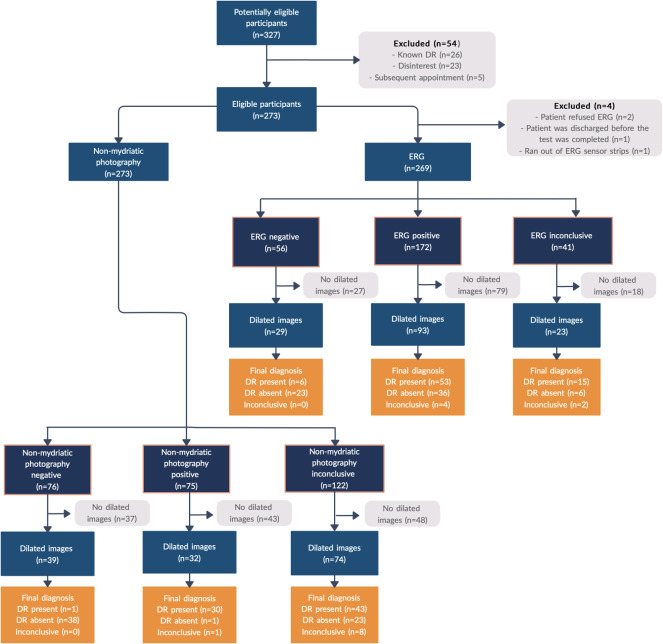
This was a cross-sectional study of patients with diabetes attending foot ulcer or integrated care diabetes clinics at two Western Sydney hospitals (n=273). DR was assessed using portable, two-field, non-mydriatic fundus photography and combined electroretinogram/ pupillometry (ERG). With mydriatic photographs used as the reference standard, sensitivity and specificity of the devices were determined. Prevalence of DR and vision-threatening diabetic retinopathy (VTDR) were reported, with multivariate logistic regression used to identify predictors of DR.
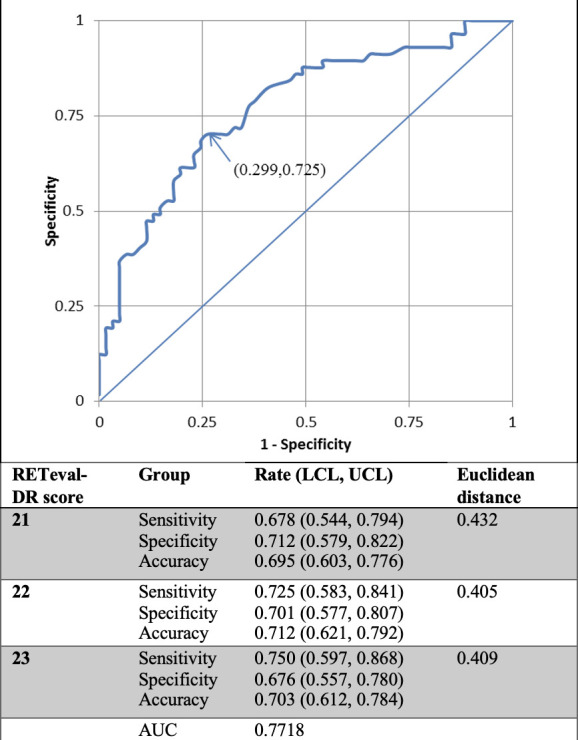
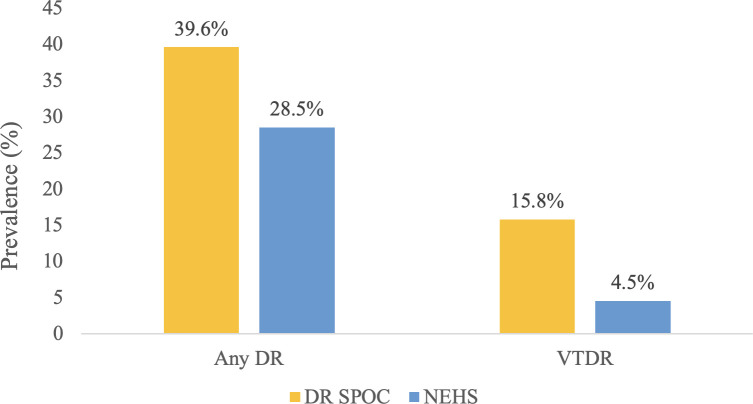
Among 273 patients, 39.6% had any DR, while 15.8% had VTDR, of whom 59.3% and 62.8% were previously undiagnosed, respectively. Non-mydriatic photography demonstrated 20.2% sensitivity and 99.5% specificity for any DR, with a 56.7% screening failure rate. Meanwhile, mydriatic photography produced high-quality images with a 7.6% failure rate. ERG demonstrated 72.5% sensitivity and 70.1% specificity, with a 15.0% failure rate. The RETeval ERG was noted to have an optimal DR cut-off score at 22. Multivariate logistic regression identified an eGFR of ≤29 mL/min/1.73 m, HbA1c of ≥7.0%, pupil size of <4 mm diameter, diabetes duration of 5-24 years and RETeval score of ≥22 as strong predictors of DR.
There is a high prevalence of vision-threatening and undiagnosed DR among patients attending high-risk tertiary clinics in Western Sydney. Point-of-care DR screening using portable, mydriatic photography demonstrates potential as a model of care which is easily accessible, targeted for high-risk populations and substantially enhances DR detection.
本研究旨在确定高收入国家低社会经济地区的糖尿病视网膜病变(DR)患病率,并确定在三级保健机构中对高危人群进行即时护理筛查的诊断效用。
这是对在两家西悉尼医院足部溃疡或综合护理糖尿病诊所就诊的糖尿病患者(n=273)进行的横断面研究。使用便携式、双视野、非散瞳眼底照相和联合视网膜电图/瞳孔测量法(ERG)评估 DR。使用散瞳照片作为参考标准,确定设备的敏感性和特异性。报告了 DR 和威胁视力的糖尿病性视网膜病变(VTDR)的患病率,并使用多变量逻辑回归确定了 DR 的预测因素。
在 273 名患者中,39.6%有任何 DR,15.8%有 VTDR,其中 59.3%和 62.8%分别为先前未确诊。非散瞳摄影对任何 DR 的敏感性为 20.2%,特异性为 99.5%,筛查失败率为 56.7%。同时,散瞳摄影产生高质量的图像,失败率为 7.6%。ERG 的敏感性为 72.5%,特异性为 70.1%,失败率为 15.0%。注意到 RETeval ERG 的最佳 DR 截止评分在 22。多变量逻辑回归确定 eGFR≤29 mL/min/1.73 m、HbA1c≥7.0%、瞳孔直径<4 mm、糖尿病病程 5-24 年和 RETeval 评分≥22 是 DR 的强预测因素。
在西悉尼高危三级诊所就诊的患者中,存在较高比例的威胁视力和未确诊的 DR。使用便携式、散瞳摄影进行即时护理 DR 筛查具有作为一种易于获得、针对高危人群的护理模式的潜力,并且大大提高了 DR 的检出率。