Infectious Diseases Unit, Alicante General University Hospital-Alicante Institute of Sanitary and Biomedical Research (ISABIAL), Alicante, Spain.
Endocrinology Department, Alicante General University Hospital-Alicante Institute of Sanitary and Biomedical Research (ISABIAL), Alicante, Spain.
Int J Clin Pract. 2023 Jul 25;2023:6668475. doi: 10.1155/2023/6668475. eCollection 2023.
To describe the epidemiological, clinical, laboratory, and radiological characteristics, medical treatment, and outcomes of a case series of severe spontaneous hematoma in COVID-19. . This retrospective study included patients hospitalized for COVID-19 who were diagnosed with severe spontaneous bleeding complications by following a standardized treatment protocol that included computed tomography angiography (CTA) from 1 March 2020 to 28 February 2022. The main outcomes were embolization and all-cause mortality. Baseline variables were analyzed for their association with mortality using bivariable logistic regression, and results were expressed as odds ratios (OR) and 95% confidence intervals (CI).
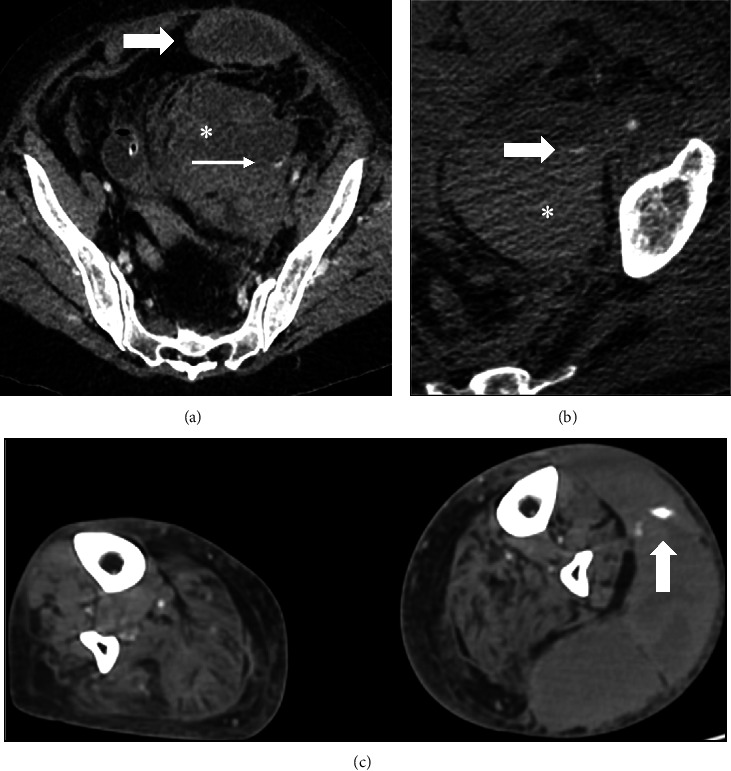
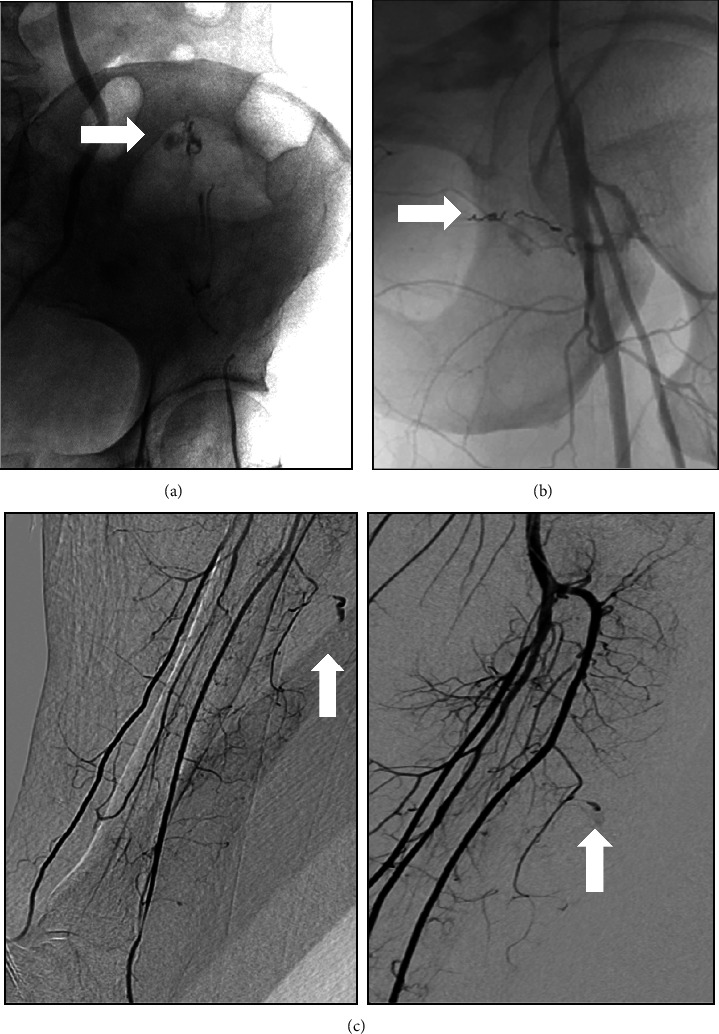
In total, 2450 adults were hospitalized for COVID-19 in our center during the study period. 20 patients presented severe and spontaneous intramuscular bleeding (8.1 per 1000 COVID-19 admission vs. 0.47 per 1000 non-COVID-19 admissions, < 0.001); their median age was 68.5 years (interquartile range (IQR) 63, 80), they had high comorbidity (median Charlson comorbidity index 4.5), and 95% were receiving high doses of heparin. The median interval from COVID-19 symptoms to bleeding was 17 days (IQR 13, 24), and 70% reported cough as a previous symptom. Hypovolemic shock, hypotension, and abdominal pain were the most frequent symptoms of the hematoma. All presented decreased hemoglobin, and 95% required transfusion. Intramuscular hematoma occurred most frequently in the rectus sheath, iliopsoas compartment, and femoral-iliac compartment. All patients underwent embolization; mortality was 45%. We did not identify risk factors associated with an increased risk of death.
Although severe bleeding is an uncommon complication of COVID-19, its prevalence is higher than in inpatients without COVID-19, it usually needs embolization, and it is associated with high mortality.
描述 COVID-19 患者严重自发性血肿的流行病学、临床、实验室和影像学特征、治疗方法和结局。本回顾性研究纳入了 2020 年 3 月 1 日至 2022 年 2 月 28 日期间因 COVID-19 住院且根据标准化治疗方案通过计算机断层血管造影术(CTA)诊断为严重自发性出血并发症的患者。主要结局为栓塞和全因死亡率。使用二变量逻辑回归分析基线变量与死亡率的关系,并以比值比(OR)和 95%置信区间(CI)表示结果。
在研究期间,共有 2450 名成年人因 COVID-19 在我们中心住院。20 名患者出现严重且自发性肌肉内出血(每 1000 例 COVID-19 入院 8.1 例 vs. 每 1000 例非 COVID-19 入院 0.47 例,<0.001);中位年龄为 68.5 岁(四分位距 63,80),合并症高(中位 Charlson 合并症指数 4.5),95%接受高剂量肝素治疗。从 COVID-19 症状到出血的中位间隔为 17 天(四分位距 13,24),70%报告咳嗽为先前症状。低血容量性休克、低血压和腹痛是血肿最常见的症状。所有患者血红蛋白均降低,95%需要输血。肌肉内血肿最常发生于腹直肌鞘、髂腰肌间隙和股髂间隙。所有患者均行栓塞治疗;死亡率为 45%。我们未发现与死亡风险增加相关的危险因素。
尽管严重出血是 COVID-19 的罕见并发症,但它的患病率高于非 COVID-19 住院患者,通常需要栓塞治疗,且与高死亡率相关。