• 文献检索
  • 文档翻译
  • 深度研究
  • 学术资讯
  • Suppr Zotero 插件Zotero 插件
  • 邀请有礼
  • 套餐&价格
  • 历史记录
应用&插件
Suppr Zotero 插件Zotero 插件浏览器插件Mac 客户端Windows 客户端微信小程序
定价
高级版会员购买积分包购买API积分包
服务
文献检索文档翻译深度研究API 文档MCP 服务
关于我们
关于 Suppr公司介绍联系我们用户协议隐私条款
关注我们

Suppr 超能文献

核心技术专利:CN118964589B侵权必究
粤ICP备2023148730 号-1Suppr @ 2026

文献检索

告别复杂PubMed语法,用中文像聊天一样搜索,搜遍4000万医学文献。AI智能推荐,让科研检索更轻松。

立即免费搜索

文件翻译

保留排版,准确专业,支持PDF/Word/PPT等文件格式,支持 12+语言互译。

免费翻译文档

深度研究

AI帮你快速写综述,25分钟生成高质量综述,智能提取关键信息,辅助科研写作。

立即免费体验

与旋盘尾丝虫感染相关的癫痫和点头综合征会导致不同的免疫特征模式。

Epilepsy and nodding syndrome in association with an Onchocerca volvulus infection drive distinct immune profile patterns.

机构信息

Institute of Medical Microbiology, Immunology and Parasitology (IMMIP), University Hospital Bonn (UKB), Bonn, German.

Hertie Institute for Clinical Brain Research, Department of Neurology and Epileptology, University of Tübingen, Tübingen, Germany.

出版信息

PLoS Negl Trop Dis. 2023 Aug 3;17(8):e0011503. doi: 10.1371/journal.pntd.0011503. eCollection 2023 Aug.

DOI:10.1371/journal.pntd.0011503
PMID:37535695
原文链接:https://pmc.ncbi.nlm.nih.gov/articles/PMC10426931/
Abstract

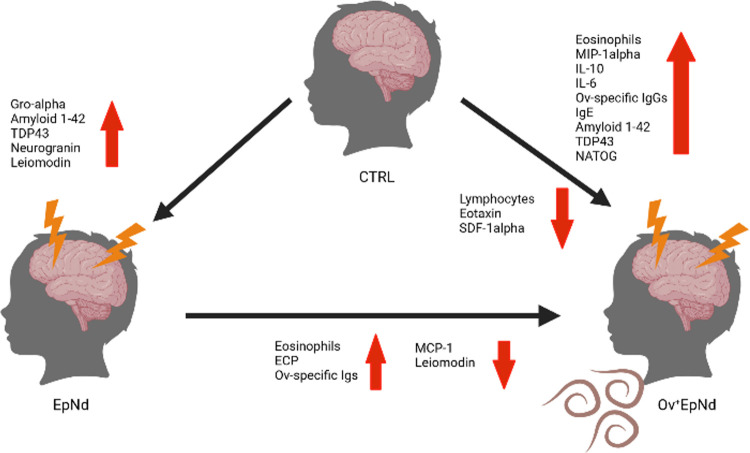
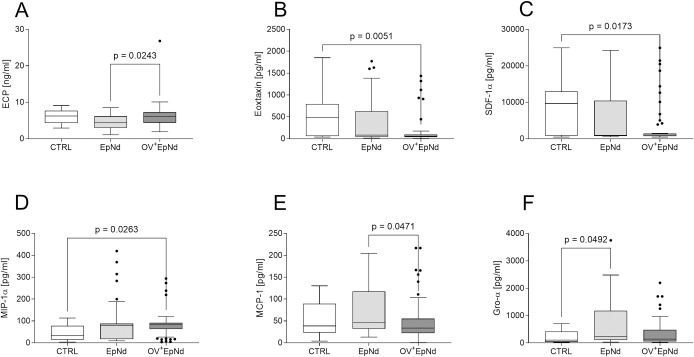
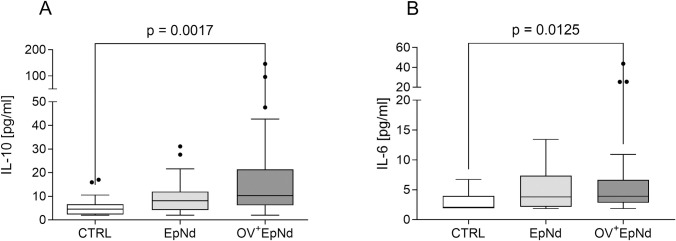
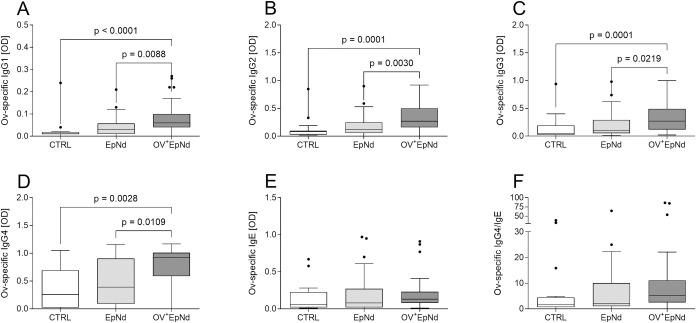
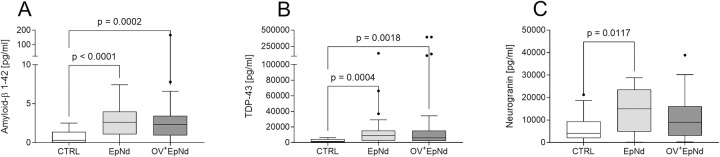
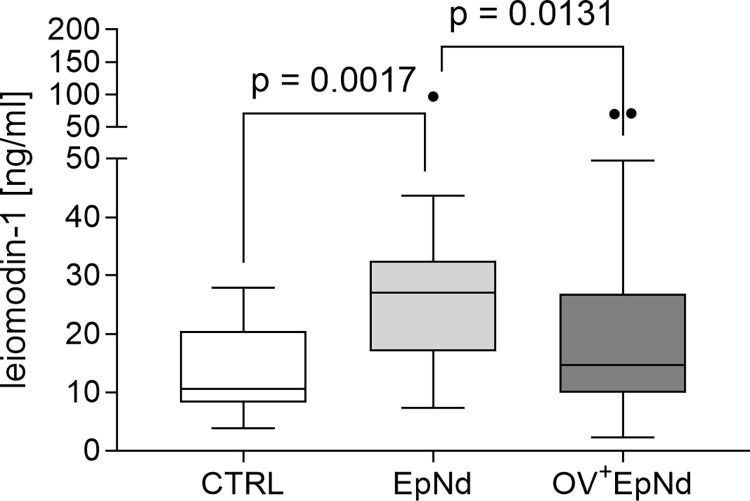
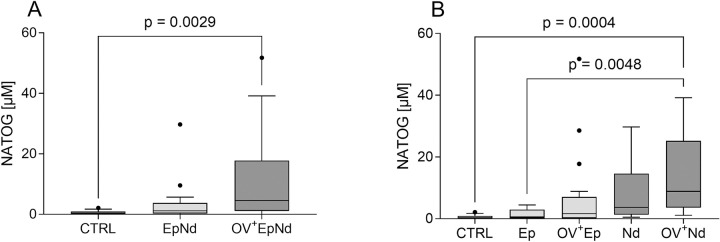
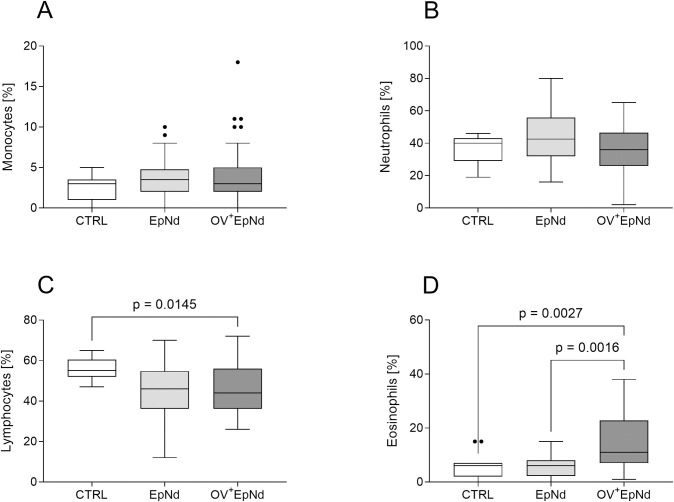
Previous studies have described the association of onchocerciasis (caused by Onchocerca volvulus) with epilepsy, including nodding syndrome, although a clear etiological link is still missing. Cases are found in different African countries (Tanzania, South Sudan, Uganda, Democratic Republic of the Congo, Central African Republic and Cameroon). In our study we investigated immunological parameters (cytokine, chemokine, immunoglobulin levels) in individuals from the Mahenge area, Tanzania, presenting with either epilepsy or nodding syndrome with or without O. volvulus infection and compared them to O. volvulus negative individuals from the same endemic area lacking neurological disorders. Additionally, cell differentiation was performed using blood smears and systemic levels of neurodegeneration markers, leiomodin-1 and N-acetyltyramine-O, β-glucuronide (NATOG) were determined. Our findings revealed that cytokines, most chemokines and neurodegeneration markers were comparable between both groups presenting with epilepsy or nodding syndrome. However, we observed elevated eosinophil percentages within the O. volvulus positive epilepsy/nodding syndrome patients accompanied with increased eosinophilic cationic protein (ECP) and antigen-specific IgG levels in comparison to those without an O. volvulus infection. Furthermore, highest levels of NATOG were found in O. volvulus positive nodding syndrome patients. These findings highlight that the detection of distinct biomarkers might be useful for a differential diagnosis of epilepsy and nodding syndrome in O. volvulus endemic areas. Trial-registration: NCT03653975.

摘要

先前的研究描述了盘尾丝虫病(由旋盘尾丝虫引起)与癫痫之间的关联,包括点头综合征,尽管目前仍缺乏明确的病因学联系。病例见于不同的非洲国家(坦桑尼亚、南苏丹、乌干达、刚果民主共和国、中非共和国和喀麦隆)。在我们的研究中,我们调查了来自坦桑尼亚马亨盖地区的个体的免疫参数(细胞因子、趋化因子、免疫球蛋白水平),这些个体患有癫痫或点头综合征,伴有或不伴有旋盘尾丝虫感染,并将其与来自同一流行地区且无神经障碍的旋盘尾丝虫阴性个体进行了比较。此外,还使用血涂片进行了细胞分化,并测定了神经退行性标志物雷米登-1 和 N-乙酰酪氨酸-O-β-葡糖苷酸(NATOG)的系统水平。我们的研究结果表明,两组患有癫痫或点头综合征的个体之间的细胞因子、大多数趋化因子和神经退行性标志物水平相当。然而,我们观察到,伴有旋盘尾丝虫感染的癫痫/点头综合征患者中的嗜酸性粒细胞百分比升高,同时嗜酸性粒细胞阳离子蛋白(ECP)和抗原特异性 IgG 水平也升高,与没有旋盘尾丝虫感染的患者相比。此外,在伴有旋盘尾丝虫感染的点头综合征患者中,NATOG 的水平最高。这些发现强调,检测特定的生物标志物可能有助于在旋盘尾丝虫流行地区对癫痫和点头综合征进行鉴别诊断。试验注册:NCT03653975。
https://cdn.ncbi.nlm.nih.gov/pmc/blobs/90b2/10426931/466e6300ed78/pntd.0011503.g008.jpg
https://cdn.ncbi.nlm.nih.gov/pmc/blobs/90b2/10426931/e08480136592/pntd.0011503.g001.jpg
https://cdn.ncbi.nlm.nih.gov/pmc/blobs/90b2/10426931/32d6e1977fef/pntd.0011503.g002.jpg
https://cdn.ncbi.nlm.nih.gov/pmc/blobs/90b2/10426931/4e760a5cbc06/pntd.0011503.g003.jpg
https://cdn.ncbi.nlm.nih.gov/pmc/blobs/90b2/10426931/e8f80ab9b711/pntd.0011503.g004.jpg
https://cdn.ncbi.nlm.nih.gov/pmc/blobs/90b2/10426931/c35a0f4b52cb/pntd.0011503.g005.jpg
https://cdn.ncbi.nlm.nih.gov/pmc/blobs/90b2/10426931/bae9b919d241/pntd.0011503.g006.jpg
https://cdn.ncbi.nlm.nih.gov/pmc/blobs/90b2/10426931/f5294151766d/pntd.0011503.g007.jpg
https://cdn.ncbi.nlm.nih.gov/pmc/blobs/90b2/10426931/466e6300ed78/pntd.0011503.g008.jpg
https://cdn.ncbi.nlm.nih.gov/pmc/blobs/90b2/10426931/e08480136592/pntd.0011503.g001.jpg
https://cdn.ncbi.nlm.nih.gov/pmc/blobs/90b2/10426931/32d6e1977fef/pntd.0011503.g002.jpg
https://cdn.ncbi.nlm.nih.gov/pmc/blobs/90b2/10426931/4e760a5cbc06/pntd.0011503.g003.jpg
https://cdn.ncbi.nlm.nih.gov/pmc/blobs/90b2/10426931/e8f80ab9b711/pntd.0011503.g004.jpg
https://cdn.ncbi.nlm.nih.gov/pmc/blobs/90b2/10426931/c35a0f4b52cb/pntd.0011503.g005.jpg
https://cdn.ncbi.nlm.nih.gov/pmc/blobs/90b2/10426931/bae9b919d241/pntd.0011503.g006.jpg
https://cdn.ncbi.nlm.nih.gov/pmc/blobs/90b2/10426931/f5294151766d/pntd.0011503.g007.jpg
https://cdn.ncbi.nlm.nih.gov/pmc/blobs/90b2/10426931/466e6300ed78/pntd.0011503.g008.jpg

相似文献

1
Epilepsy and nodding syndrome in association with an Onchocerca volvulus infection drive distinct immune profile patterns.与旋盘尾丝虫感染相关的癫痫和点头综合征会导致不同的免疫特征模式。
PLoS Negl Trop Dis. 2023 Aug 3;17(8):e0011503. doi: 10.1371/journal.pntd.0011503. eCollection 2023 Aug.
2
Nodding syndrome, a case-control study in Mahenge, Tanzania: Onchocerca volvulus and not Mansonella perstans as a risk factor.点头综合征,坦桑尼亚马亨盖的病例对照研究:盘尾丝虫而非曼森氏线虫是危险因素。
PLoS Negl Trop Dis. 2023 Jun 20;17(6):e0011434. doi: 10.1371/journal.pntd.0011434. eCollection 2023 Jun.
3
Nodding syndrome (NS) and () in Northern Uganda.乌干达北部的点头综合征(NS)和() 。 (括号内原文缺失内容,无法完整准确翻译)
Pan Afr Med J. 2017 Sep 4;28:1. doi: 10.11604/pamj.2017.28.1.13554. eCollection 2017.
4
Nodding syndrome and epilepsy in onchocerciasis endemic regions: comparing preliminary observations from South Sudan and the Democratic Republic of the Congo with data from Uganda.盘尾丝虫病流行地区的点头综合征与癫痫:将南苏丹和刚果民主共和国的初步观察结果与乌干达的数据进行比较
BMC Res Notes. 2016 Mar 22;9:182. doi: 10.1186/s13104-016-1993-7.
5
MRI findings in people with epilepsy and nodding syndrome in an area endemic for onchocerciasis: an observational study.盘尾丝虫病流行地区癫痫和点头综合征患者的MRI表现:一项观察性研究。
Afr Health Sci. 2013 Jun;13(2):529-40. doi: 10.4314/ahs.v13i2.51.
6
Nodding syndrome-a new hypothesis and new direction for research.点头综合征——一种新假说与新研究方向
Int J Infect Dis. 2014 Oct;27:74-7. doi: 10.1016/j.ijid.2014.08.001. Epub 2014 Aug 23.
7
The Pathogenesis of Nodding Syndrome.点头综合征的发病机制。
Annu Rev Pathol. 2020 Jan 24;15:395-417. doi: 10.1146/annurev-pathmechdis-012419-032748.
8
Persons with onchocerciasis-associated epilepsy and nodding seizures have a more severe form of epilepsy with more cognitive impairment and higher levels of Onchocerca volvulus infection.患有盘尾丝虫病相关癫痫和点头样癫痫发作的人患有更严重形式的癫痫,伴有更多认知障碍和更高水平的旋盘尾丝虫感染。
Epileptic Disord. 2020 Jun 1;22(3):301-308. doi: 10.1684/epd.2020.1164.
9
Prevalence and incidence of nodding syndrome and other forms of epilepsy in onchocerciasis-endemic areas in northern Uganda after the implementation of onchocerciasis control measures.乌干达北部在实施盘尾丝虫病控制措施后,点头症和其他形式癫痫在盘尾丝虫病流行地区的流行率和发病率。
Infect Dis Poverty. 2020 Mar 2;9(1):12. doi: 10.1186/s40249-020-0628-3.
10
Systemic and cerebrospinal fluid immune and complement activation in Ugandan children and adolescents with long-standing nodding syndrome: A case-control study.乌干达长期点头综合征儿童和青少年的全身及脑脊液免疫和补体激活:一项病例对照研究。
Epilepsia Open. 2021 Jun;6(2):297-309. doi: 10.1002/epi4.12463. Epub 2021 Mar 12.

引用本文的文献

1
Active infection with Onchocerca volvulus and the linkage to epilepsy/nodding syndrome.盘尾丝虫的活动性感染及其与癫痫/点头综合征的关联。
PLoS Negl Trop Dis. 2024 May 9;18(5):e0012076. doi: 10.1371/journal.pntd.0012076. eCollection 2024 May.
2
Onchocerciasis-associated epilepsy and biomarkers.盘尾丝虫病相关癫痫与生物标志物
PLoS Negl Trop Dis. 2024 May 9;18(5):e0011808. doi: 10.1371/journal.pntd.0011808. eCollection 2024 May.
3
Emerging and Re-Emerging Parasitic Infections of the Central Nervous System (CNS) in Europe.

本文引用的文献

1
Ictal Electroencephalographic Characteristics of Nodding Syndrome: A Comparative Case-Series from South Sudan, Tanzania, and Uganda.发作性脑电图特征点头综合征:来自南苏丹、坦桑尼亚和乌干达的比较病例系列。
Ann Neurol. 2022 Jul;92(1):75-80. doi: 10.1002/ana.26377. Epub 2022 May 7.
2
A new biomarker in the differential diagnosis of epileptic seizure: Neurogranin.神经颗粒蛋白:癫痫发作鉴别诊断的一种新生物标志物。
Am J Emerg Med. 2022 Apr;54:147-150. doi: 10.1016/j.ajem.2022.02.010. Epub 2022 Feb 6.
3
Reducing onchocerciasis-associated morbidity in onchocerciasis-endemic foci with high ongoing transmission: a focus on the children.
欧洲中枢神经系统(CNS)新出现和再度出现的寄生虫感染
Infect Dis Rep. 2023 Oct 25;15(6):679-699. doi: 10.3390/idr15060062.
在传播持续存在的盘尾丝虫病流行区降低盘尾丝虫病相关发病率:以儿童为重点。
Int J Infect Dis. 2022 Mar;116:302-305. doi: 10.1016/j.ijid.2022.01.042. Epub 2022 Jan 21.
4
Urine metabolites for the identification of Onchocerca volvulus infections in patients from Cameroon.尿液代谢产物用于鉴定来自喀麦隆的盘尾丝虫感染者。
Parasit Vectors. 2021 Aug 11;14(1):397. doi: 10.1186/s13071-021-04893-1.
5
CXCL1-CXCR1/2 signaling is induced in human temporal lobe epilepsy and contributes to seizures in a murine model of acquired epilepsy.CXCL1-CXCR1/2 信号在人类颞叶癫痫中被诱导,并在获得性癫痫的小鼠模型中导致癫痫发作。
Neurobiol Dis. 2021 Oct;158:105468. doi: 10.1016/j.nbd.2021.105468. Epub 2021 Aug 4.
6
No Evidence for the Involvement of Leiomodin-1 Antibodies in the Pathogenesis of Onchocerciasis-Associated Epilepsy.没有证据表明雷奥莫丁-1抗体参与盘尾丝虫病相关性癫痫的发病机制。
Pathogens. 2021 Jul 5;10(7):845. doi: 10.3390/pathogens10070845.
7
MCP-1: Function, regulation, and involvement in disease.单核细胞趋化蛋白-1:功能、调节及其与疾病的关系
Int Immunopharmacol. 2021 Dec;101(Pt B):107598. doi: 10.1016/j.intimp.2021.107598. Epub 2021 May 20.
8
Serotonin Levels in the Serum of Persons with Onchocerciasis-Associated Epilepsy: A Case-Control Study.盘尾丝虫病相关性癫痫患者血清中的血清素水平:一项病例对照研究。
Pathogens. 2021 Jun 8;10(6):720. doi: 10.3390/pathogens10060720.
9
Eosinophils and helminth infection: protective or pathogenic?嗜酸性粒细胞与寄生虫感染:保护还是致病?
Semin Immunopathol. 2021 Jun;43(3):363-381. doi: 10.1007/s00281-021-00870-z. Epub 2021 Jun 24.
10
First description of Nodding Syndrome in the Central African Republic.中非共和国首例点头综合征描述。
PLoS Negl Trop Dis. 2021 Jun 18;15(6):e0009430. doi: 10.1371/journal.pntd.0009430. eCollection 2021 Jun.