Department of Medical Microbiology, University Medical Center Utrecht, Utrecht University, Utrecht, The Netherlands.
Bacterial Pathogenesis and Cellular Responses Group, UMR5075, Institute of Structural Biology, University Grenoble Alpes, Grenoble, France.
Sci Rep. 2023 Aug 3;13(1):12618. doi: 10.1038/s41598-023-39613-5.
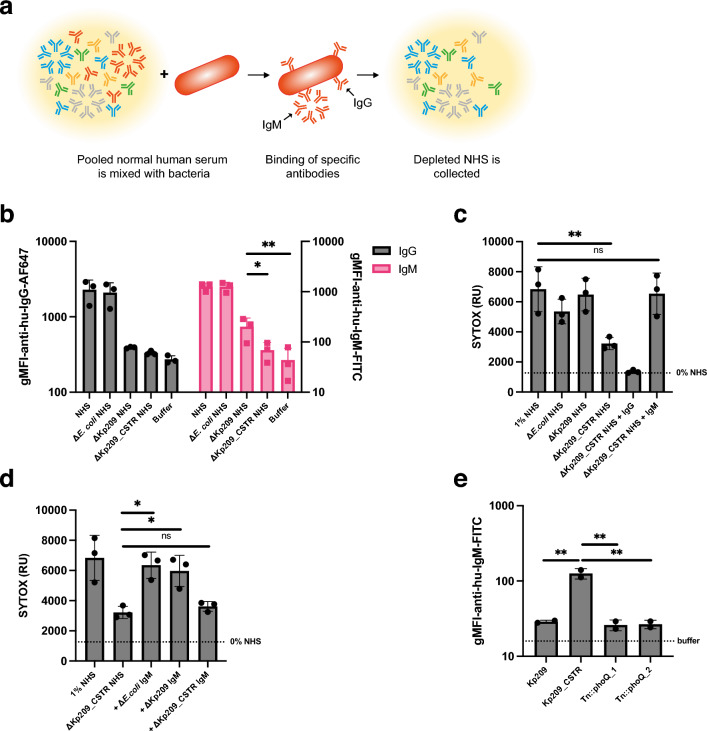
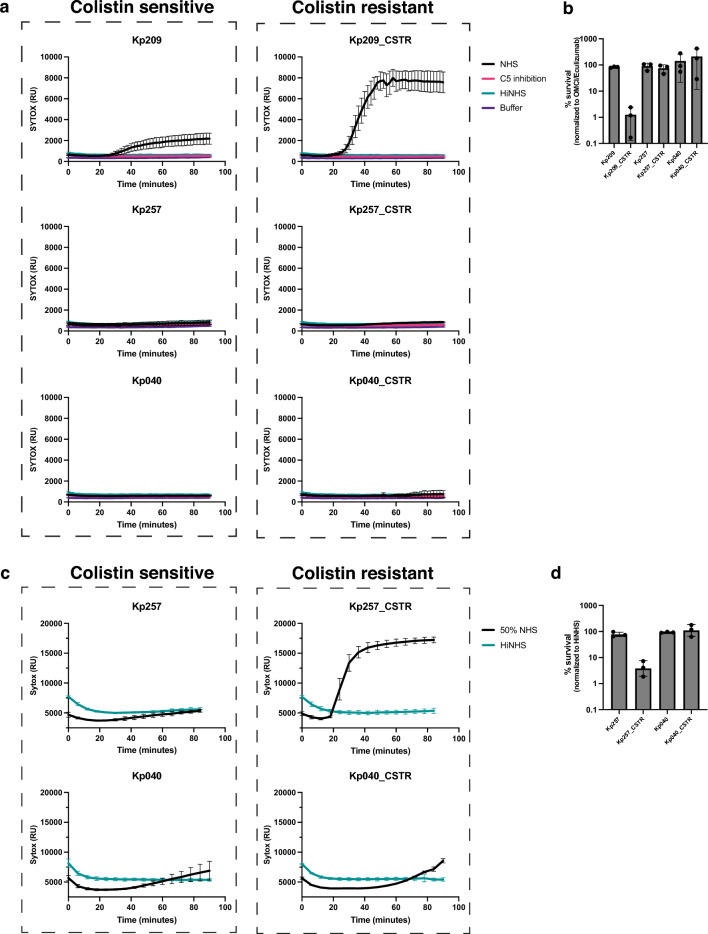
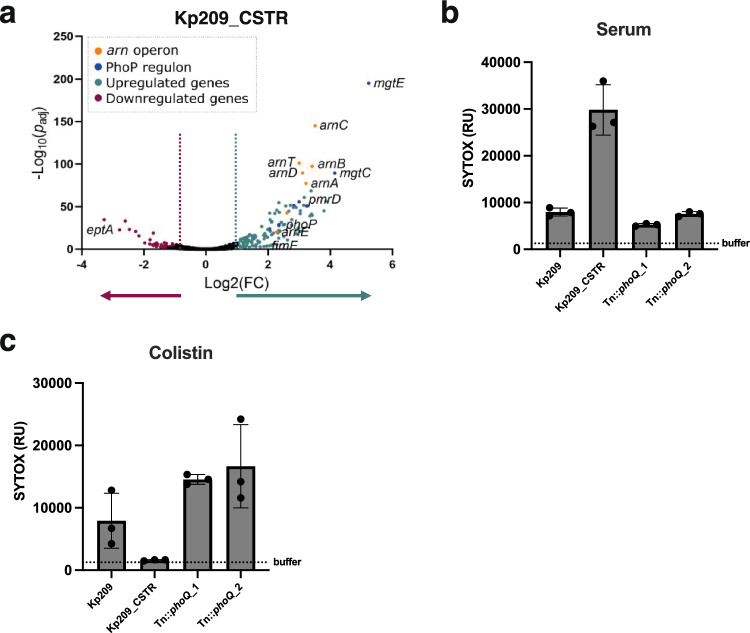
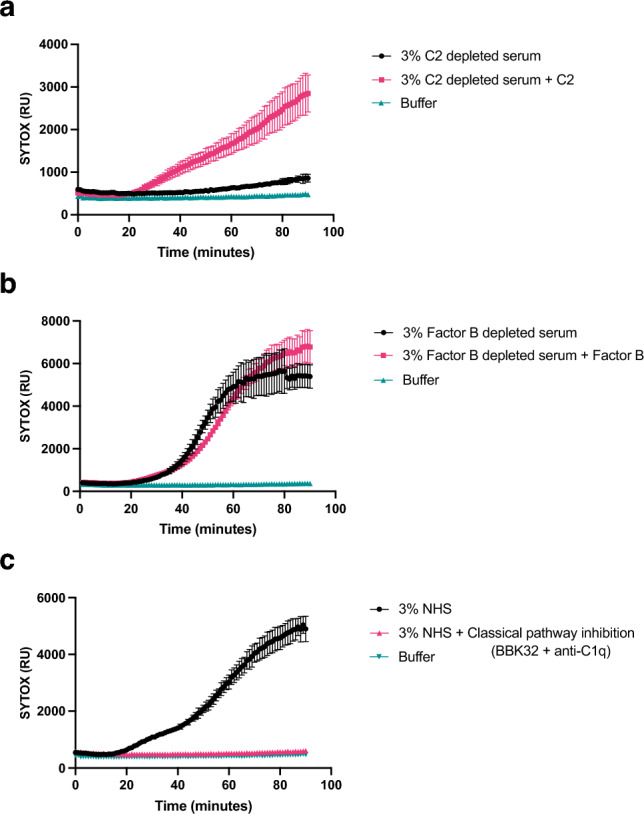
Due to multi-drug resistance, physicians increasingly use the last-resort antibiotic colistin to treat infections with the Gram-negative bacterium Klebsiella pneumoniae. Unfortunately, K. pneumoniae can also develop colistin resistance. Interestingly, colistin resistance has dual effects on bacterial clearance by the immune system. While it increases resistance to antimicrobial peptides, colistin resistance has been reported to sensitize certain bacteria for killing by human serum. Here we investigate the mechanisms underlying this increased serum sensitivity, focusing on human complement which kills Gram-negatives via membrane attack complex (MAC) pores. Using in vitro evolved colistin resistant strains and a fluorescent MAC-mediated permeabilization assay, we showed that two of the three tested colistin resistant strains, Kp209_CSTR and Kp257_CSTR, were sensitized to MAC. Transcriptomic and mechanistic analyses focusing on Kp209_CSTR revealed that a mutation in the phoQ gene locked PhoQ in an active state, making Kp209_CSTR colistin resistant and MAC sensitive. Detailed immunological assays showed that complement activation on Kp209_CSTR in human serum required specific IgM antibodies that bound Kp209_CSTR but did not recognize the wild-type strain. Together, our results show that developing colistin resistance affected recognition of Kp209_CSTR and its killing by the immune system.
由于多药耐药性,医生越来越多地使用最后手段抗生素黏菌素来治疗革兰氏阴性菌肺炎克雷伯菌的感染。不幸的是,肺炎克雷伯菌也可能产生黏菌素耐药性。有趣的是,黏菌素耐药性对免疫系统清除细菌有双重影响。虽然它增加了对抗生素肽的耐药性,但据报道,黏菌素耐药性使某些细菌对人血清的杀伤变得敏感。在这里,我们研究了这种增加的血清敏感性的机制,重点是通过膜攻击复合物 (MAC) 孔杀死革兰氏阴性菌的人类补体。使用体外进化的黏菌素耐药株和荧光 MAC 介导的通透性测定法,我们表明,在测试的三种黏菌素耐药株中,有两种,Kp209_CSTR 和 Kp257_CSTR,对 MAC 敏感。针对 Kp209_CSTR 的转录组学和机制分析表明,phoQ 基因的突变使 PhoQ 处于激活状态,使 Kp209_CSTR 对黏菌素产生耐药性,对 MAC 敏感。详细的免疫学检测表明,在人血清中 Kp209_CSTR 上的补体激活需要特异性 IgM 抗体,该抗体结合 Kp209_CSTR 但不识别野生型菌株。总之,我们的结果表明,黏菌素耐药性的产生影响了对 Kp209_CSTR 的识别及其被免疫系统杀伤。