Department of Physiology, Medical College of Wisconsin, Milwaukee, WI 53226, USA.
Department of Neuroscience and Pharmacology, University of Iowa Carver College of Medicine, Iowa City, IA 52242, USA; Fraternal Order of Eagles Diabetes Research Center, University of Iowa Carver College of Medicine, Iowa City, IA 52242, USA; Iowa Neuroscience Institute, University of Iowa Carver College of Medicine, Iowa City, IA 52242, USA.
Cell Rep. 2023 Aug 29;42(8):112935. doi: 10.1016/j.celrep.2023.112935. Epub 2023 Aug 2.
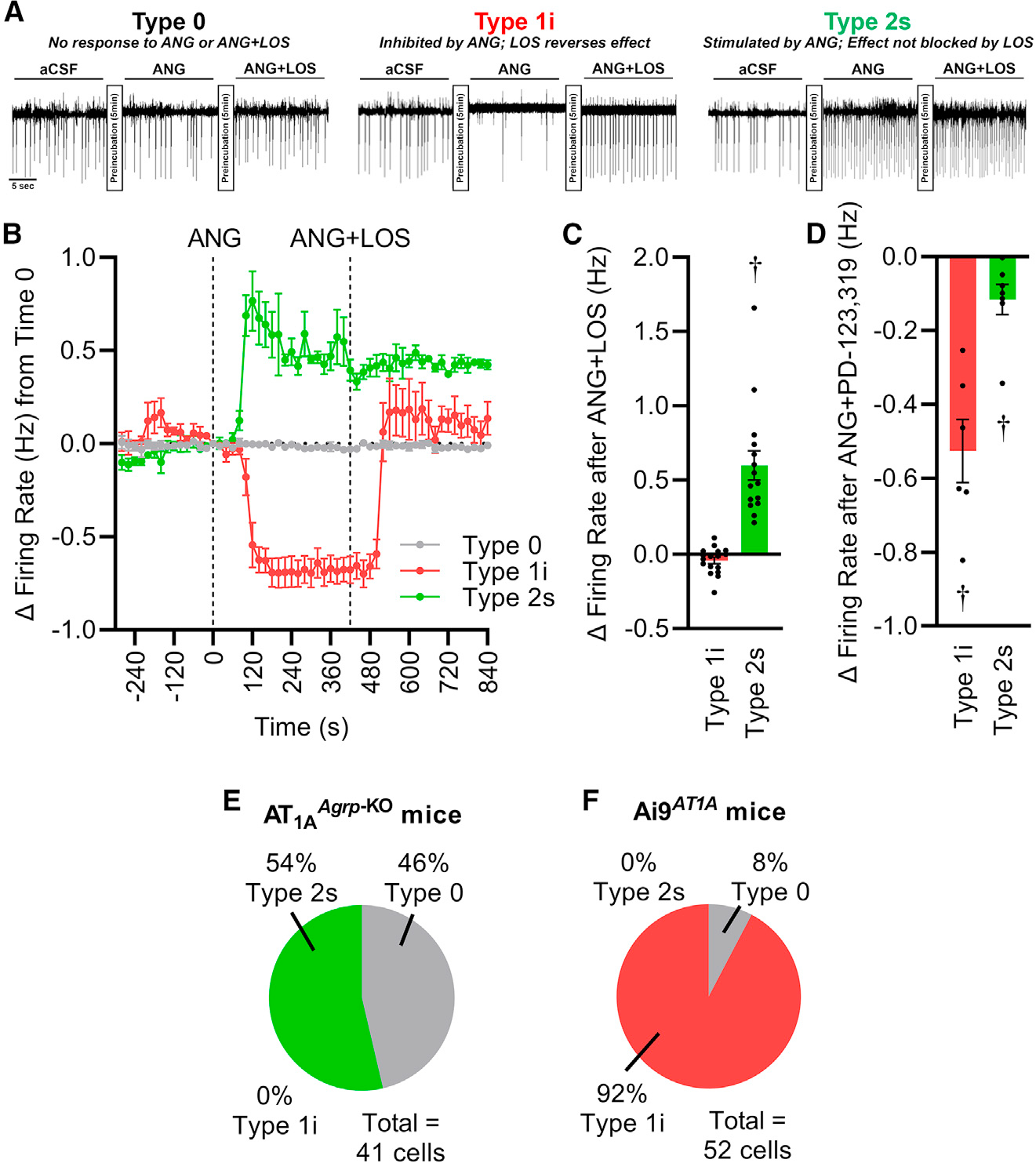
Resting metabolic rate (RMR) adaptation occurs during obesity and is hypothesized to contribute to failed weight management. Angiotensin II (Ang-II) type 1 (AT) receptors in Agouti-related peptide (AgRP) neurons contribute to the integrative control of RMR, and deletion of AT from AgRP neurons causes RMR adaptation. Extracellular patch-clamp recordings identify distinct cellular responses of individual AgRP neurons from lean mice to Ang-II: no response, inhibition via AT and Gαi, or stimulation via Ang-II type 2 (AT) receptors and Gαq. Following diet-induced obesity, a subset of Ang-II/AT-inhibited AgRP neurons undergo a spontaneous G-protein "signal switch," whereby AT stop inhibiting the cell via Gαi and instead begin stimulating the cell via Gαq. DREADD-mediated activation of Gαi, but not Gαq, in AT-expressing AgRP cells stimulates RMR in lean and obese mice. Thus, loss of AT-Gαi coupling within the AT-expressing AgRP neuron subtype represents a molecular mechanism contributing to RMR adaptation.
静息代谢率(RMR)适应发生在肥胖过程中,据推测它有助于体重管理的失败。Agouti 相关肽(AgRP)神经元中的血管紧张素 II(Ang-II)1 型(AT)受体有助于 RMR 的综合控制,而 AgRP 神经元中 AT 的缺失会导致 RMR 适应。细胞外膜片钳记录鉴定出来自瘦鼠的单个 AgRP 神经元对 Ang-II 的不同细胞反应:无反应、通过 AT 和 Gαi 抑制,或通过 Ang-II 2 型(AT)受体和 Gαq 刺激。在饮食诱导肥胖后,一部分 Ang-II/AT 抑制的 AgRP 神经元会发生自发的 G 蛋白“信号转换”,其中 AT 通过 Gαi 停止抑制细胞,而是通过 Gαq 开始刺激细胞。在表达 AT 的 AgRP 细胞中,通过 DREADD 介导的 Gαi 激活,但不是 Gαq 激活,会刺激瘦鼠和肥胖鼠的 RMR。因此,表达 AT 的 AgRP 神经元亚型中 AT-Gαi 偶联的丧失代表了导致 RMR 适应的分子机制。