Zhu Jie-Ying, Chen Min, Mu Wang-Jing, Luo Hong-Yang, Li Yang, Li Shan, Yan Lin-Jing, Li Ruo-Ying, Yin Meng-Ting, Li Xin, Chen Hu-Min, Guo Liang
School of Exercise and Health and Collaborative Innovation Center for Sports and Public Health, Shanghai University of Sport, Shanghai, China.
Shanghai Frontiers Science Research Base of Exercise and Metabolic Health, Shanghai University of Sport, Shanghai, China.
Nat Commun. 2025 Apr 1;16(1):3111. doi: 10.1038/s41467-025-58467-1.
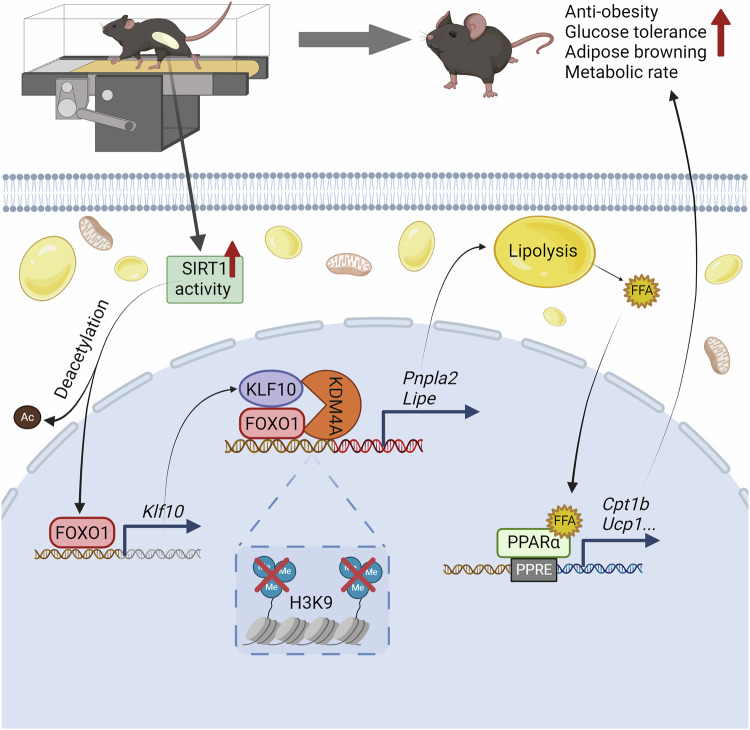
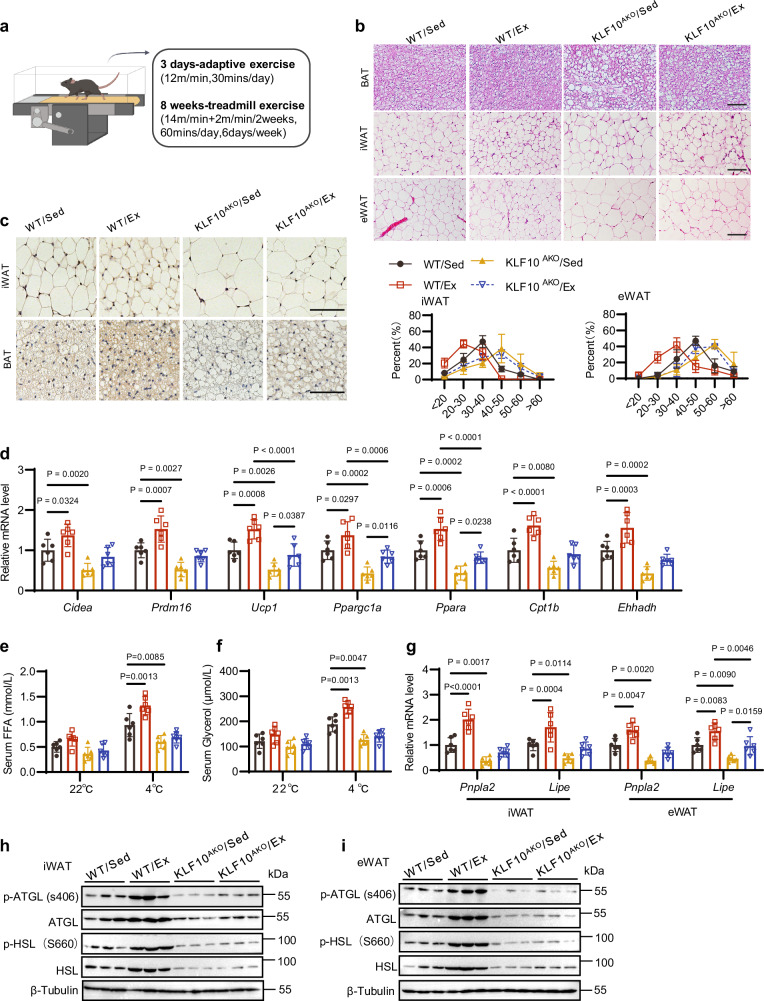
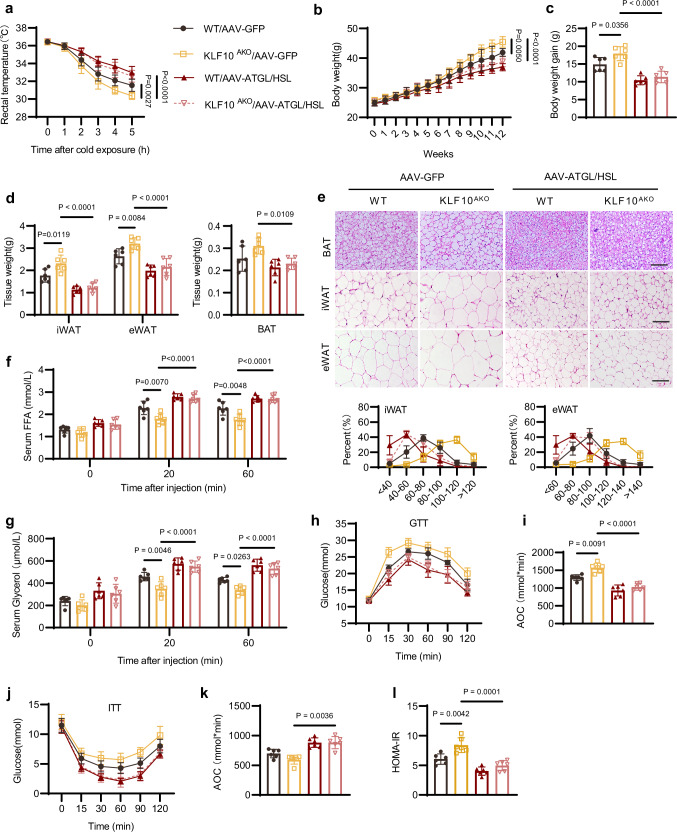
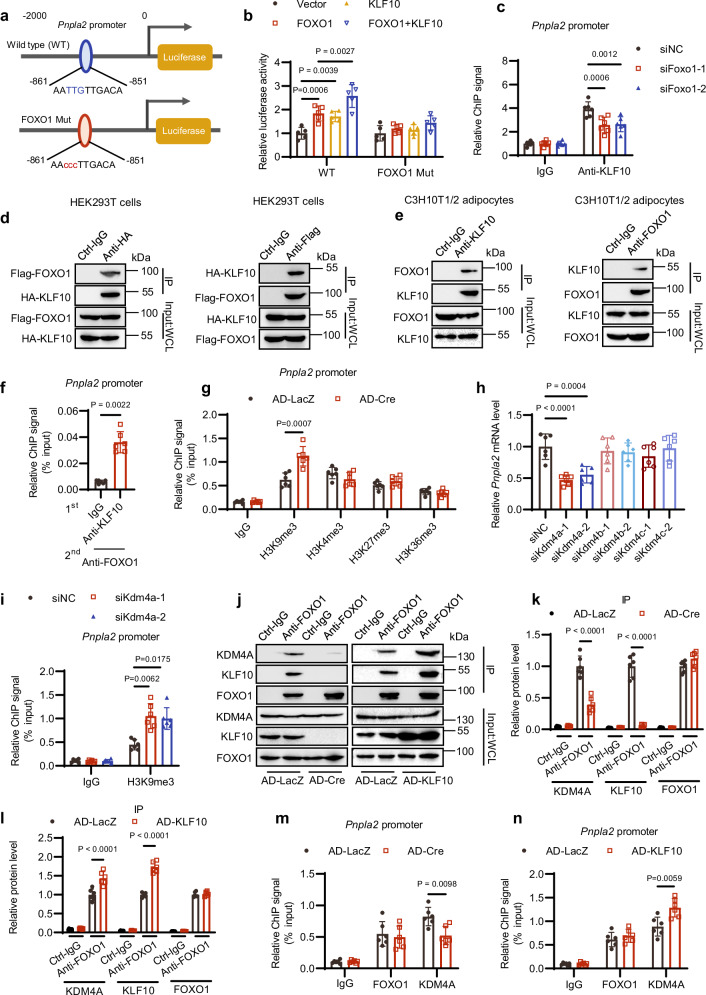
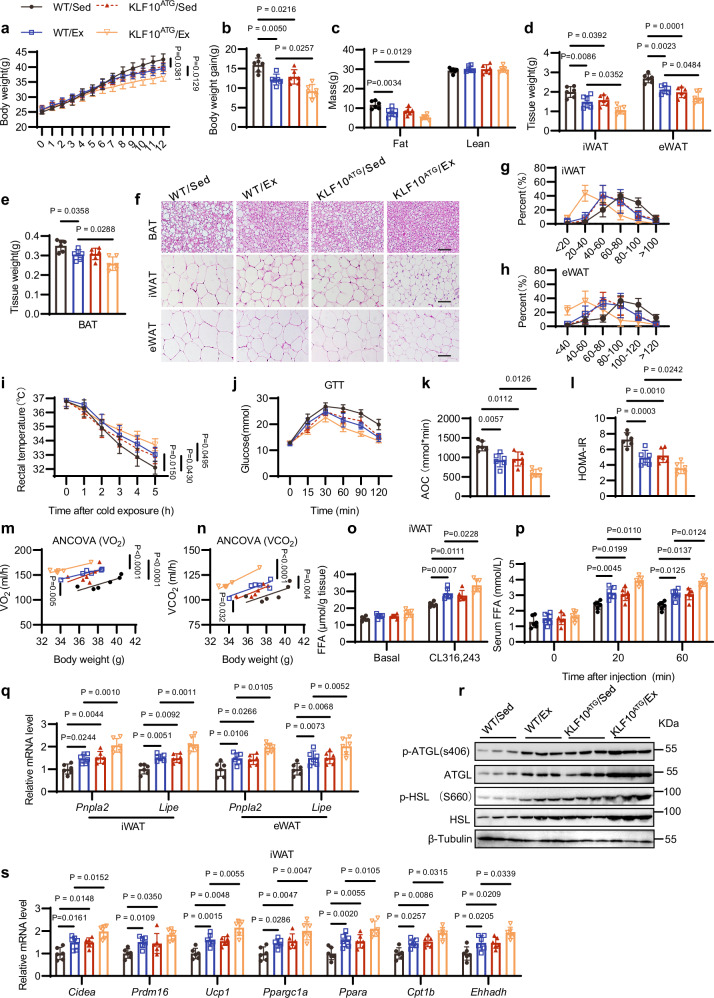
Exercise combats obesity and metabolic disorders, but the underlying mechanism is incompletely understood. KLF10, a transcription factor involved in various biological processes, has an undefined role in adipose tissue and obesity. Here, we show that exercise facilitates adipocyte-derived KLF10 expression via SIRT1/FOXO1 pathway. Adipocyte-specific knockout of KLF10 blunts exercise-promoted white adipose browning, energy expenditure, fat loss, glucose tolerance in diet-induced obese male mice. Conversely, adipocyte-specific transgenic expression of KLF10 in male mice enhanced the above metabolic profits induced by exercise. Mechanistically, KLF10 interacts with FOXO1 and facilitates the recruitment of KDM4A to form a ternary complex on the promoter regions of Pnpla2 and Lipe genes to promote these key lipolytic genes expression by demethylating H3K9me3 on their promoters, which facilitates lipolysis to defend against obesity in male mice. As a downstream effector responding to exercise, adipose KLF10 could act as a potential target in the fight against obesity.
运动可对抗肥胖和代谢紊乱,但其潜在机制尚未完全明确。KLF10是一种参与多种生物学过程的转录因子,在脂肪组织和肥胖中的作用尚不明确。在此,我们表明运动通过SIRT1/FOXO1途径促进脂肪细胞来源的KLF10表达。在饮食诱导的肥胖雄性小鼠中,脂肪细胞特异性敲除KLF10会削弱运动促进的白色脂肪褐变、能量消耗、脂肪减少和葡萄糖耐量。相反,雄性小鼠中脂肪细胞特异性转基因表达KLF10可增强运动诱导的上述代谢益处。机制上,KLF10与FOXO1相互作用,并促进KDM4A的募集,在Pnpla2和Lipe基因的启动子区域形成三元复合物,通过去甲基化其启动子上的H3K9me3来促进这些关键脂肪分解基因的表达,从而促进脂肪分解以抵御雄性小鼠肥胖。作为对运动作出反应的下游效应物,脂肪组织中的KLF10可能成为对抗肥胖的潜在靶点。