Ruan Zhengmin, Xiao Zhiying, Shi Xue, Liang Yu, Hou Liang, Wu Tao, Wu Mei
Department of Ultrasound, The Second Hospital of Shandong University, No 247, Beiyuan Street, Jinan, 250033, Shandong, China.
Department of Urology, The Second Hospital of Shandong University, Jinan, Shandong, China.
Insights Imaging. 2023 Aug 4;14(1):135. doi: 10.1186/s13244-023-01476-9.
Sound touch elastography (STE) and sound touch quantification (STQ) are novel imaging methods to evaluate tissue stiffness. This study aims to investigate renal stiffness in patients with chronic kidney disease (CKD) by STE and STQ, using renal biopsy as 'gold standard'.
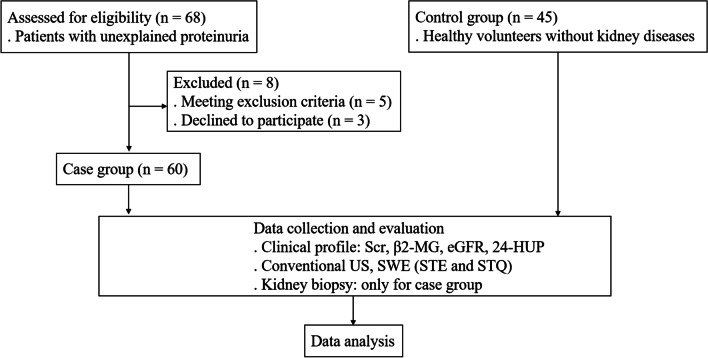
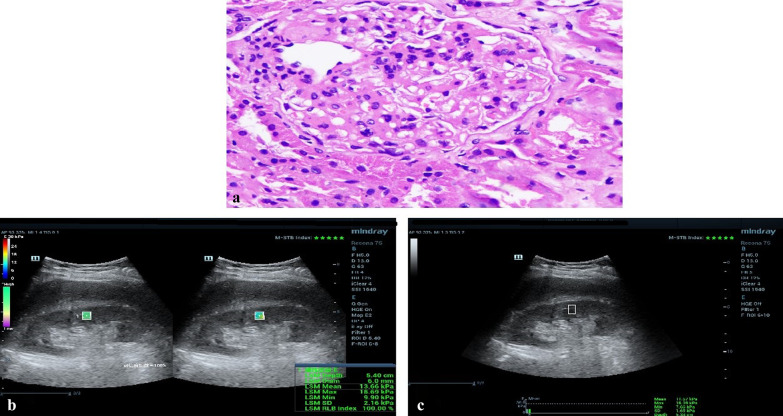
Between 2019 January and 2022 June, 60 patients who underwent renal biopsy for proteinuria (cases) and 45 healthy volunteers (controls) at our hospital were included in this study. The maximum and mean elastic modulus (Emax, Emean) of region of interest in right kidney were measured by STE and STQ techniques. Biochemical profiles and renal biopsy findings were recorded.
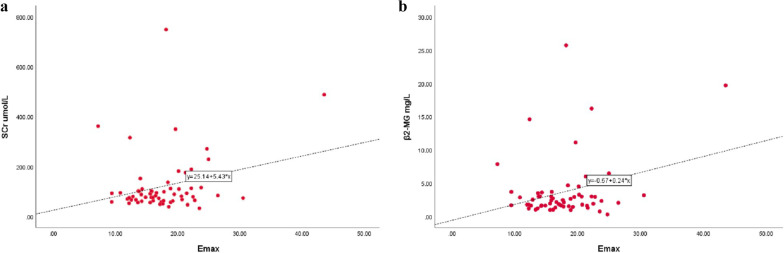
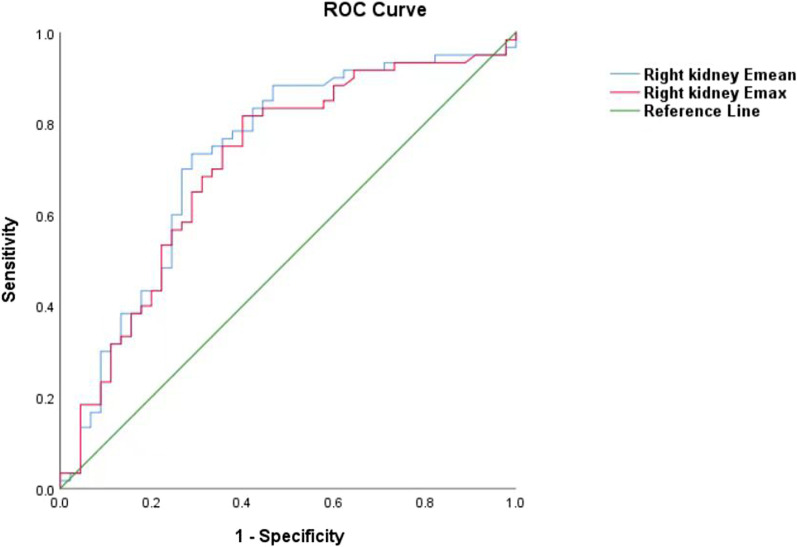
Both Emax and Emean measured by STE were significantly different between cases and controls. ROC analysis of STE measurements revealed using a cutoff of 13.53 kPa for Emax and 10.16 kPa for Emean, the area under the curve (AUC) to distinguish nephropathy from healthy was 0.718 and 0.744. Analysis of ROC for STQ measurements showed that using a cutoff value of 15.87 kPa for Emax and 9.95 kPa for Emean, the AUC for the nephropathy was 0.612 and 0.569. Emax and Emean values were significantly different among CKD patients with mild, moderate and severe pathological stage. The Emax value for STE was positively related to Scr, β2-MG (r = 0.257, 0.292, p < 0.05).
Both STE and STQ are non-invasive, feasible methods to quantitatively evaluate renal stiffness. STE is more effective than STQ in the diagnosis of CKD patients with proteinuria.
Sound touch elastography is more effective than sound touch quantification in the diagnosis of chronic kidney disease patients with proteinuria.
• Emax and Emean measured by STE were different between cases and controls. • Emax and Emean were different among CKD patients with different pathological stages. • The Emax value for STE was positively related to serum creatinine, β2-microglobulin.
超声剪切波弹性成像(STE)和超声剪切波弹性定量(STQ)是评估组织硬度的新型成像方法。本研究旨在通过STE和STQ评估慢性肾脏病(CKD)患者的肾脏硬度,并将肾活检作为“金标准”。
2019年1月至2022年6月期间,本研究纳入了我院60例因蛋白尿接受肾活检的患者(病例组)和45名健康志愿者(对照组)。采用STE和STQ技术测量右肾感兴趣区域的最大和平均弹性模量(Emax、Emean)。记录生化指标和肾活检结果。
病例组和对照组通过STE测量的Emax和Emean均有显著差异。STE测量的ROC分析显示,以Emax为13.53 kPa、Emean为10.16 kPa为临界值,区分肾病与健康人的曲线下面积(AUC)分别为0.718和0.744。STQ测量的ROC分析表明,以Emax为15.87 kPa、Emean为9.95 kPa为临界值,肾病的AUC分别为0.612和0.569。不同病理分期的CKD患者的Emax和Emean值有显著差异。STE的Emax值与Scr、β2-MG呈正相关(r = 0.257,0.292,p < 0.05)。
STE和STQ都是定量评估肾脏硬度的非侵入性可行方法。在诊断蛋白尿型CKD患者方面,STE比STQ更有效。
在诊断蛋白尿型慢性肾脏病患者方面,超声剪切波弹性成像比超声剪切波弹性定量更有效。
• 病例组和对照组通过STE测量的Emax和Emean不同。• 不同病理分期的CKD患者的Emax和Emean不同。• STE的Emax值与血清肌酐、β2-微球蛋白呈正相关。