Omo-Lamai Serena, Zamora Marco E, Patel Manthan N, Wu Jichuan, Nong Jia, Wang Zhicheng, Peshkova Alina, Chase Liam S, Essien Eno-Obong, Muzykantov Vladimir, Marcos-Contreras Oscar, Myerson Jacob W, Brenner Jacob S
University of Pennsylvania.
Drexel University.
bioRxiv. 2023 Jul 25:2023.07.21.550080. doi: 10.1101/2023.07.21.550080.
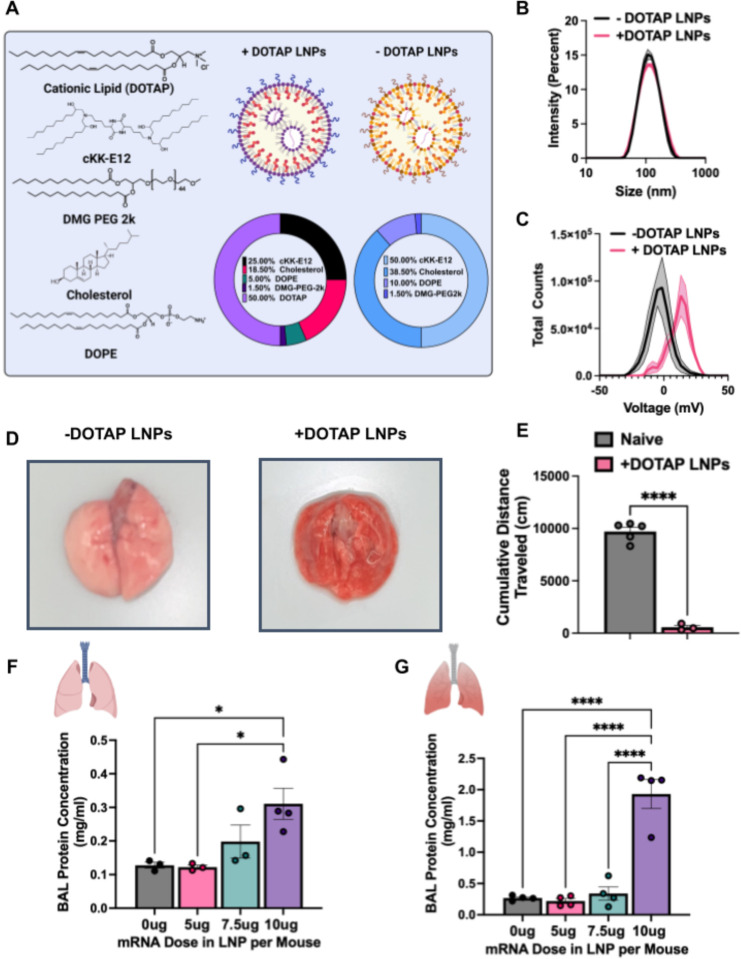
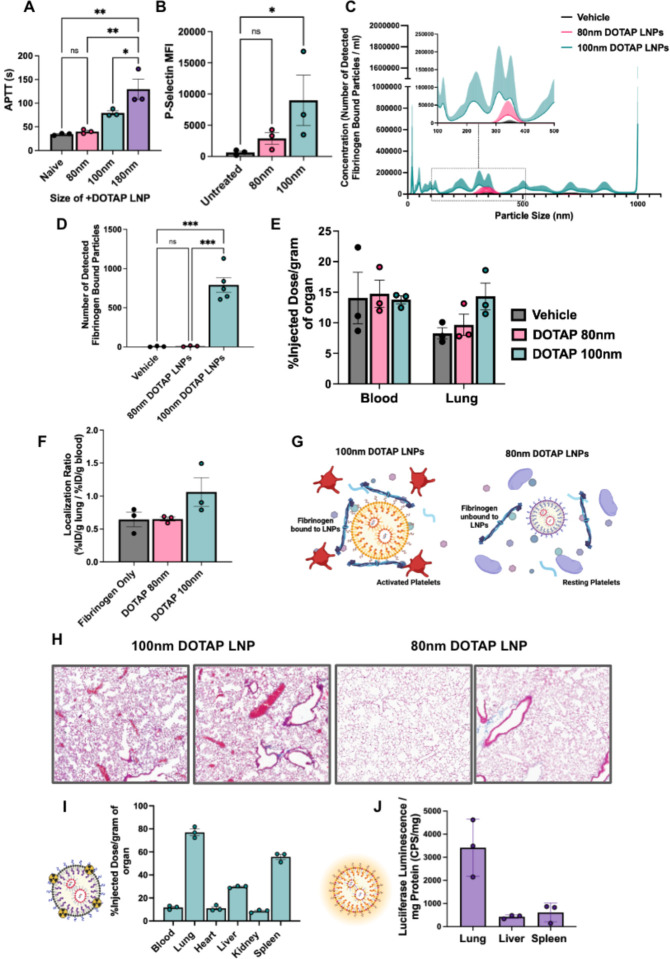
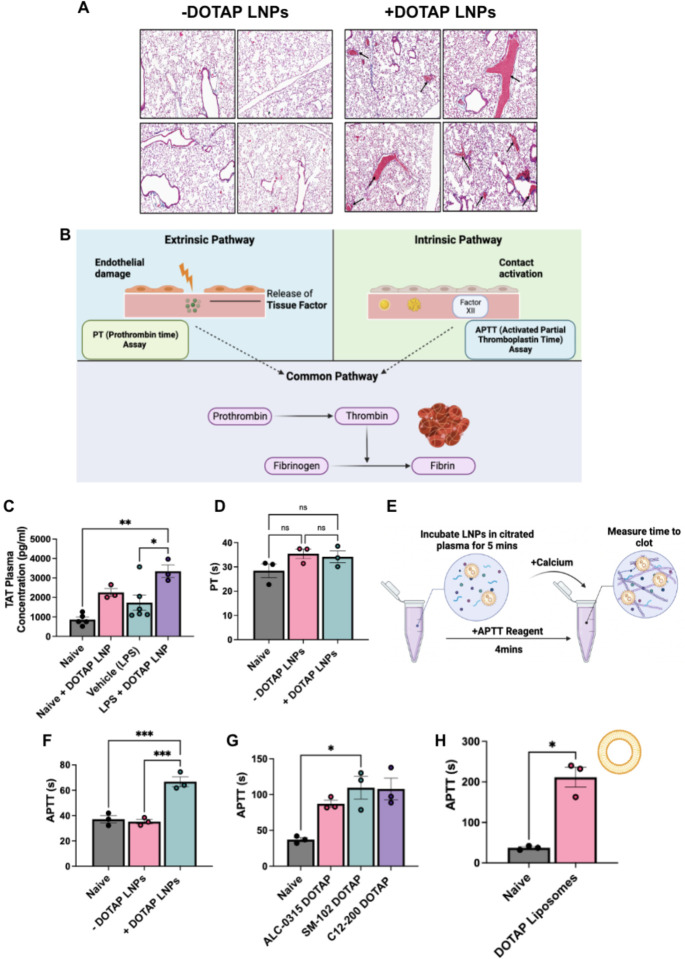
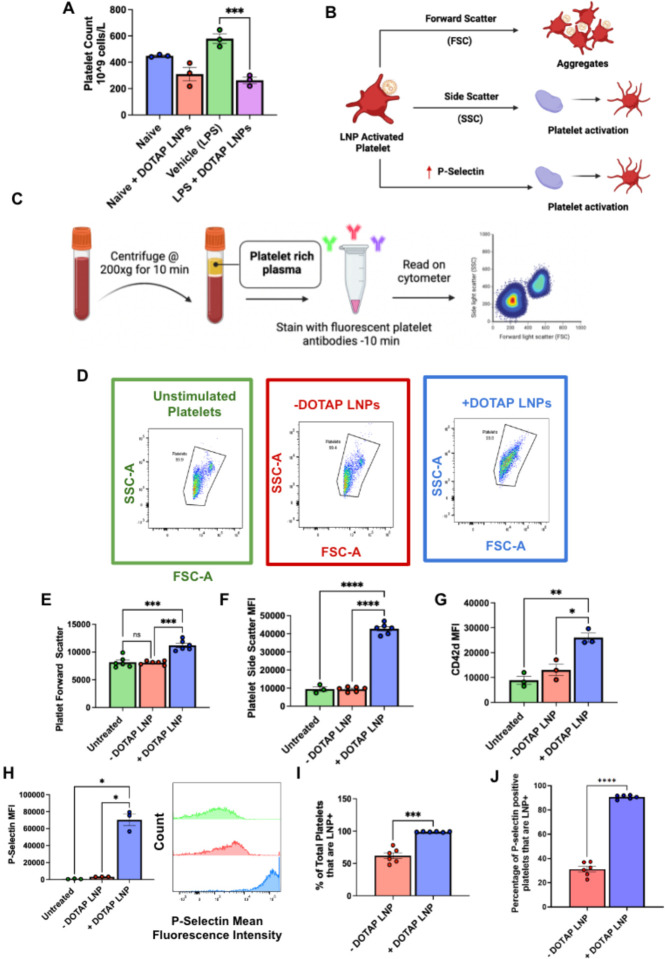
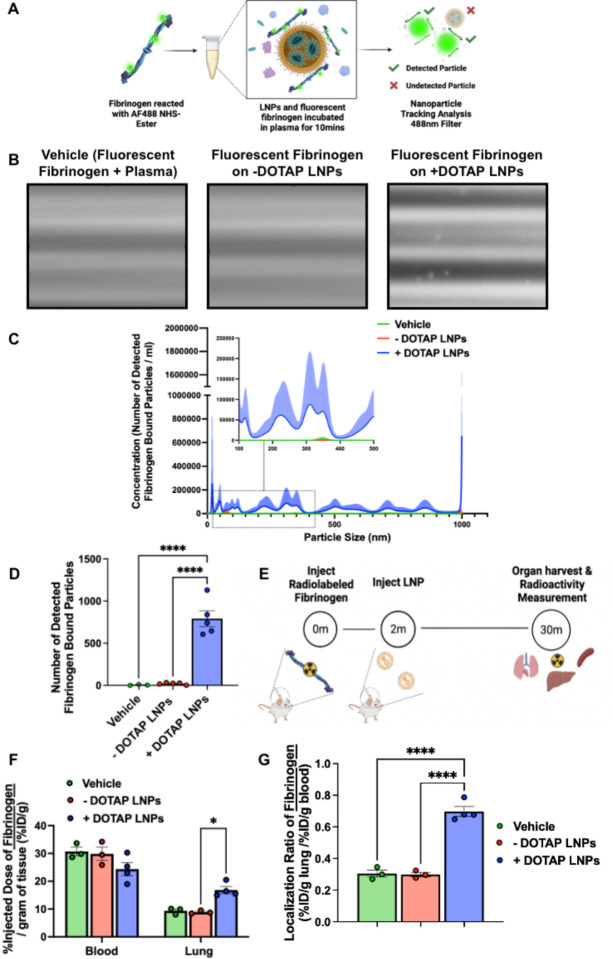
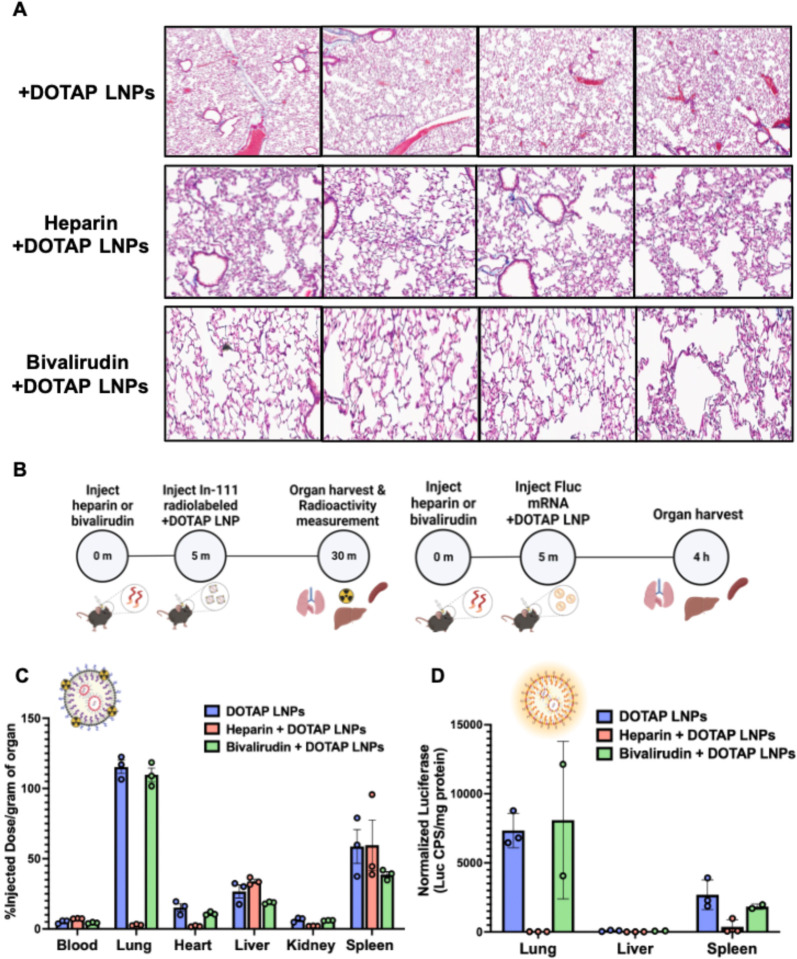
Lipid nanoparticles (LNPs) have become the dominant drug delivery technology in industry, holding the promise to deliver RNA to up- or down-regulate any protein of interest. LNPs have been targeted to specific cell types or organs by physicochemical targeting, in which LNP's lipid compositions are adjusted to find mixtures with the desired tropism. In a popular approach, physicochemical targeting is accomplished by formulating with charged lipids. Negatively charged lipids localize LNPs to the spleen, and positively charged lipids to the lungs. Here we found that lung-tropic LNPs employing cationic lipids induce massive thrombosis. We demonstrate that thrombosis is induced in the lungs and other organs, and greatly exacerbated by pre-existing inflammation. This clotting is induced by a variety of formulations with cationic lipids, including LNPs and non-LNP nanoparticles. The mechanism depends on the LNPs binding to fibrinogen and inducing platelet and thrombin activation. Based on these mechanisms, we engineered multiple solutions which enable positively charged LNPs to target the lungs while not inducing thrombosis. Our findings implicate thrombosis as a major barrier that blood erects against LNPs with cationic components and illustrate how physicochemical targeting approaches must be investigated early for risks and re-engineered with a careful understanding of biological mechanisms.
脂质纳米颗粒(LNPs)已成为工业界占主导地位的药物递送技术,有望递送RNA以上调或下调任何感兴趣的蛋白质。通过物理化学靶向,LNPs已被靶向特定的细胞类型或器官,其中调整LNP的脂质组成以找到具有所需靶向性的混合物。在一种常见的方法中,通过与带电荷的脂质一起配制来实现物理化学靶向。带负电荷的脂质使LNPs定位于脾脏,而带正电荷的脂质使LNPs定位于肺。在此,我们发现采用阳离子脂质的肺靶向LNPs会引发大量血栓形成。我们证明血栓形成发生在肺部和其他器官,并且会因预先存在的炎症而大大加剧。这种凝血是由多种含阳离子脂质的制剂诱导的,包括LNPs和非LNP纳米颗粒。其机制取决于LNPs与纤维蛋白原结合并诱导血小板和凝血酶激活。基于这些机制,我们设计了多种解决方案,使带正电荷的LNPs能够靶向肺部而不诱导血栓形成。我们的研究结果表明血栓形成是血液对含阳离子成分的LNPs形成的一个主要屏障,并说明了必须尽早研究物理化学靶向方法的风险,并在仔细理解生物学机制的基础上进行重新设计。