Liu Miao, Jin Shengyan, Agabiti Sherry S, Jensen Tyler B, Yang Tianqi, Radda Jonathan S D, Ruiz Christian F, Baldissera Gabriel, Rajaei Moein, Townsend Jeffrey P, Muzumdar Mandar Deepak, Wang Siyuan
Department of Genetics, Yale School of Medicine, Yale University; New Haven, CT 06510, USA.
Yale Cancer Biology Institute, Yale University; West Haven, CT 06516, USA.
bioRxiv. 2024 Sep 9:2023.07.23.550157. doi: 10.1101/2023.07.23.550157.
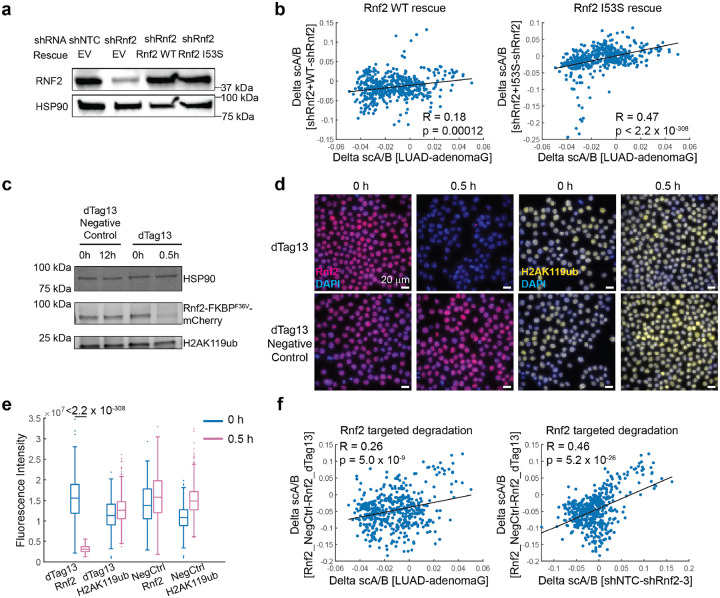
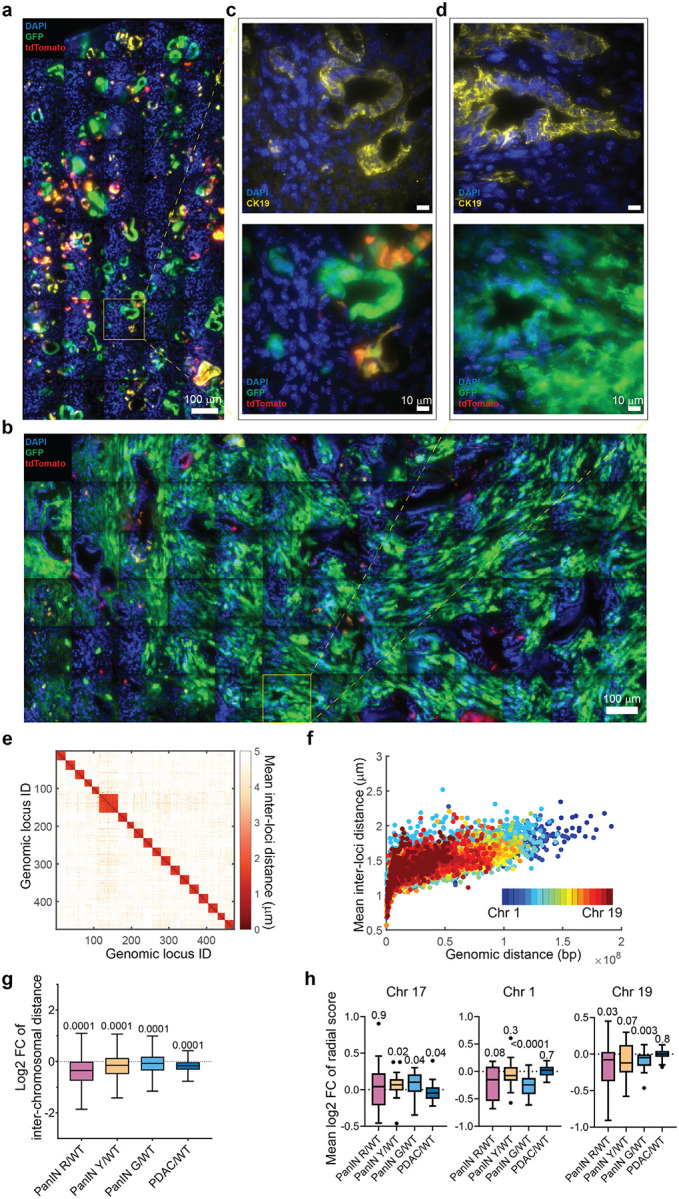
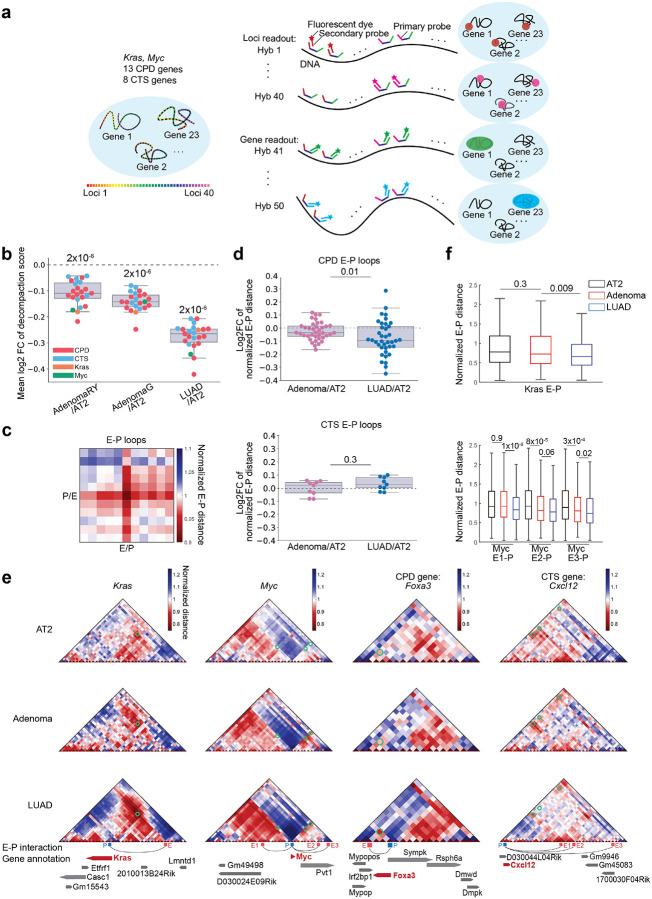
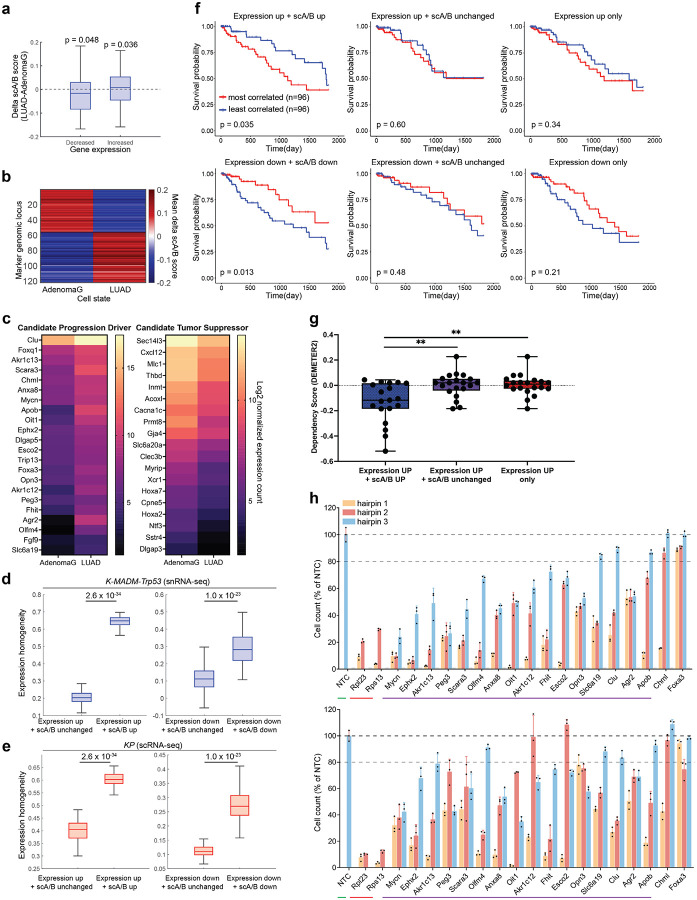
Although three-dimensional (3D) genome structures are altered in cancer cells, little is known about how these changes evolve and diversify during cancer progression. Leveraging genome-wide chromatin tracing to visualize 3D genome folding directly in tissues, we generated 3D genome cancer atlases of murine lung and pancreatic adenocarcinoma. Our data reveal stereotypical, non-monotonic, and stage-specific alterations in 3D genome folding heterogeneity, compaction, and compartmentalization as cancers progress from normal to preinvasive and ultimately to invasive tumors, discovering a potential structural bottleneck in early tumor progression. Remarkably, 3D genome architectures distinguish histologic cancer states in single cells, despite considerable cell-to-cell heterogeneity. Gene-level analyses of evolutionary changes in 3D genome compartmentalization not only showed compartment-associated genes are more homogeneously regulated, but also elucidated prognostic and dependency genes in lung adenocarcinoma and a previously unappreciated role for polycomb-group protein Rnf2 in 3D genome regulation. Our results demonstrate the utility of mapping the single-cell cancer 3D genome in tissues and illuminate its potential to identify new diagnostic, prognostic, and therapeutic biomarkers in cancer.
尽管癌细胞中的三维(3D)基因组结构会发生改变,但对于这些变化在癌症进展过程中如何演变和多样化却知之甚少。利用全基因组染色质追踪技术直接在组织中可视化3D基因组折叠,我们生成了小鼠肺癌和胰腺癌的3D基因组癌症图谱。我们的数据揭示了随着癌症从正常发展到癌前病变并最终发展为侵袭性肿瘤,3D基因组折叠异质性、压缩和分区化存在刻板、非单调且阶段特异性的改变,发现了早期肿瘤进展中的一个潜在结构瓶颈。值得注意的是,尽管细胞间存在相当大的异质性,但3D基因组结构仍能区分单细胞中的组织学癌症状态。对3D基因组分区化进化变化的基因水平分析不仅表明与分区相关的基因受到更均匀的调控,还阐明了肺腺癌中的预后和依赖性基因,以及多梳蛋白组蛋白Rnf2在3D基因组调控中以前未被认识到的作用。我们的结果证明了在组织中绘制单细胞癌症3D基因组图谱的实用性,并阐明了其在识别癌症新的诊断、预后和治疗生物标志物方面所具有的潜力。