Isenberg Ruth Y, Holschbach Chandler S, Gao Jing, Mandel Mark J
Department of Medical Microbiology and Immunology, University of Wisconsin-Madison, Madison, WI USA.
Microbiology Doctoral Training Program, University of Wisconsin-Madison, Madison, WI USA.
bioRxiv. 2024 Sep 24:2023.07.24.550417. doi: 10.1101/2023.07.24.550417.
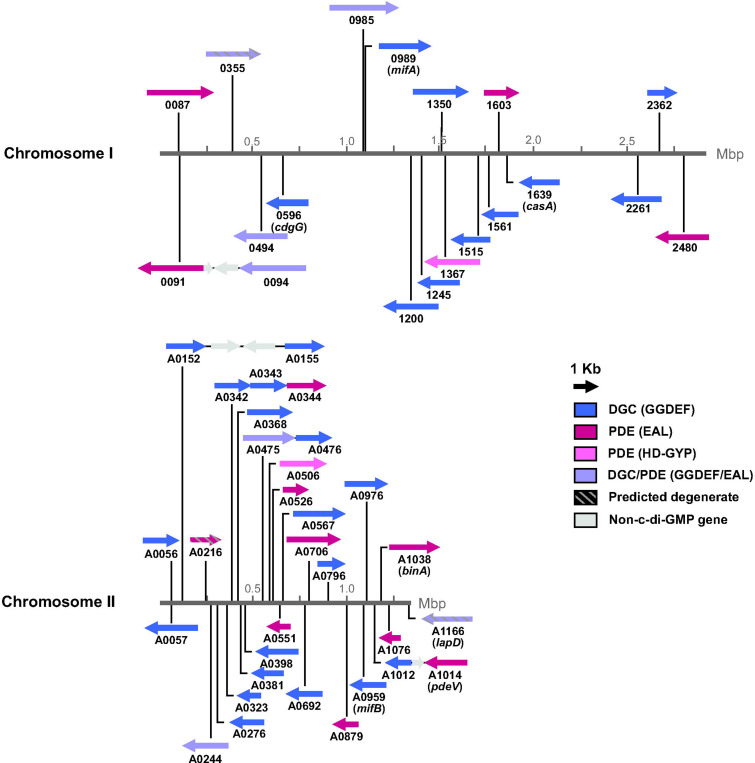
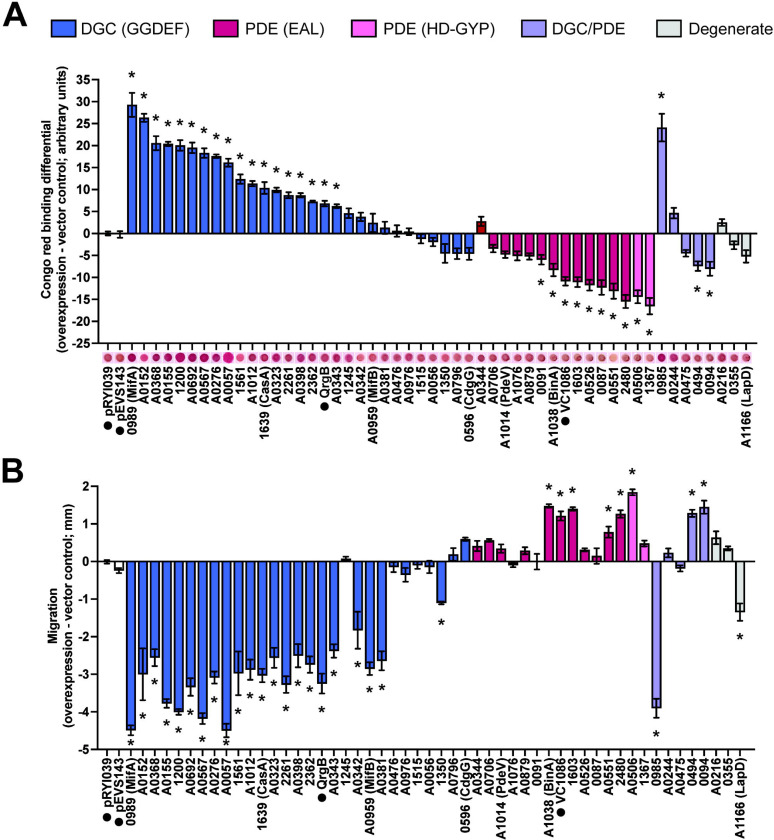
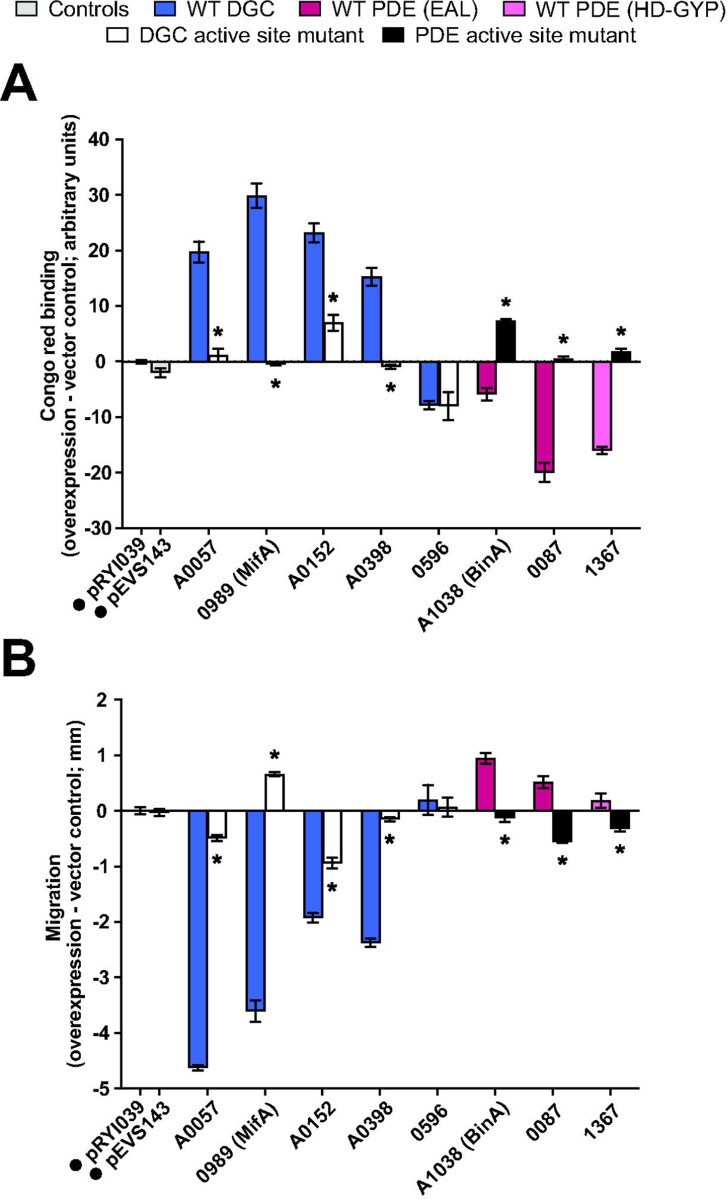
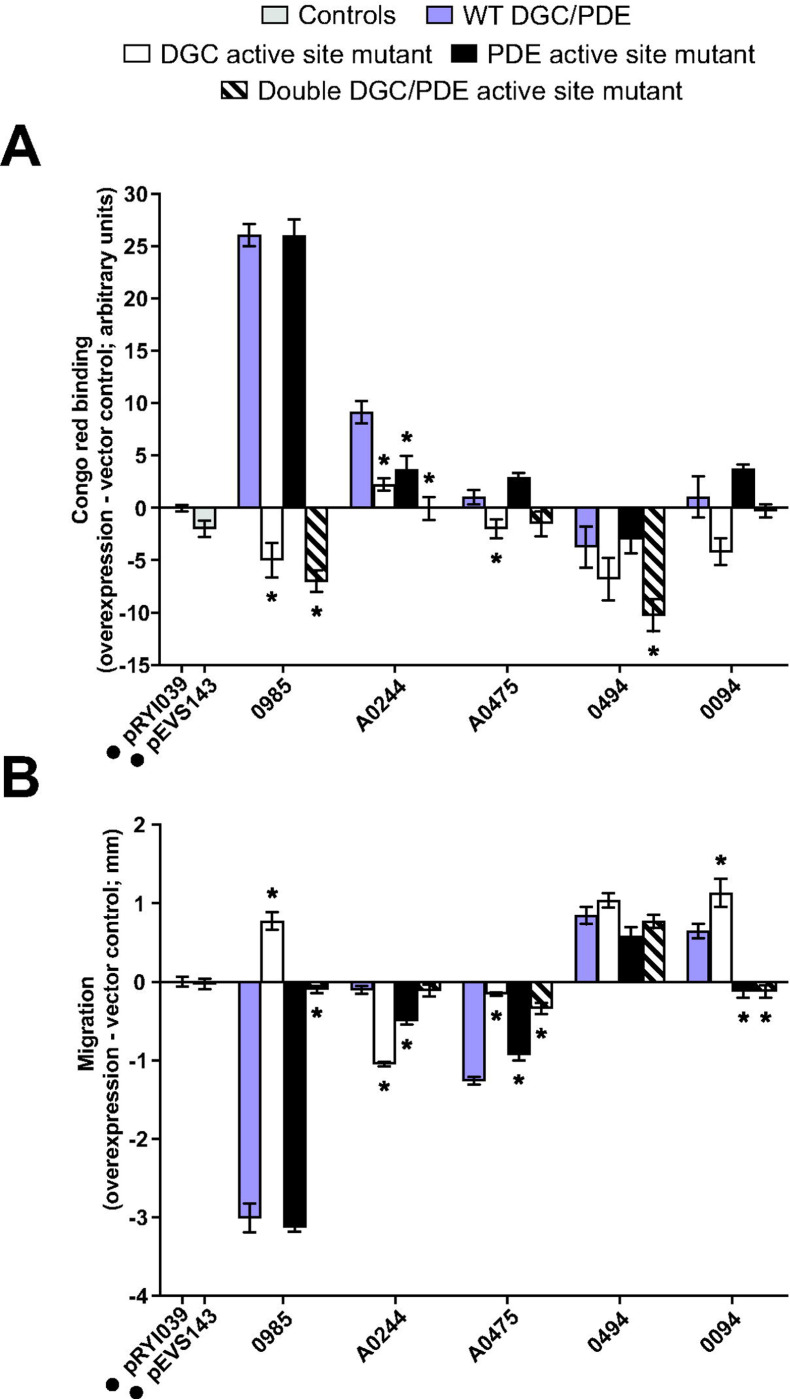
As bacterial symbionts transition from a motile free-living state to a sessile biofilm state, they must coordinate behavior changes suitable to each lifestyle. Cyclic diguanylate (c-di-GMP) is an intracellular signaling molecule that can regulate this transition, and it is synthesized by diguanylate cyclase (DGC) enzymes and degraded by phosphodiesterase (PDE) enzymes. Generally, c-di-GMP inhibits motility and promotes biofilm formation. While c-di-GMP and the enzymes that contribute to its metabolism have been well-studied in pathogens, considerably less focus has been placed on c-di-GMP regulation in beneficial symbionts. is the sole beneficial symbiont of the Hawaiian bobtail squid () light organ, and the bacterium requires both motility and biofilm formation to efficiently colonize. C-di-GMP regulates swimming motility and cellulose exopolysaccharide production in . The genome encodes 50 DGCs and PDEs, and while a few of these proteins have been characterized, the majority have not undergone comprehensive characterization. In this study, we use protein overexpression to systematically characterize the functional potential of all 50 proteins. All 28 predicted DGCs and 14 predicted PDEs displayed at least one phenotype consistent with their predicted function, and a majority of each displayed multiple phenotypes. Finally, active site mutant analysis of proteins with the potential for both DGC and PDE activities revealed potential activities for these proteins. This work presents a systems-level functional analysis of a family of signaling proteins in a tractable animal symbiont and will inform future efforts to characterize the roles of individual proteins during lifestyle transitions.
当细菌共生体从游动的自由生活状态转变为固着的生物膜状态时,它们必须协调适合每种生活方式的行为变化。环二鸟苷酸(c-di-GMP)是一种细胞内信号分子,可调节这种转变,它由二鸟苷酸环化酶(DGC)合成,并由磷酸二酯酶(PDE)降解。一般来说,c-di-GMP会抑制运动性并促进生物膜形成。虽然c-di-GMP及其参与代谢的酶在病原体中已得到充分研究,但在有益共生体中对c-di-GMP调节的关注却少得多。费氏弧菌是夏威夷短尾乌贼光器官的唯一有益共生体,该细菌需要运动性和生物膜形成才能有效地定殖。c-di-GMP调节费氏弧菌的游动运动性和纤维素胞外多糖的产生。该基因组编码50种DGC和PDE,虽然其中一些蛋白质已被表征,但大多数尚未经过全面表征。在本研究中,我们使用蛋白质过表达来系统地表征所有50种费氏弧菌蛋白质的功能潜力。所有28种预测的DGC和14种预测的PDE都表现出至少一种与其预测功能一致的表型,并且大多数都表现出多种表型。最后,对具有DGC和PDE活性潜力的蛋白质进行活性位点突变分析,揭示了这些蛋白质的潜在活性。这项工作对一种易于处理的动物共生体中的信号蛋白家族进行了系统水平的功能分析,并将为未来表征个体蛋白质在生活方式转变过程中的作用提供参考。