Division of Innate Immunity, Department of Medicine, University of Massachusetts Chan Medical School, Worcester, MA 01605.
Program in Chemical Biology, Department of Biochemistry and Molecular Biotechnology, University of Massachusetts Chan Medical School, Worcester, MA 01605.
Proc Natl Acad Sci U S A. 2023 Aug 15;120(33):e2305420120. doi: 10.1073/pnas.2305420120. Epub 2023 Aug 7.
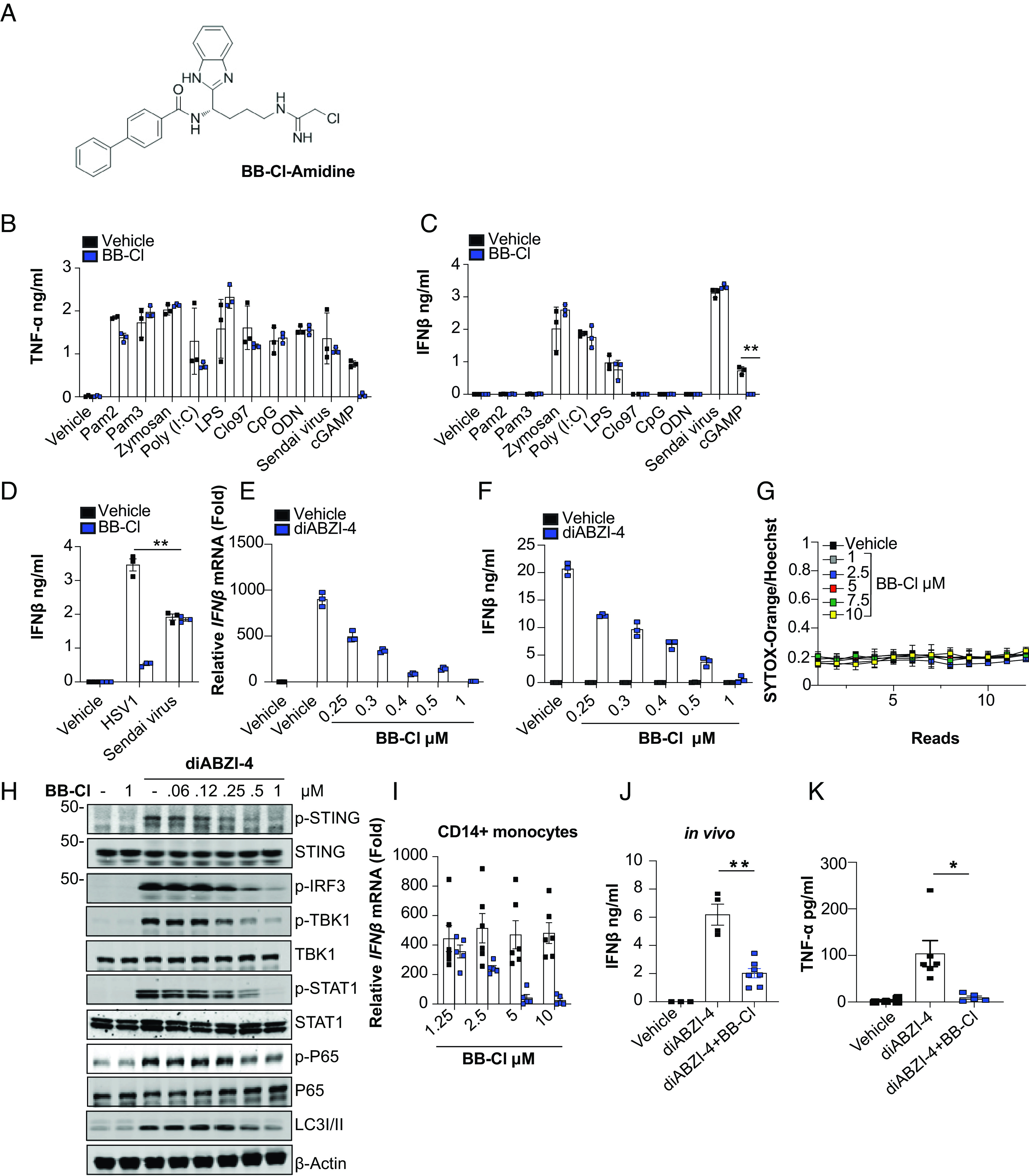
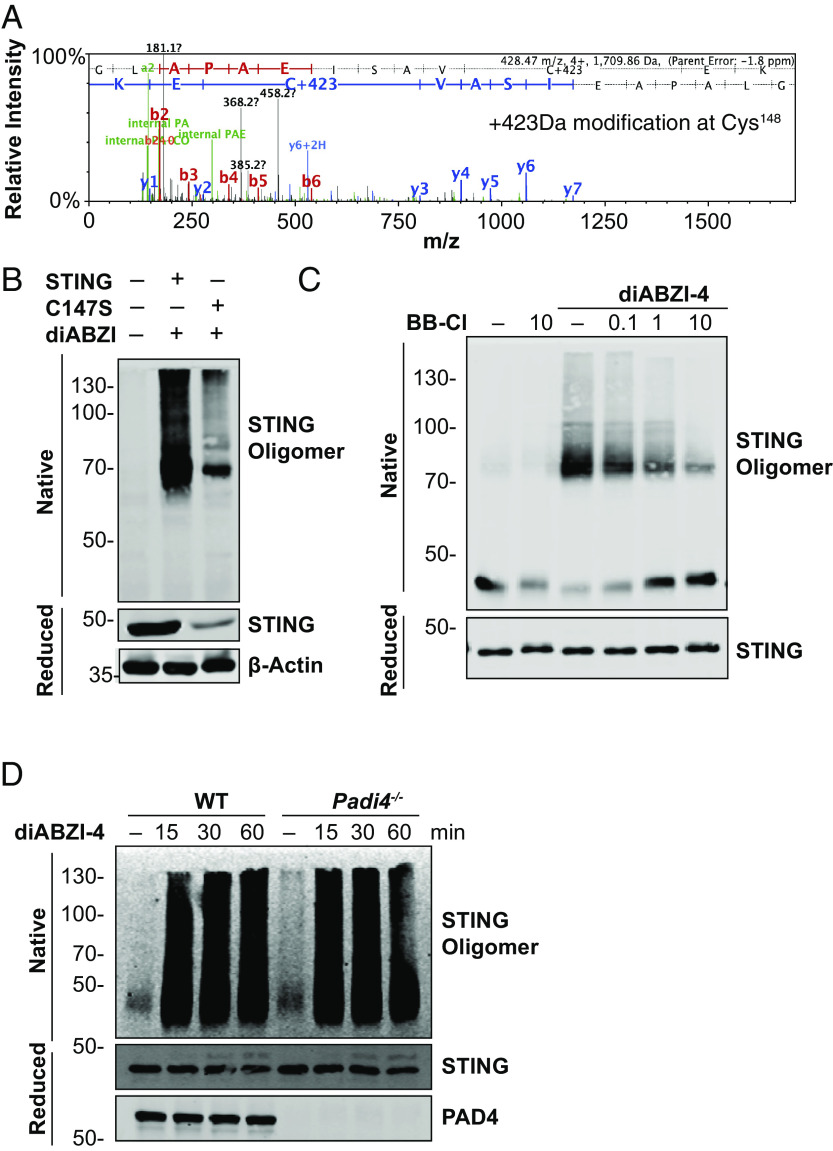
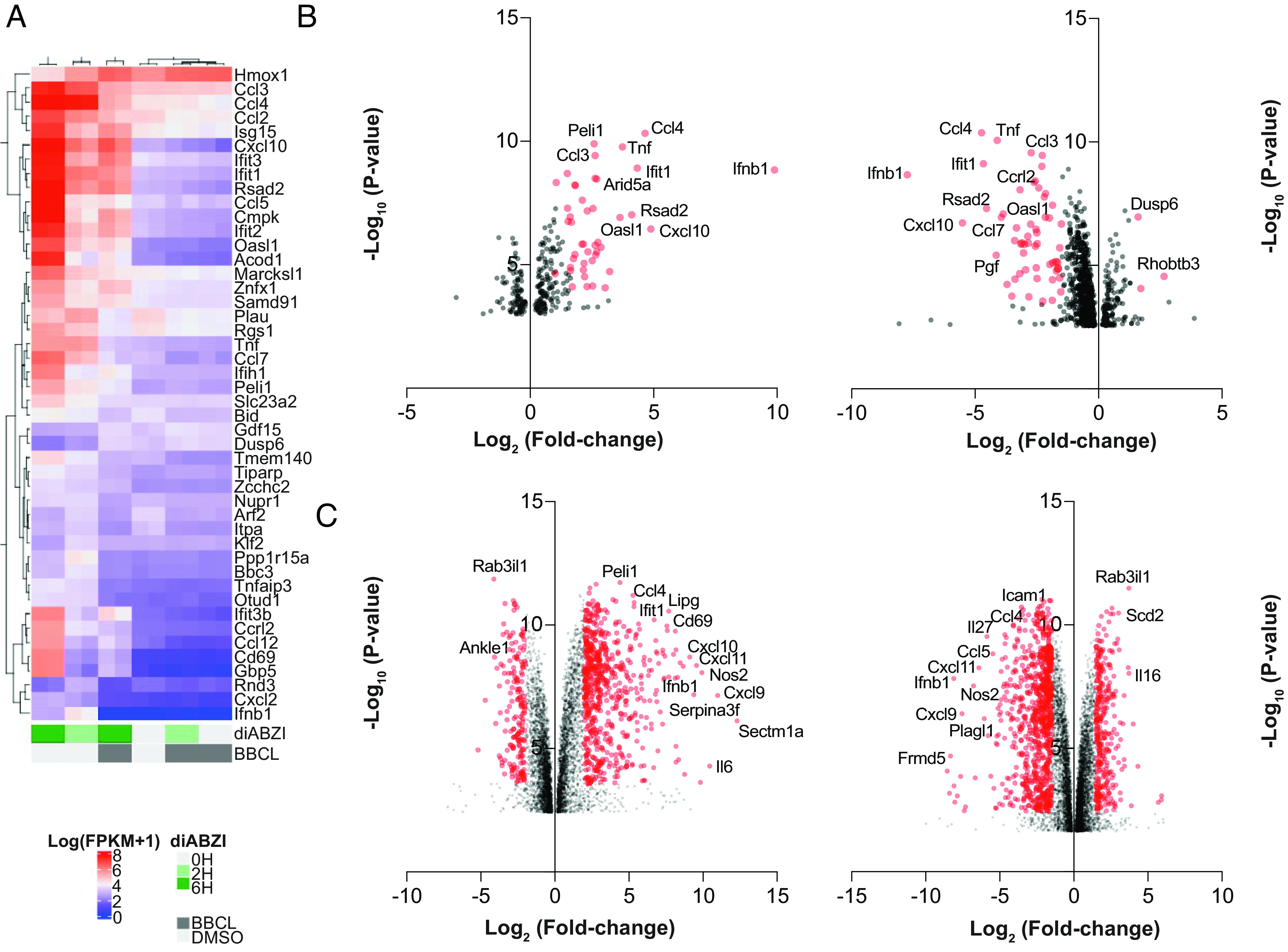
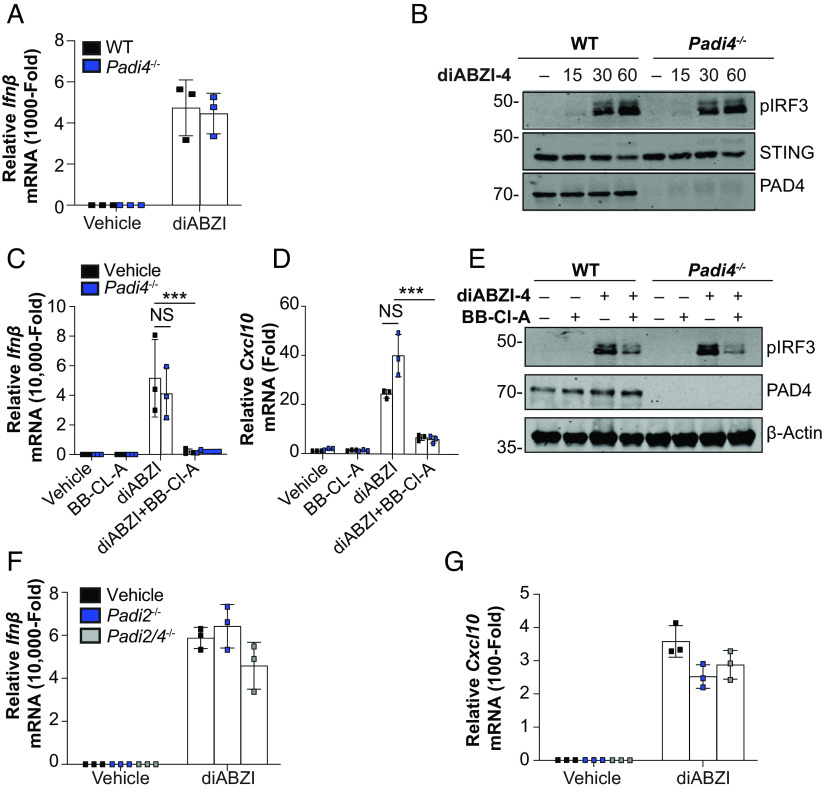
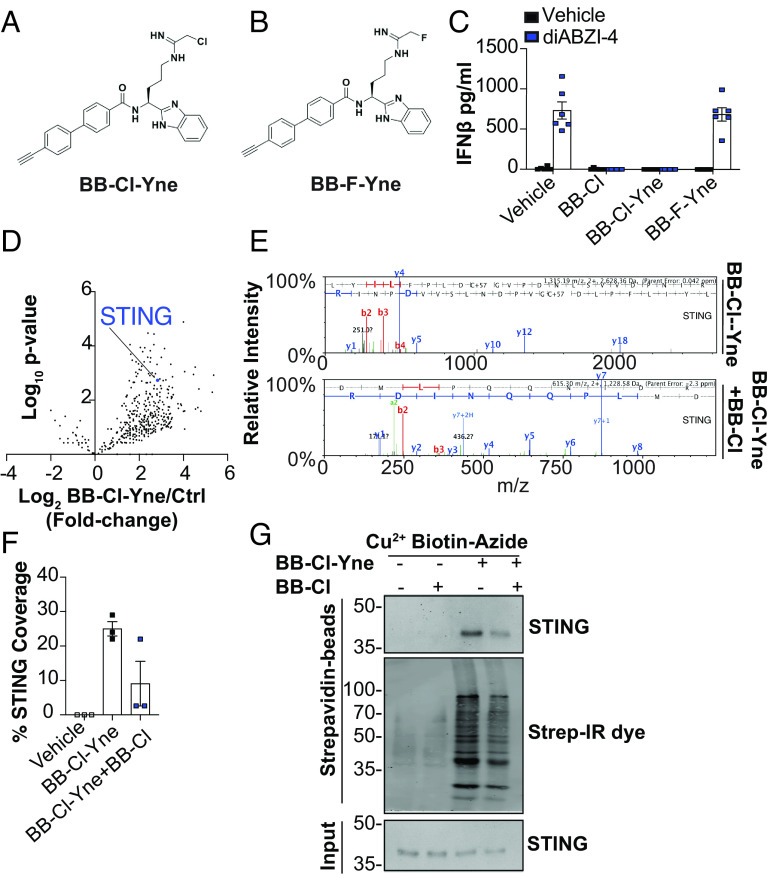
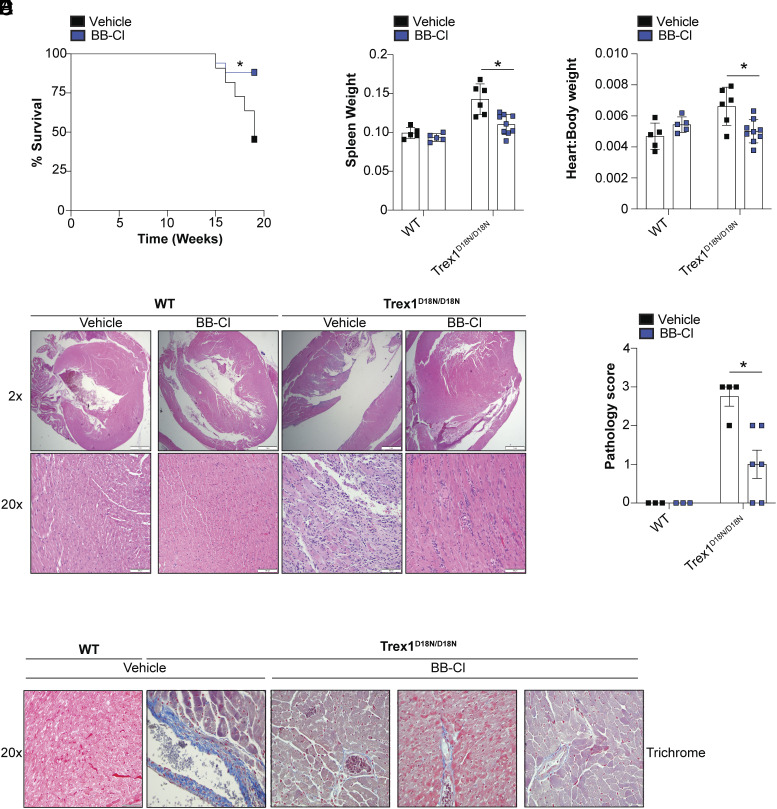
Stimulator of interferon genes (STING) is an essential adaptor protein required for the inflammatory response to cytosolic DNA. dsDNA activates cGAS to generate cGAMP, which binds and activates STING triggering a conformational change, oligomerization, and the IRF3- and NFκB-dependent transcription of type I Interferons (IFNs) and inflammatory cytokines, as well as the activation of autophagy. Aberrant activation of STING is now linked to a growing number of both rare as well as common chronic inflammatory diseases. Here, we identify and characterize a potent small-molecule inhibitor of STING. This compound, BB-Cl-amidine inhibits STING signaling and production of type I IFNs, IFN-stimulated genes (ISGs) and NFκB-dependent cytokines, but not other pattern recognition receptors. In vivo, BB-Cl-amidine alleviated pathology resulting from accrual of cytosolic DNA in Trex-1 mutant mice. Mechanistically BB-Cl-amidine inhibited STING oligomerization through modification of Cys. Collectively, our work uncovers an approach to inhibit STING activation and highlights the potential of this strategy for the treatment of STING-driven inflammatory diseases.
干扰素基因刺激物(STING)是一种必需的衔接蛋白,对于细胞质 DNA 引发的炎症反应是必需的。dsDNA 激活 cGAS 生成 cGAMP,后者结合并激活 STING,引发构象改变、寡聚化以及 IRF3 和 NFκB 依赖性的 I 型干扰素(IFNs)和炎症细胞因子的转录,以及自噬的激活。STING 的异常激活现在与越来越多的罕见和常见的慢性炎症性疾病有关。在这里,我们鉴定并表征了一种有效的 STING 小分子抑制剂。该化合物 BB-Cl-amidine 抑制 STING 信号转导和 I 型 IFNs、IFN 刺激基因(ISGs)和 NFκB 依赖性细胞因子的产生,但不抑制其他模式识别受体。在体内,BB-Cl-amidine 减轻了 Trex-1 突变小鼠中细胞质 DNA 积累引起的病理。从机制上讲,BB-Cl-amidine 通过修饰半胱氨酸抑制 STING 寡聚化。总的来说,我们的工作揭示了一种抑制 STING 激活的方法,并强调了该策略治疗 STING 驱动的炎症性疾病的潜力。