Department of Respiratory Medicine and Clinical Immunology, Graduate School of Medicine, Osaka University, 2-2 Yamadaoka, Suita, Osaka, 565-0871, Japan.
Department of Hematology and Oncology, Graduate School of Medicine, Osaka University, 2-2 Yamadaoka, Suita, Osaka, 565-0871, Japan.
BMC Infect Dis. 2023 Aug 8;23(1):517. doi: 10.1186/s12879-023-08510-7.
Mycobacterium obuense (M. obuense) is a rapidly growing mycobacterium (RGM) which has been considered nonpathogenic. Here, we report a case of disseminated non-tuberculous mycobacterial (NTM) infection caused by M. obuense in an immunocompromised patient.
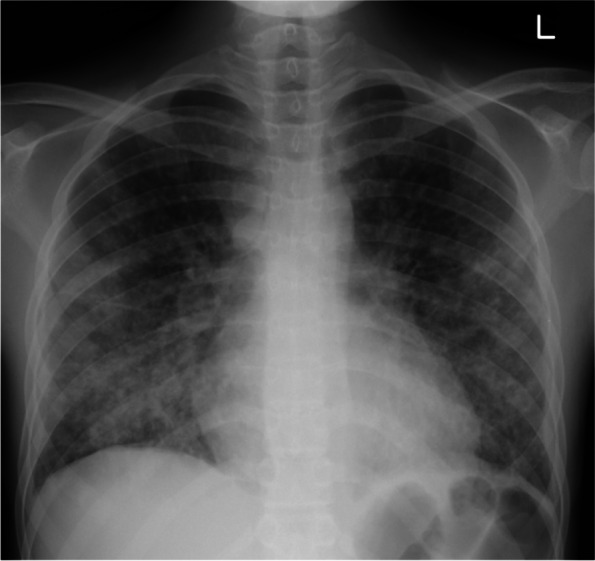
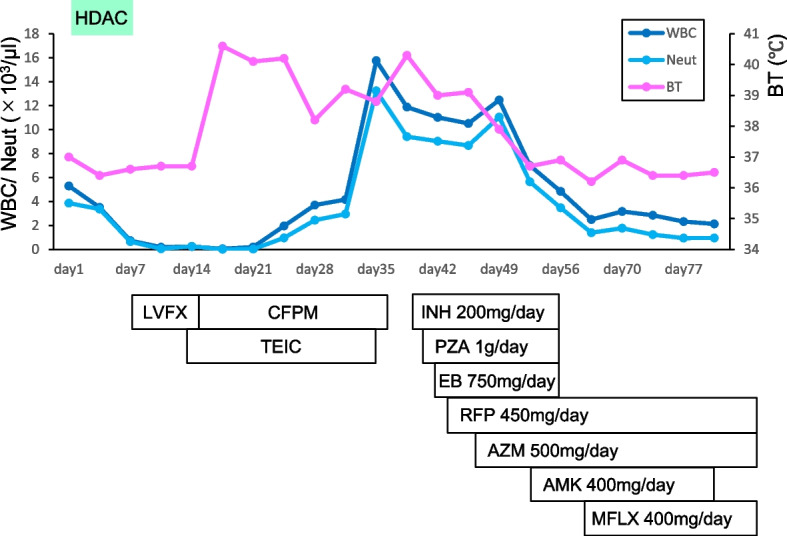
A 16-year-old boy was referred to our hospital due to acute myeloid leukemia. During the treatment of leukemia, the patient exhibited continuous fever, and diffuse miliary nodules with random distribution were found on chest computed tomography. Repeated examinations of bacterial culture tests revealed sputum and urine samples to be smear-positive for acid-fast bacillus, and blood culture from a peripherally inserted central catheter line showed the growth of NTM. The NTM species was identified as M. obuense by mass spectrometry and confirmed by genome sequencing. Combination therapy with amikacin, rifampicin, azithromycin, and moxifloxacin significantly improved the patient's symptoms and radiological findings.
We report a case of disseminated NTM infection caused by M. obuense for which combination anti-microbial therapy was effective. An immunocompromised host indwelling catheter is at risk of RGM bloodstream infections. Although relatively rare, M. obuense may be considered as a potential pathogen causing infectious diseases, especially in high-risk patients.
龟分枝杆菌(M.obuense)是一种快速生长的分枝杆菌(RGM),被认为是非致病性的。在这里,我们报告了一例免疫功能低下患者由龟分枝杆菌引起的播散性非结核分枝杆菌(NTM)感染。
一名 16 岁男孩因急性髓系白血病被转至我院。在白血病治疗过程中,患者出现持续发热,胸部计算机断层扫描显示弥漫性粟粒性结节,分布随机。反复进行细菌培养检查显示痰和尿液样本抗酸杆菌涂片阳性,外周置入中心静脉导管血培养显示分枝杆菌生长。质谱法鉴定分枝杆菌物种为龟分枝杆菌,并通过基因组测序得到确认。阿米卡星、利福平、阿奇霉素和莫西沙星联合治疗显著改善了患者的症状和影像学表现。
我们报告了一例由龟分枝杆菌引起的播散性 NTM 感染病例,联合抗菌治疗有效。免疫功能低下宿主留置导管有发生 RGM 血流感染的风险。虽然相对罕见,但龟分枝杆菌可能被认为是一种引起传染病的潜在病原体,尤其是在高危患者中。