Schindler-Gmelch Lena, Capito Klara, Steudte-Schmiedgen Susann, Kirschbaum Clemens, Berking Matthias
Department of Clinical Psychology and Psychotherapy, Friedrich-Alexander-Universität Erlangen-Nürnberg, Erlangen, Germany.
Department of Psychotherapy and Psychosomatic Medicine, Faculty of Medicine, Technische Universität Dresden, Dresden, Germany.
Curr Neuropharmacol. 2024;22(10):1697-1719. doi: 10.2174/1570159X21666230807112425.
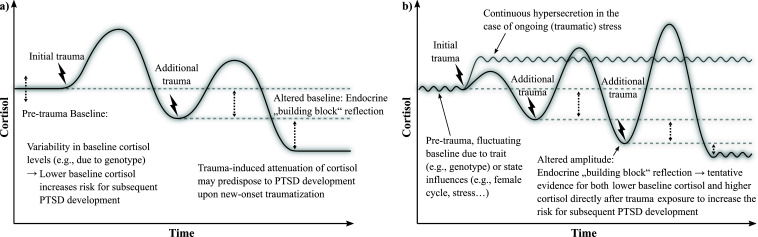
Cortisol is one of the most extensively studied biomarkers in the context of trauma/posttraumatic stress disorder (PTSD). For more than a decade, hair cortisol concentrations (HCC) have been measured in this context, leading to a two-staged dysregulation model. Specifically, an elevated secretion during/immediately after trauma exposure eventually reverts to hyposecretion with increasing time since trauma exposure has been postulated.
The aim of our systematic review was to re-evaluate the two-staged secretion model with regard to the accumulated diagnostic, prognostic, and intervention-related evidence of HCC in lifetime trauma exposure and PTSD. Further, we provide an overview of open questions, particularly with respect to reporting standards and quality criteria.
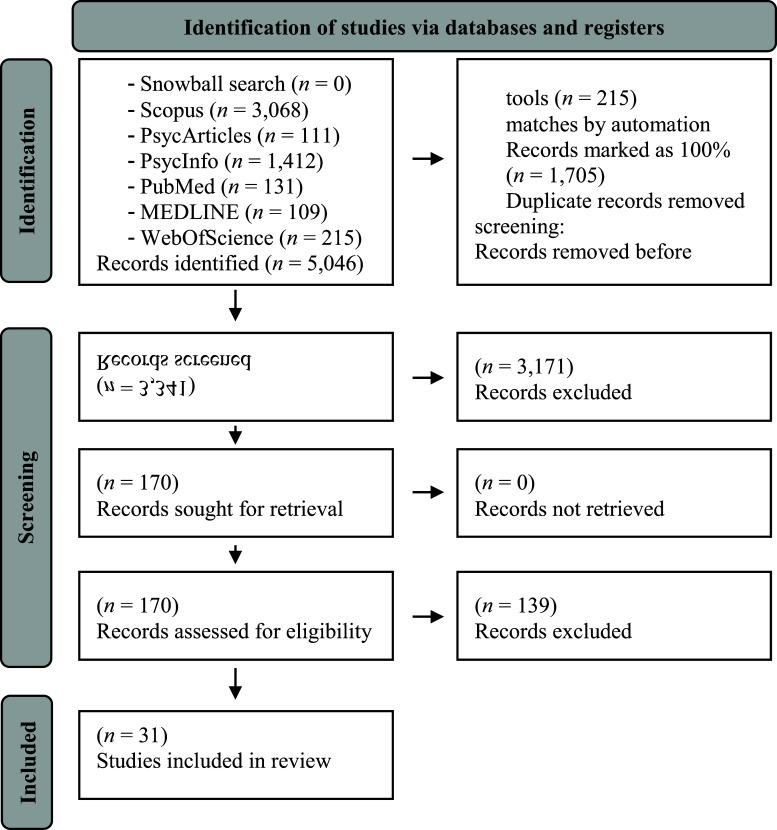
A systematic literature search yielded 5,046 records, of which 31 studies were included.
For recent/ongoing (traumatic) stress, the predictions of cortisol hypersecretion could be largely confirmed. However, for the assumed hyposecretion temporally more distal to trauma exposure, the results are more ambiguous. As most studies did not report holistic overviews of trauma history and confounding influences, this may largely be attributable to methodological limitations. Data on the prognostic and intervention-related benefits of HCC remain sparse.
Over the last decade, important insights could be gained about long-term cortisol secretion patterns following lifetime trauma exposure and PTSD. This systematic review integrates these insights into an updated secretion model for trauma/PTSD. We conclude with recommendations for improving HCC research in the context of trauma/PTSD in order to answer the remaining open questions.
在创伤/创伤后应激障碍(PTSD)的背景下,皮质醇是研究最为广泛的生物标志物之一。十多年来,一直在该背景下测量头发皮质醇浓度(HCC),从而形成了一个两阶段失调模型。具体而言,有人提出,创伤暴露期间/之后立即分泌升高,最终会随着创伤暴露时间的增加而恢复为分泌不足。
我们系统评价的目的是根据HCC在终生创伤暴露和PTSD中的累积诊断、预后及干预相关证据,重新评估两阶段分泌模型。此外,我们概述了一些未解决的问题,特别是在报告标准和质量标准方面。
系统文献检索得到5046条记录,其中纳入31项研究。
对于近期/正在发生的(创伤性)应激,皮质醇分泌过多的预测在很大程度上得到了证实。然而,对于假设的创伤暴露后时间更远的分泌不足,结果则更为模糊。由于大多数研究没有报告创伤史和混杂影响的整体概况,这在很大程度上可能归因于方法学上的局限性。关于HCC的预后和干预相关益处的数据仍然很少。
在过去十年中,我们对终生创伤暴露和PTSD后的长期皮质醇分泌模式有了重要认识。本系统评价将这些认识整合到一个更新的创伤/PTSD分泌模型中。我们最后提出了在创伤/PTSD背景下改进HCC研究的建议,以回答其余未解决的问题。