Tagworks Pharmaceuticals, Toernooiveld 1, 6525 ED Nijmegen, The Netherlands.
SyMO-Chem, Den Dolech 2, 5612 AZ Eindhoven, The Netherlands.
Theranostics. 2023 Jul 9;13(12):4004-4015. doi: 10.7150/thno.84865. eCollection 2023.
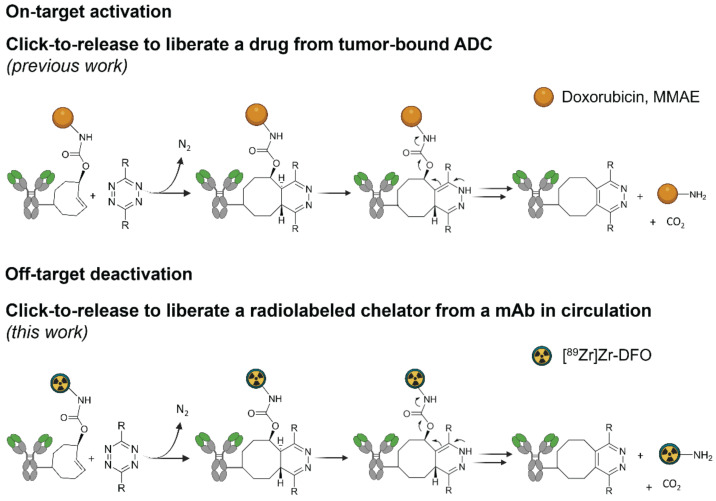
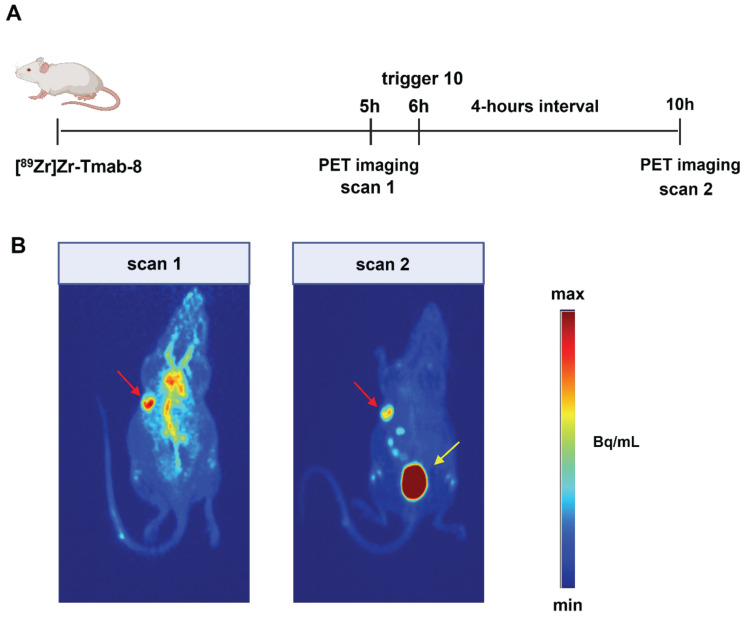
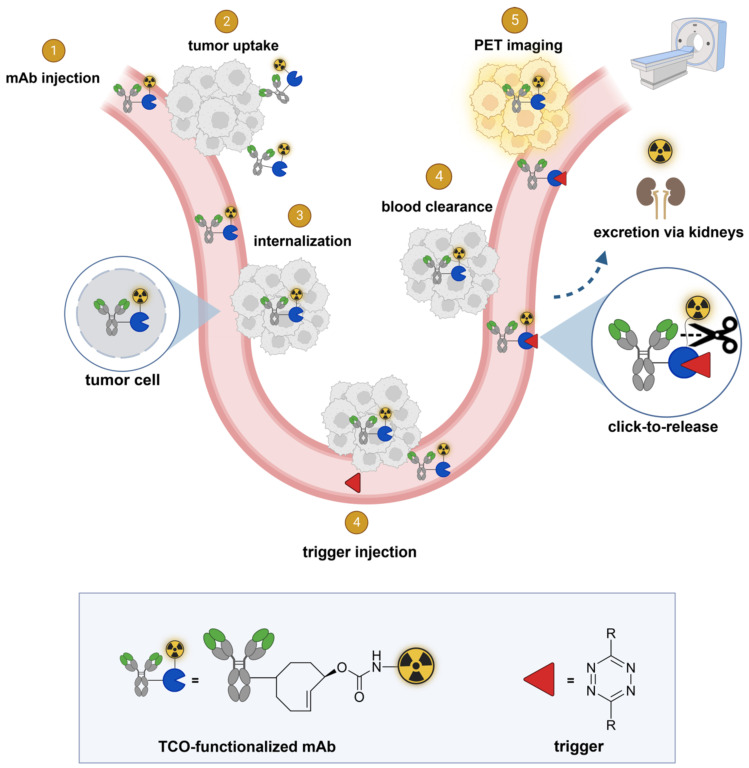
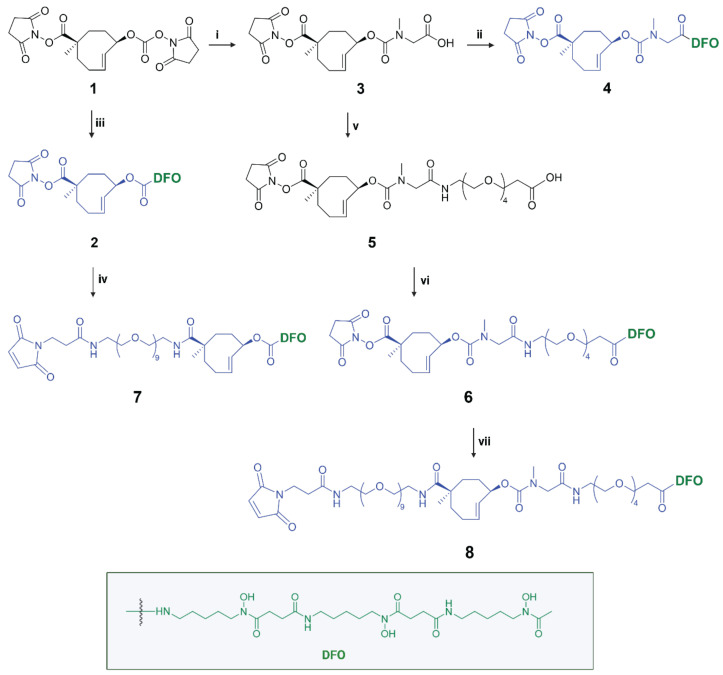
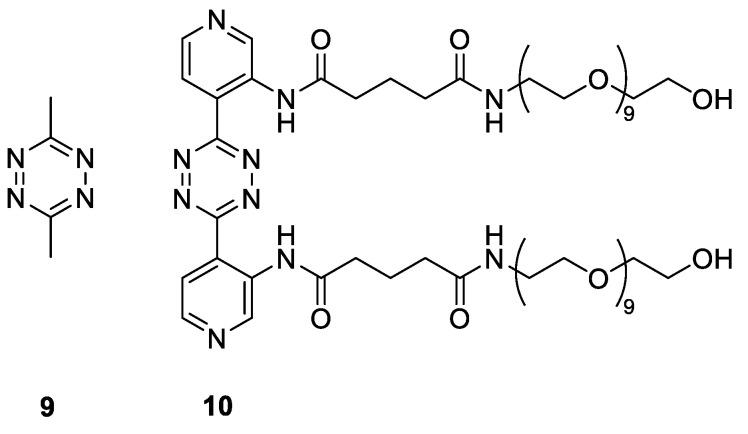
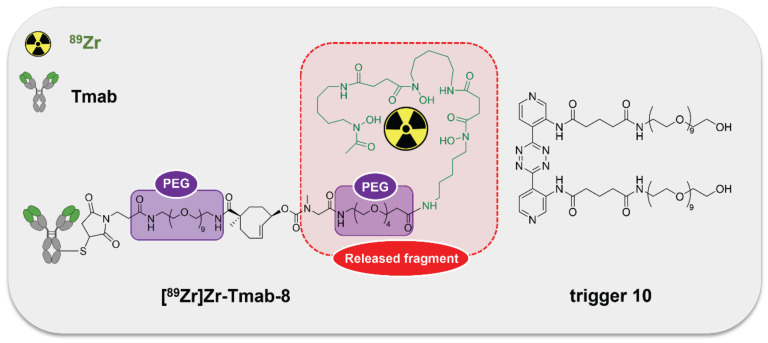
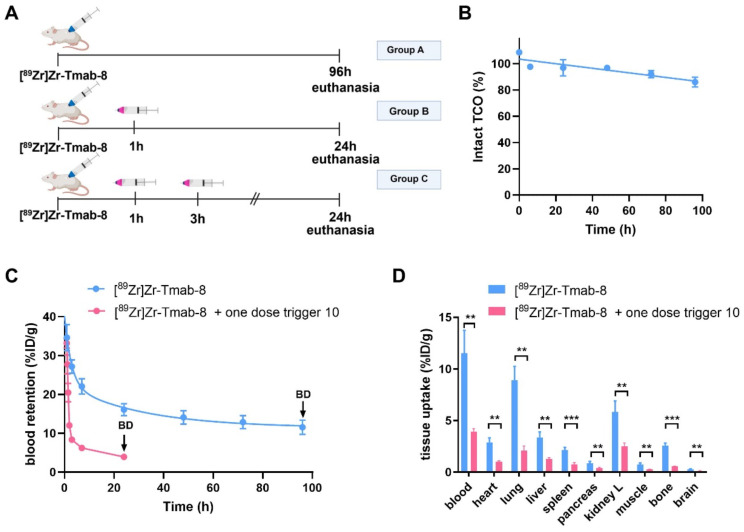
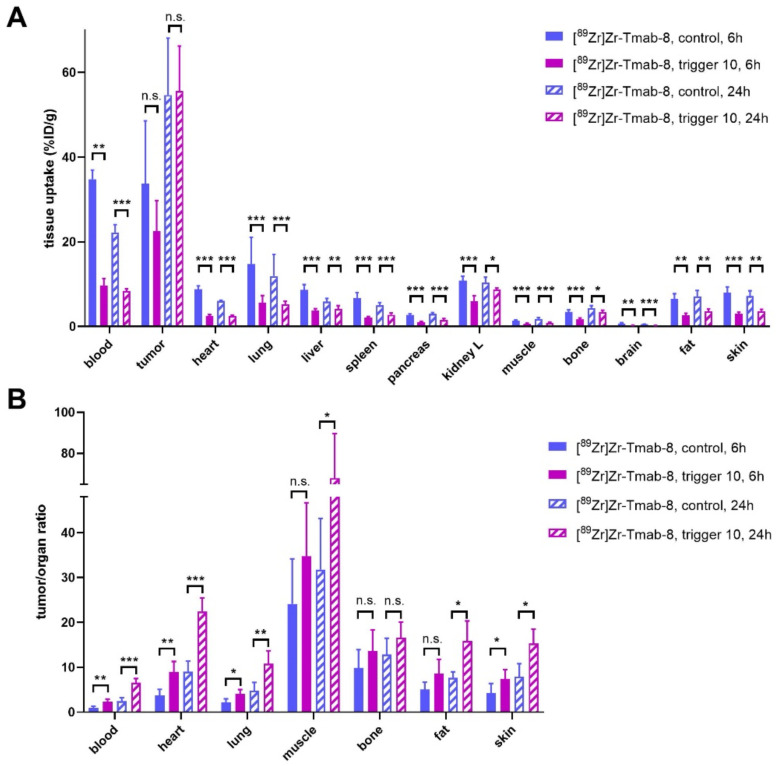
One of the main challenges of PET imaging with Zr-labeled monoclonal antibodies (mAbs) remains the long blood circulation of the radiolabeled mAbs, leading to high background signals, decreasing image quality. To overcome this limitation, here we report the use of a bioorthogonal linker cleavage approach (click-to-release chemistry) to selectively liberate [Zr]Zr-DFO from -cyclooctene-functionalized trastuzumab (TCO-Tmab) in blood, following the administration of a tetrazine compound (trigger) in BT-474 tumor-bearing mice. We created a series of TCO-DFO constructs and evaluated their performance in [Zr]Zr-DFO release from Tmab using different trigger compounds. The behavior of the best performing [Zr]Zr-TCO-Tmab was studied in healthy mice first to determine the optimal dose of the trigger. To find the optimal time for the trigger administration, the rate of [Zr]Zr-TCO-Tmab internalization was studied in BT-474 cancer cells. Finally, the trigger was administered 6 h or 24 h after [Zr]Zr-TCO-Tmab- administration in tumor-bearing mice to liberate the [Zr]Zr-DFO fragment. PET scans were obtained of tumor-bearing mice that received the trigger 6 h post-[Zr]Zr-TCO-Tmab administration. The [Zr]Zr-TCO-Tmab and trigger pair with the best properties exhibited 83% release in 50% mouse plasma. In tumor-bearing mice the tumor-blood ratios were markedly increased from 1.0 ± 0.4 to 2.3 ± 0.6 (p = 0.0057) and from 2.5 ± 0.7 to 6.6 ± 0.9 (p < 0.0001) when the trigger was administered at 6 h and 24 h post-mAb, respectively. Same day PET imaging clearly showed uptake in the tumor combined with a strongly reduced background due to the fast clearance of the released [Zr]Zr-DFO-containing fragment from the circulation through the kidneys. This is the first demonstration of the use of -cyclooctene-tetrazine click-to-release chemistry to release a radioactive chelator from a mAb in mice to increase tumor-to-blood ratios. Our results suggest that click-cleavable radioimmunoimaging may allow for substantially shorter intervals in PET imaging with full mAbs, reducing radiation doses and potentially even enabling same day imaging.
Zr 标记单克隆抗体(mAbs)的 PET 成像的主要挑战之一仍然是放射性标记 mAbs 的长血液循环,导致高背景信号,降低图像质量。为了克服这一限制,我们在这里报告了使用生物正交连接体切割方法(点击释放化学),在 BT-474 荷瘤小鼠中给予四嗪化合物(触发)后,从 -环辛烯功能化曲妥珠单抗(TCO-Tmab)中选择性释放 [Zr]Zr-DFO。 我们创建了一系列 TCO-DFO 构建体,并使用不同的触发化合物评估了它们从 Tmab 中释放 [Zr]Zr-DFO 的性能。首先在健康小鼠中研究了表现最佳的 [Zr]Zr-TCO-Tmab 的行为,以确定触发的最佳剂量。为了找到给药的最佳时间,研究了 BT-474 癌细胞中 [Zr]Zr-TCO-Tmab 的内化速率。最后,在荷瘤小鼠中给予 [Zr]Zr-TCO-Tmab 后 6 小时或 24 小时给予触发剂以释放 [Zr]Zr-DFO 片段。对接受触发剂后 6 小时给予 [Zr]Zr-TCO-Tmab 的荷瘤小鼠进行了 PET 扫描。具有最佳性能的 [Zr]Zr-TCO-Tmab 和触发剂对在 50%的小鼠血浆中显示出 83%的释放。在荷瘤小鼠中,当在 mAb 给药后 6 小时和 24 小时分别给予触发剂时,肿瘤与血液的比值从 1.0 ± 0.4 显著增加到 2.3 ± 0.6(p = 0.0057)和从 2.5 ± 0.7 增加到 6.6 ± 0.9(p < 0.0001)。同一天的 PET 成像清楚地显示了肿瘤的摄取,同时由于通过肾脏从循环中快速清除释放的含有 [Zr]Zr-DFO 的片段,背景信号大大降低。这是首次证明在小鼠中使用 -环辛烯-四嗪点击释放化学从 mAb 中释放放射性螯合剂以增加肿瘤与血液的比值。我们的结果表明,点击可裂解放射性免疫成像可能允许使用完整的 mAb 进行 PET 成像的时间间隔大大缩短,从而降低辐射剂量,甚至有可能实现同一天成像。