Division of Molecular Virology and Genetics, Joint Research Center for Human Retrovirus Infection, Kumamoto University , Kumamoto, Japan.
Graduate School of Medical Sciences, Kumamoto University , Kumamoto, Japan.
mBio. 2023 Aug 31;14(4):e0078223. doi: 10.1128/mbio.00782-23. Epub 2023 Aug 9.
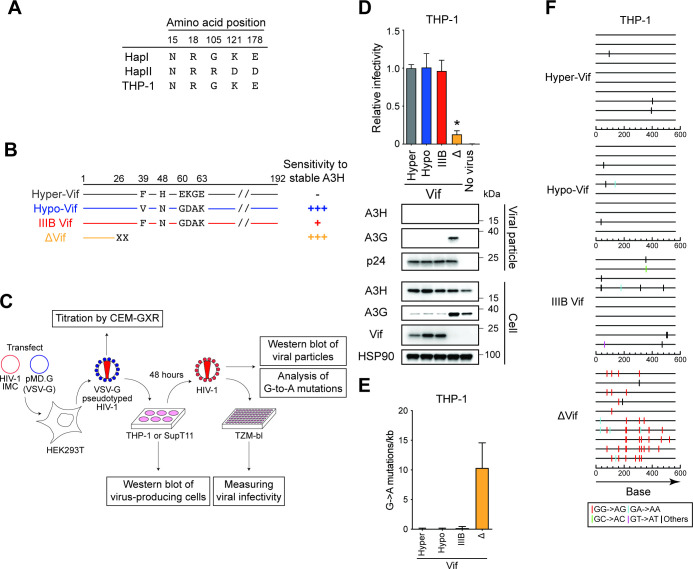
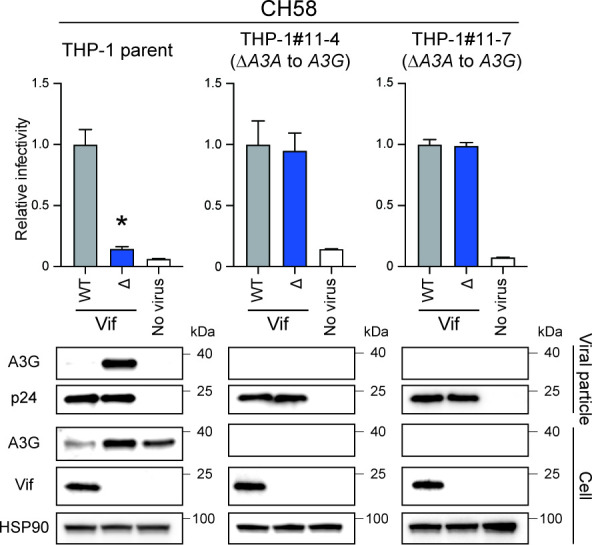
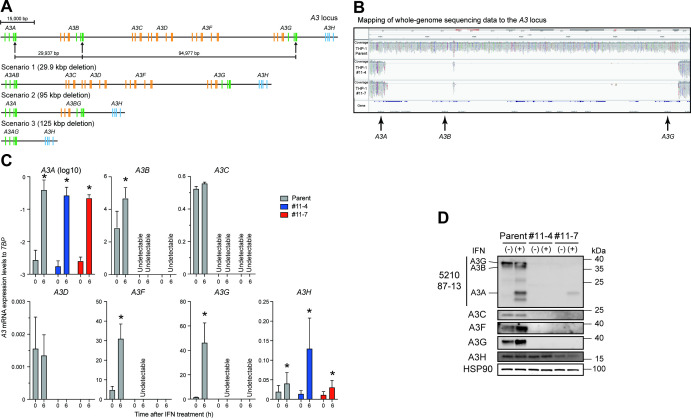
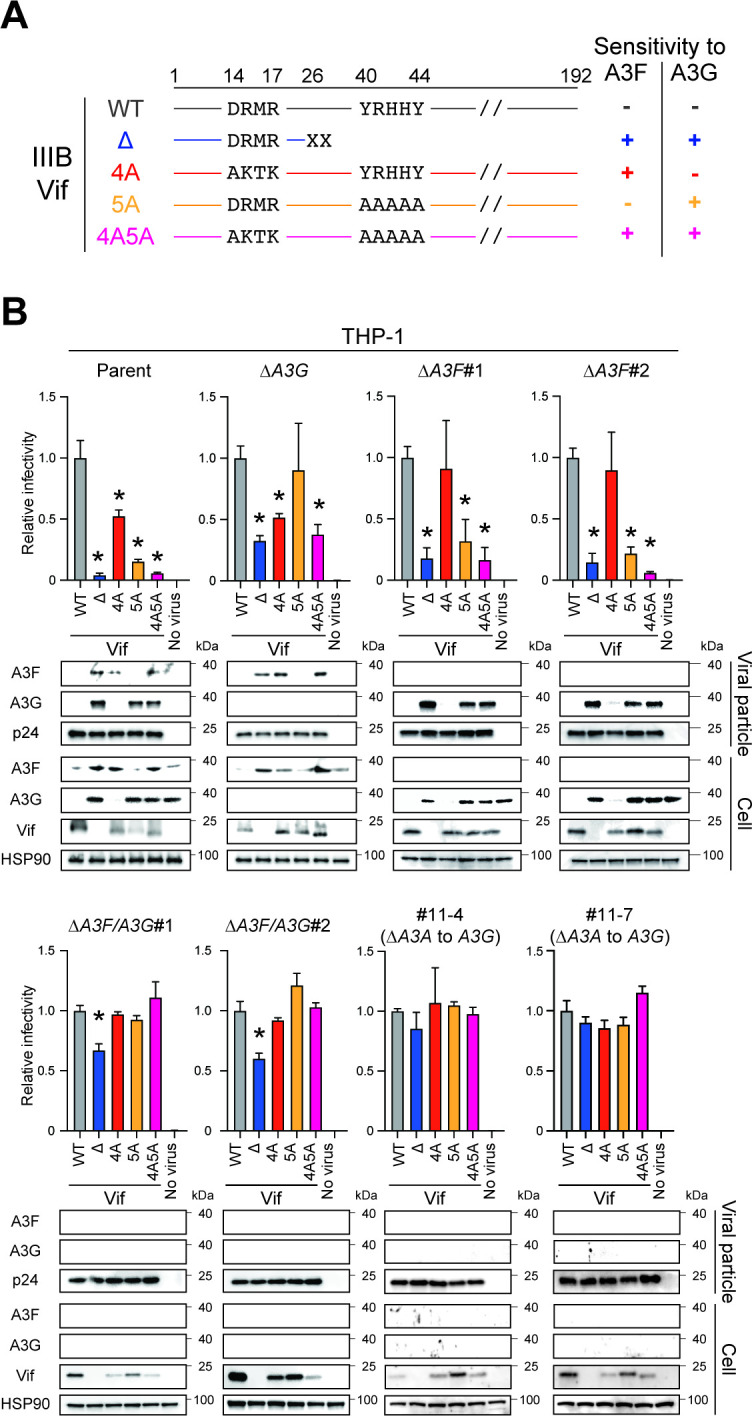
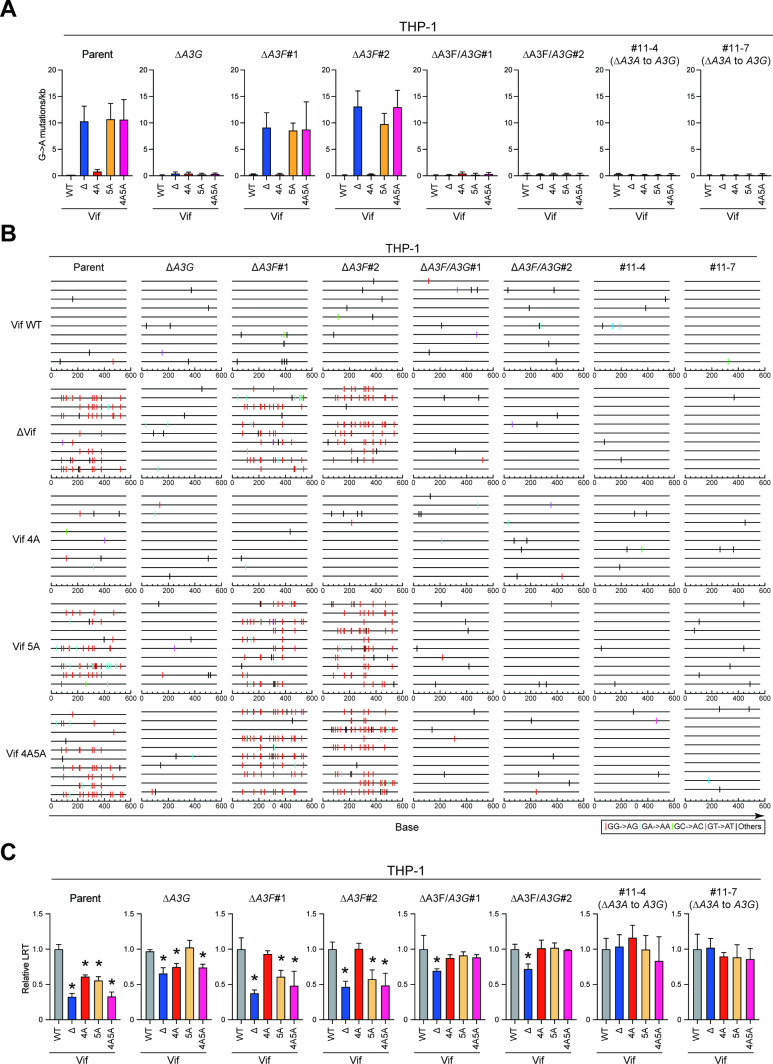
HIV-1 must overcome multiple innate antiviral mechanisms to replicate in CD4 T lymphocytes and macrophages. Previous studies have demonstrated that the apolipoprotein B mRNA editing enzyme polypeptide-like 3 (APOBEC3, A3) family of proteins (at least A3D, A3F, A3G, and stable A3H haplotypes) contribute to HIV-1 restriction in CD4 T lymphocytes. Virus-encoded virion infectivity factor (Vif) counteracts this antiviral activity by degrading A3 enzymes allowing HIV-1 replication in infected cells. In addition to A3 proteins, Vif also targets other cellular proteins in CD4 T lymphocytes, including PPP2R5 proteins. However, whether Vif primarily degrades only A3 proteins during viral replication is currently unknown. Herein, we describe the development and characterization of -, -, and -to--null THP-1 cells. In comparison to Vif-proficient HIV-1, Vif-deficient viruses have substantially reduced infectivity in parental and -null THP-1 cells, and a more modest decrease in infectivity in -null cells. Remarkably, disruption of A3A-A3G protein expression completely restores the infectivity of Vif-deficient viruses in THP-1 cells. These results indicate that the primary function of Vif during infectious HIV-1 production from THP-1 cells is the targeting and degradation of A3 enzymes. IMPORTANCE HIV-1 Vif neutralizes the HIV-1 restriction activity of A3 proteins. However, it is currently unclear whether Vif has additional essential cellular targets. To address this question, we disrupted 3 to 3 genes in the THP-1 myeloid cell line using CRISPR and compared the infectivity of wild-type HIV-1 and Vif mutants with the selective A3 neutralization activities. Our results demonstrate that the infectivity of Vif-deficient HIV-1 and the other Vif mutants is fully restored by ablating the expression of cellular A3A to A3G proteins. These results indicate that A3 proteins are the only essential target of Vif that is required for fully infectious HIV-1 production from THP-1 cells.
HIV-1 必须克服多种先天抗病毒机制才能在 CD4 T 淋巴细胞和巨噬细胞中复制。先前的研究表明,载脂蛋白 B mRNA 编辑酶多肽样 3(APOBEC3,A3)家族蛋白(至少 A3D、A3F、A3G 和稳定的 A3H 单倍型)有助于 CD4 T 淋巴细胞中的 HIV-1 限制。病毒编码的病毒感染性因子(Vif)通过降解 A3 酶来拮抗这种抗病毒活性,从而允许 HIV-1 在感染细胞中复制。除了 A3 蛋白,Vif 还靶向 CD4 T 淋巴细胞中的其他细胞蛋白,包括 PPP2R5 蛋白。然而,Vif 在病毒复制过程中是否主要仅降解 A3 蛋白目前尚不清楚。在此,我们描述了 -、- 和 - 到 -- 缺失 THP-1 细胞的开发和表征。与具有 Vif 的 HIV-1 相比,Vif 缺失的病毒在亲本和 - 缺失 THP-1 细胞中的感染性显着降低,在 - 缺失细胞中的感染性降低程度较小。值得注意的是,破坏 A3A-A3G 蛋白表达完全恢复了 Vif 缺失病毒在 THP-1 细胞中的感染性。这些结果表明,Vif 在从 THP-1 细胞产生感染性 HIV-1 过程中的主要功能是靶向和降解 A3 酶。重要性 HIV-1 Vif 中和了 A3 蛋白对 HIV-1 的限制活性。然而,目前尚不清楚 Vif 是否还有其他必需的细胞靶标。为了解决这个问题,我们使用 CRISPR 在髓样细胞系 THP-1 中敲除了 3 到 3 个基因,并比较了野生型 HIV-1 和 Vif 突变体的感染性与选择性 A3 中和活性。我们的结果表明,通过消除细胞 A3A 至 A3G 蛋白的表达,Vif 缺失的 HIV-1 和其他 Vif 突变体的感染性完全恢复。这些结果表明,A3 蛋白是 Vif 唯一必需的靶标,是从 THP-1 细胞中产生完全感染性 HIV-1 所必需的。