Pernet Vincent, Joly Sandrine, Spiegel Sebastian, Meli Ivo, Idriss Sherif, Maigler Frank, Mdzomba Julius Baya, Roenneke Anna K, Franceschini Alessandra, Silvestri Ludovico, Pavone Francesco S, Calamai Martino, Schindowski Katharina, Chan Andrew
Department of Neurology, Inselspital, Bern University Hospital, University of Bern, Bern, Switzerland.
Center for experimental neurology (ZEN), Bern University Hospital, University of Bern, Bern, Switzerland.
Cell Death Discov. 2023 Aug 9;9(1):290. doi: 10.1038/s41420-023-01588-7.
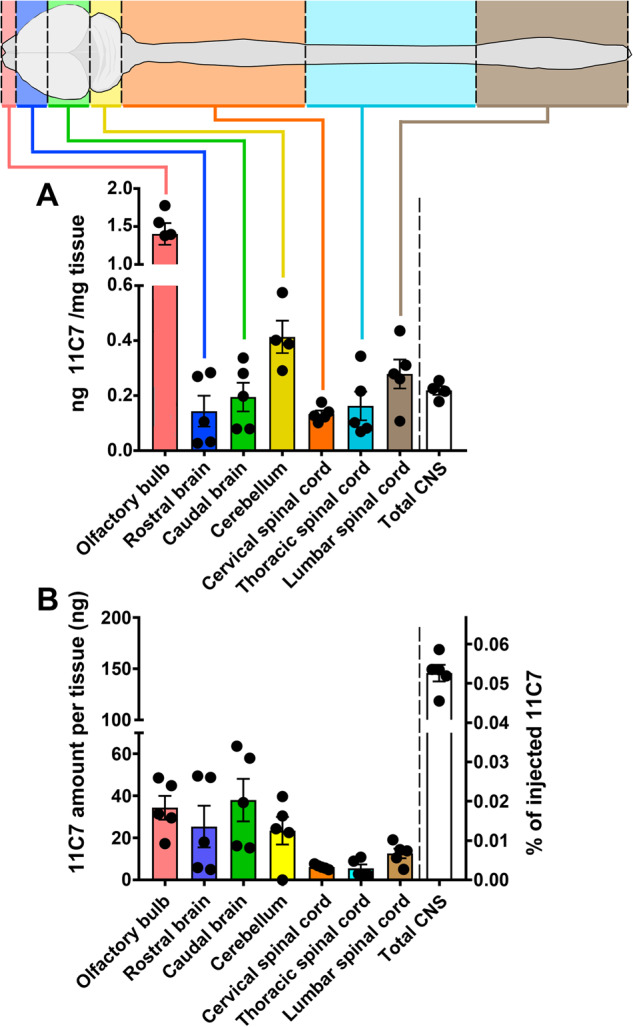
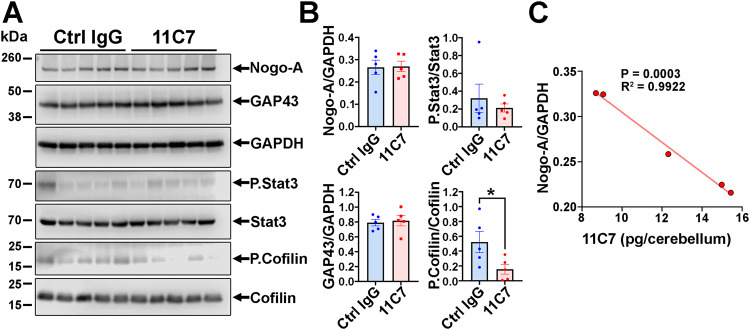
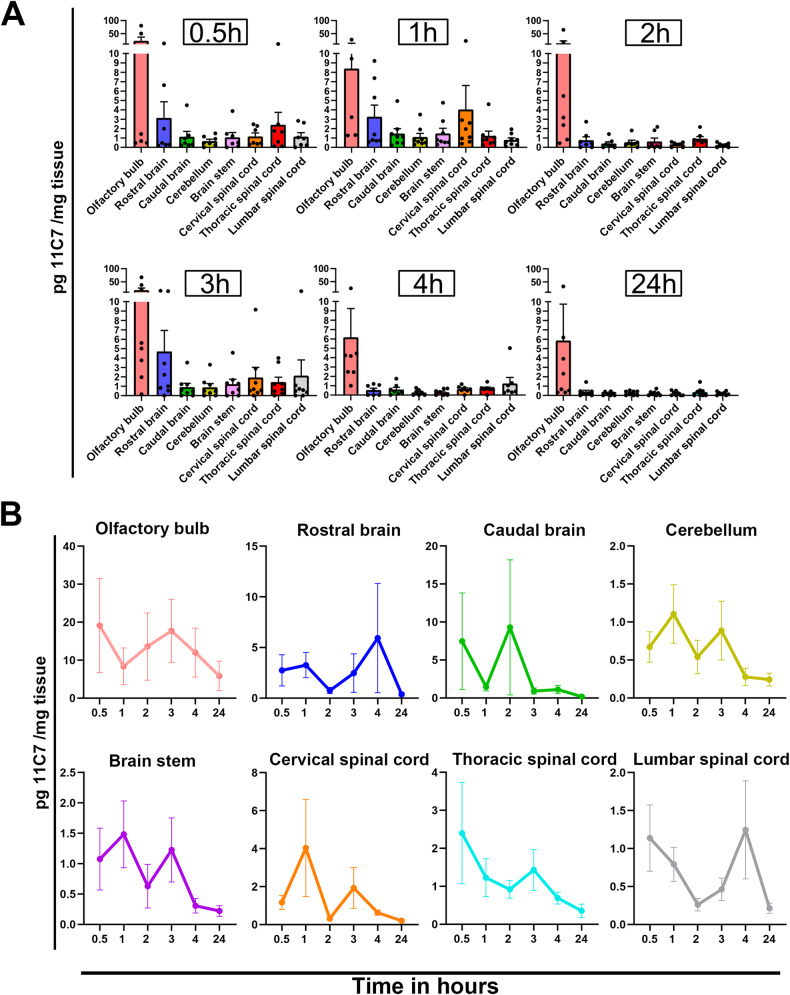
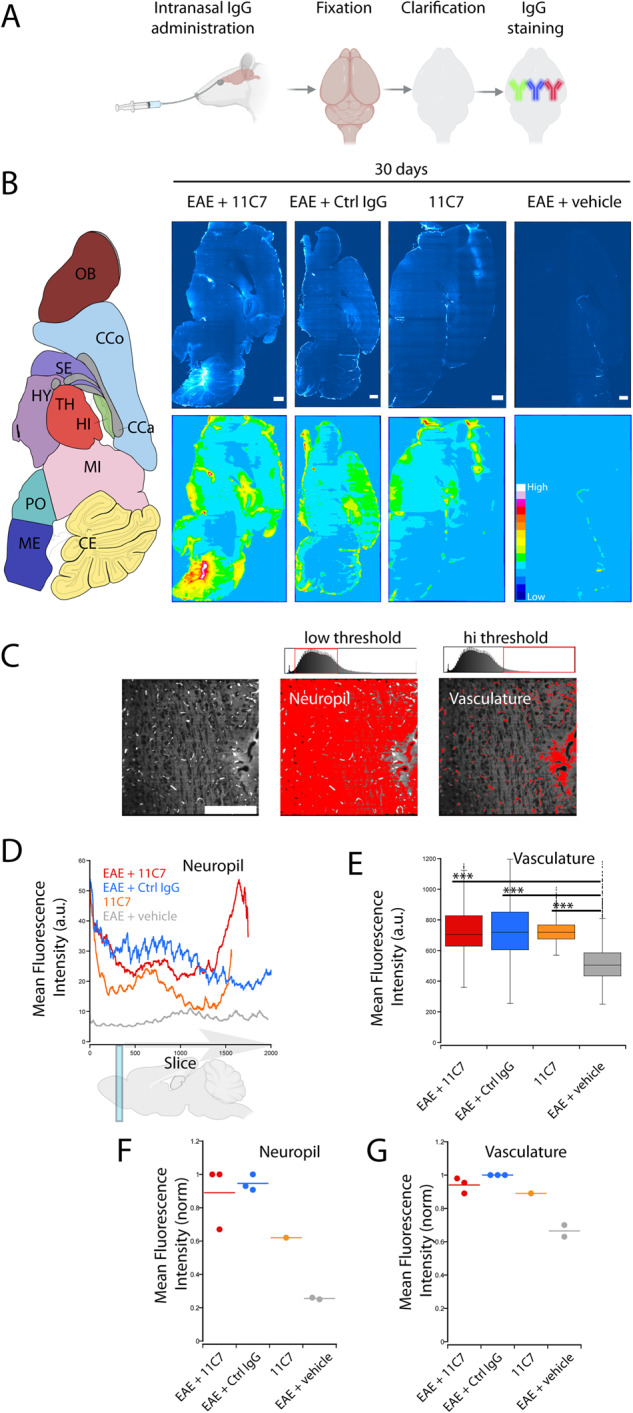
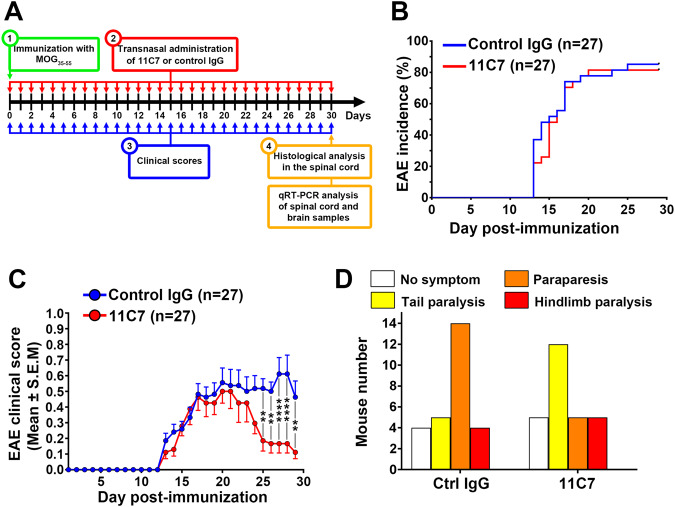
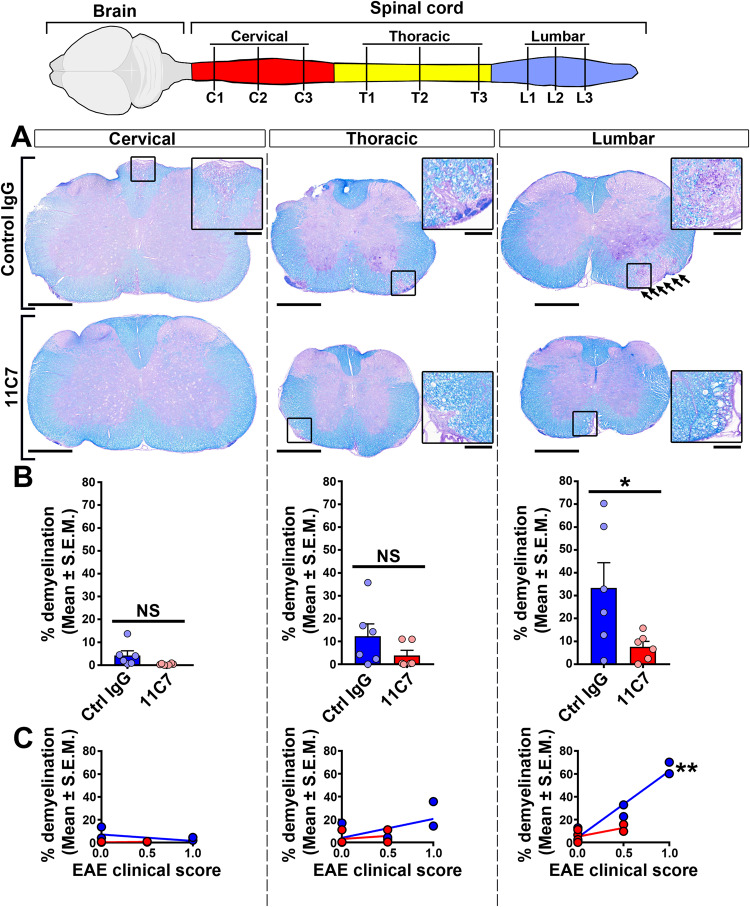
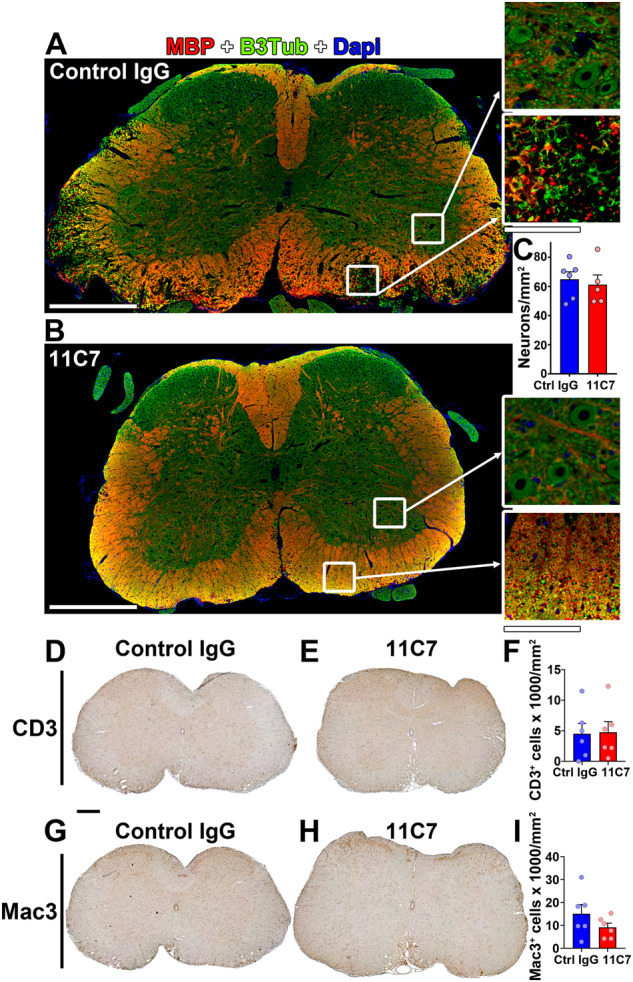
Systemic administration of Nogo-A-neutralizing antibody ameliorates experimental autoimmune encephalomyelitis (EAE), an animal model of multiple sclerosis. However, the blood-brain barrier (BBB) is a major obstacle limiting the passage of systemically applied antibody to the CNS. To bypass the BBB, in the present study we tested the intranasal route of administration by targeting the olfactory mucosa with the Nogo-A-blocking antibody 11C7 mAb in myelin oligodendrocyte glycoprotein-induced EAE. Antibodies were specifically administered onto the olfactory mucosa using a microcatheter. Antibody distribution was examined in the CNS by ELISA and light-sheet microscopy. The effects of 11C7 mAb on Nogo-A signaling were assessed by Western blotting. EAE-induced deficits were monitored daily. Demyelination was observed on spinal cord histological sections. Gene expression changes were followed by trancriptomic analyses. A sensitive capture ELISA revealed a rapid and widespread distribution of 11C7 mAb in the CNS, including the olfactory bulb, the cerebellum and the lumbar spinal cord, but not in the CSF. Light-sheet microscopy allowed to observe antibody accumulation in the parenchyma, thus demonstrating nose-to-brain transfer of IgG. At the functional level, the widespread penetration of 11C7 mAb in the CNS, including the thoracolumbar spinal cord, resulted in the improvement of motor symptoms and in the preservation of myelin in the spinal cord of EAE mice. This was accompanied by Nogo-A signaling downregulation, as reflected by the decreased level of phosphorylated cofilin observed by Western blotting in the cerebellum. In the brain of EAE score-matched animals, 11C7 modified the expression of genes that can influence neurotransmission and cognitive functions, independently of the demyelination phenotype in the spinal cord. In conclusion, our data show the feasibility of olfactory mucosa-directed administration for the delivery of therapeutic antibodies targeting CNS antigens in EAE mice.
全身给予Nogo-A中和抗体可改善实验性自身免疫性脑脊髓炎(EAE),这是一种多发性硬化症的动物模型。然而,血脑屏障(BBB)是限制全身应用抗体进入中枢神经系统(CNS)的主要障碍。为了绕过血脑屏障,在本研究中,我们在髓鞘少突胶质细胞糖蛋白诱导的EAE中,通过用Nogo-A阻断抗体11C7单克隆抗体靶向嗅黏膜来测试鼻内给药途径。使用微导管将抗体特异性地施用于嗅黏膜。通过酶联免疫吸附测定(ELISA)和光片显微镜检查中枢神经系统中的抗体分布。通过蛋白质印迹法评估11C7单克隆抗体对Nogo-A信号传导的影响。每天监测EAE诱导的功能缺陷。在脊髓组织学切片上观察到脱髓鞘。通过转录组分析追踪基因表达变化。一种灵敏的捕获ELISA显示11C7单克隆抗体在中枢神经系统中迅速广泛分布,包括嗅球、小脑和腰脊髓,但在脑脊液中未检测到。光片显微镜能够观察到实质内的抗体积累,从而证明了IgG从鼻到脑的转移。在功能水平上,11C7单克隆抗体在中枢神经系统(包括胸腰段脊髓)中的广泛渗透导致运动症状改善,并使EAE小鼠脊髓中的髓鞘得以保留。这伴随着Nogo-A信号传导下调,如通过蛋白质印迹法在小脑中观察到的磷酸化丝切蛋白水平降低所反映的那样。在EAE评分匹配的动物脑中,11C7改变了可影响神经传递和认知功能的基因表达,而与脊髓中的脱髓鞘表型无关。总之,我们的数据表明,在EAE小鼠中,针对中枢神经系统抗原的治疗性抗体通过嗅黏膜定向给药是可行的。