Lacalle Laura, Martínez-Shaw Melissa Liher, Marín Yolanda, Sánchez-Sandoval Yolanda
Department of Psychology, University of Cádiz, Cádiz, Spain.
Instituto de Investigación e Innovación Biomédica de Cádiz (INiBICA), Cádiz, Spain.
Front Psychol. 2023 Jul 25;14:1216825. doi: 10.3389/fpsyg.2023.1216825. eCollection 2023.
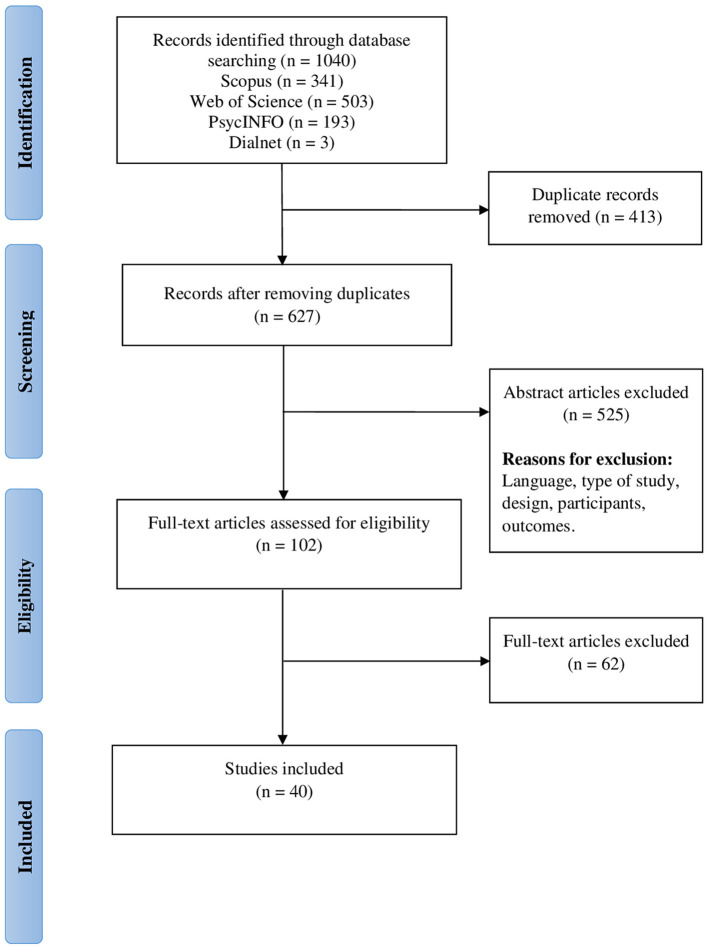
Preterm birth (before 37 weeks of gestational age) is associated with certain risks to child development. The aim of this systematic review was to summarize available and updated empirical evidence on prematurity as a risk factor for cognitive development in school age. Thus, we attempted to identify similarities and differences with the full-term population and to point out possible risk or protective factors among the biological, psychosocial and family variables. The conceptualization and methodology of this review followed the PRISMA recommendations. The search was carried out in Web of Science, Scopus, PsycInfo, and Dialnet databases, in May 2022. The search was limited to journal articles, published between 2012 and 2022, in English and Spanish. Research articles selected were those focused on the intelligence quotient (IQ) of preterm children aged 6-12 years. The review included studies with cross-sectional or longitudinal cohorts, compared to a control group of children born at term or to standardized scales. The quality of evidence of the selected studies was verified with the Mixed Methods Appraisal Tool (MMAT). The initial search identified 1,040 articles. Forty articles met the inclusion criteria and were finally included in this review. These studies involved 5,396 preterm children from 37 different cohorts. Despite the diversity found among the results, in general, total IQ scores were within the normative mean for premature children; however, compared to their full-term peers, these scores were lower. The most studied variables in relation to IQ are perinatal (e.g., gestational age and birth weight) and family (e.g., socioeconomic level and education level of the mother). Recent studies corroborate that premature birth affects cognitive development in school age, and identify associated perinatal and family variables.
https://www.crd.york.ac.uk/PROSPERO/display_record.php?RecordID=337371; identifier: CRD42022337371.
早产(孕龄37周之前)与儿童发育的某些风险相关。本系统评价的目的是总结关于早产作为学龄期认知发育风险因素的现有和最新实证证据。因此,我们试图找出与足月儿群体的异同,并指出生物、心理社会和家庭变量中可能的风险或保护因素。本评价的概念化和方法遵循PRISMA建议。检索于2022年5月在Web of Science、Scopus、PsycInfo和Dialnet数据库中进行。检索仅限于2012年至2022年期间以英文和西班牙文发表的期刊文章。所选研究文章聚焦于6至12岁早产儿童的智商(IQ)。该评价纳入了与足月出生儿童对照组或标准化量表相比的横断面或纵向队列研究。使用混合方法评估工具(MMAT)验证所选研究的证据质量。初步检索识别出1040篇文章。40篇文章符合纳入标准,最终被纳入本评价。这些研究涉及来自37个不同队列的5396名早产儿童。尽管结果存在差异,但总体而言,早产儿童的总智商得分在正常均值范围内;然而,与足月同龄人相比,这些得分较低。与智商相关研究最多的变量是围产期(如孕龄和出生体重)和家庭(如母亲的社会经济水平和教育水平)。近期研究证实早产会影响学龄期的认知发育,并识别出相关的围产期和家庭变量。
https://www.crd.york.ac.uk/PROSPERO/display_record.php?RecordID=337371;标识符:CRD42022337371。