Department of Bioscience and Engineering, Molecular Cell Biology Laboratory, College of System Engineering and Science, Shibaura Institute of Technology, Fukasaku, Minuma-ku, Saitama, Japan.
Department of Systems Engineering and Science, Molecular Cell Biology Laboratory, Shibaura Institute of Technology, Graduate School of Engineering and Science, Fukasaku, Minuma-ku, Saitama, Japan.
PLoS One. 2023 Aug 10;18(8):e0289534. doi: 10.1371/journal.pone.0289534. eCollection 2023.
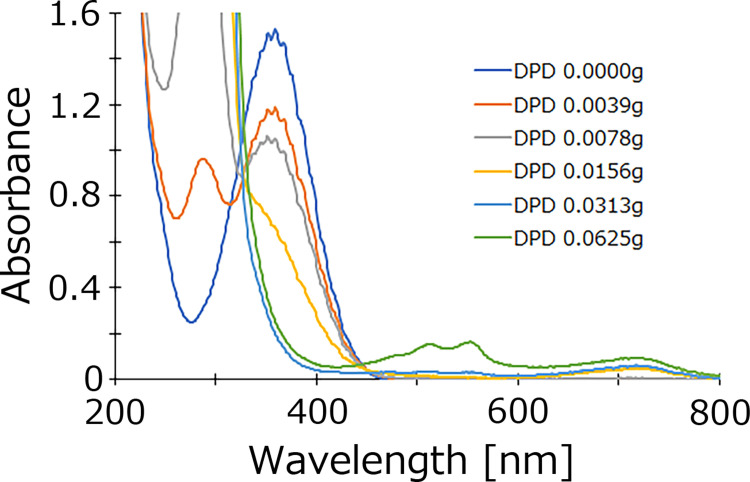
With the spread of coronavirus infections, the demand for disinfectants, such as a sodium chlorite solution, has increased worldwide. Sodium chlorite solution is a food additive and is used in a wide range of applications. There is evidence that chlorous acid or sodium chlorite is effective against various bacteria, but the actual mechanism is not well understood. One reason for this is that the composition of chlorine-based compounds contained in sodium chlorite solutions has not been clearly elucidated. The composition can vary greatly with pH. In addition, the conventional iodometric titration method, the N,N-diethyl-p-phenylenediamine sulfate (DPD) method and the absorption photometric method cannot clarify the composition. In this study, we attempted to elucidate the composition of a sodium chlorite solution using absorption spectrophotometry and ion chromatography (IC). IC is excellent for qualitative and quantitative analysis of trace ions. Through this, we aimed to develop an evaluation method that allows anyone to easily determine the bactericidal power of sodium chlorite. We found that commercially available sodium chlorite solution is 80% pure, with the remaining 20% potentially containing sodium hypochlorite solution. In addition, when sodium chlorite solution became acidified, its absorption spectrum exhibited a peak at 365 nm. Sodium chlorite solution is normally alkaline, and it cannot be measured by the DPD method, which is only applicable under acidic conditions. The presence of a peak at 365 nm indicates that the acidic sodium chlorite solution contains species with oxidizing power. On the other hand, the IC analysis showed a gradual decrease in chlorite ions in the acidic sodium chlorite solution. These results indicate that chlorite ions may not react with this DPD reagent, and other oxidizing species may be present in the acidic sodium chlorite solution. In summary, when a sodium chlorite solution becomes acidic, chlorine-based oxidizing species produce an absorption peak at 365 nm. Sodium hypochlorite and sodium chlorite solutions have completely different IC peak profiles. Although there are still many problems to be solved, we believe that the use of IC will facilitate the elucidation of the composition of sodium chlorite solution and its sterilization mechanism.
随着冠状病毒感染的传播,全球对消毒剂(如次氯酸钠溶液)的需求有所增加。次氯酸钠溶液是一种食品添加剂,广泛应用于各种领域。有证据表明,亚氯酸或次氯酸钠对各种细菌有效,但实际机制尚不清楚。原因之一是次氯酸钠溶液中所含的含氯化合物的组成尚未明确阐明。其组成随 pH 值变化而有很大差异。此外,常规的碘量滴定法、N,N-二乙基对苯二胺硫酸盐(DPD)法和吸收光度法均无法阐明其组成。在这项研究中,我们尝试使用吸收分光光度法和离子色谱法(IC)来阐明次氯酸钠溶液的组成。IC 非常适合痕量离子的定性和定量分析。通过这种方法,我们旨在开发一种评估方法,使任何人都可以轻松确定次氯酸钠的杀菌能力。我们发现市售的次氯酸钠溶液纯度为 80%,其余 20%可能含有次氯酸钠溶液。此外,当次氯酸钠溶液酸化时,其吸收光谱在 365nm 处出现一个峰值。次氯酸钠溶液通常呈碱性,无法用仅适用于酸性条件下的 DPD 法进行测量。365nm 处出现峰值表明酸性次氯酸钠溶液中含有具有氧化能力的物质。另一方面,IC 分析显示酸性次氯酸钠溶液中的亚氯酸盐离子逐渐减少。这些结果表明,亚氯酸盐离子可能不会与该 DPD 试剂反应,酸性次氯酸钠溶液中可能存在其他氧化物质。综上所述,当次氯酸钠溶液呈酸性时,含氯的氧化物质会在 365nm 处产生吸收峰。次氯酸钠和次氯酸钠溶液的 IC 峰形完全不同。虽然还有许多问题需要解决,但我们相信使用 IC 将有助于阐明次氯酸钠溶液的组成及其杀菌机制。