Department of Medicine, Massachusetts General Hospital Cancer Center, Boston, MA.
Harvard Medical School, Boston, MA.
JCO Precis Oncol. 2023 Aug;7:e2200594. doi: 10.1200/PO.22.00594.
Increased awareness of the distinct tumor biology for adolescents and young adults (AYAs) with cancer has led to improvement in outcomes for this population. However, in cholangiocarcinoma (CCA), a paucity of data exist on the AYA population. To our knowledge, we present the largest study to date on AYA disease biology, treatment patterns, and survival outcomes in CCA.
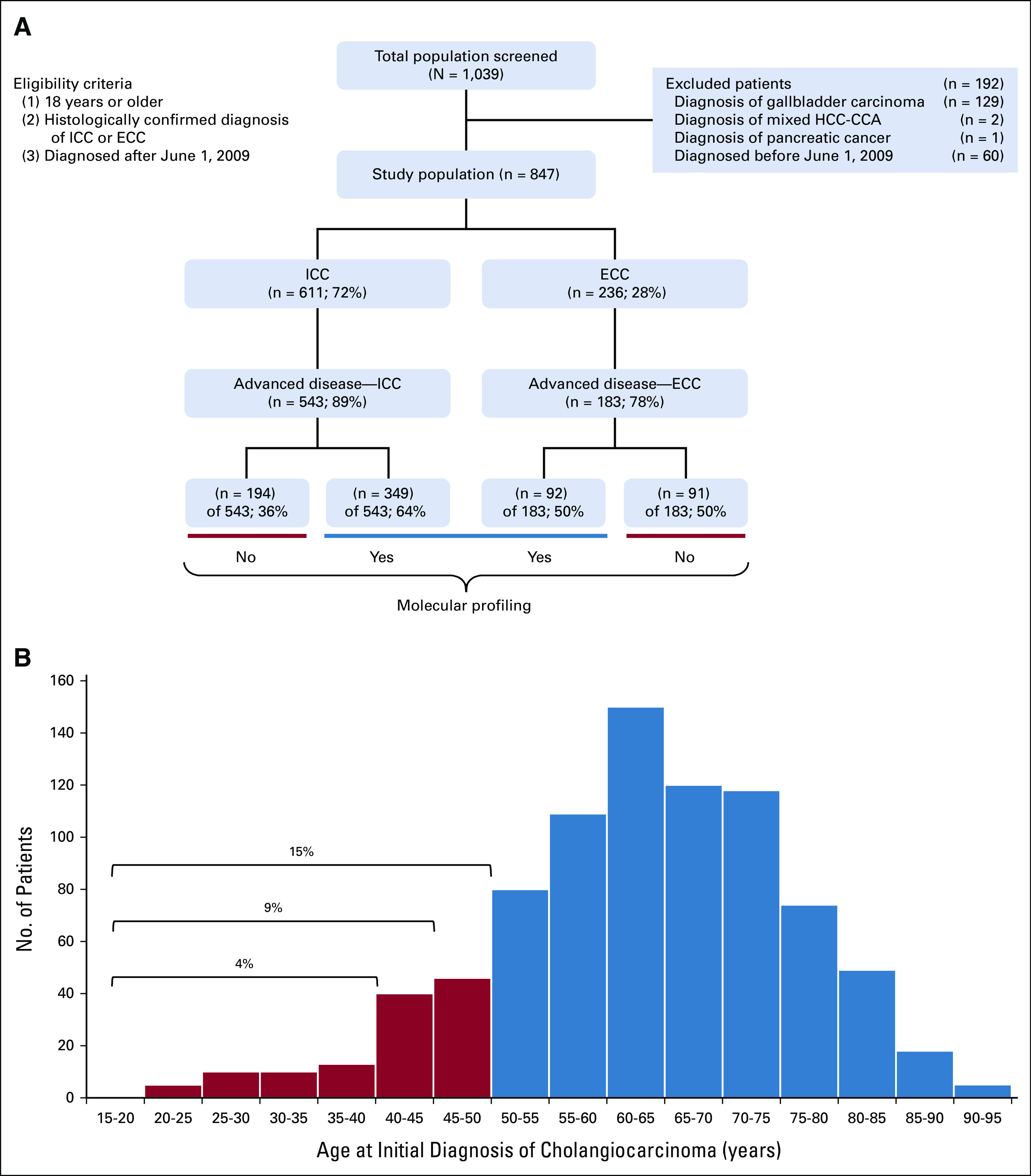
A multi-institutional cohort of patients with CCA diagnosed with intrahepatic cholangiocarcinoma (ICC) or extrahepatic cholangiocarcinoma (ECC) was used for analysis. Retrospective chart review was conducted on patients who were 50 years old and younger (young; n = 124) and older than 50 years (older; n = 723).
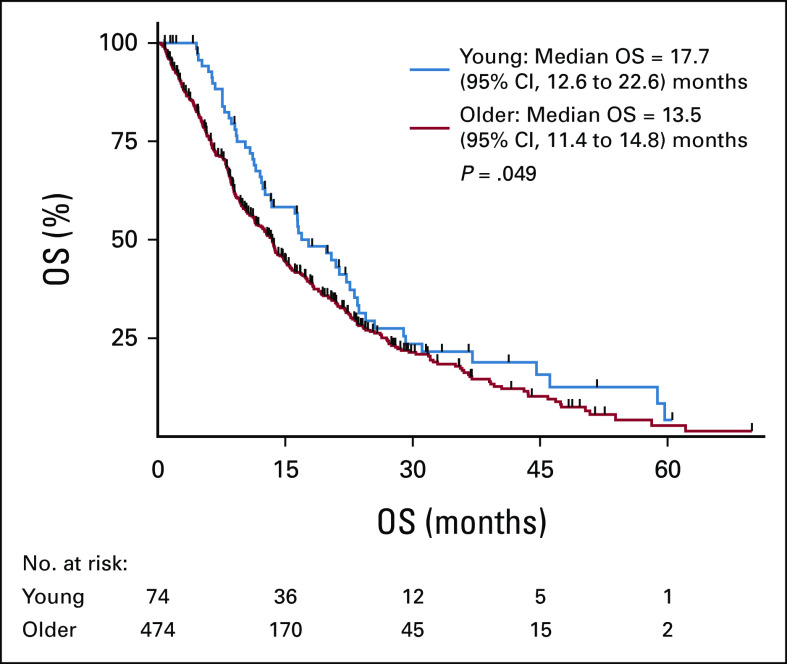
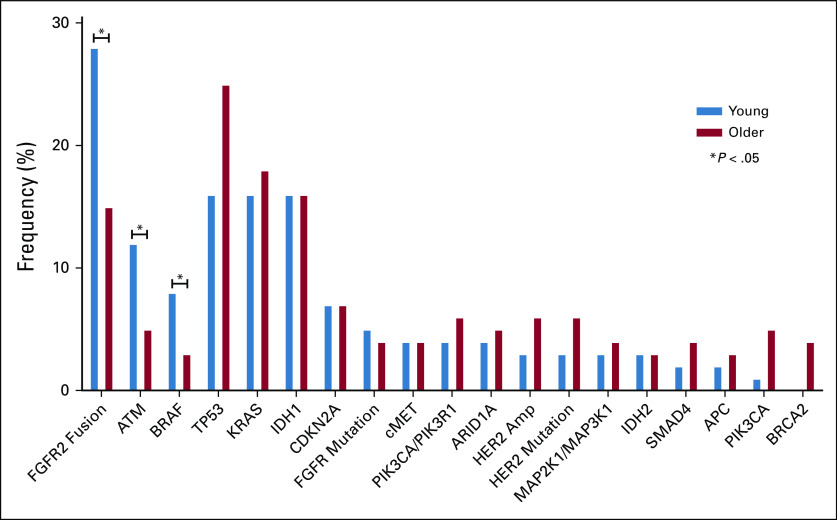
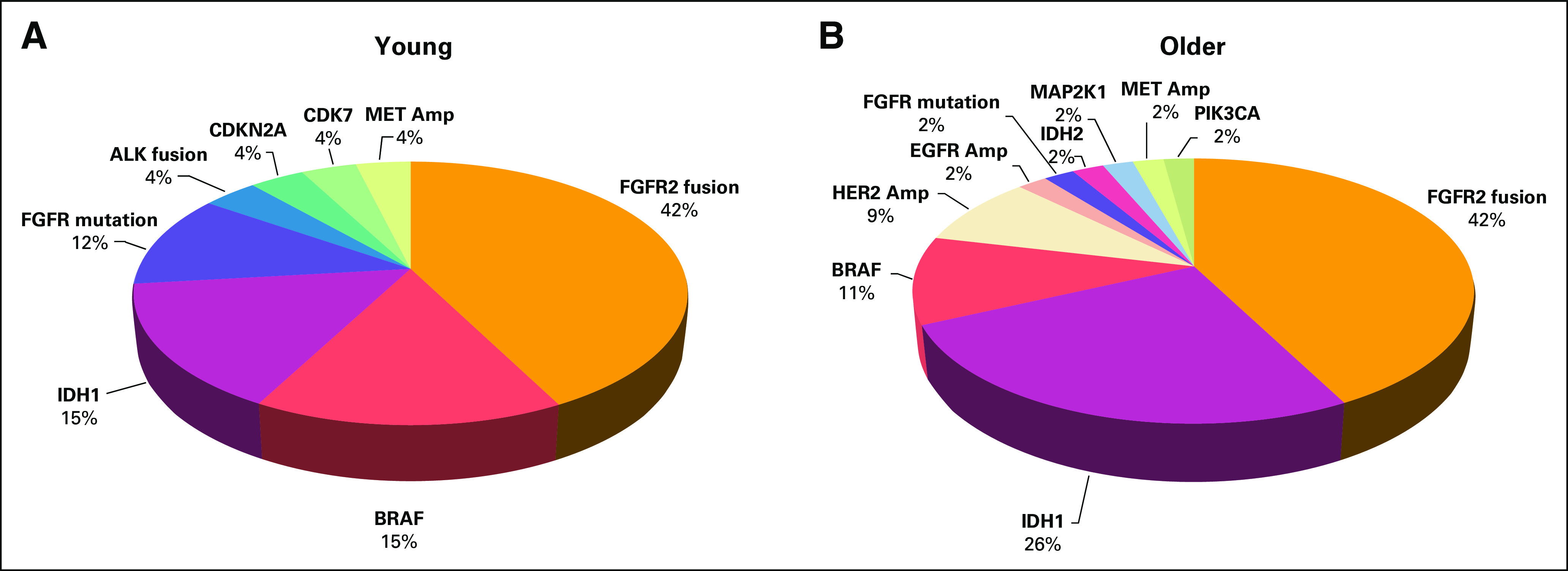
Among 1,039 patients screened, 847 patients met eligibility (72% ICC, 28% ECC). Young patients had a larger median tumor size at resection compared with older patients (4.2 3.6 cm; .048), more commonly had N1 disease (65% 43%; .040), and were more likely to receive adjuvant therapy (odds ratio, 4.0; 95% CI, 1.64 to 9.74). Tumors of young patients were more likely to harbor an fusion, mutation, or mutation ( .05 for each). Young patients were more likely to receive palliative systemic therapy (96% 69%; .001), targeted therapy (23% 8%; .001), and treatment on a clinical trial (31% 19%; .004). Among patients who presented with advanced disease, young patients had a higher median overall survival compared with their older counterparts (17.7 13.5 months; 95% CI, 12.6 to 22.6 11.4 to 14.8; .049).
Young patients with CCA had more advanced disease at resection, more commonly received both adjuvant and palliative therapies, and demonstrated improved survival compared with older patients. Given the low clinical trial enrollment and poor outcomes among some AYA cancer populations, data to the contrary in CCA are highly encouraging.
提高对青少年和年轻成人(AYA)癌症独特肿瘤生物学的认识,改善了该人群的预后。然而,在胆管癌(CCA)中,关于 AYA 人群的数据很少。据我们所知,我们目前报告了最大的关于 CCA 中 AYA 疾病生物学、治疗模式和生存结果的研究。
对诊断为肝内胆管癌(ICC)或肝外胆管癌(ECC)的 CCA 多机构队列患者进行分析。对年龄在 50 岁及以下的(年轻组;n=124)和年龄超过 50 岁的(老年组;n=723)患者进行回顾性病历复查。
在筛选的 1039 名患者中,847 名符合入选标准(72%ICC,28%ECC)。与老年患者相比,年轻患者的肿瘤在切除时的中位肿瘤大小更大(4.2 3.6cm;P=0.048),更常见 N1 期疾病(65% 43%;P=0.040),且更有可能接受辅助治疗(比值比,4.0;95%CI,1.64 9.74)。年轻患者的肿瘤更可能存在 融合、 突变或 突变(每项 P=0.05)。年轻患者更有可能接受姑息性全身治疗(96% 69%;P<0.001)、靶向治疗(23% 8%;P<0.001)和临床试验治疗(31% 19%;P=0.004)。在有晚期疾病表现的患者中,年轻患者的总生存中位数高于老年患者(17.7 13.5 个月;95%CI,12.6 22.6 11.4 14.8;P=0.049)。
在接受切除术的 CCA 年轻患者中,疾病更晚期,更常接受辅助和姑息治疗,与老年患者相比,生存得到改善。鉴于一些 AYA 癌症人群的临床试验参与率低和预后不良,CCA 中与此相反的数据非常令人鼓舞。