Bednarek Radosław, Wojkowska Dagmara W, Braun Marcin, Watala Cezary, Salifu Moro O, Swiatkowska Maria, Babinska Anna
Department of Cytobiology and Proteomics, Chair of Biomedical Sciences, Medical University of Lodz, ul. Mazowiecka 6/8, 92-215, Lodz, Poland.
Department of Haemostasis and Haemostatic Disorders, Medical University of Lodz, Lodz, Poland.
Cancer Cell Int. 2023 Aug 11;23(1):160. doi: 10.1186/s12935-023-03023-4.
The F11R/JAM-A cell adhesion protein was examined as the therapeutic target in triple negative breast cancer (TNBC) with the use of the peptide antagonist to F11R/JAM-A, that previously inhibited the early stages of breast cancer metastasis in vitro.
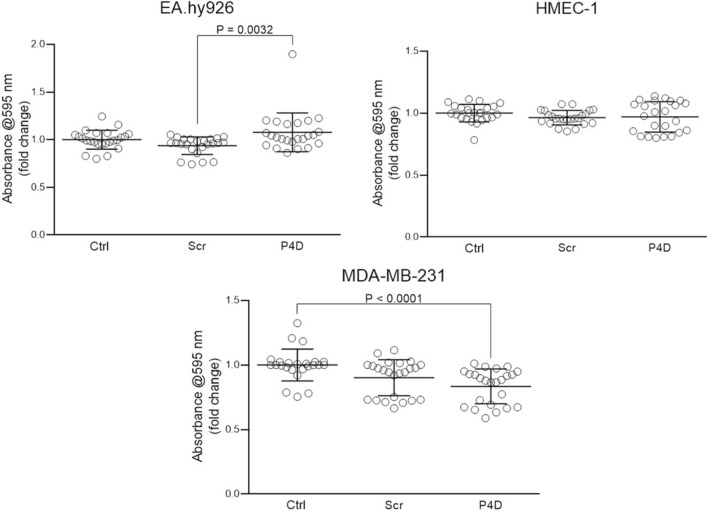
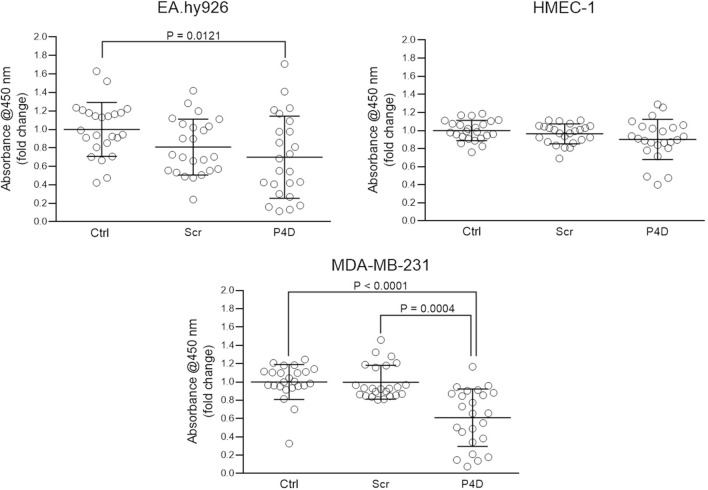
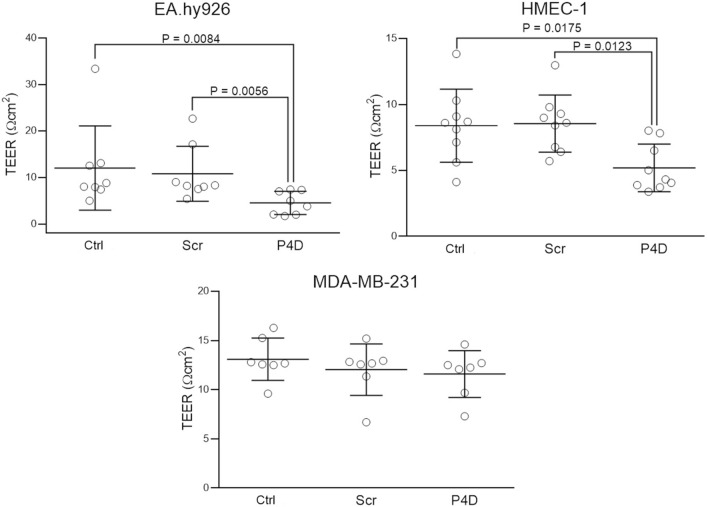
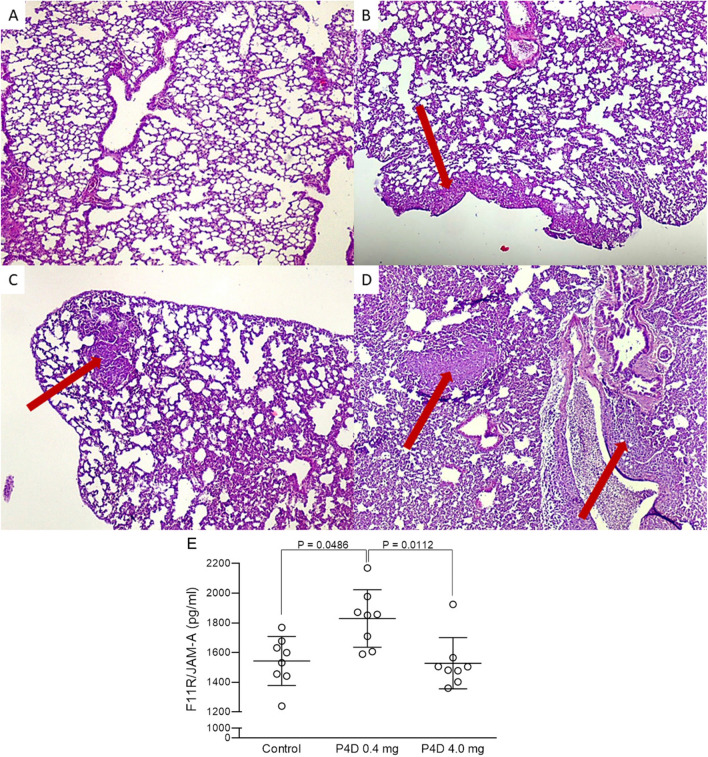
The online in silico analysis was performed by TNMPlot, UALCAN, and KM plotter. The in vitro experiments were performed to verify the effect of peptide 4D (P4D) on human endothelial cell lines EA.hy926 and HMEC-1 as well as on human TNBC cell line MDA-MB-231. The cell morphology upon P4D treatment was verified by light microscopy, while the cell functions were assessed by colony forming assay, MTT cell viability assay, BrdU cell proliferation assay, and Transepithelial/Endothelial Electrical Resistance measurements. The in vivo experiments on 4T1 murine breast cancer model were followed by histopathological analysis and a series of quantitative analyses of murine tissues.
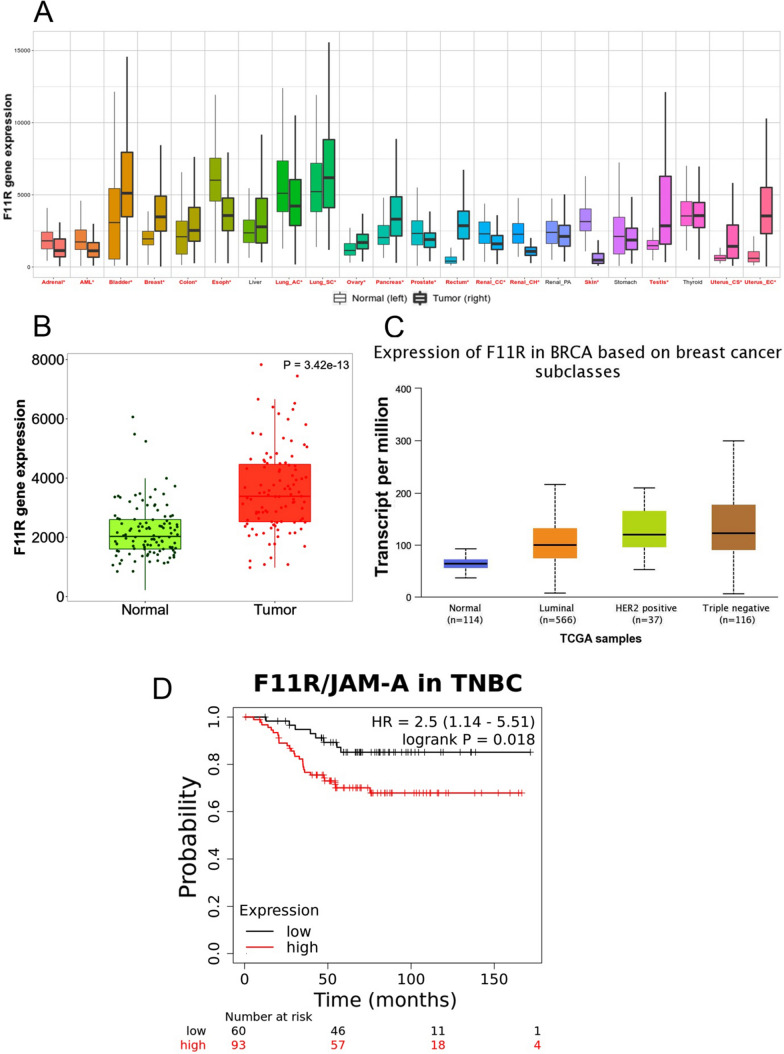
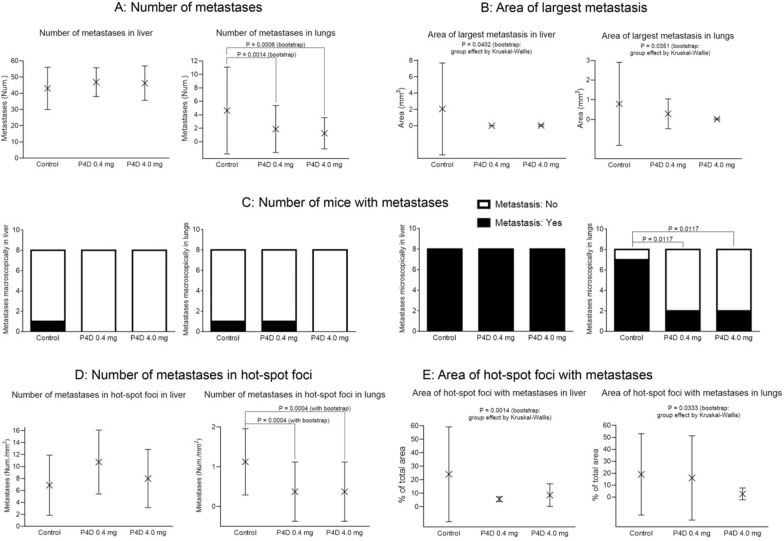
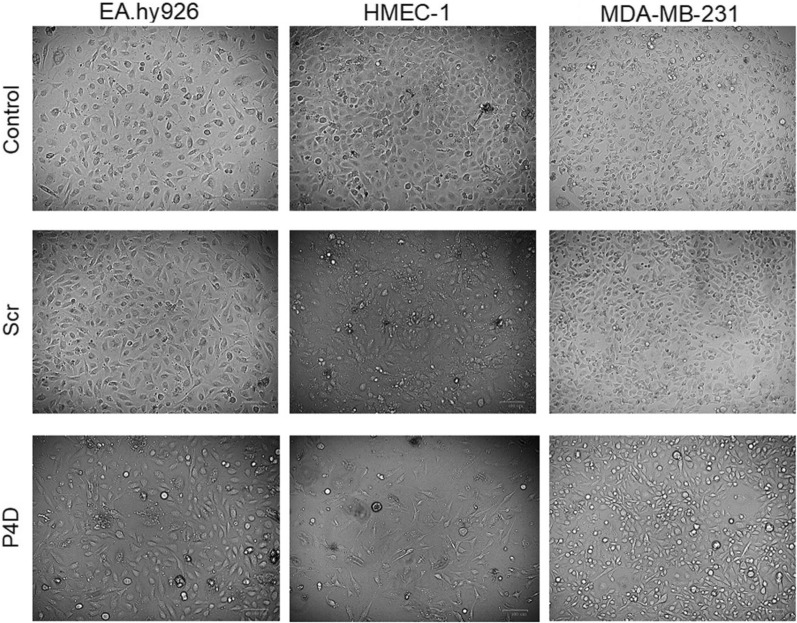
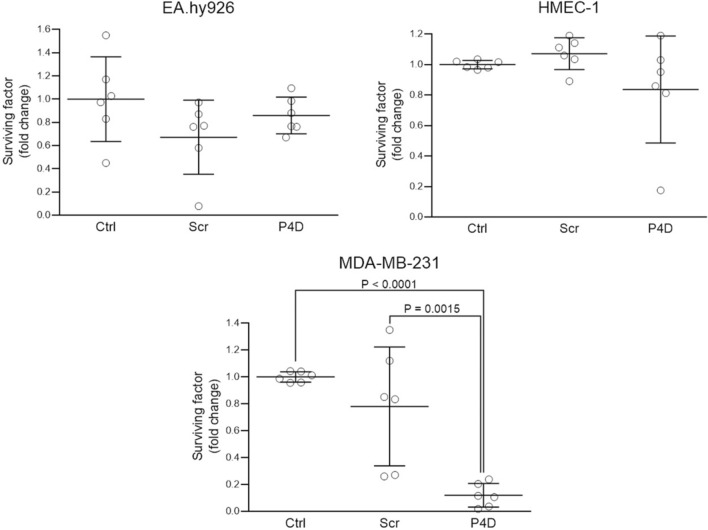
By in silico analysis we have found the elevated gene expression in breast cancer with particular emphasis on TNBC. The elevated F11R expression in TNBC was related with poorer survival prognosis. Peptide 4D has altered the morphology and increased the permeability of endothelial monolayers. The colony formation, viability, and proliferation of MDA-MB-231 cells were decreased. P4D inhibited the metastasis in 4T1 breast cancer murine model in a statistically significant manner that was demonstrated by the resampling bootstrap technique.
The P4D peptide antagonist to F11R/JAM-A is able to hinder the metastasis in TNBC. This assumption needs to be confirmed by additional 4T1 mouse model study performed on larger group size, before making the decision on human clinical trials.
利用F11R/JAM-A的肽拮抗剂,将F11R/JAM-A细胞粘附蛋白作为三阴性乳腺癌(TNBC)的治疗靶点进行研究,该肽拮抗剂先前在体外可抑制乳腺癌转移的早期阶段。
通过TNMPlot、UALCAN和KM plotter进行在线计算机分析。进行体外实验以验证肽4D(P4D)对人内皮细胞系EA.hy926和HMEC-1以及人TNBC细胞系MDA-MB-231的作用。通过光学显微镜验证P4D处理后的细胞形态,同时通过集落形成试验、MTT细胞活力试验、BrdU细胞增殖试验和跨上皮/内皮电阻测量评估细胞功能。对4T1小鼠乳腺癌模型进行体内实验,随后进行组织病理学分析和一系列小鼠组织的定量分析。
通过计算机分析,我们发现乳腺癌中基因表达升高,尤其在TNBC中。TNBC中F11R表达升高与较差的生存预后相关。肽4D改变了内皮单层的形态并增加了其通透性。MDA-MB-231细胞的集落形成、活力和增殖均降低。P4D在4T1乳腺癌小鼠模型中以统计学显著方式抑制转移,重采样自举技术证明了这一点。
F11R/JAM-A的P4D肽拮抗剂能够阻碍TNBC的转移。在决定进行人体临床试验之前,这一假设需要通过对更大样本量的4T1小鼠模型进行额外研究来证实。