Giri Suprabhat, Afzalpurkar Shivaraj, Angadi Sumaswi, Marikanty Adarsh, Sundaram Sridhar
Gastroenterology, Nizam's Institute of Medical Sciences, Hyderabad, India.
Institute of Gastrosciences, Apollo Gleneagles Hospital, Kolkata, India.
Endosc Int Open. 2023 Aug 1;11(8):E703-E711. doi: 10.1055/a-2085-3674. eCollection 2023 Aug.
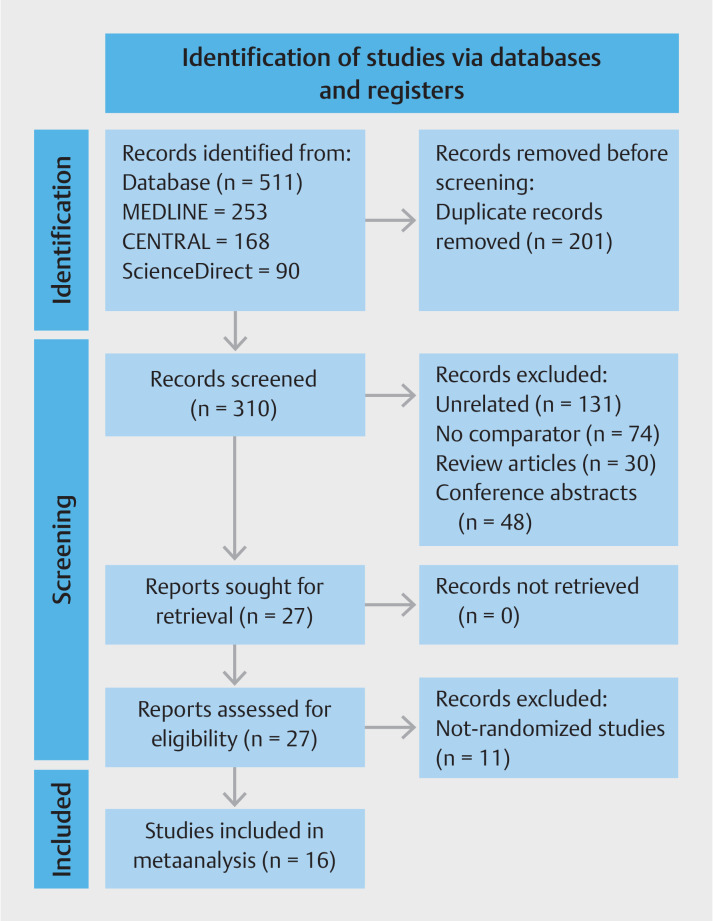
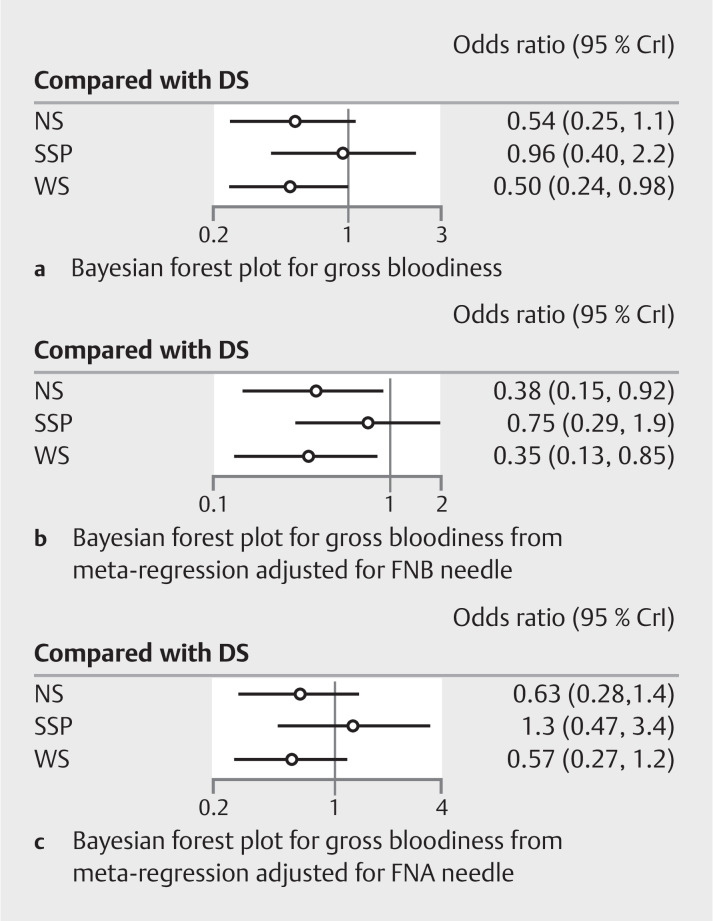
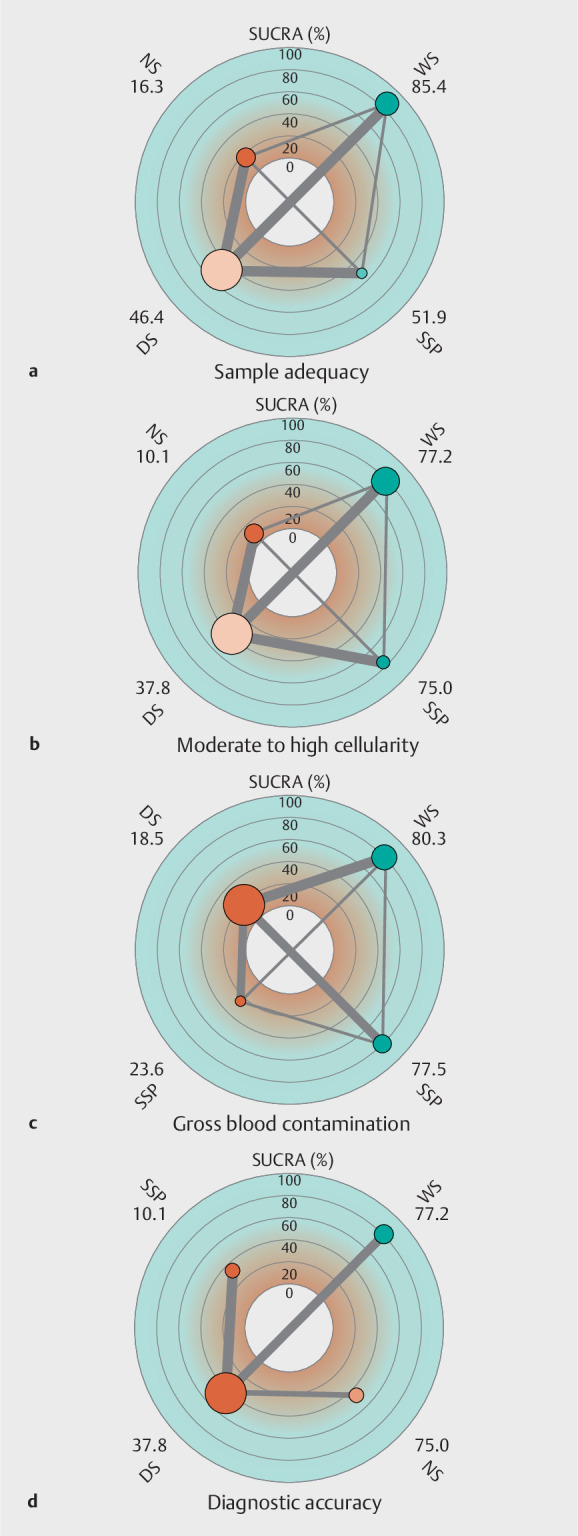
Despite the widespread use of endoscopic ultrasound (EUS)-guided tissue acquisition, the choice of optimal suction technique remains a subject of debate. Multiple studies have shown conflicting results with respect to the four suction techniques: Dry suction (DS), no suction (NS), stylet slow-pull (SSP) and wet suction (WS). Thus, the present network meta-analysis (NMA) was conducted to compare the diagnostic yields of above suction techniques during EUS-guided tissue acquisition. A comprehensive literature search from 2010 to March 2022 was done for randomized trials comparing the aspirated sample and diagnostic outcome with various suction techniques. Both pairwise and network meta-analyses were performed to analyze the outcomes: sample adequacy, moderate to high cellularity, gross bloodiness and diagnostic accuracy. A total of 16 studies (n=2048 patients) were included in the final NMA. WS was associated with a lower odd of gross bloodiness compared to DS (odds ratio 0.50, 95% confidence interval 0.24-0.97). There was no significant difference between the various suction methods with respect to sample adequacy, moderate to high cellularity and diagnostic accuracy. On meta-regression, to adjust for the effect of needle type, WS was comparable to DS in terms of bloodiness when adjusted for fine-needle aspiration needle. Surface under the cumulative ranking analysis ranked WS as the best modality for all the outcomes. The present NMA did not show superiority of any specific suction technique for EUS-guided tissue sampling with regard to sample quality or diagnostic accuracy, with low confidence in estimates.
尽管内镜超声(EUS)引导下组织获取技术已广泛应用,但最佳抽吸技术的选择仍存在争议。多项研究表明,在干抽吸(DS)、无抽吸(NS)、针芯慢拉(SSP)和湿抽吸(WS)这四种抽吸技术方面,结果相互矛盾。因此,本网络荟萃分析(NMA)旨在比较上述抽吸技术在EUS引导下组织获取过程中的诊断率。对2010年至2022年3月的随机试验进行了全面的文献检索,以比较不同抽吸技术的抽吸样本和诊断结果。进行了成对和网络荟萃分析以分析结果:样本充足性、中度至高细胞密度、明显血性和诊断准确性。最终的NMA共纳入16项研究(n = 2048例患者)。与DS相比,WS出现明显血性的几率较低(优势比0.50,95%置信区间0.24 - 0.97)。在样本充足性、中度至高细胞密度和诊断准确性方面,不同抽吸方法之间没有显著差异。在meta回归中,为调整针型的影响,当针对细针抽吸针进行调整时,WS在血性方面与DS相当。累积排序分析下的曲面将WS列为所有结果的最佳方式。本NMA未显示任何特定抽吸技术在EUS引导下组织采样的样本质量或诊断准确性方面具有优势,估计的置信度较低。