Department of Cell Biology, University of Oklahoma Health Sciences Center, DMEI 423 Parke Pavilion, 608 Stanton L. Young Boulevard, Oklahoma City, OK, 73104, USA.
Department of Ophthalmology and Dean McGee Eye Institute, University of Oklahoma Health Sciences Center, Oklahoma City, USA.
Acta Neuropathol Commun. 2023 Aug 11;11(1):131. doi: 10.1186/s40478-023-01628-4.
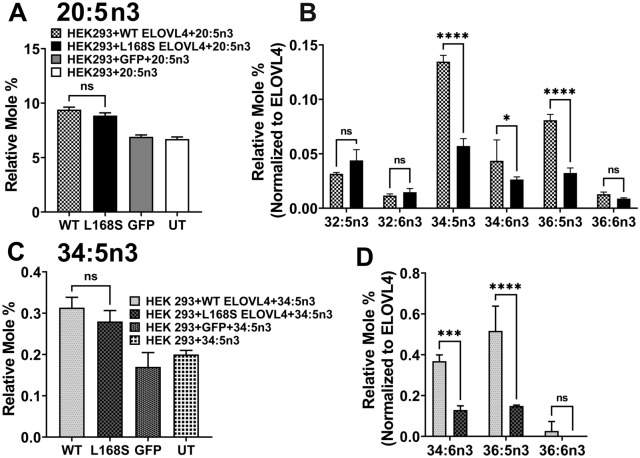
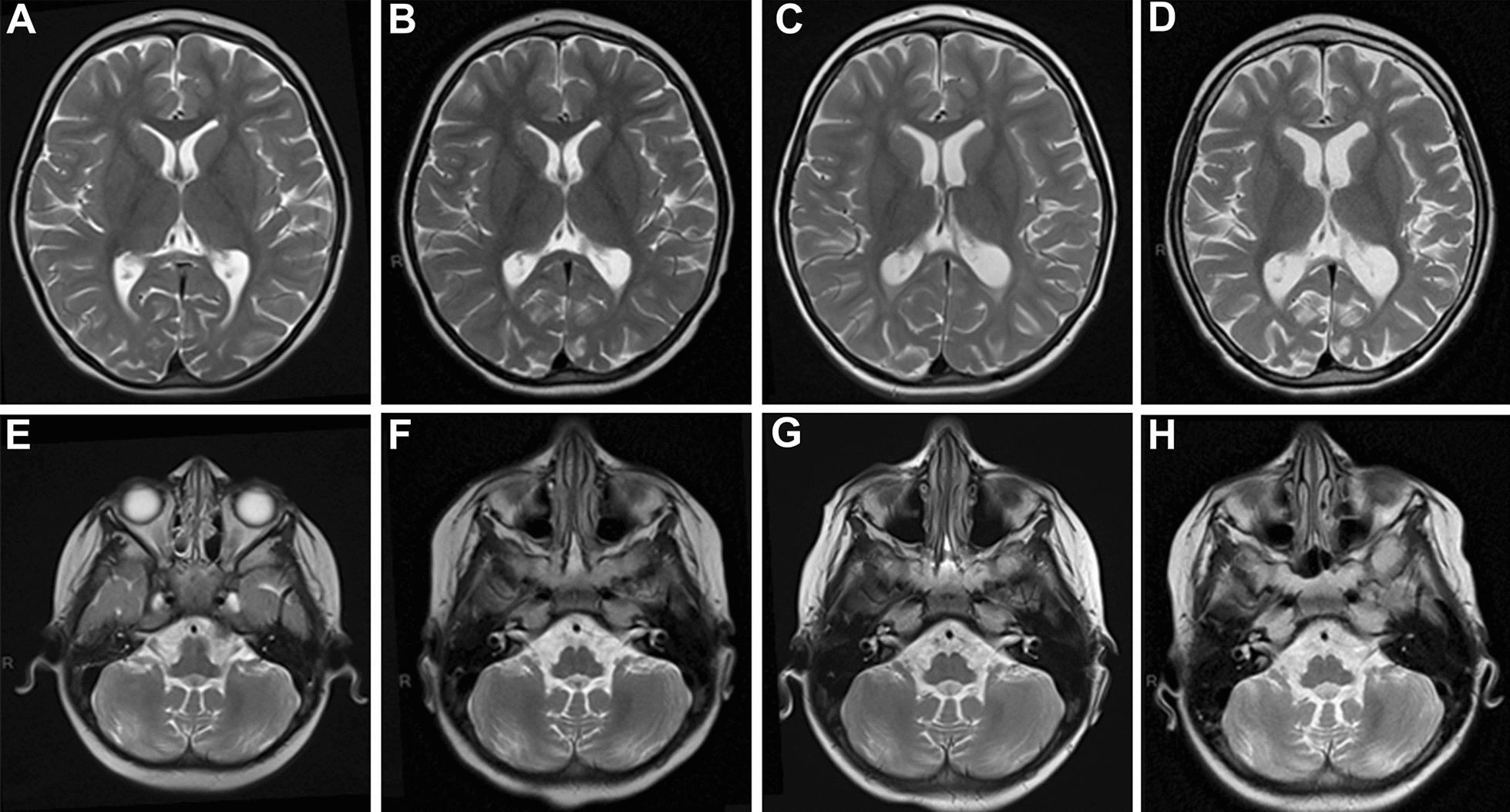
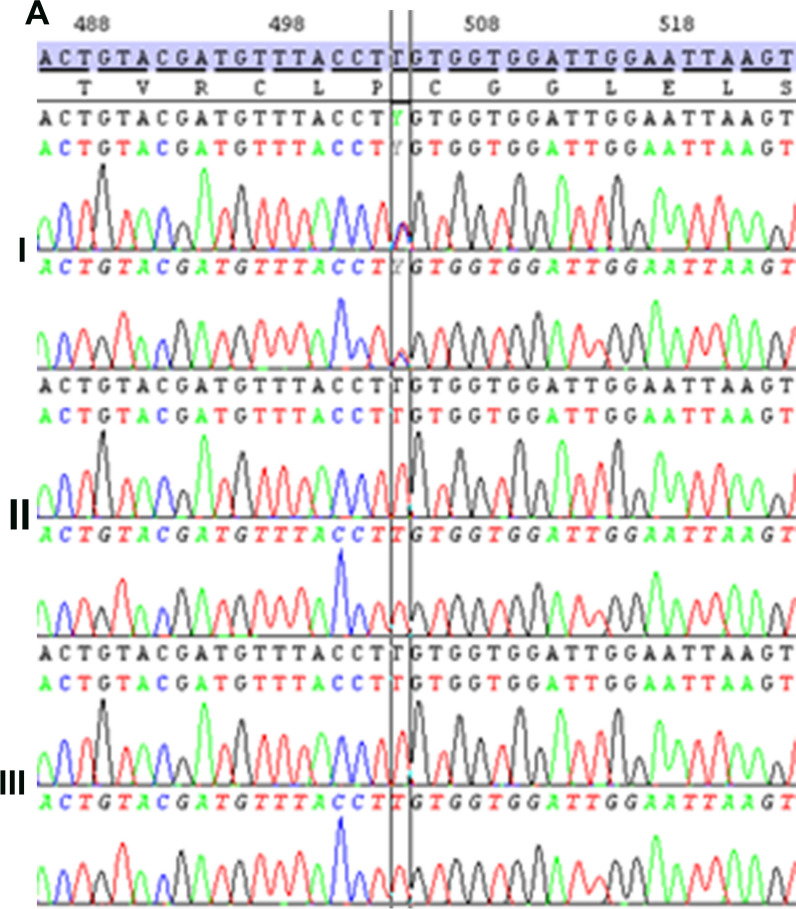
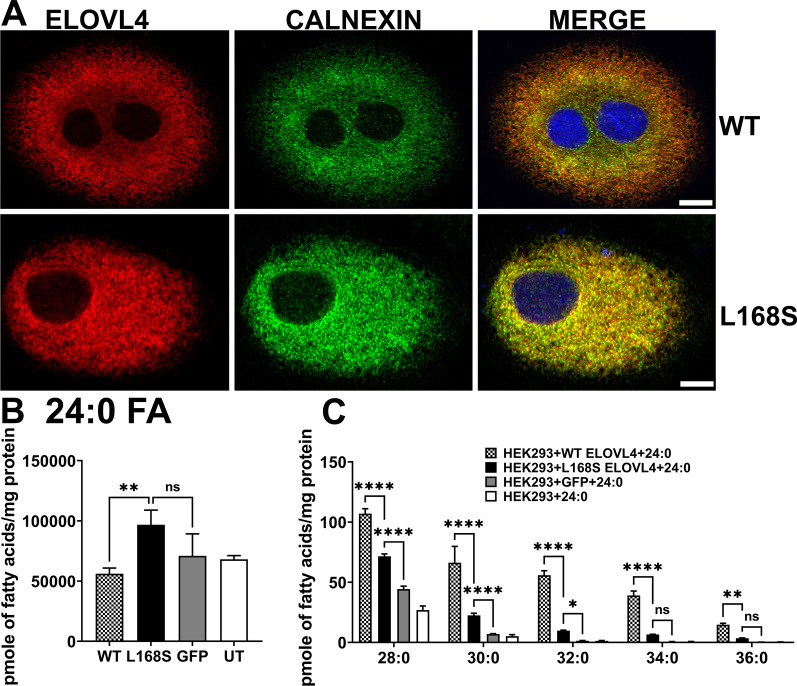
Spinocerebellar ataxia 34 (SCA34) is an autosomal dominant inherited disease characterized by age-related cerebellar degeneration and ataxia caused by mutations in the Elongation of Very Long Chain Fatty Acid-4 (ELOVL4) gene. The ELOVL4 enzyme catalyzes the biosynthesis of both very long chain saturated fatty acids (VLC-SFA) and very long chain polyunsaturated fatty acids (VLC-PUFA) that are important for neuronal, reproductive, and skin function. Several variants in ELOVL4 have been shown to cause different tissue-specific disorders including SCA34 with or without Erythrokeratodermia Variabilis (EKV), a skin condition characterized by dry, scaly skin, Autosomal Dominant Stargardt-Like Macular Dystrophy (STGD3), and seizures associated with neuro-ichthyotic disorders. What is puzzling is how different mutations in the same gene seem to cause different tissue-specific disorders. To date, no SCA34 patients have presented with both SCA34 and STGD3 pathology that is caused by ELOVL4 variants that cause truncation of ELOVL4. Here, we report a novel case of an early childhood onset and rapidly progressive cerebellar degeneration and retinal dysfunction in a Belgian-Italian girl who developed severe dysarthria and gait problems starting at about 3.5 years of age and progressed to immobility by 4.5 years of age. Brain magnetic resonance imaging (MRI) revealed progressive vermian, cerebellar, cortical atrophy, progressive corpus callosum slimming, and hot cross bun sign visible on the MRI. Ophthalmological examinations also revealed progressive macular dysfunction as measured by electroretinography. Using exome sequencing, we identified a novel heterozygous ELOVL4 variant, c.503 T > C (p. L168S) in the patient. To understand the enzymatic function of this novel ELOVL4 variant and how it alters the levels of VLC-PUFA and VLC-SFA biosynthesis to contribute to cerebellar and retinal dysfunction, we expressed wild-type ELOVL4 or the L168S ELOVL4 variant in cell culture and supplemented the cultures with VLC-PUFA or VLC-SFA precursors. We showed that the L168S ELOVL4 variant is deficient in the biosynthesis of VLC-SFA and VLC-PUFA. Our work suggests that differential depletion of these fatty acids may be a contributing factor to the pathogenic mechanism of SCA34 with or without EKV. Further studies will help further define how the different ELOVL4 variants cause different tissue-specific disorders with variable ages of onset.
脊髓小脑性共济失调 34 型(SCA34)是一种常染色体显性遗传性疾病,其特征为年龄相关性小脑变性和由 Elongation of Very Long Chain Fatty Acid-4(ELOVL4)基因突变引起的共济失调。ELOVL4 酶催化非常长链饱和脂肪酸(VLC-SFA)和非常长链多不饱和脂肪酸(VLC-PUFA)的生物合成,这些脂肪酸对于神经元、生殖和皮肤功能很重要。已经发现 ELOVL4 的几种变体可导致不同的组织特异性疾病,包括伴有或不伴有红细胞角化病(Erythrokeratodermia Variabilis,EKV)的 SCA34、伴或不伴 Autosomal Dominant Stargardt-Like Macular Dystrophy(STGD3)的常染色体显性遗传黄斑营养不良、与神经鱼眼病相关的癫痫。令人困惑的是,同一基因中的不同突变似乎导致不同的组织特异性疾病。迄今为止,尚无 SCA34 患者同时表现出由 ELOVL4 变体引起的 SCA34 和 STGD3 病理学,这些变体导致 ELOVL4 的截断。在这里,我们报告了一个比利时-意大利女孩的早期儿童发病和快速进行性小脑变性和视网膜功能障碍的新病例,该女孩在大约 3.5 岁时出现严重构音障碍和步态问题,并在 4.5 岁时进展为无法移动。大脑磁共振成像(MRI)显示进行性蚓部、小脑、皮质萎缩,进行性胼胝体变薄,MRI 上可见十字面包征。眼科检查还显示电视网膜图测量的进行性黄斑功能障碍。使用外显子组测序,我们在患者中鉴定出一种新的杂合 ELOVL4 变体,c.503T> C(p. L168S)。为了了解这种新型 ELOVL4 变体的酶促功能以及它如何改变 VLC-PUFA 和 VLC-SFA 生物合成水平以导致小脑和视网膜功能障碍,我们在细胞培养中表达野生型 ELOVL4 或 L168S ELOVL4 变体,并在培养物中补充 VLC-PUFA 或 VLC-SFA 前体。我们表明,L168S ELOVL4 变体在 VLC-SFA 和 VLC-PUFA 的生物合成中存在缺陷。我们的工作表明,这些脂肪酸的不同耗竭可能是 SCA34 伴或不伴 EKV 的致病机制的一个促成因素。进一步的研究将有助于进一步确定不同的 ELOVL4 变体如何导致不同的组织特异性疾病,其发病年龄不同。