Harper Andrew, Schulte Fiona, Guilcher Gregory M T, Truong Tony H, Reynolds Kathleen, Spavor Maria, Logie Natalie, Lee Joon, Fidler-Benaoudia Miranda M
Department of Cancer Epidemiology and Prevention Research, Cancer Care Alberta, Alberta Health Services, Calgary, AB T2S 3C3, Canada.
Department of Oncology, Cumming School of Medicine, University of Calgary, Calgary, AB T2N 1N4, Canada.
Cancers (Basel). 2023 Aug 2;15(15):3932. doi: 10.3390/cancers15153932.
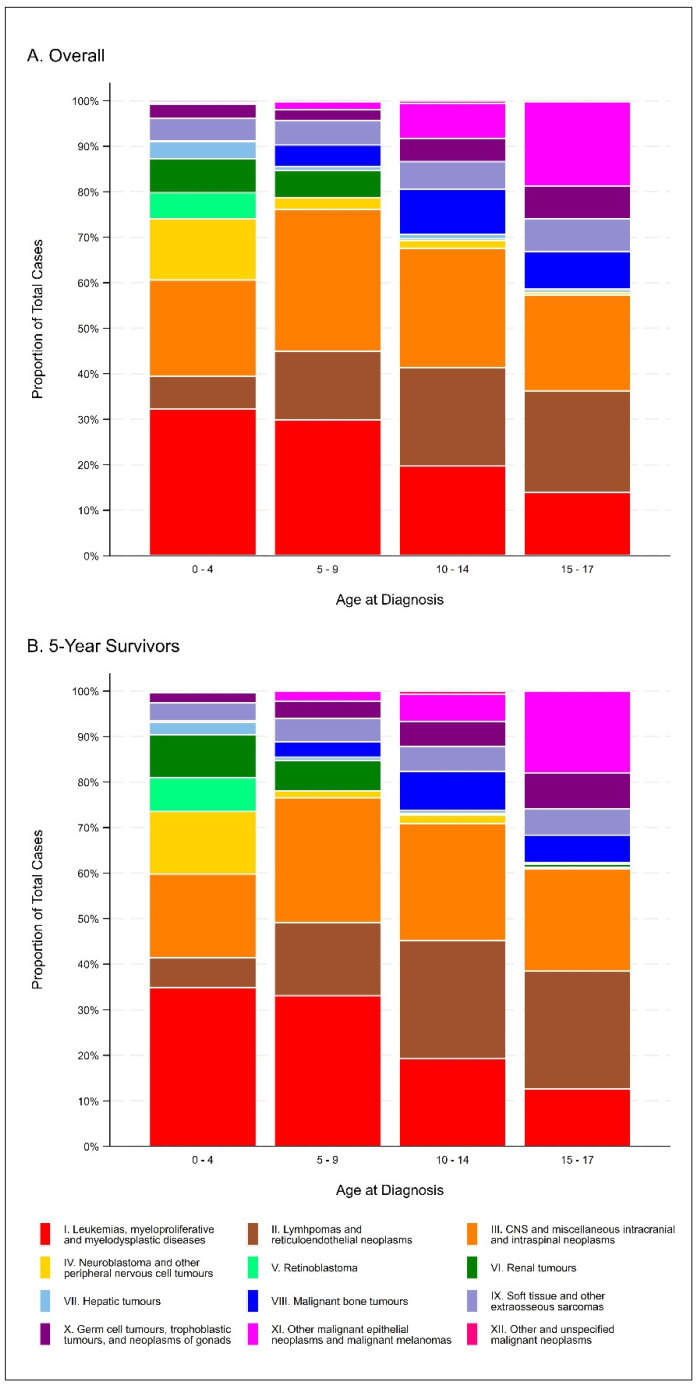
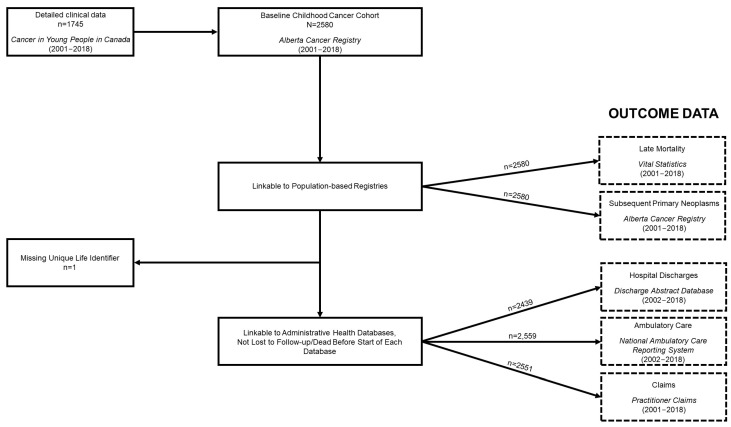
Adverse outcomes after childhood cancer have been assessed in a range of settings, but most existing studies are historical and ascertain outcomes only after 5-year survival. Here, we describe the Alberta Childhood Cancer Survivorship Research Program and its foundational retrospective, population-based cohort of Albertan residents diagnosed with a first primary neoplasm between the ages of 0 and 17 years from 1 January 2001 to 31 December 2018. The cohort was established in collaboration with the Alberta Cancer Registry and Cancer in Young People in Canada program and has been linked to existing administrative health databases and patient-reported outcome questionnaires. The cohort comprised 2581 survivors of childhood cancer, 1385 (53.7%) of whom were 5-year survivors. Approximately 48% of the cohort was female, 46% of the cohort was diagnosed between 0 and 4 years of age, and the most frequent diagnoses were leukemias (25.3%), central nervous system tumors (24.2%), and lymphomas (14.9%). Detailed treatment information was available for 1745 survivors (67.6%), with manual abstraction ongoing for those with missing data. By the study exit date, the median time since diagnosis was 5.6 years overall and 10.3 years for 5-year survivors. During the follow-up time, 94 subsequent primary cancers were diagnosed, 16,669 inpatient and 445,150 ambulatory/outpatient events occurred, 396,074 claims were reported, and 408 survivors died. The results from this research program seek to inform and improve clinical care and reduce cancer-related sequelae via tertiary prevention strategies.
儿童癌症后的不良结局已在一系列环境中进行了评估,但大多数现有研究都是历史性的,仅在5年生存后确定结局。在此,我们描述了艾伯塔省儿童癌症幸存者研究计划及其基于人群的回顾性基础队列,该队列研究对象为2001年1月1日至2018年12月31日期间在艾伯塔省被诊断出患有首个原发性肿瘤的0至17岁居民。该队列是与艾伯塔癌症登记处和加拿大青年癌症计划合作建立的,并已与现有的行政健康数据库和患者报告结局问卷相链接。该队列包括2581名儿童癌症幸存者,其中1385名(53.7%)为5年幸存者。该队列中约48%为女性,46%在0至4岁之间被诊断出患有癌症,最常见的诊断是白血病(25.3%)、中枢神经系统肿瘤(24.2%)和淋巴瘤(14.9%)。1745名幸存者(67.6%)有详细的治疗信息,对于数据缺失者正在进行人工提取。到研究结束日期,自诊断以来的中位时间总体为5.6年,5年幸存者为10.3年。在随访期间,诊断出94例后续原发性癌症,发生了16,669次住院和445,150次门诊/门诊事件,报告了396,074次索赔,408名幸存者死亡。该研究计划的结果旨在通过三级预防策略为临床护理提供信息并加以改善,减少癌症相关后遗症。