Department of Civil and Environmental Engineering, University of Strathclyde, Glasgow G1 1XJ, UK.
The James Hutton Institute, Craigiebuckler, Aberdeen AB15 8QH, UK.
Int J Environ Res Public Health. 2023 Aug 5;20(15):6528. doi: 10.3390/ijerph20156528.
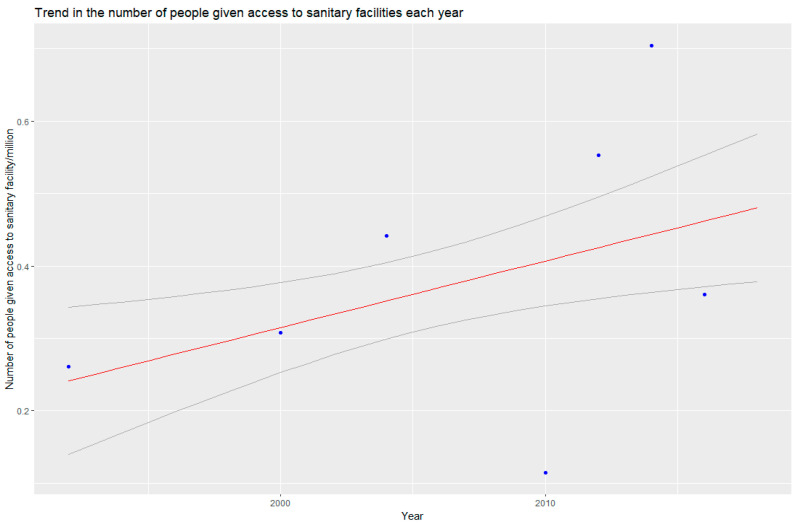
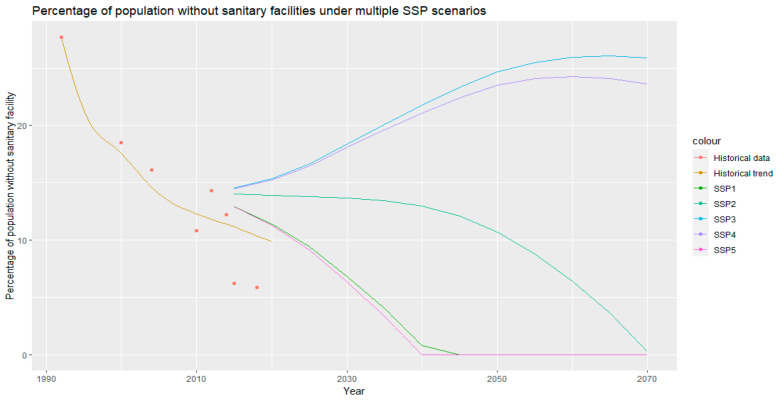
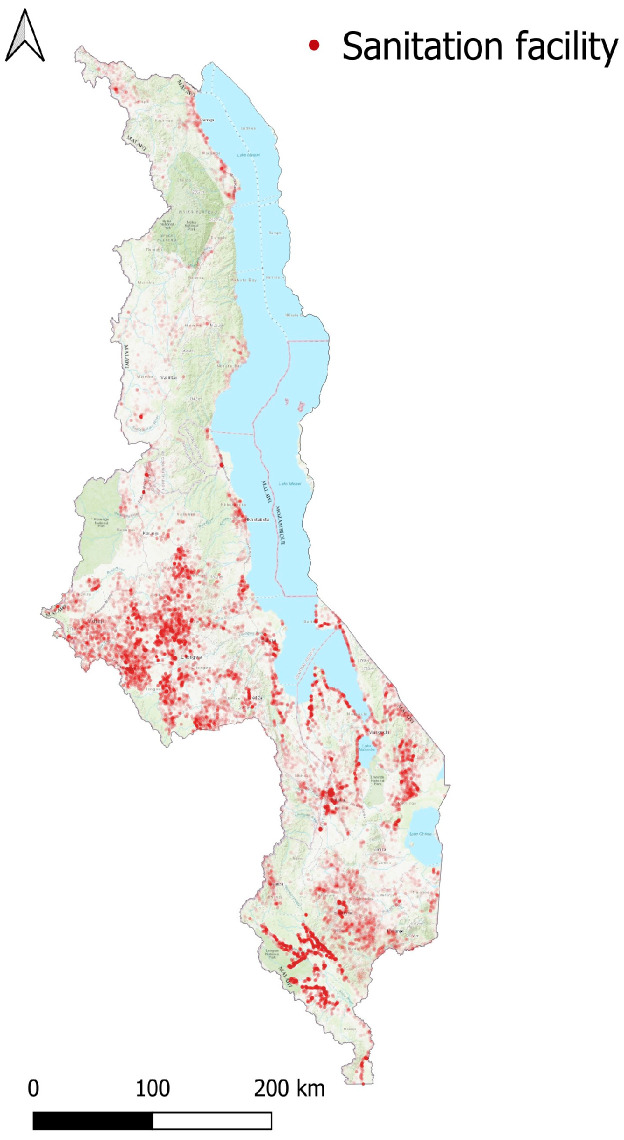
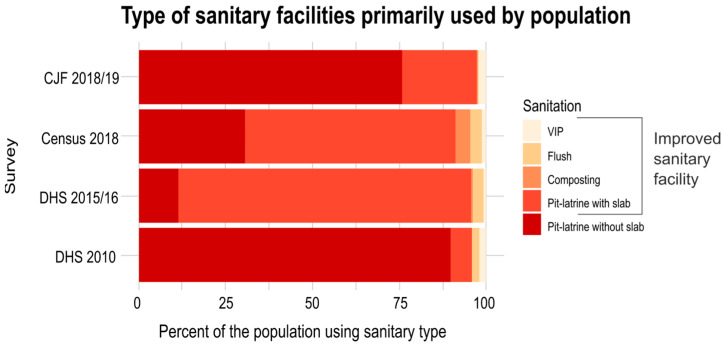
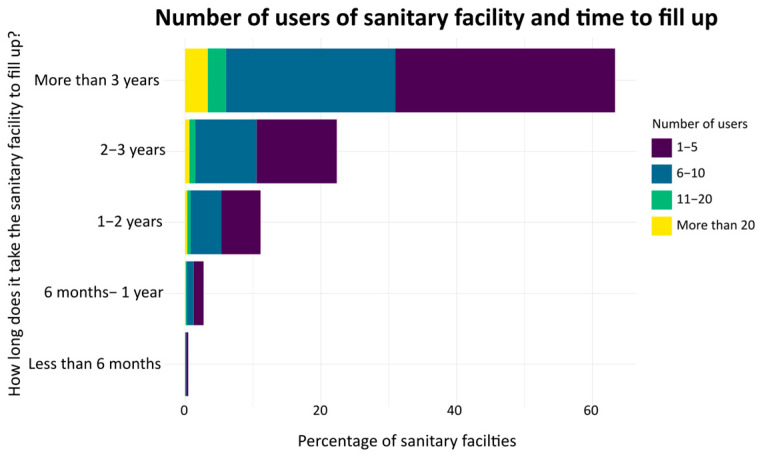
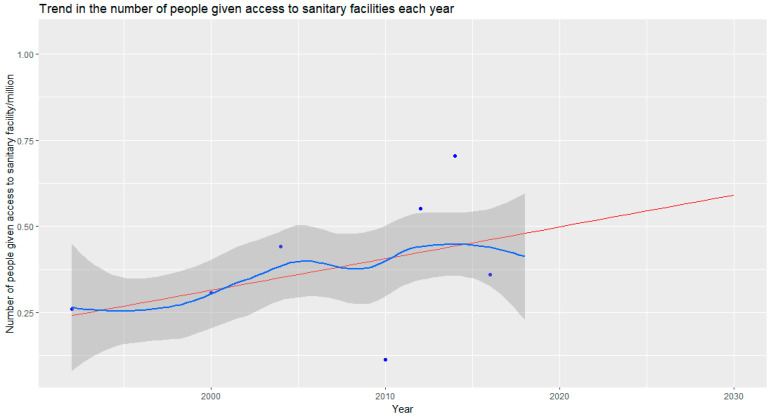
Ensuring access to adequate and equitable sanitation and ending open defecation by 2030 is the focus of Sustainable Development Goal 6.2 (SDG6.2). We evaluated Malawi's progress towards SDG 6.2 (specifically the goal to end open defecation), presenting the results of a national survey of over 200,000 sanitary facilities and evaluating their management. Based on non-linear population dynamics, we used a linear model to evaluate the reduction in open defecation between 1992-2018, and to project whether Malawi can meet the SDG target to end open defecation by 2030 under multiple scenarios of population growth. Whilst Malawi has made considerable progress in providing sanitary provision for the population, we estimate that, at the current rate of the provision of sanitary facilities, Malawi will not reach SDG 6.2 by 2030 under any of the modelled socioeconomic scenarios. Furthermore, we compare the estimates of the extent of sanitary provision classed as improved from multiple surveys, including the USAID Demographic and Health (DHS) Surveys and Government of Malawi Census data. We conclude that some of the surveys (particularly the 2015/16 DHS) may be overestimating the level of improved sanitary provision, and we hypothesize that this is due to how pit-latrines with earth/sand slabs are classed. Furthermore, we examine the long-term sustainability of pit-latrine use, investigating the challenge of pit-latrine abandonment and identifying pit-latrine filling as a cause of the abandonment in 30.2% of cases. We estimate that between 2020-2070, 31.8 (range 2.8 to 3320) million pit-latrines will be filled and abandoned, representing a major challenge for the safe management of abandoned latrines, a potential for long-term impacts on the groundwater quality, and a significant loss of investment in sanitary infrastructure. For Malawi to reach SDG 6.2, improvements are needed in both the quantity and quality of its sanitary facilities.
到 2030 年实现充足和公平的环境卫生服务供应并终止露天排便,是可持续发展目标 6.2 的重点。我们评估了马拉维在实现可持续发展目标 6.2(特别是终止露天排便目标)方面的进展,介绍了对 20 多万个卫生设施进行的全国调查结果,并对其管理情况进行了评估。我们基于非线性人口动态,使用线性模型评估了 1992 年至 2018 年期间露天排便的减少情况,并根据人口增长的多种情景,评估了马拉维是否能够实现到 2030 年终止露天排便的可持续发展目标。虽然马拉维在为人口提供卫生设施方面取得了相当大的进展,但我们估计,按照目前卫生设施的供应速度,在所有模拟的社会经济情景下,马拉维都无法在 2030 年之前实现可持续发展目标 6.2。此外,我们比较了多项调查中被归类为改良卫生设施的范围估计,包括美援署人口与健康调查(DHS)和马拉维政府的人口普查数据。我们得出的结论是,一些调查(特别是 2015/16 年 DHS)可能高估了改良卫生设施的水平,我们假设这是由于带有土/沙板的坑式厕所的分类方式造成的。此外,我们还研究了坑式厕所使用的长期可持续性,调查了坑式厕所废弃的挑战,并确定坑式厕所填满是导致 30.2%案例中废弃的原因。我们估计,在 2020 年至 2070 年期间,将有 3180 万(280 万至 3320 万)个坑式厕所被填满和废弃,这对安全管理废弃厕所构成了重大挑战,对地下水质量也可能产生长期影响,同时还会使卫生基础设施投资大量损失。为了实现可持续发展目标 6.2,马拉维需要在卫生设施的数量和质量上都有所改进。