Department of Bioscience and Biotechnology, Konkuk University, 120 Neundong-ro, Gwangjin-gu, Seoul 05029, Republic of Korea.
Int J Mol Sci. 2023 Aug 3;24(15):12408. doi: 10.3390/ijms241512408.
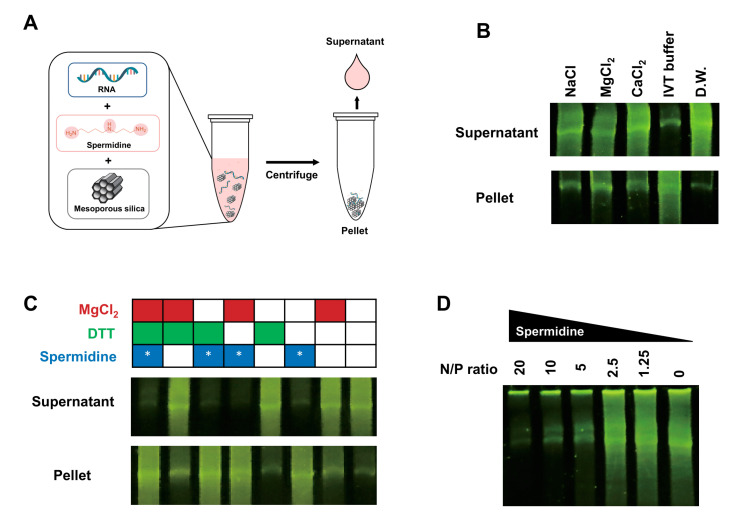
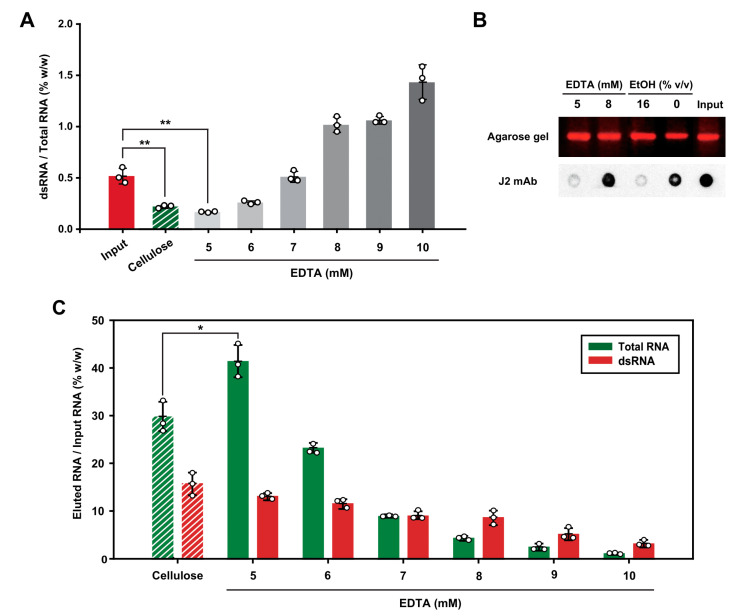
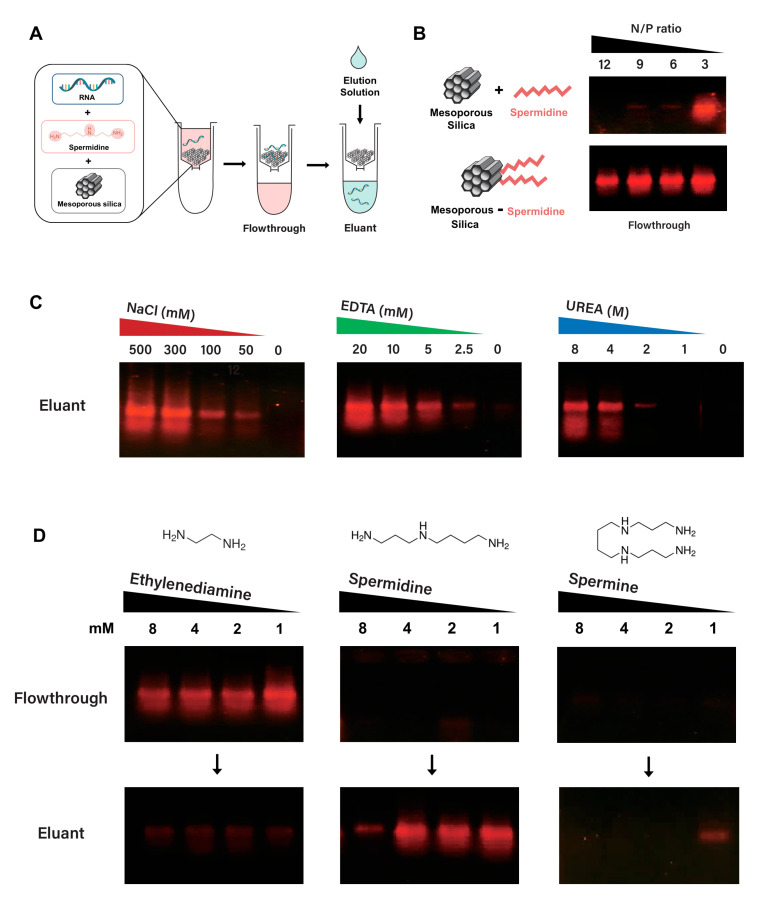
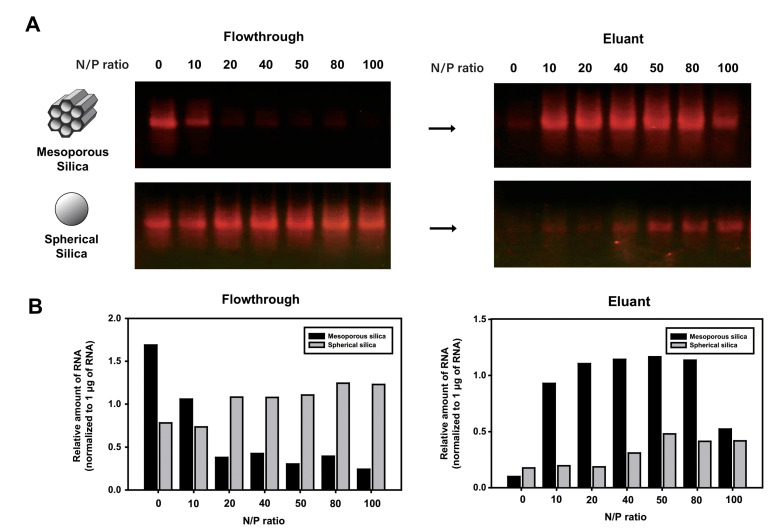
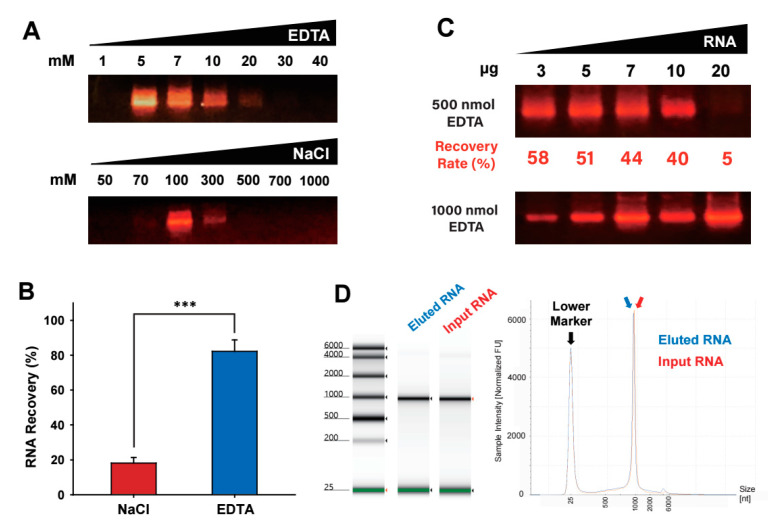
Messenger RNA vaccines against SARS-CoV-2 hold great promise for the treatment of a wide range of diseases by using mRNA as a tool for generating vaccination antigens as well as therapeutic proteins in vivo. Increasing interest in mRNA preparation warrants reliable methods for in vitro transcription (IVT) of mRNA, which must entail the elimination of surplus side products such as immunogenic double-stranded RNA (dsRNA). We developed a facile method for the removal of dsRNA from in vitro transcribed RNA with mesoporous silica particles as RNA adsorbents. Various polyamines were tested for the facilitation of RNA adsorption onto mesoporous silica particles in the chromatography. Among the polyamines tested for RNA adsorption, spermidine showed a superior capability of RNA binding to the silica matrix. Mesoporous silica-adsorbed RNA was readily desorbed with elution buffer containing either salt, EDTA, or urea, possibly by disrupting electrostatic interaction and hydrogen bonding between RNA and the silica matrix. Purification of IVT RNA was enabled with the adsorption of RNA to mesoporous silica in a spermidine-containing buffer and subsequent elution with EDTA. By differing EDTA concentration in the eluting buffer, we demonstrated that at least 80% of the dsRNA can be removed from the mesoporous silica-adsorbed RNA. When compared with the cellulose-based removal of dsRNA from IVT RNA, the mesoporous silica-based purification of IVT RNA using spermidine and EDTA in binding and elution, respectively, exhibited more effective removal of dsRNA contaminants from IVT RNA. Thus, mRNA purification with mesoporous silica particles as RNA adsorbents is applicable for the facile preparation of nonimmunogenic RNA suitable for in vivo uses.
信使 RNA 疫苗通过将 mRNA 用作体内产生疫苗抗原和治疗性蛋白的工具,为治疗多种疾病提供了巨大的希望。人们对 mRNA 制备的兴趣日益增加,这就需要可靠的体外转录 (IVT) mRNA 方法,该方法必须消除多余的副产物,如免疫原性双链 RNA (dsRNA)。我们开发了一种简便的方法,使用介孔硅颗粒作为 RNA 吸附剂,从体外转录的 RNA 中去除 dsRNA。测试了各种多胺以促进多胺在色谱中与介孔硅颗粒的 RNA 吸附。在测试的用于 RNA 吸附的多胺中, spermidine 显示出与硅基质结合的 RNA 的优越能力。用含有盐、EDTA 或尿素的洗脱缓冲液很容易将吸附在介孔硅上的 RNA 洗脱下来,可能是通过破坏 RNA 和硅基质之间的静电相互作用和氢键。在含有 spermidine 的缓冲液中通过将 RNA 吸附到介孔硅上来纯化 IVT RNA,然后用 EDTA 洗脱。通过改变洗脱缓冲液中的 EDTA 浓度,我们证明至少 80%的 dsRNA 可以从吸附在介孔硅上的 RNA 中去除。与基于纤维素的从 IVT RNA 中去除 dsRNA 相比,使用 spermidine 和 EDTA 分别在结合和洗脱中纯化 IVT RNA 的介孔硅基方法,从 IVT RNA 中去除 dsRNA 污染物的效果更显著。因此,使用介孔硅颗粒作为 RNA 吸附剂的 mRNA 纯化适用于制备适合体内使用的非免疫原性 RNA。