Gao Yu, Yang Liang, Li Zhenning, Peng Xueqiang, Li Hangyu
Department of General Surgery, The Fourth Affiliated Hospital, China Medical University, Shenyang, 110032, China.
Department of Oromaxillofacial-Head and Neck Surgery, School and Hospital of Stomatology, China Medical University, Liaoning Province Key Laboratory of Oral Disease, Shenyang, 110001, China.
Biomark Res. 2024 Aug 31;12(1):93. doi: 10.1186/s40364-024-00644-3.
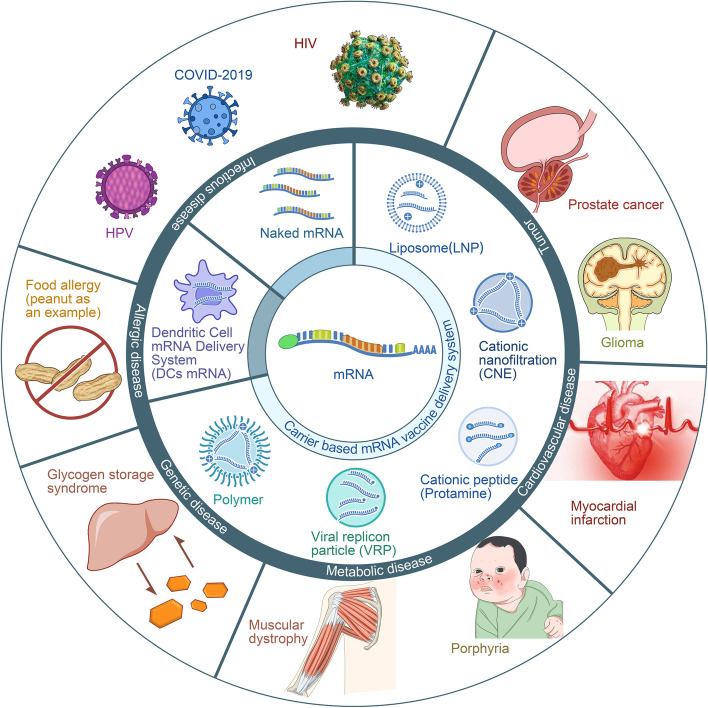
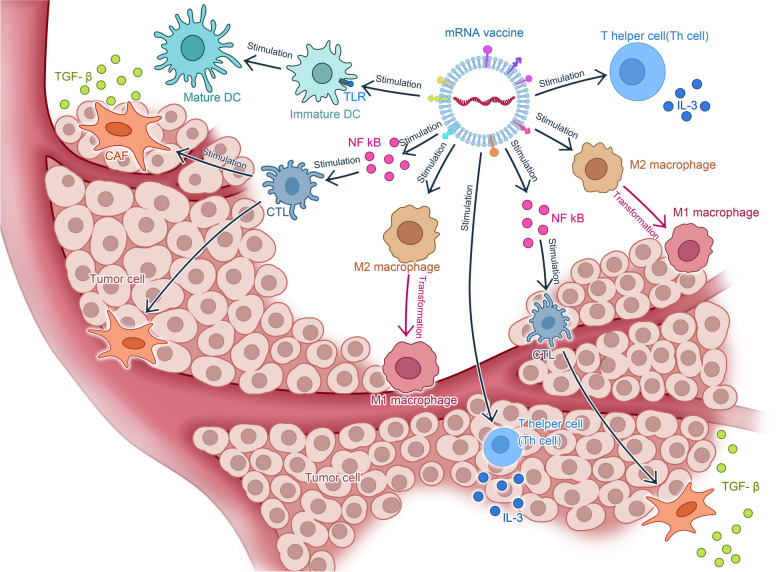
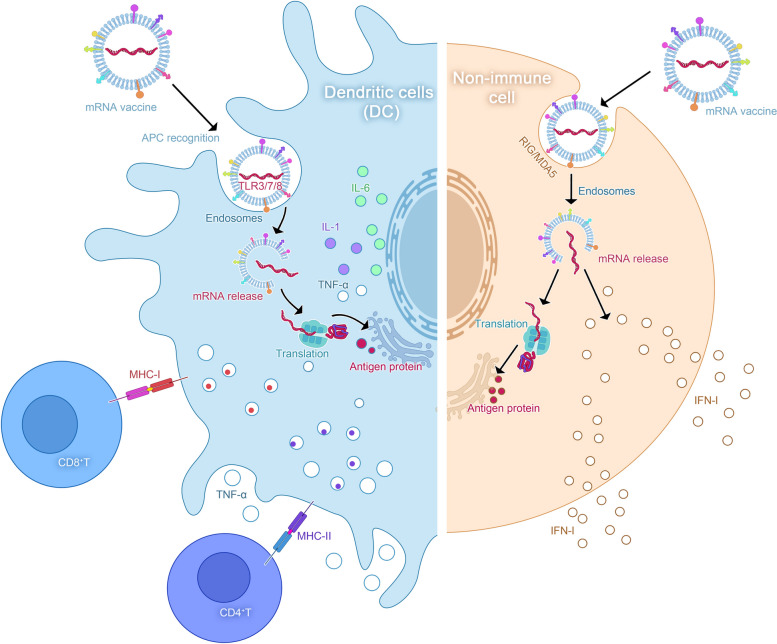
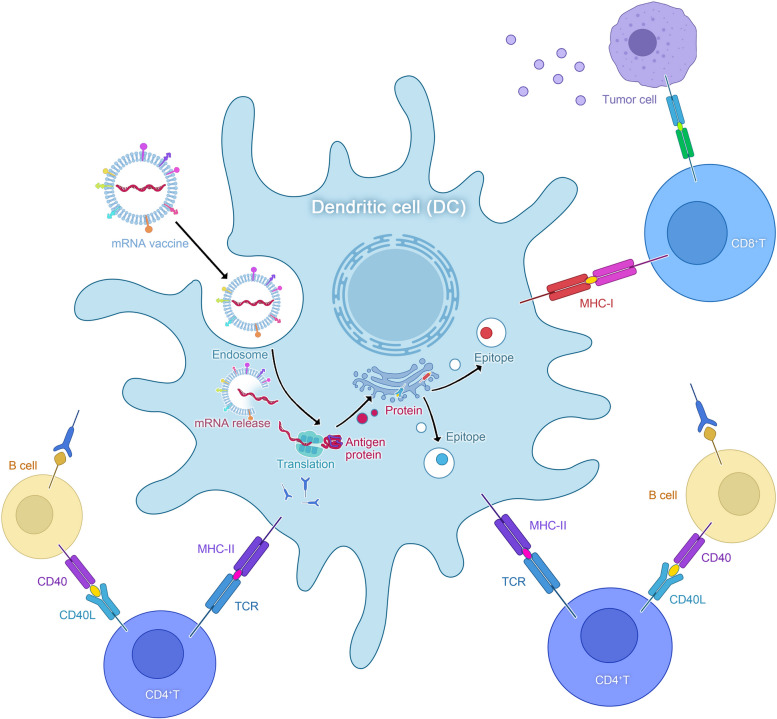
Malignant tumors remain a primary cause of human mortality. Among the various treatment modalities for neoplasms, tumor vaccines have consistently shown efficacy and promising potential. These vaccines offer advantages such as specificity, safety, and tolerability, with mRNA vaccines representing promising platforms. By introducing exogenous mRNAs encoding antigens into somatic cells and subsequently synthesizing antigens through gene expression systems, mRNA vaccines can effectively induce immune responses. Katalin Karikó and Drew Weissman were awarded the 2023 Nobel Prize in Physiology or Medicine for their great contributions to mRNA vaccine research. Compared with traditional tumor vaccines, mRNA vaccines have several advantages, including rapid preparation, reduced contamination, nonintegrability, and high biodegradability. Tumor-targeted therapy is an innovative treatment modality that enables precise targeting of tumor cells, minimizes damage to normal tissues, is safe at high doses, and demonstrates great efficacy. Currently, targeted therapy has become an important treatment option for malignant tumors. The application of mRNA vaccines in tumor-targeted therapy is expanding, with numerous clinical trials underway. We systematically outline the targeted delivery mechanism of mRNA vaccines and the mechanism by which mRNA vaccines induce anti-tumor immune responses, describe the current research and clinical applications of mRNA vaccines in tumor-targeted therapy, and forecast the future development trends of mRNA vaccine application in tumor-targeted therapy.
恶性肿瘤仍然是人类死亡的主要原因。在肿瘤的各种治疗方式中,肿瘤疫苗一直显示出疗效和有前景的潜力。这些疫苗具有特异性、安全性和耐受性等优点,其中mRNA疫苗是很有前景的平台。通过将编码抗原的外源性mRNA导入体细胞,随后通过基因表达系统合成抗原,mRNA疫苗可以有效地诱导免疫反应。卡塔琳·卡里科和德鲁·魏斯曼因对mRNA疫苗研究的巨大贡献而获得2023年诺贝尔生理学或医学奖。与传统肿瘤疫苗相比,mRNA疫苗具有几个优点,包括制备迅速、污染减少、不可整合性和高生物降解性。肿瘤靶向治疗是一种创新的治疗方式,能够精确靶向肿瘤细胞,将对正常组织的损害降至最低,高剂量时安全且疗效显著。目前,靶向治疗已成为恶性肿瘤的重要治疗选择。mRNA疫苗在肿瘤靶向治疗中的应用正在扩大,有许多临床试验正在进行中。我们系统地概述了mRNA疫苗的靶向递送机制以及mRNA疫苗诱导抗肿瘤免疫反应的机制,描述了mRNA疫苗在肿瘤靶向治疗中的当前研究和临床应用,并预测了mRNA疫苗在肿瘤靶向治疗中的未来发展趋势。