Zhao Xiang, Radford Bethany N, Ungrin Mark, Dean Wendy, Hemberger Myriam
Department of Cell Biology and Anatomy, Cumming School of Medicine, University of Calgary, 3330 Hospital Drive NW, Calgary, AB T2N 4N1, Canada.
Alberta Children's Hospital Research Institute, University of Calgary, Calgary, AB T2N 4N1, Canada.
Int J Mol Sci. 2023 Aug 4;24(15):12423. doi: 10.3390/ijms241512423.
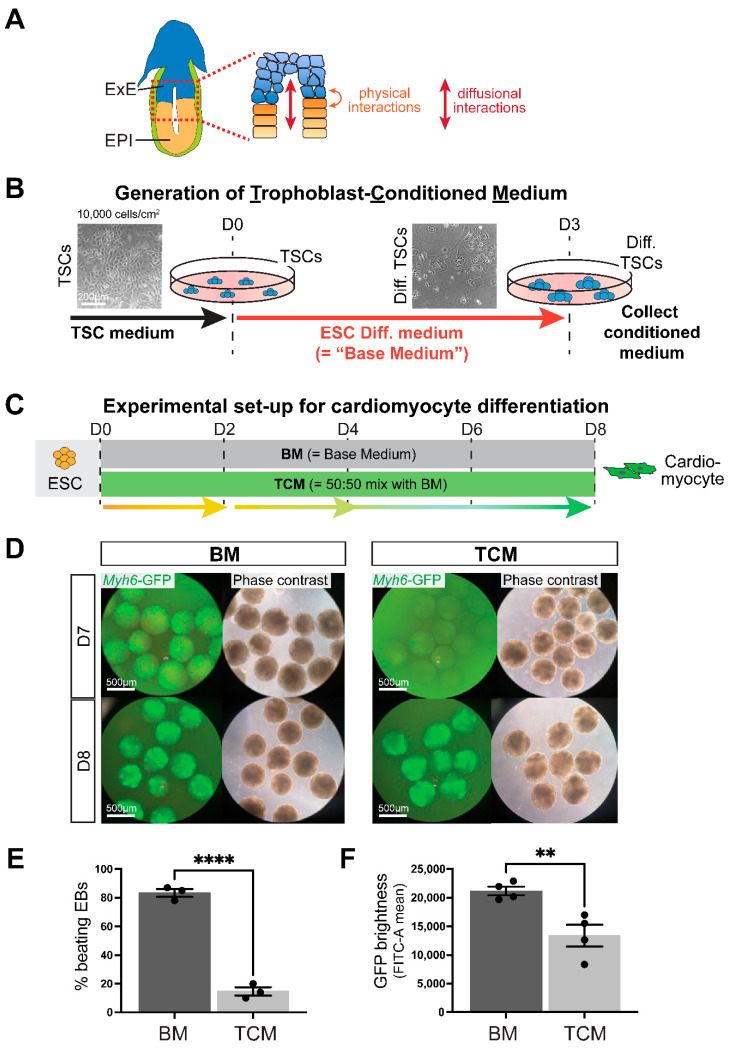
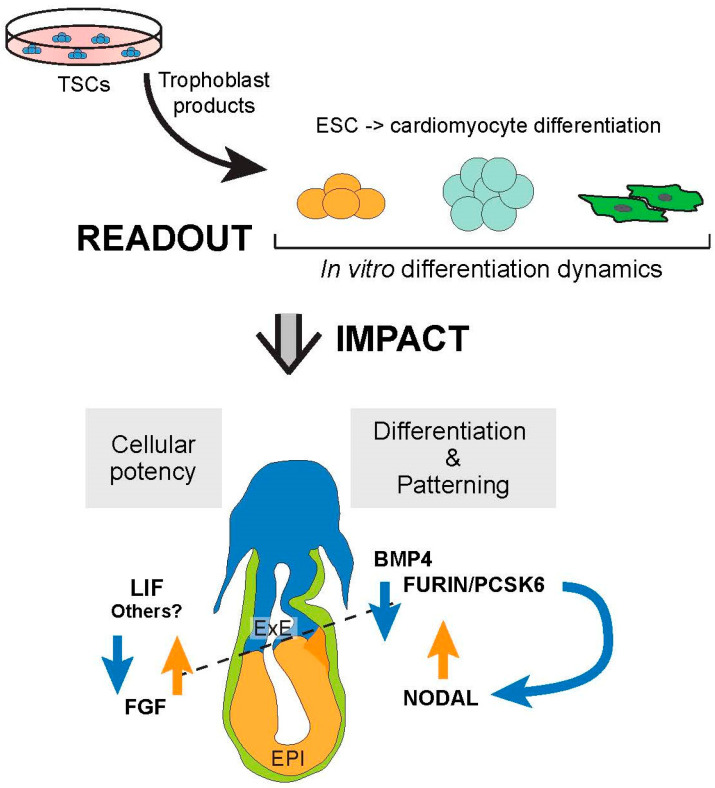
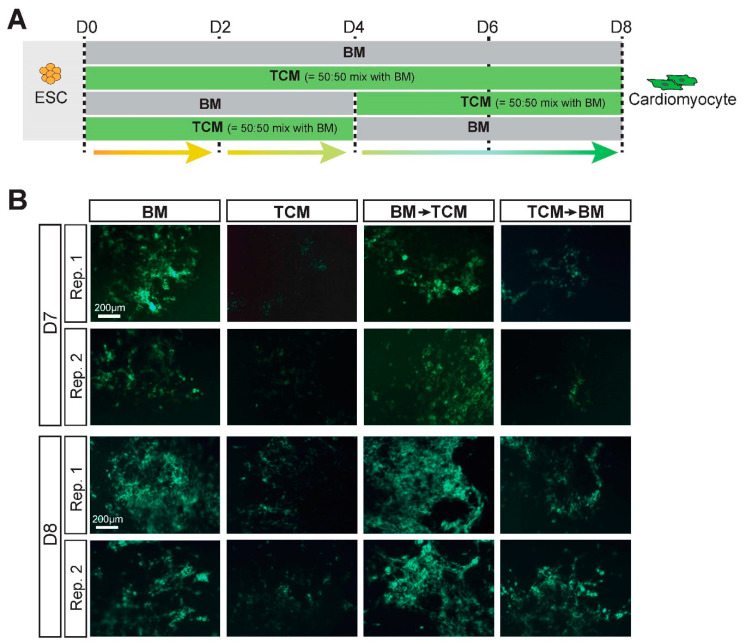
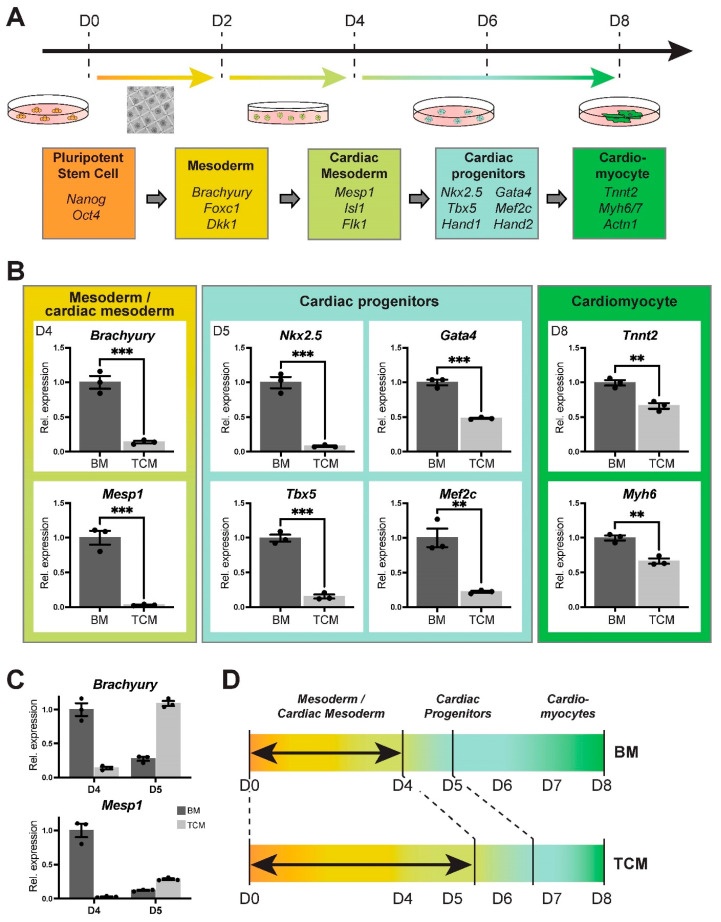
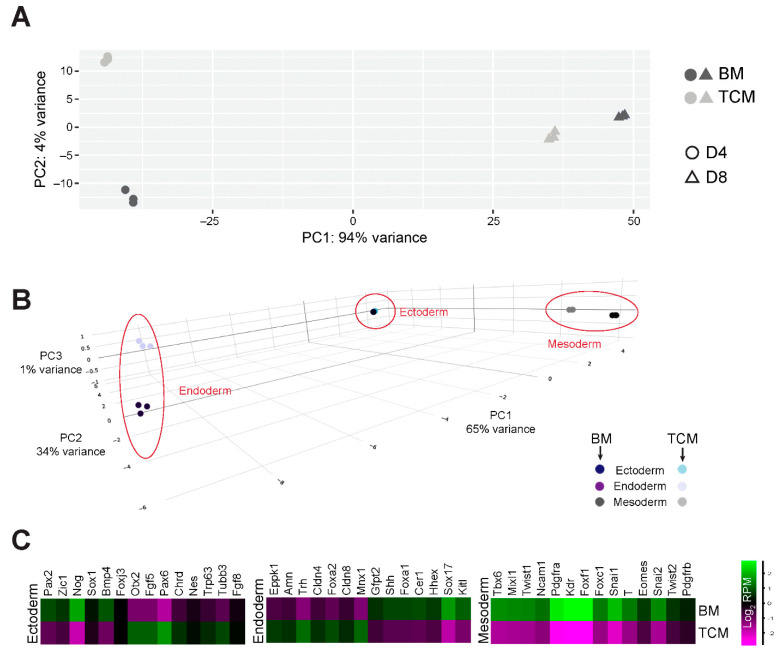
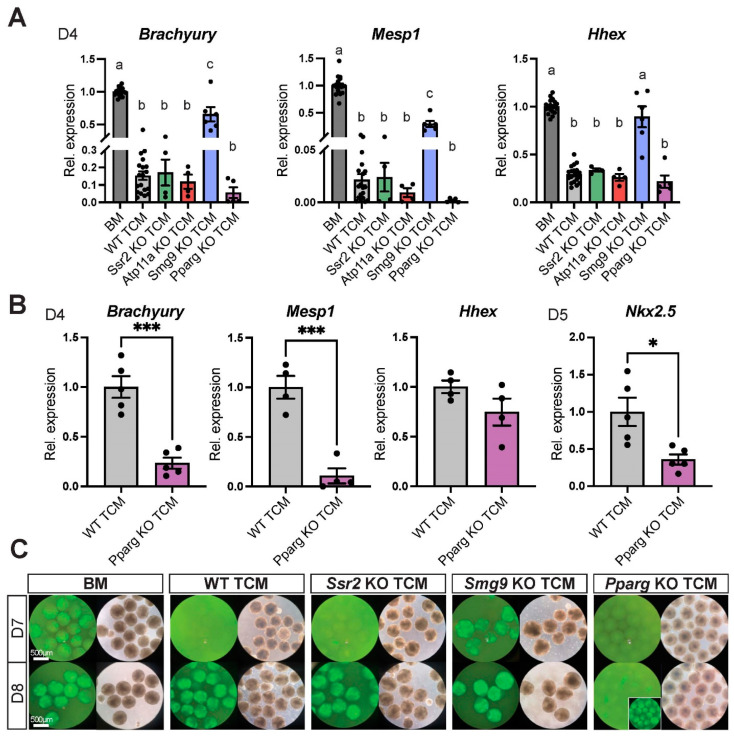
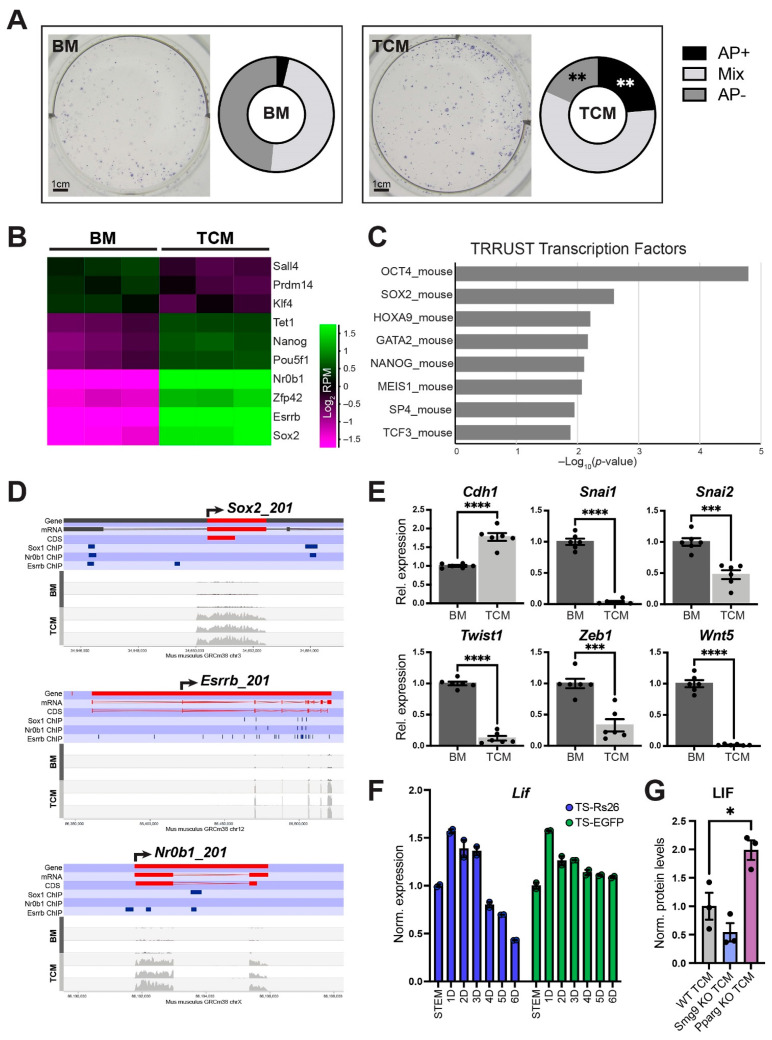
Normal developmental progression relies on close interactions between the embryonic and extraembryonic lineages in the pre- and peri-gastrulation stage conceptus. For example, mouse epiblast-derived FGF and NODAL signals are required to maintain a stem-like state in trophoblast cells of the extraembryonic ectoderm, while visceral endoderm signals are pivotal to pattern the anterior region of the epiblast. These developmental stages also coincide with the specification of the first heart precursors. Here, we established a robust differentiation protocol of mouse embryonic stem cells (ESCs) into cardiomyocyte-containing embryoid bodies that we used to test the impact of trophoblast on this key developmental process. Using trophoblast stem cells (TSCs) to produce trophoblast-conditioned medium (TCM), we show that TCM profoundly slows down the cardiomyocyte differentiation dynamics and specifically delays the emergence of cardiac mesoderm progenitors. TCM also strongly promotes the retention of pluripotency transcription factors, thereby sustaining the stem cell state of ESCs. By applying TCM from various mutant TSCs, we further show that those mutations that cause a trophoblast-mediated effect on early heart development in vivo alter the normal cardiomyocyte differentiation trajectory. Our approaches provide a meaningful deconstruction of the intricate crosstalk between the embryonic and the extraembryonic compartments. They demonstrate that trophoblast helps prolong a pluripotent state in embryonic cells and delays early differentiative processes, likely through production of leukemia inhibitory factor (LIF). These data expand our knowledge of the multifaceted signaling interactions among distinct compartments of the early conceptus that ensure normal embryogenesis, insights that will be of significance for the field of synthetic embryo research.
正常的发育进程依赖于原肠胚形成前和原肠胚形成期胚胎与胚外谱系之间的紧密相互作用。例如,小鼠上胚层来源的FGF和NODAL信号是维持胚外外胚层滋养层细胞干细胞样状态所必需的,而脏内胚层信号对于上胚层前部区域的模式形成至关重要。这些发育阶段也与第一批心脏前体细胞的特化相吻合。在这里,我们建立了一种将小鼠胚胎干细胞(ESC)分化为含有心肌细胞的胚状体的强大方案,我们用它来测试滋养层对这一关键发育过程的影响。利用滋养层干细胞(TSC)产生滋养层条件培养基(TCM),我们发现TCM显著减缓了心肌细胞的分化动力学,并特别延迟了心脏中胚层祖细胞的出现。TCM还强烈促进多能性转录因子的保留,从而维持ESC的干细胞状态。通过应用来自各种突变TSC的TCM,我们进一步表明,那些在体内对早期心脏发育产生滋养层介导作用的突变改变了正常的心肌细胞分化轨迹。我们的方法对胚胎和胚外部分之间复杂的串扰进行了有意义的解构。它们表明,滋养层可能通过产生白血病抑制因子(LIF)来帮助延长胚胎细胞中的多能状态,并延迟早期分化过程。这些数据扩展了我们对早期胚胎不同部分之间多方面信号相互作用的认识,这些相互作用确保了正常的胚胎发生,这些见解对于合成胚胎研究领域具有重要意义。