Mooney Andrew, McCall Kelly, Bastow Scott, Rose Paul
Dublin Zoo, Phoenix Park, D08 AC98 Dublin, Ireland.
School of Biological Sciences, Queen's University Belfast, Belfast BT9 5DL, UK.
Animals (Basel). 2023 Aug 1;13(15):2483. doi: 10.3390/ani13152483.
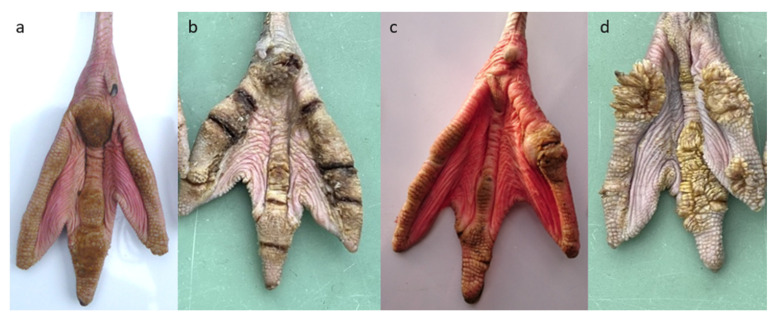
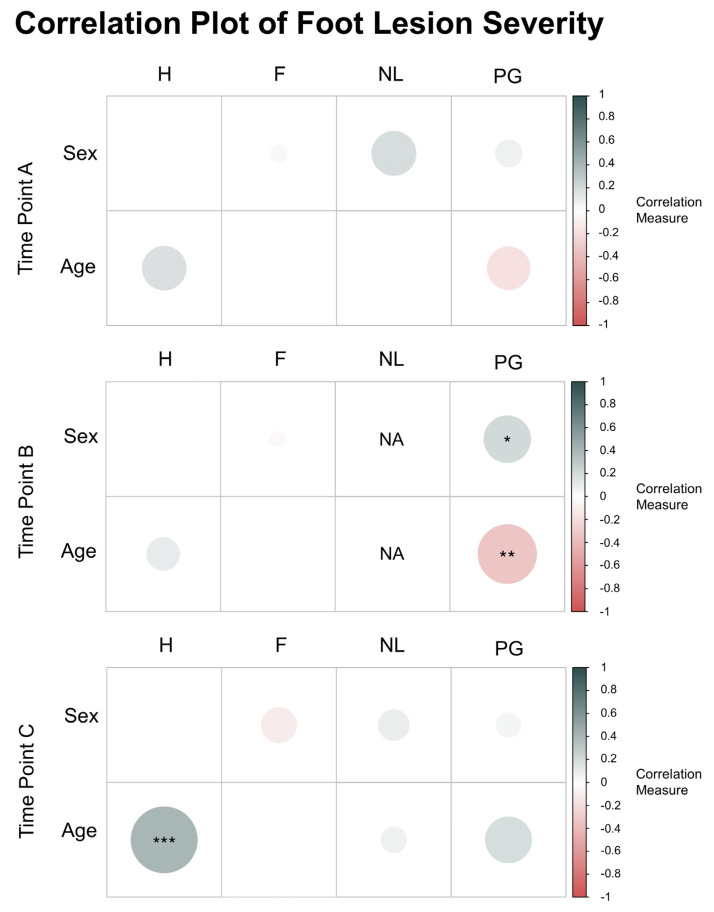
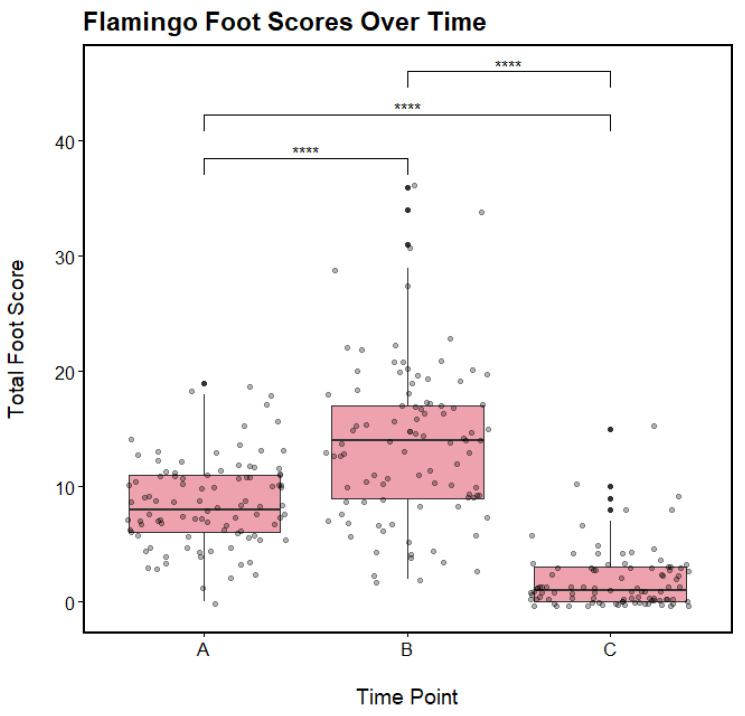
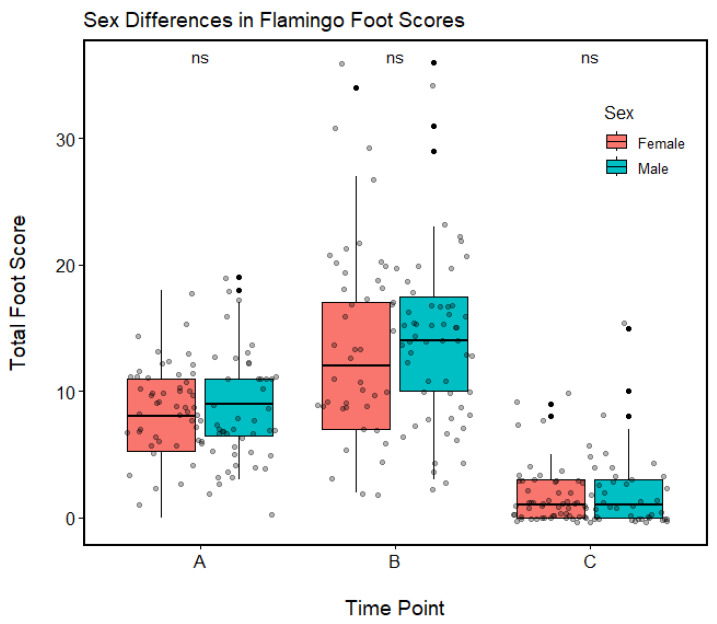
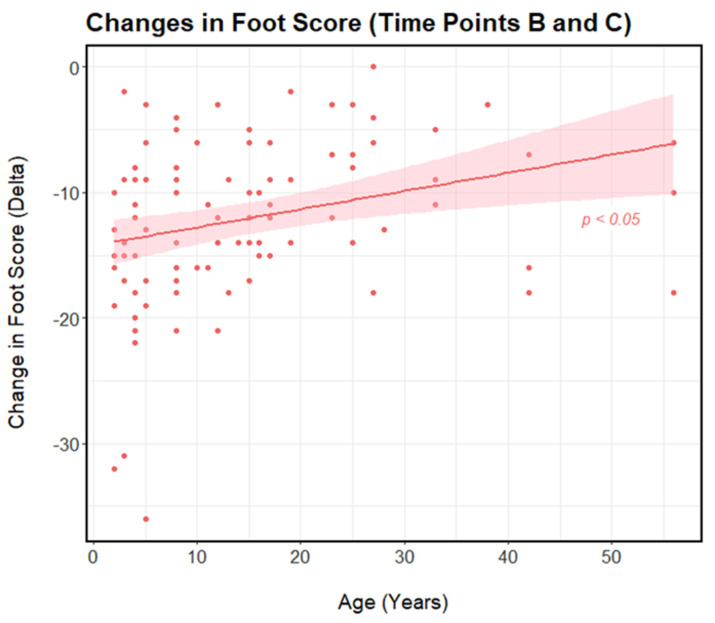
Foot lesions are a highly prevalent phenomenon among zoo-housed flamingos, with up to 99.8% of birds affected. These lesions are a recognized welfare concern, increasing the likelihood of bacterial infections, and even septicemia. Although several risk factors have been linked to foot lesions in flamingos (including age, climate, and substrate), there have been few studies looking at changes in foot lesions over time. This study tracked changes in foot lesions for an individual flock of Chilean Flamingos (97 birds) at Dublin Zoo, Ireland, over an 18-month period in response to a mandatory indoor housing order imposed by the Irish Government as a seasonal precautionary measure to prevent the spread of avian influenza. Using a pre-defined scoring system for four common types of foot lesions (hyperkeratosis, fissures, nodular lesions, and papillomatous growths), we show that providing unrestricted access to outdoor habitats and natural substrates (both terrestrial and aquatic) can improve the health and wellbeing of zoo-housed flamingos. This longitudinal study highlights the importance of regular foot health monitoring in flamingos, and the importance of natural aquatic substrates when managing flamingos. As many zoo-housed birds have been spending more time indoors on artificial substrates over recent years due to avian influenza housing orders, it is critical that we assess the impact of such changes in management and habitat access on bird health and welfare.
足部病变在圈养于动物园的火烈鸟中是一种非常普遍的现象,受影响的鸟类比例高达99.8%。这些病变是公认的福利问题,会增加细菌感染甚至败血症的可能性。尽管有几个风险因素与火烈鸟的足部病变有关(包括年龄、气候和基质),但很少有研究关注足部病变随时间的变化。本研究追踪了爱尔兰都柏林动物园一群智利火烈鸟(97只)在18个月期间足部病变的变化情况,这是应爱尔兰政府发布的强制室内饲养命令而进行的,该命令作为一项季节性预防措施,旨在防止禽流感传播。我们使用针对四种常见足部病变类型(角化过度、裂缝、结节性病变和乳头状瘤样增生)预先定义的评分系统,结果表明,让火烈鸟不受限制地进入户外栖息地和接触天然基质(包括陆地和水生基质),可以改善圈养火烈鸟的健康状况。这项纵向研究凸显了对火烈鸟进行定期足部健康监测的重要性,以及在管理火烈鸟时天然水生基质的重要性。近年来,由于禽流感防控要求,许多圈养鸟类在室内人工基质上停留的时间增加,因此,我们必须评估这种管理方式和栖息地使用变化对鸟类健康和福利的影响。