DIMEVET, University of Bologna, Bologna, Italy.
Vetagro S.p.A., Reggio Emilia, Italy.
Poult Sci. 2023 Oct;102(10):102898. doi: 10.1016/j.psj.2023.102898. Epub 2023 Jul 6.
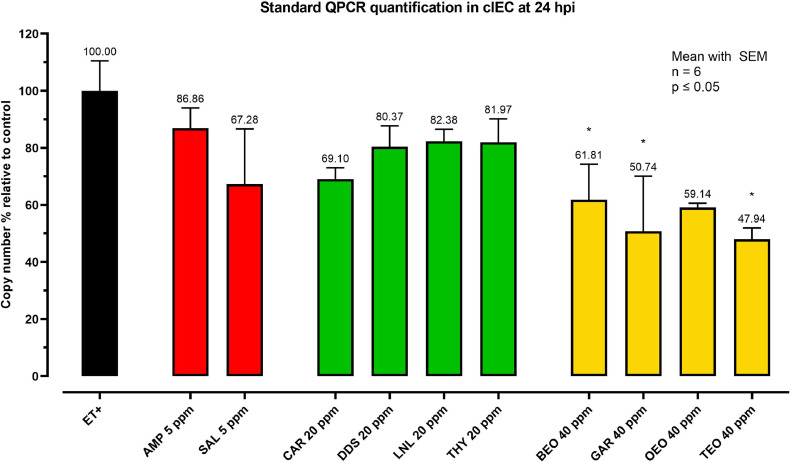
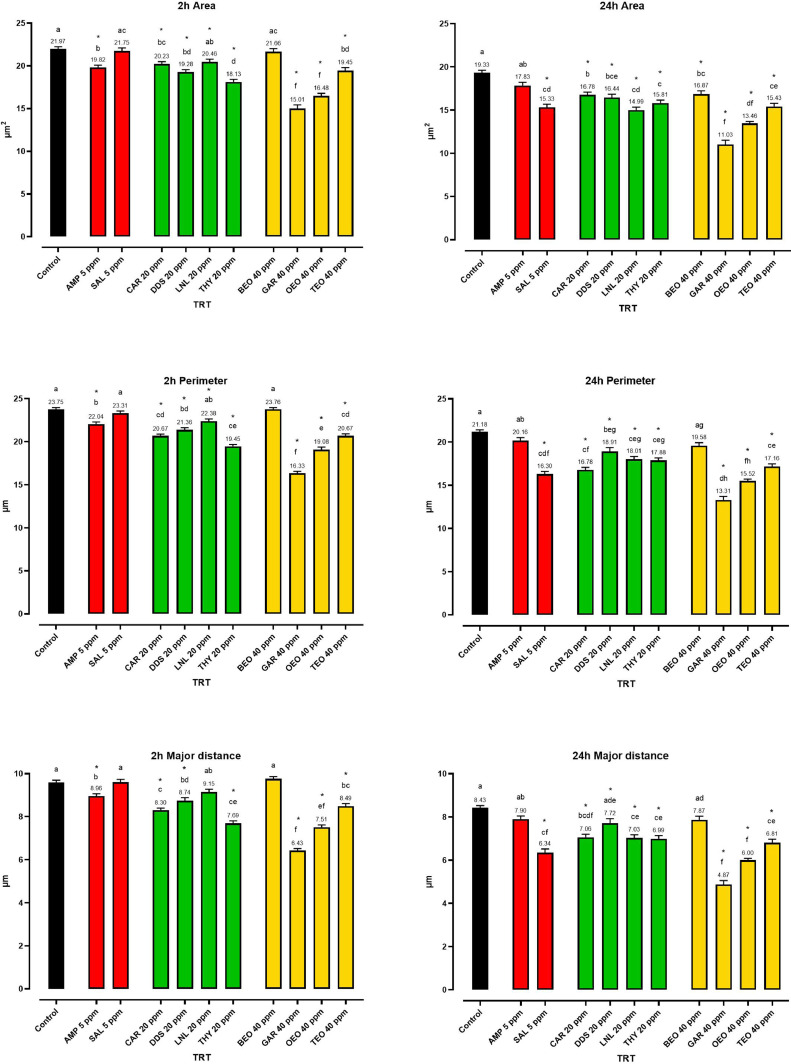
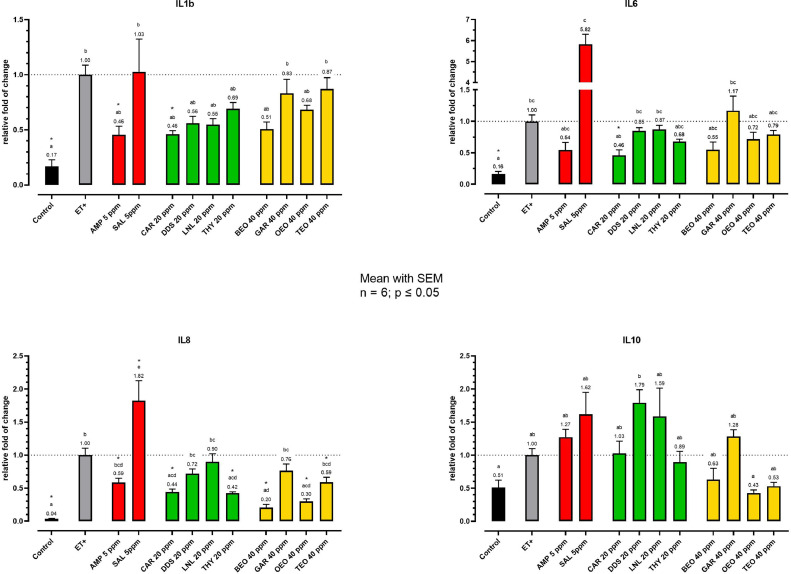
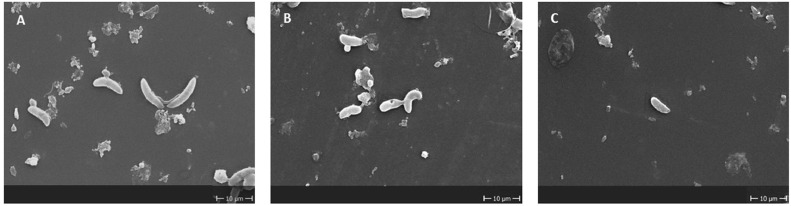
Essential oils (EO) and natural bioactive compounds are well-known antibacterial and anti-inflammatory factors; however, little is known about their anticoccidial activity and mode of action. EO deriving from basil (BEO), garlic (GAR), oregano (OEO), thyme (TEO), and their main bioactive compounds were investigated for their anticoccidial proprieties and compared to salinomycin (SAL) and amprolium (AMP) in vitro. The invasion of Eimeria tenella sporozoites was studied on 2 cell models: Madin-Darby Bovine Kidney (MDBK) cells and primary chicken epithelial cells (cIEC). Invasion efficiency was evaluated at 2 and 24 h postinfection (hpi) with counts of extracellular sporozoites and by detection of intracellular E. tenella DNA by PCR. Results show that at both timepoints, the EO were most effective in preventing the invasion of E. tenella with an average reduction of invasion at 24 hpi by 36% in cIEC and 55% in MDBK. The study also examined cytokine gene expression in cIEC at 24 hpi and found that AMP, BEO, OEO, TEO, carvacrol (CAR), and thymol (THY) significantly reduced interleukin (IL)8 expression, with CAR also reducing expression of IL1β and IL6 compared to the infected control. In addition, this work investigated the morphology of E. tenella sporozoites treated with anticoccidial drugs and EO using a scanning electron microscope. All the treatments induced morphological anomalies, characterized by a reduction of area, perimeter and length of sporozoites. SAL had a significant impact on altering sporozoite shape only at 24 h, whereas CAR and THY significantly compromised the morphology already at 2 hpi, compared to the untreated control. OEO and GAR showed the most significant alterations among all the treatments. The findings of this study highlight the potential of EO as an alternative to traditional anticoccidial drugs in controlling E. tenella invasion and in modulating primary immune response.
精油(EO)和天然生物活性化合物是众所周知的抗菌和抗炎因子;然而,它们的抗球虫活性和作用方式知之甚少。本文研究了罗勒(BEO)、大蒜(GAR)、牛至(OEO)、百里香(TEO)精油及其主要生物活性化合物的抗球虫特性,并将其与盐霉素(SAL)和安普霉素(AMP)进行了比较。在两种细胞模型:马迪-达比牛肾(MDBK)细胞和原代鸡上皮细胞(cIEC)上研究了柔嫩艾美耳球虫(Eimeria tenella)孢子的入侵。在感染后 2 和 24 小时(hpi)通过计数细胞外孢子和通过 PCR 检测细胞内 E. tenella DNA 来评估入侵效率。结果表明,在这两个时间点,EO 对防止 E. tenella 的入侵最有效,在 cIEC 中 24 hpi 时平均减少 36%的入侵,在 MDBK 中减少 55%的入侵。该研究还在 24 hpi 时检查了 cIEC 中的细胞因子基因表达,发现 AMP、BEO、OEO、TEO、香芹酚(CAR)和百里香酚(THY)显著降低白细胞介素(IL)8 的表达,与感染对照相比,CAR 还降低了白细胞介素 1β(IL1β)和白细胞介素 6(IL6)的表达。此外,这项工作使用扫描电子显微镜研究了抗球虫药物和 EO 处理后的柔嫩艾美耳球虫孢子的形态。所有处理都诱导了形态异常,表现为孢子面积、周长和长度的减少。SAL 仅在 24 h 时对改变孢子形状有显著影响,而 CAR 和 THY 与未处理对照相比,在 2 hpi 时已显著损害形态。OEO 和 GAR 在所有处理中显示出最显著的变化。这项研究的结果强调了 EO 作为传统抗球虫药物的替代品,控制 E. tenella 入侵和调节初级免疫反应的潜力。