J Am Pharm Assoc (2003). 2023 Nov-Dec;63(6):1796-1802. doi: 10.1016/j.japh.2023.08.002. Epub 2023 Aug 11.
Although opioid prescribing has recently trended downward, opioid-related overdoses and deaths have drastically increased. Community pharmacists are accessible health care providers who are well positioned to disseminate information on opioid safety and to educate and counsel on medication use, managing adverse events, and proper medication disposal. Patient callbacks facilitate appropriate medication usage. We developed an opioid callback program that provides a framework for pharmacists to follow up with patients with an opioid prescription.
This study aimed to (1) describe the development of the opioid callback initiative and (2) report results from a pilot test in 2 community pharmacies.
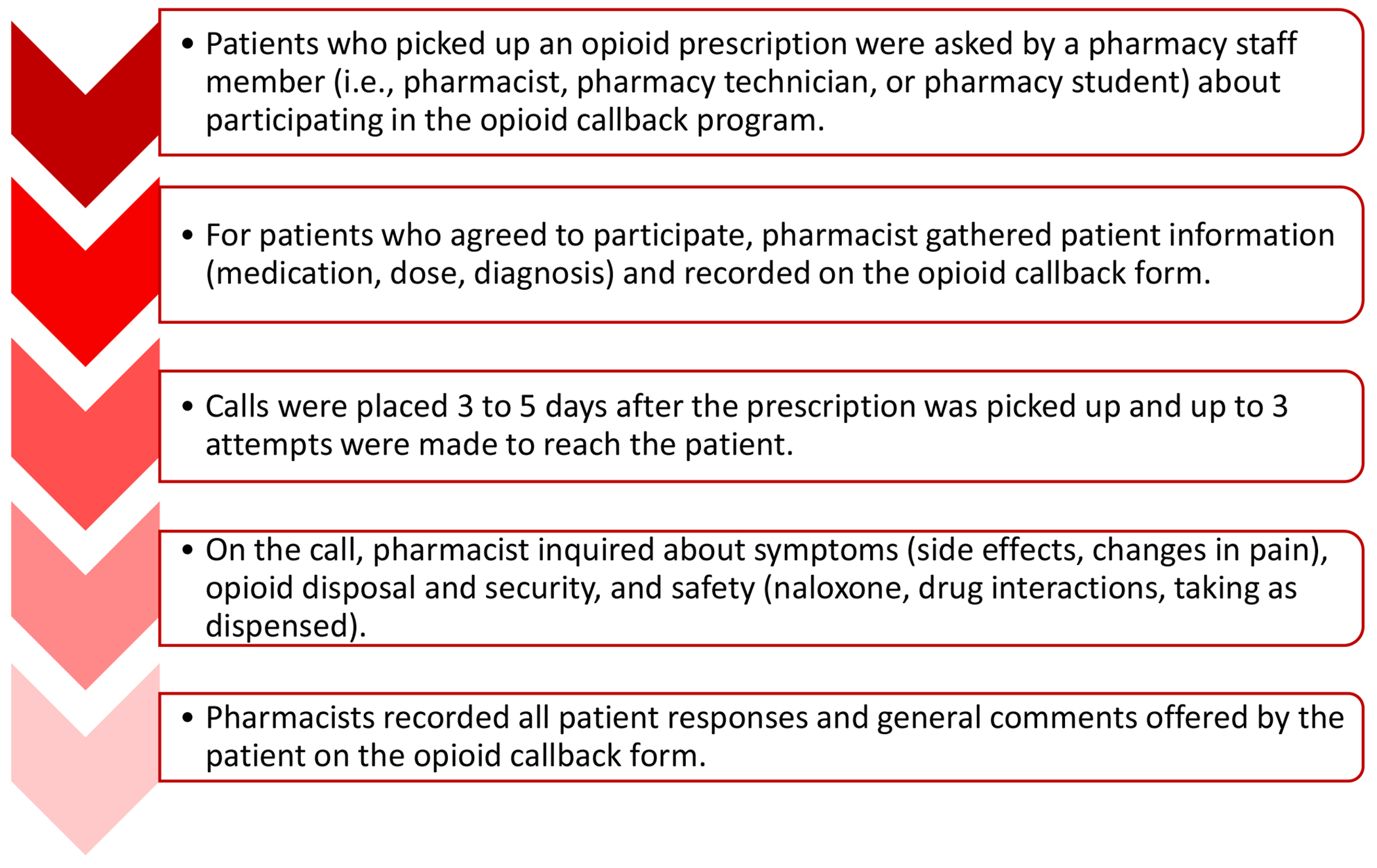
The opioid callback process and data collection forms were collaboratively developed with community pharmacists at each site. Data recorded on the opioid callback forms were descriptively analyzed and chi-square test of independence explored differences by pain durations related to opioid disposal, security, and safety. Participating pharmacy staff were interviewed to identify facilitators and barriers to implementation, as well as opportunities for improvement.
Forty-one opioid callbacks were attempted and 36 were completed (87.8%). Pharmacists were statistically significantly more likely to discuss naloxone with patients with chronic pain (89.5%) than those with acute pain (46.2%). Pharmacists reported that the program successfully raised awareness of opioid disposal opportunities and safe opioid practices, including storage and naloxone ownership. They expressed patients' willingness to answer questions and appreciation for the extra attention and care.
Community pharmacists are well positioned to address the opioid crisis as access points for medication questions, opioid safety education, opioid disposal, naloxone, and medications for people with an opioid use disorder. This study presents a proof of concept for a pharmacist-led opioid callback program. Expansion could help inform patients about how to use opioids safely, how to treat an opioid overdose, and where to dispose of unused medications.
尽管阿片类药物的处方量最近呈下降趋势,但与阿片类药物相关的过量用药和死亡人数却大幅增加。社区药剂师是可及的医疗保健提供者,他们能够很好地传播有关阿片类药物安全的信息,并就药物使用、管理不良反应以及正确处理药物进行教育和咨询。患者回电有助于适当使用药物。我们开发了一个阿片类药物回电计划,为药剂师提供了一个随访有阿片类药物处方的患者的框架。
本研究旨在:(1)描述阿片类药物回电计划的制定过程;(2)报告在 2 家社区药店进行试点测试的结果。
与每个地点的社区药剂师合作制定了阿片类药物回电流程和数据收集表。对阿片类药物回电表上记录的数据进行描述性分析,并通过独立样本卡方检验探讨与阿片类药物处置、安全性和安全性相关的疼痛持续时间的差异。对参与药房工作人员进行访谈,以确定实施的障碍和改进机会。
尝试了 41 次阿片类药物回电,完成了 36 次(87.8%)。药剂师与慢性疼痛患者(89.5%)相比,更有可能与急性疼痛患者(46.2%)讨论纳洛酮。药剂师报告说,该计划成功提高了对阿片类药物处置机会和安全阿片类药物使用的认识,包括储存和纳洛酮拥有。他们表示患者愿意回答问题,并对额外的关注和护理表示赞赏。
社区药剂师是解决阿片类药物危机的最佳人选,他们是药物咨询、阿片类药物安全教育、阿片类药物处置、纳洛酮和阿片类药物使用障碍患者药物的切入点。本研究为药剂师主导的阿片类药物回电计划提供了一个概念验证。扩大规模可以帮助患者了解如何安全使用阿片类药物、如何治疗阿片类药物过量以及如何处理未使用的药物。