Graduate Institute of Veterinary Medicine, National Taiwan University, Taipei, 10617, Taiwan.
Department of Chemical Engineering, College of Engineering, National Taiwan University, Taipei, 106, Taiwan.
Int J Nanomedicine. 2023 Aug 7;18:4313-4327. doi: 10.2147/IJN.S408623. eCollection 2023.
Cisplatin, a commonly used anticancer compound, exhibits severe off-target organ toxicity. Due to its wide application in cancer treatment, the reduction of its damage to normal tissue is an imminent clinical need. Cisplatin-induced testicular oxidative stress and damage lead to male sub- or infertility. Despite earlier studies showing that the natural polyphenol extracts honokiol serve as the free radical scavenger that reduces the accumulation of intracellular free radicals, whether honokiol exhibits direct effects on the testis and sperm is unclear. Thus, the aim of the current study is to investigate the direct effects of honokiol on testicular recovery and sperm physiology.
We encapsulated this polyphenol antioxidation compound into liposome-based nanoparticles (nHNK) and gave intraperitoneally to mice at a dosage of 5 mg/kg body mass every other day for consecutive 6 weeks.
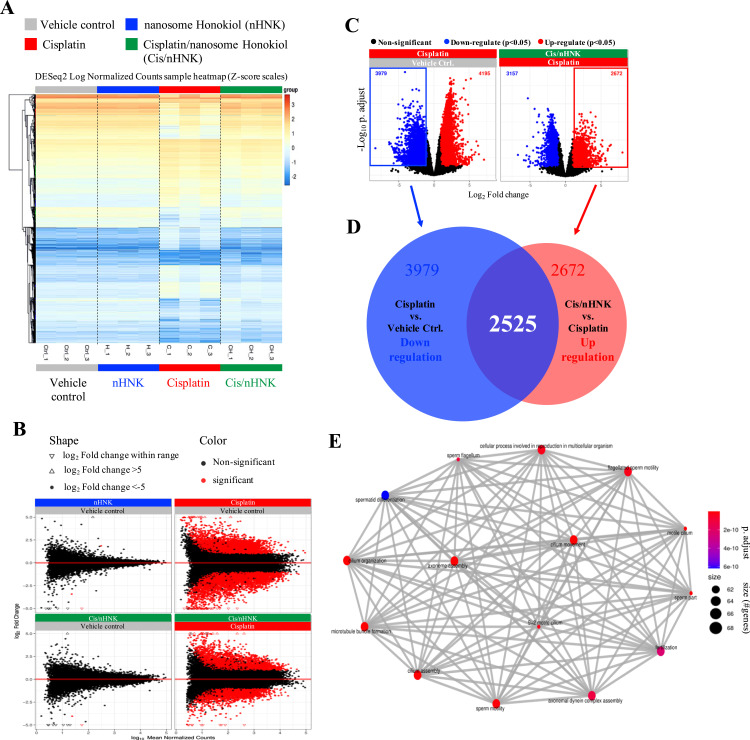
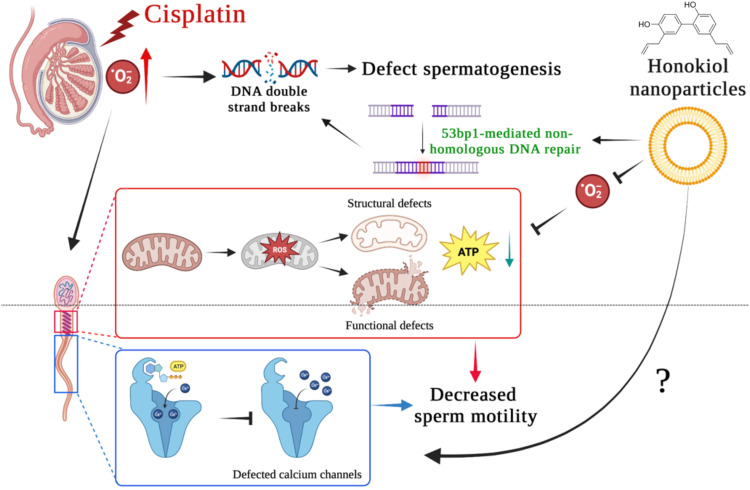
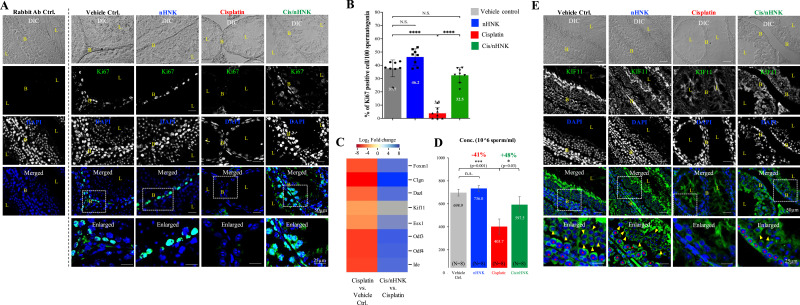
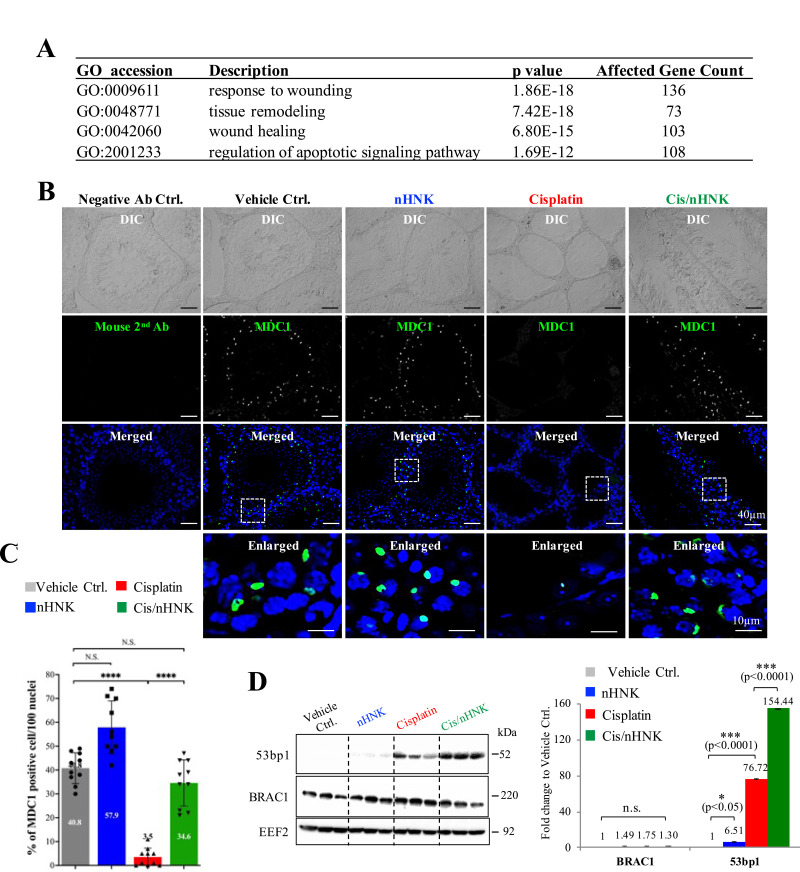
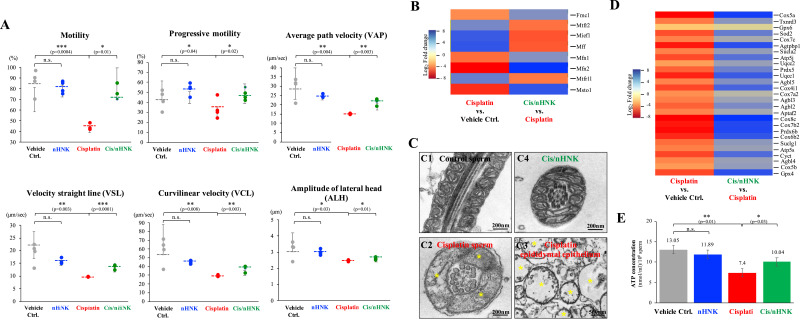
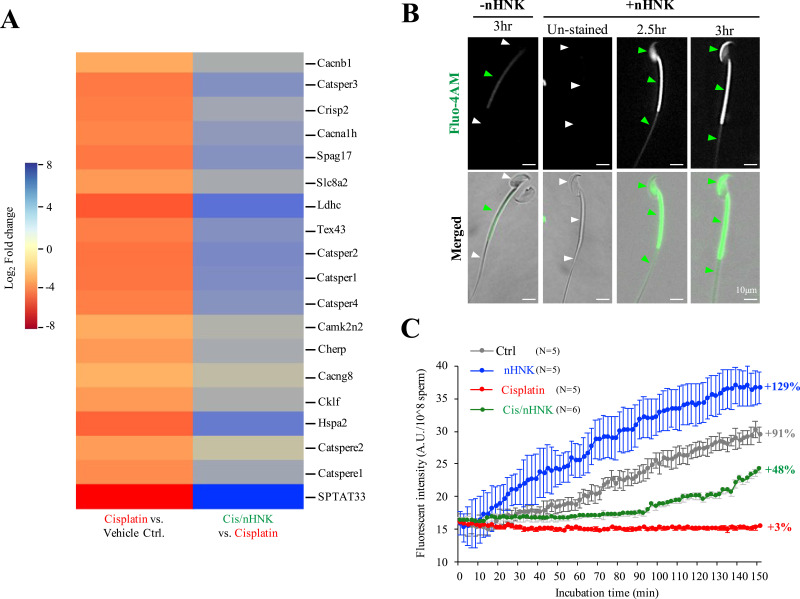
We showed that nHNK promotes MDC1-53bp1-associated non-homologous DNA double-strand break repair signaling pathway that minimizes cisplatin-induced DNA damage. This positive effect restores spermatogenesis and allows the restructuring of the multi-spermatogenic layers in the testis. By reducing mitochondrial oxidative damage, nHNK also protects sperm mitochondrial structure and maintains both testicular and sperm ATP production. By a yet-to-identify mechanism, nHNK restores sperm calcium influx at the sperm midpiece and tail, which is essential for sperm hypermotility and their interaction with the oocyte.
Taken together, the nanoparticulated antioxidant counteracts cisplatin-induced male fertility defects and benefits patients undertaking cisplatin-based chemotherapy. These data may allow the reintroduction of cisplatin for systemic applications in patients at clinics with reduced testicular toxicity.
顺铂是一种常用的抗癌化合物,具有严重的脱靶器官毒性。由于其在癌症治疗中的广泛应用,降低其对正常组织的损伤是当前临床的迫切需求。顺铂诱导的睾丸氧化应激和损伤导致男性生育力下降或不育。尽管早期研究表明天然多酚提取物厚朴酚作为自由基清除剂,可以减少细胞内自由基的积累,但厚朴酚是否对睾丸和精子有直接作用尚不清楚。因此,本研究旨在探讨厚朴酚对睾丸恢复和精子生理的直接作用。
我们将这种多酚抗氧化化合物包封在脂质体纳米颗粒(nHNK)中,并以 5mg/kg 体重的剂量每隔一天腹膜内给予小鼠,连续 6 周。
我们表明,nHNK 促进了 MDC1-53bp1 相关的非同源 DNA 双链断裂修复信号通路,最大限度地减少了顺铂引起的 DNA 损伤。这种积极的作用恢复了精子发生,并允许在睾丸中重建多精子层。通过减少线粒体氧化损伤,nHNK 还保护精子线粒体结构,维持睾丸和精子的 ATP 产生。通过尚未确定的机制,nHNK 恢复了精子中段和尾部的钙离子内流,这对于精子的超动力和与卵子的相互作用至关重要。
综上所述,纳米颗粒抗氧化剂可对抗顺铂引起的男性生育力缺陷,并使接受顺铂为基础的化疗的患者受益。这些数据可能允许将顺铂重新引入临床,以降低睾丸毒性的系统应用于患者。