Iadecola Costantino, Anfray Antoine, Schaeffer Samantha, Hattori Yorito, Santisteban Monica, Casey Nicole, Wang Gang, Strickland Michael, Zhou Ping, Holtzman David, Anrather Josef, Park Laibaik
Weill Cornell Medicine.
National Cerebral and Cardiovascular Center.
Res Sq. 2023 Aug 4:rs.3.rs-3222611. doi: 10.21203/rs.3.rs-3222611/v1.
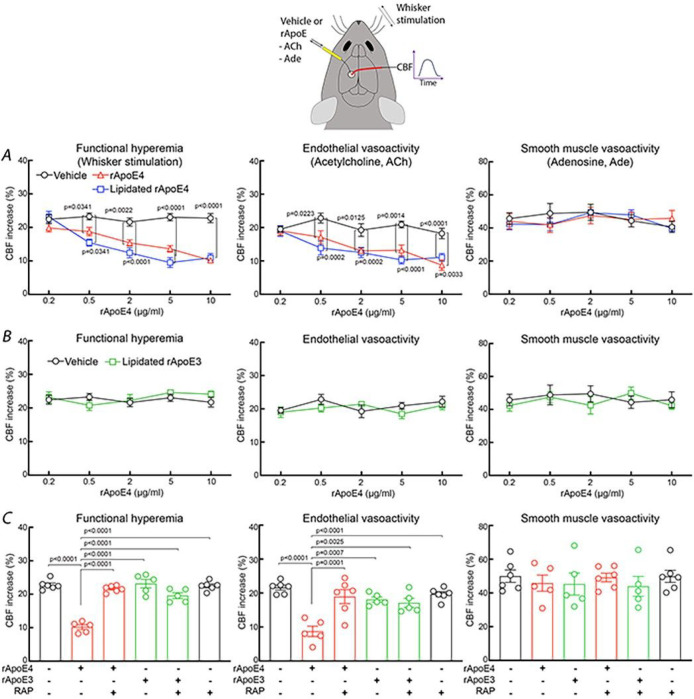
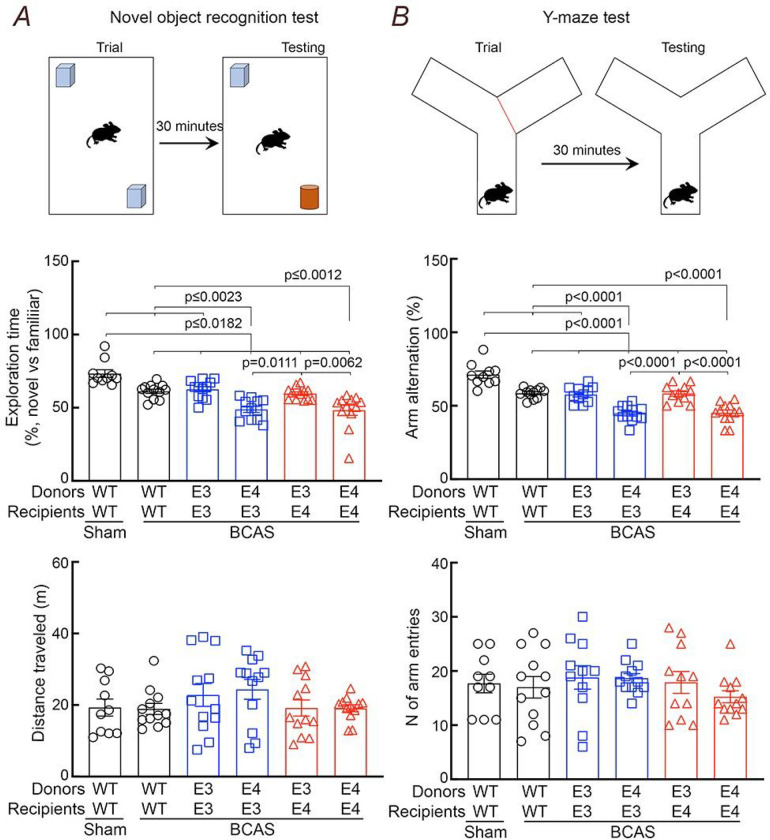
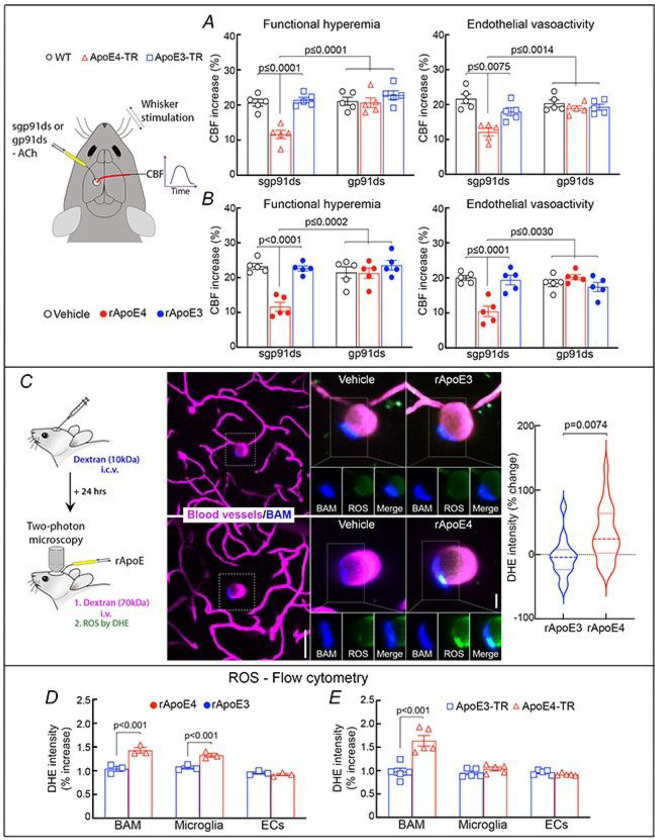
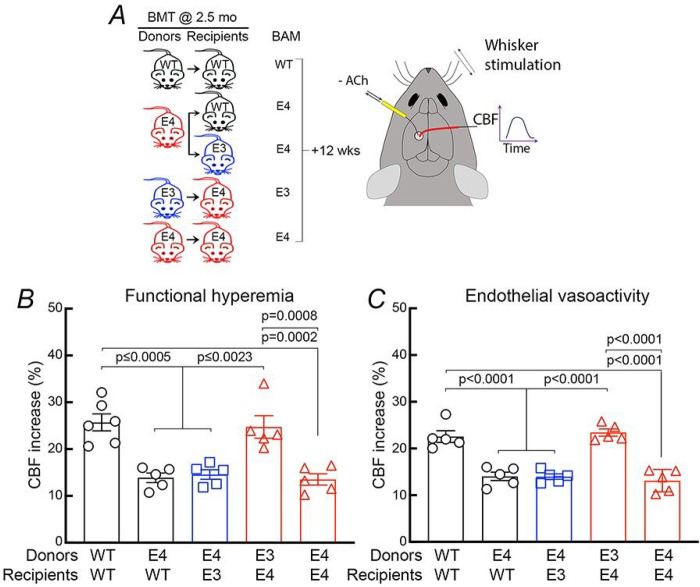
Apolipoprotein-E4 (ApoE4), the strongest genetic risk factor for sporadic Alzheimer's disease, is also a risk factor for microvascular pathologies leading to cognitive impairment, particularly subcortical white matter injury. These effects have been attributed to alterations in the regulation of the brain blood supply, but the cellular source of ApoE4 and the underlying mechanisms remain unclear. In mice expressing human ApoE3 or ApoE4 we report that border associated macrophages (BAM), myeloid cells closely apposed to neocortical microvessels, are both the source and the target of the ApoE4 mediating the neurovascular dysfunction through reactive oxygen species. ApoE4 in BAM is solely responsible for the increased susceptibility to oligemic white matter damage in ApoE4 mice and is sufficient to enhance damage in ApoE3 mice. The data unveil a new aspect of BAM pathobiology and highlight a previously unrecognized cell autonomous role of BAM in the neurovascular dysfunction of ApoE4 with potential therapeutic implications.
载脂蛋白E4(ApoE4)是散发性阿尔茨海默病最强的遗传风险因素,也是导致认知障碍的微血管病变的风险因素,尤其是皮质下白质损伤。这些影响归因于脑血供调节的改变,但ApoE4的细胞来源和潜在机制仍不清楚。在表达人类ApoE3或ApoE4的小鼠中,我们报告与新皮质微血管紧密相邻的髓样细胞——边界相关巨噬细胞(BAM),既是ApoE4的来源,也是其靶点,ApoE4通过活性氧介导神经血管功能障碍。BAM中的ApoE4是ApoE4小鼠对白质低灌注损伤易感性增加的唯一原因,并且足以增强ApoE3小鼠的损伤。这些数据揭示了BAM病理生物学的一个新方面,并突出了BAM在ApoE4神经血管功能障碍中以前未被认识的细胞自主作用,具有潜在的治疗意义。