Ward Ryan D, Tran Jennifer S, Banta Amy B, Bacon Emily E, Rose Warren E, Peters Jason M
Pharmaceutical Sciences Division, School of Pharmacy, University of Wisconsin-Madison, Madison, WI 53705.
Laboratory of Genetics, University of Wisconsin-Madison, Madison, WI 53706.
bioRxiv. 2023 Aug 2:2023.08.02.551708. doi: 10.1101/2023.08.02.551708.
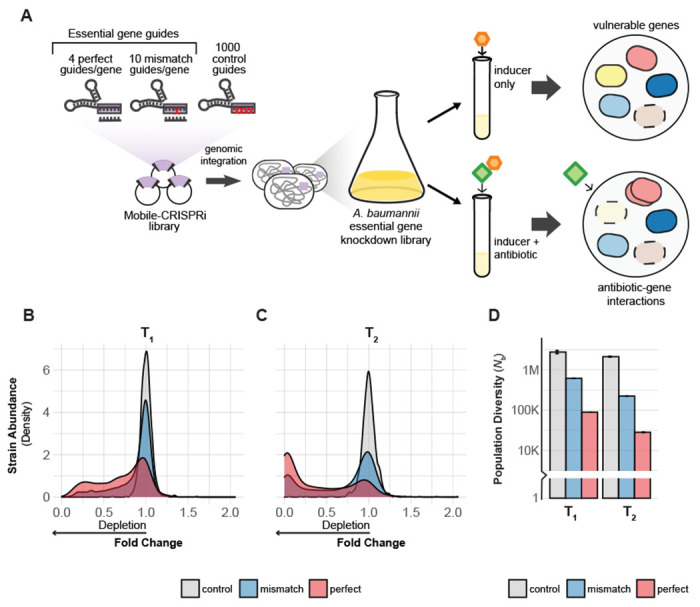
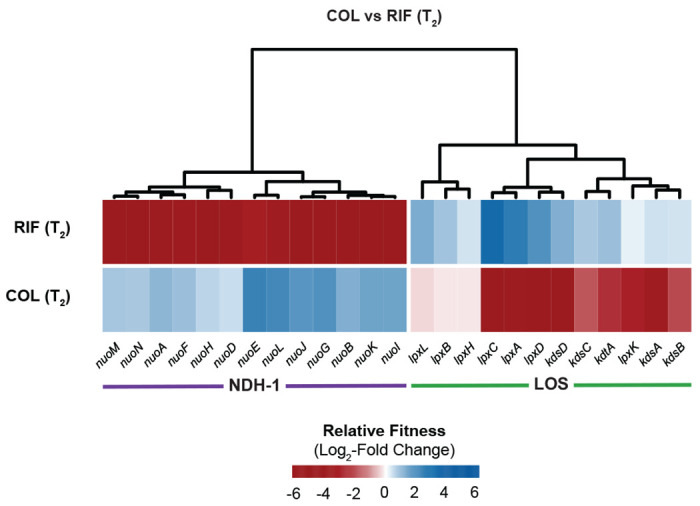
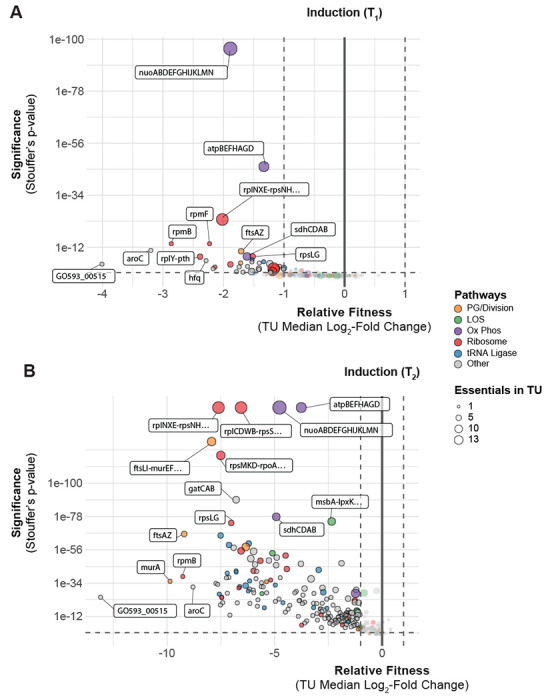
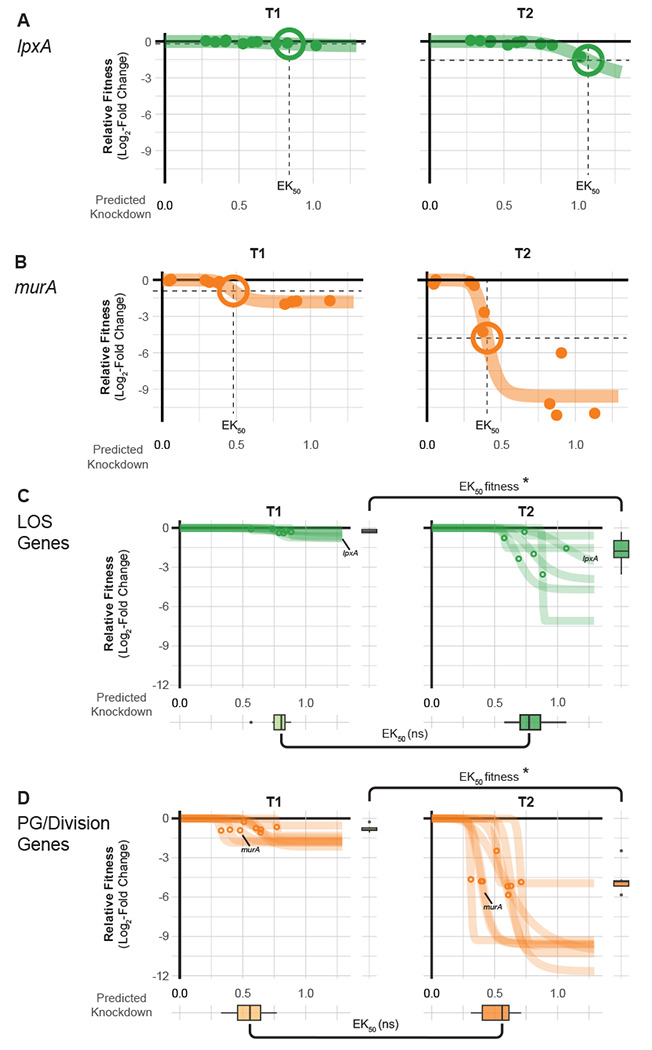
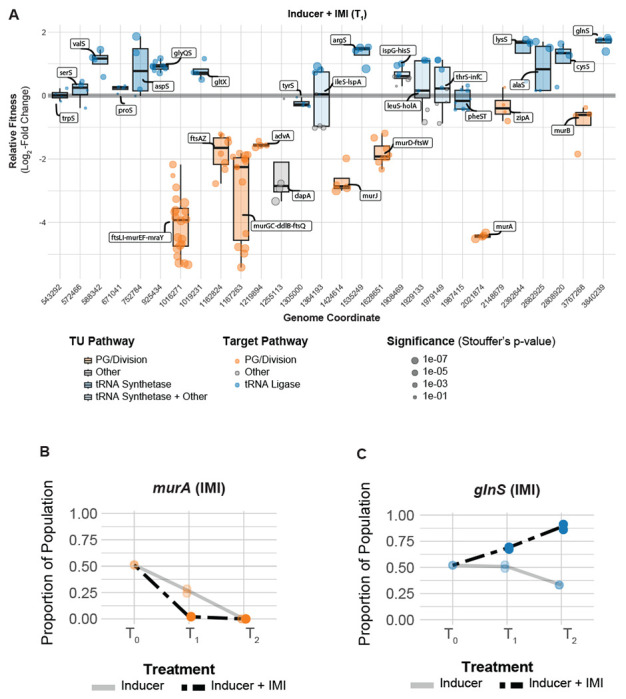
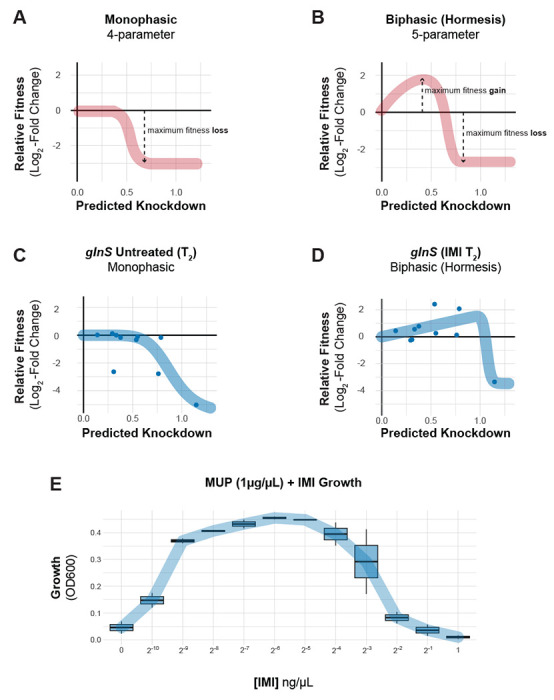
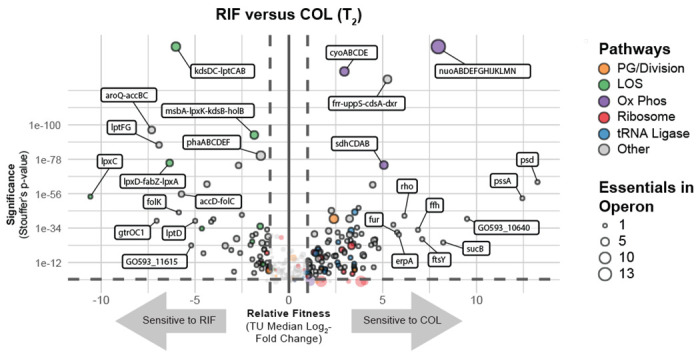
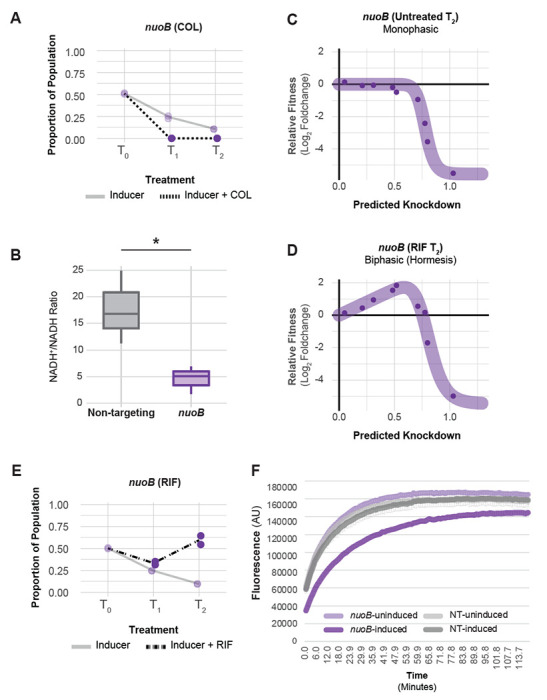
The emergence of multidrug-resistant Gram-negative bacteria underscores the need to define genetic vulnerabilities that can be therapeutically exploited. The Gram-negative pathogen, , is considered an urgent threat due to its propensity to evade antibiotic treatments. Essential cellular processes are the target of existing antibiotics and a likely source of new vulnerabilities. Although essential genes have been identified by transposon sequencing (Tn-seq), they have not been prioritized by sensitivity to knockdown or antibiotics. Here, we take a systems biology approach to comprehensively characterize essential genes using CRISPR interference (CRISPRi). We show that certain essential genes and pathways are acutely sensitive to knockdown, providing a set of vulnerable targets for future therapeutic investigation. Screening our CRISPRi library against last-resort antibiotics uncovered genes and pathways that modulate beta-lactam sensitivity, an unexpected link between NADH dehydrogenase activity and growth inhibition by polymyxins, and anticorrelated phenotypes that underpin synergy between polymyxins and rifamycins. Our study demonstrates the power of systematic genetic approaches to identify vulnerabilities in Gram-negative pathogens and uncovers antibiotic-essential gene interactions that better inform combination therapies.
多重耐药革兰氏阴性菌的出现凸显了确定可用于治疗的基因脆弱性的必要性。革兰氏阴性病原体 因其逃避抗生素治疗的倾向而被视为一种紧迫威胁。基本细胞过程是现有抗生素的作用靶点,也是新的脆弱性的可能来源。尽管通过转座子测序(Tn-seq)已鉴定出 的必需基因,但它们尚未根据对基因敲低或抗生素的敏感性进行优先级排序。在这里,我们采用系统生物学方法,利用CRISPR干扰(CRISPRi)全面表征 的必需基因。我们表明,某些必需基因和途径对基因敲低极为敏感,为未来的治疗研究提供了一组脆弱靶点。针对最后手段抗生素筛选我们的CRISPRi文库,发现了调节β-内酰胺敏感性的基因和途径、NADH脱氢酶活性与多粘菌素生长抑制之间的意外联系,以及支撑多粘菌素与利福霉素协同作用的反相关表型。我们的研究证明了系统遗传学方法在识别革兰氏阴性病原体脆弱性方面的力量,并揭示了抗生素-必需基因相互作用,为联合治疗提供了更好的信息。