VIB Center for Medical Biotechnology, Technologiepark-Zwijnaarde 75, 9052, Ghent, Belgium.
Department of Biomolecular Medicine, Ghent University, Ghent, Belgium.
Cell Mol Life Sci. 2023 Aug 14;80(9):249. doi: 10.1007/s00018-023-04900-x.
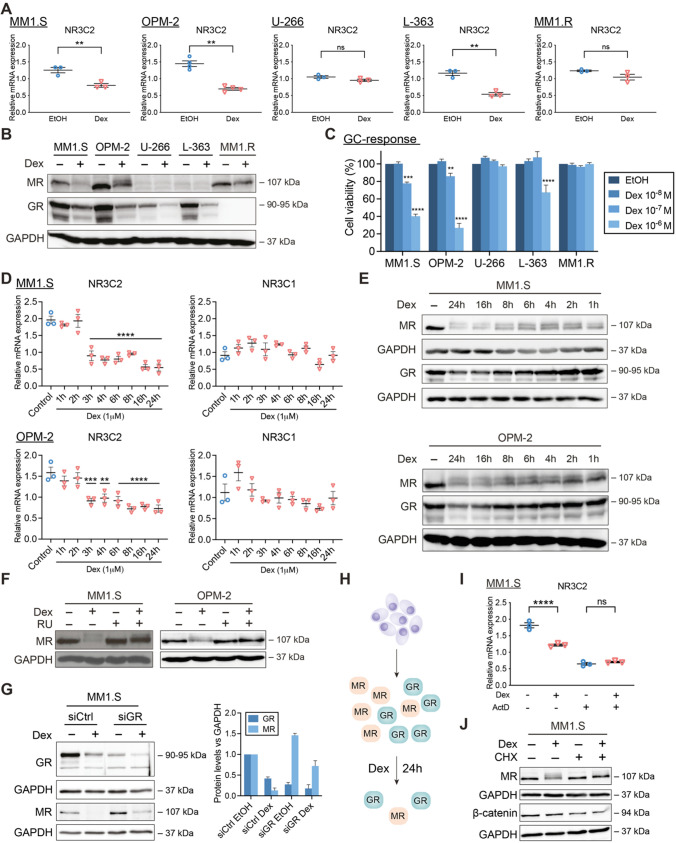
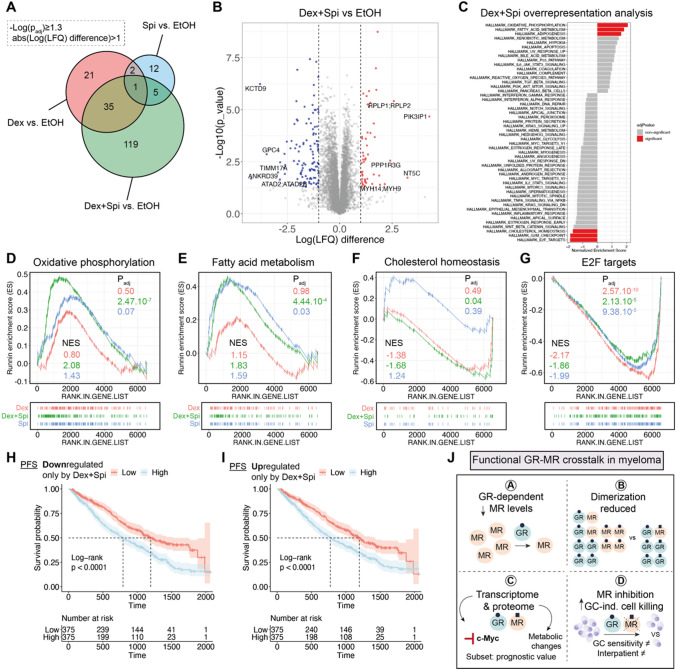
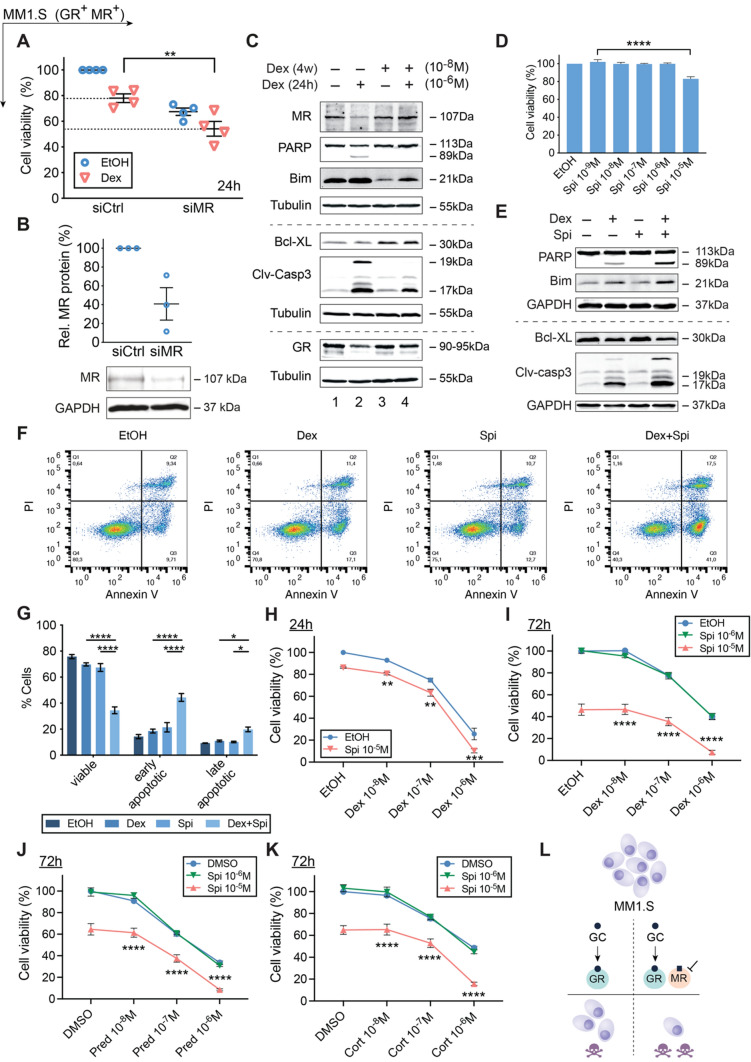
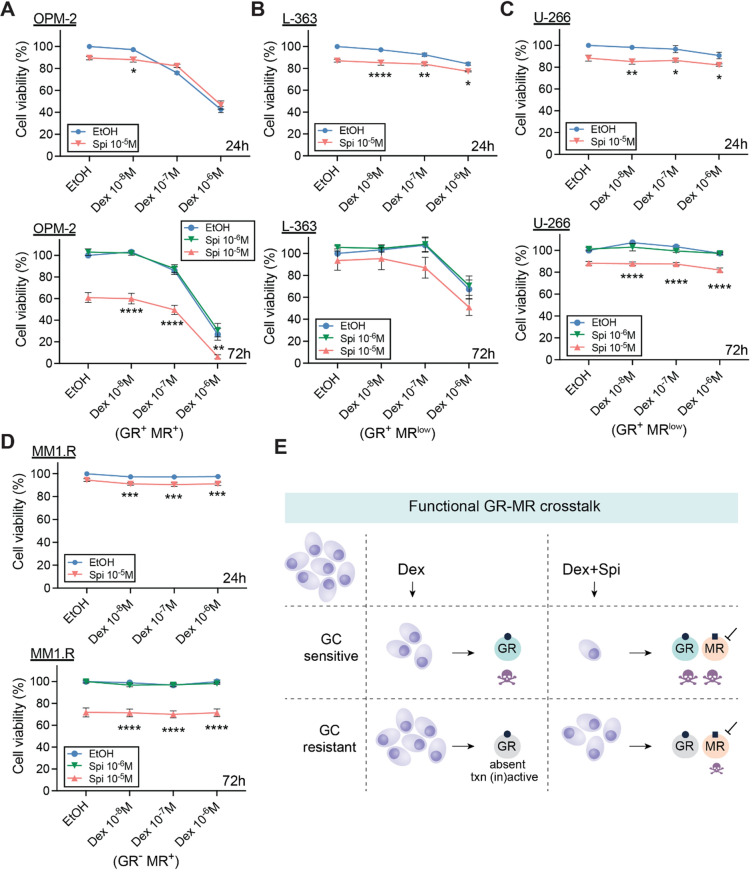
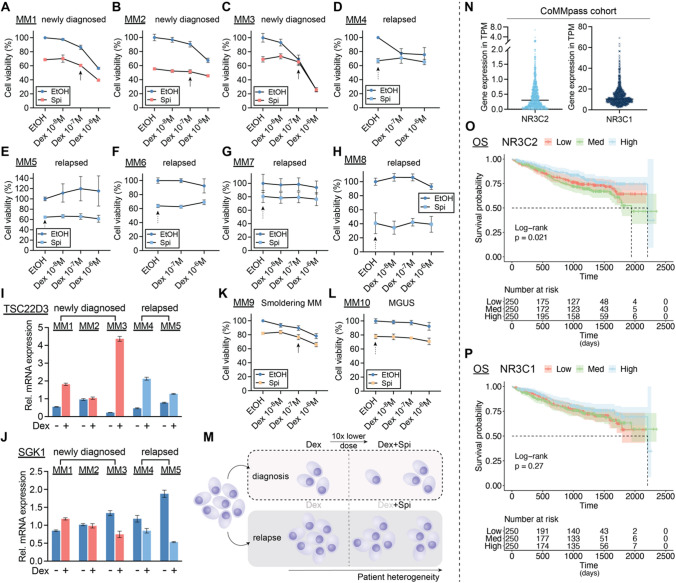
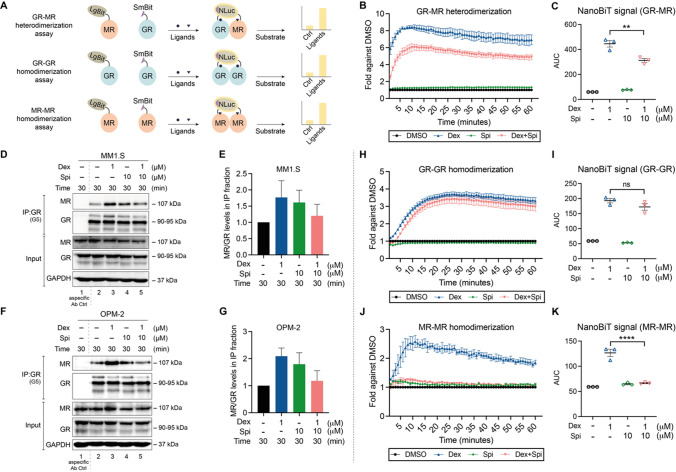
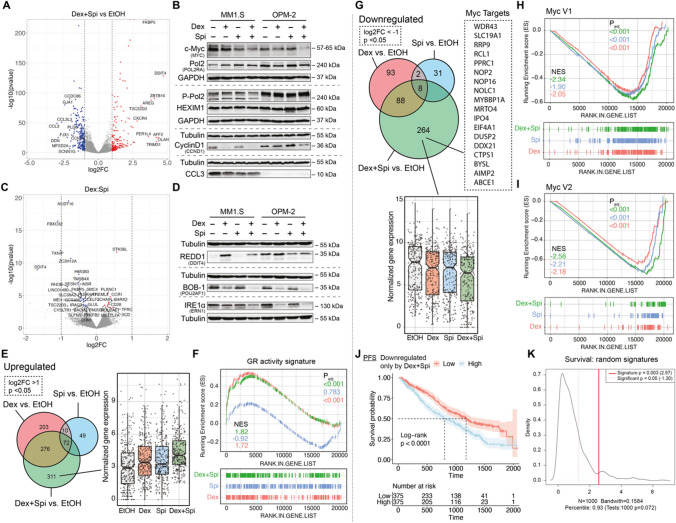
The glucocorticoid receptor (GR) is a crucial drug target in multiple myeloma as its activation with glucocorticoids effectively triggers myeloma cell death. However, as high-dose glucocorticoids are also associated with deleterious side effects, novel approaches are urgently needed to improve GR action in myeloma. Here, we reveal a functional crosstalk between GR and the mineralocorticoid receptor (MR) that plays a role in improved myeloma cell killing. We show that the GR agonist dexamethasone (Dex) downregulates MR levels in a GR-dependent way in myeloma cells. Co-treatment of Dex with the MR antagonist spironolactone (Spi) enhances Dex-induced cell killing in primary, newly diagnosed GC-sensitive myeloma cells. In a relapsed GC-resistant setting, Spi alone induces distinct myeloma cell killing. On a mechanistic level, we find that a GR-MR crosstalk likely arises from an endogenous interaction between GR and MR in myeloma cells. Quantitative dimerization assays show that Spi reduces Dex-induced GR-MR heterodimerization and completely abolishes Dex-induced MR-MR homodimerization, while leaving GR-GR homodimerization intact. Unbiased transcriptomics analyses reveal that c-myc and many of its target genes are downregulated most by combined Dex-Spi treatment. Proteomics analyses further identify that several metabolic hallmarks are modulated most by this combination treatment. Finally, we identified a subset of Dex-Spi downregulated genes and proteins that may predict prognosis in the CoMMpass myeloma patient cohort. Our study demonstrates that GR-MR crosstalk is therapeutically relevant in myeloma as it provides novel strategies for glucocorticoid-based dose-reduction.
糖皮质激素受体 (GR) 是多发性骨髓瘤的一个重要药物靶点,因为其与糖皮质激素的激活可有效触发骨髓瘤细胞死亡。然而,由于高剂量的糖皮质激素也会带来有害的副作用,因此迫切需要新的方法来改善骨髓瘤中的 GR 作用。在这里,我们揭示了 GR 与盐皮质激素受体 (MR) 之间的一种功能串扰,这种串扰在改善骨髓瘤细胞杀伤中发挥作用。我们表明,GR 激动剂地塞米松 (Dex) 以 GR 依赖性的方式下调骨髓瘤细胞中的 MR 水平。在原发性、新诊断的 GC 敏感骨髓瘤细胞中,Dex 与 MR 拮抗剂螺内酯 (Spi) 共同处理可增强 Dex 诱导的细胞杀伤。在复发的 GC 耐药环境中,Spi 单独诱导明显的骨髓瘤细胞杀伤。在机制水平上,我们发现 GR-MR 串扰可能源于骨髓瘤细胞中 GR 和 MR 之间的内源性相互作用。定量二聚化分析表明,Spi 减少 Dex 诱导的 GR-MR 异二聚体形成,并完全消除 Dex 诱导的 MR-MR 同二聚体形成,而 GR-GR 同二聚体形成则保持完整。无偏转录组学分析表明,c-myc 及其许多靶基因受 Dex-Spi 联合处理的下调最为明显。蛋白质组学分析进一步表明,几种代谢特征受这种联合治疗的调节最为明显。最后,我们鉴定了一组 Dex-Spi 下调的基因和蛋白质,它们可能预测 CoMMpass 骨髓瘤患者队列的预后。我们的研究表明,GR-MR 串扰在骨髓瘤中具有治疗相关性,因为它为基于糖皮质激素的剂量减少提供了新的策略。