Materials and Manufacturing Directorate, Air Force Research Laboratory, Wright Patterson Air Force Base, OH, 45433, USA.
Department of Bioengineering, University of Massachusetts Dartmouth, Dartmouth, MA, 02747, USA.
Sci Rep. 2023 Aug 14;13(1):13192. doi: 10.1038/s41598-023-38797-0.
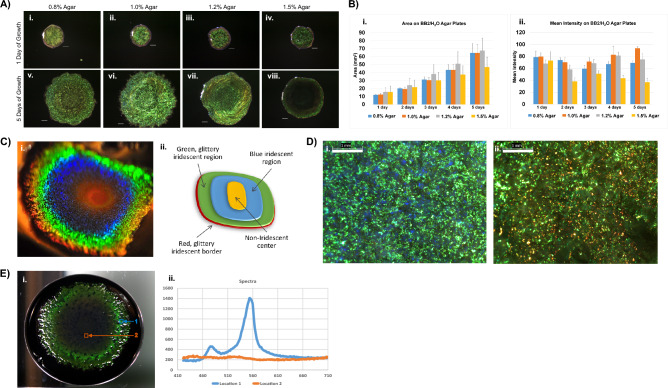
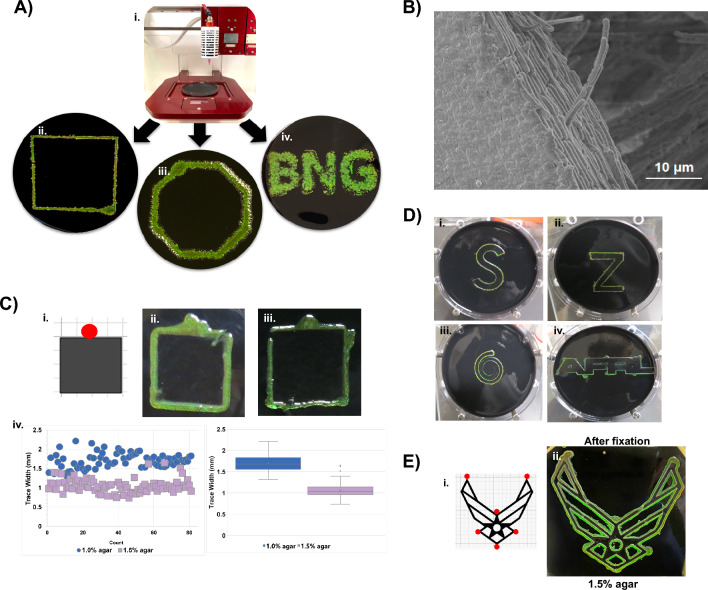
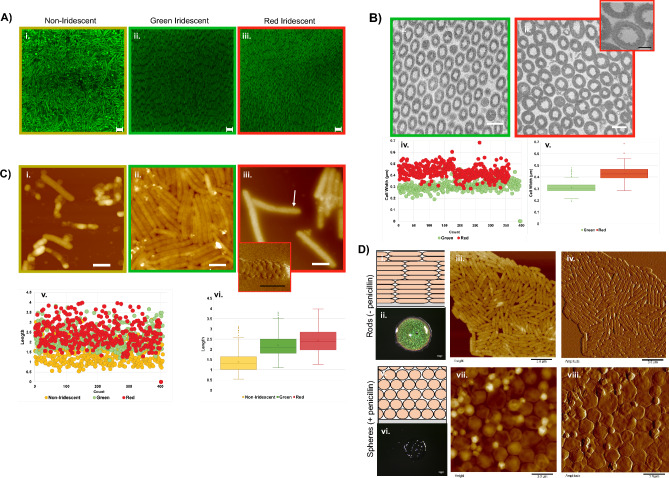
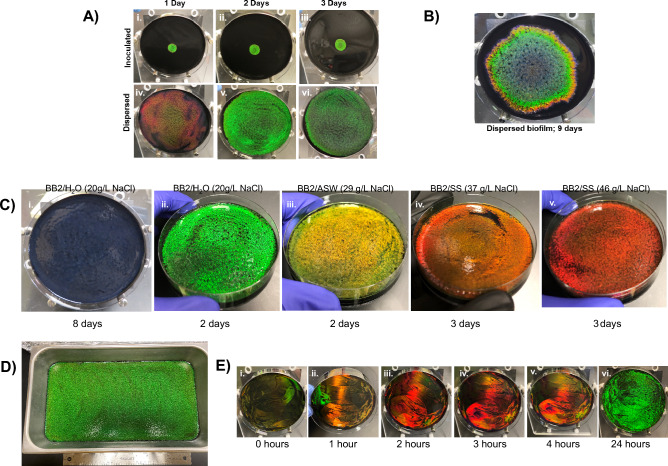
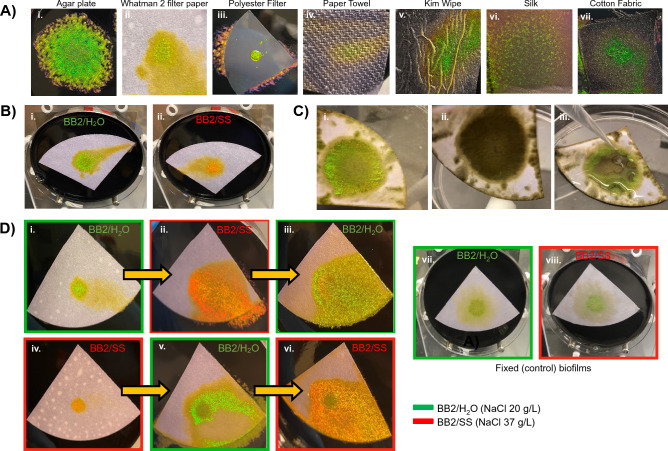
Nature offers many examples of materials which exhibit exceptional properties due to hierarchical assembly of their constituents. In well-studied multi-cellular systems, such as the morpho butterfly, a visible indication of having ordered submicron features is given by the display of structural color. Detailed investigations of nature's designs have yielded mechanistic insights and led to the development of biomimetic materials at laboratory scales. However, the manufacturing of hierarchical assemblies at industrial scales remains difficult. Biomanufacturing aims to leverage the autonomy of biological systems to produce materials at lower cost and with fewer carbon emissions. Earlier reports documented that some bacteria, particularly those with gliding motility, self-assemble into biofilms with polycrystalline structures and exhibit glittery, iridescent colors. The current study demonstrates the potential of using one of these bacteria, Cellulophaga lytica, as a platform for the large scale biomanufacturing of ordered materials. Specific approaches for controlling C. lytica biofilm optical, spatial and temporal properties are reported. Complementary microscopy-based studies reveal that biofilm color variations are attributed to changes in morphology induced by cellular responses to the local environment. Incorporation of C. lytica biofilms into materials is also demonstrated, thereby facilitating their handling and downstream processing, as would be needed during manufacturing processes. Finally, the utility of C. lytica as a self-printing, photonic ink is established by this study. In summary, autonomous surface assembly of C. lytica under ambient conditions and across multiple length scales circumvent challenges that currently hinder production of ordered materials in industrial settings.
自然界提供了许多例子,说明由于其组成部分的分层组装,材料表现出了非凡的特性。在研究充分的多细胞系统中,例如形态蝴蝶,其有序亚微米特征的明显表现是结构色的显示。对自然界设计的详细研究产生了机械学的见解,并导致了在实验室规模上仿生材料的开发。然而,在工业规模上制造分层组装仍然很困难。生物制造旨在利用生物系统的自主性,以更低的成本和更少的碳排放来生产材料。早期的报告记录了一些细菌,特别是那些具有滑行运动的细菌,会自我组装成具有多晶结构的生物膜,并表现出闪闪发光的虹彩颜色。本研究展示了使用其中一种细菌——纤维弧菌作为平台,大规模生物制造有序材料的潜力。报告了控制 C. lytica 生物膜光学、空间和时间特性的具体方法。基于互补显微镜的研究表明,生物膜颜色的变化归因于细胞对局部环境的反应引起的形态变化。还将 C. lytica 生物膜纳入材料中,从而便于处理和下游加工,这是制造过程中所需要的。最后,本研究确立了 C. lytica 作为自打印光子墨水的实用性。总之,在环境条件下和跨越多个长度尺度上的 C. lytica 自主表面组装规避了目前阻碍工业有序材料生产的挑战。