The UK Dementia Research Institute, University College London, Queen Square, London, WC1N 3BG, UK.
Department of Neuromuscular Diseases, Queen Square Institute of Neurology, University College London, Queen Square, London, WC1N 3BG, UK.
Acta Neuropathol Commun. 2023 Aug 14;11(1):132. doi: 10.1186/s40478-023-01632-8.
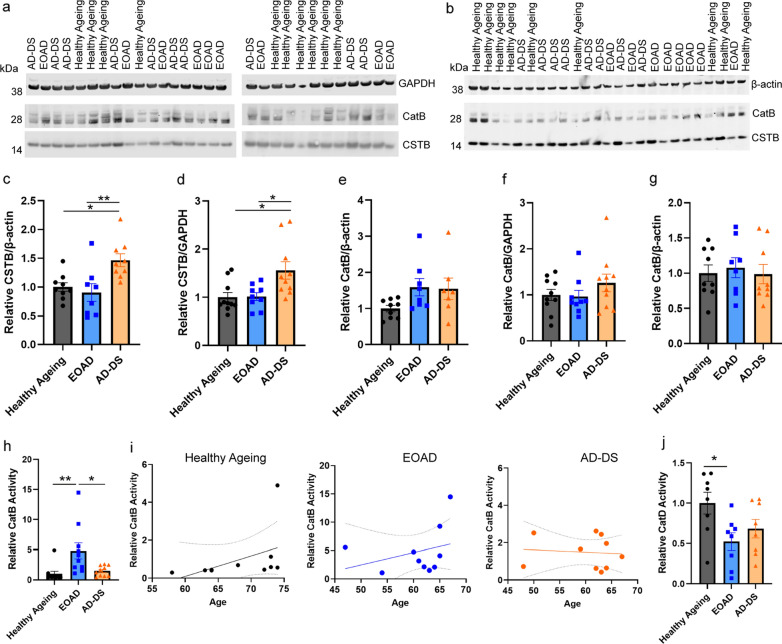
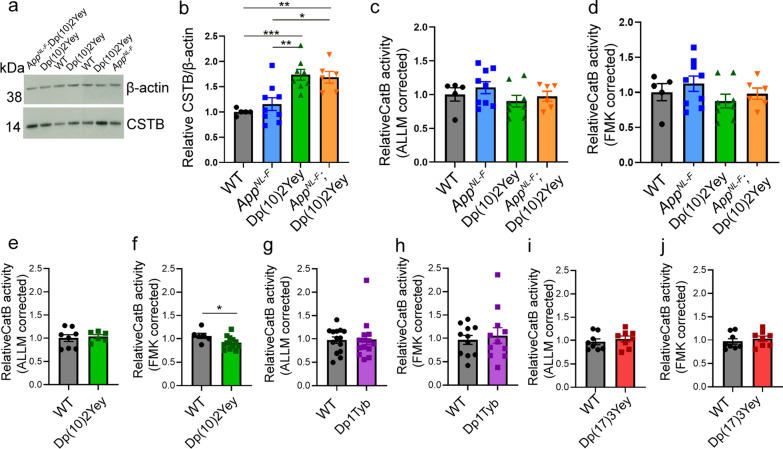
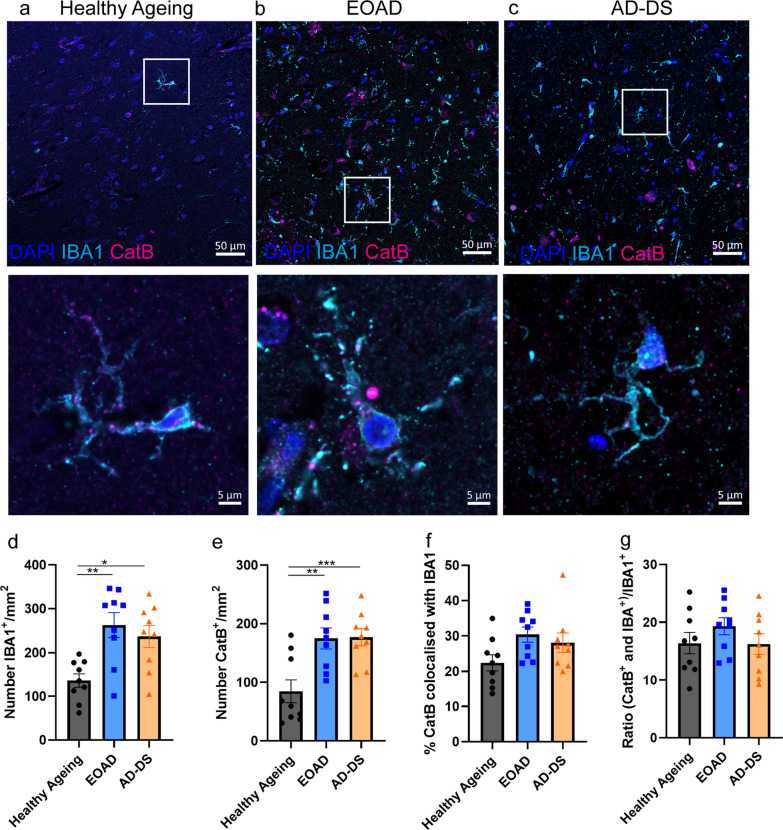
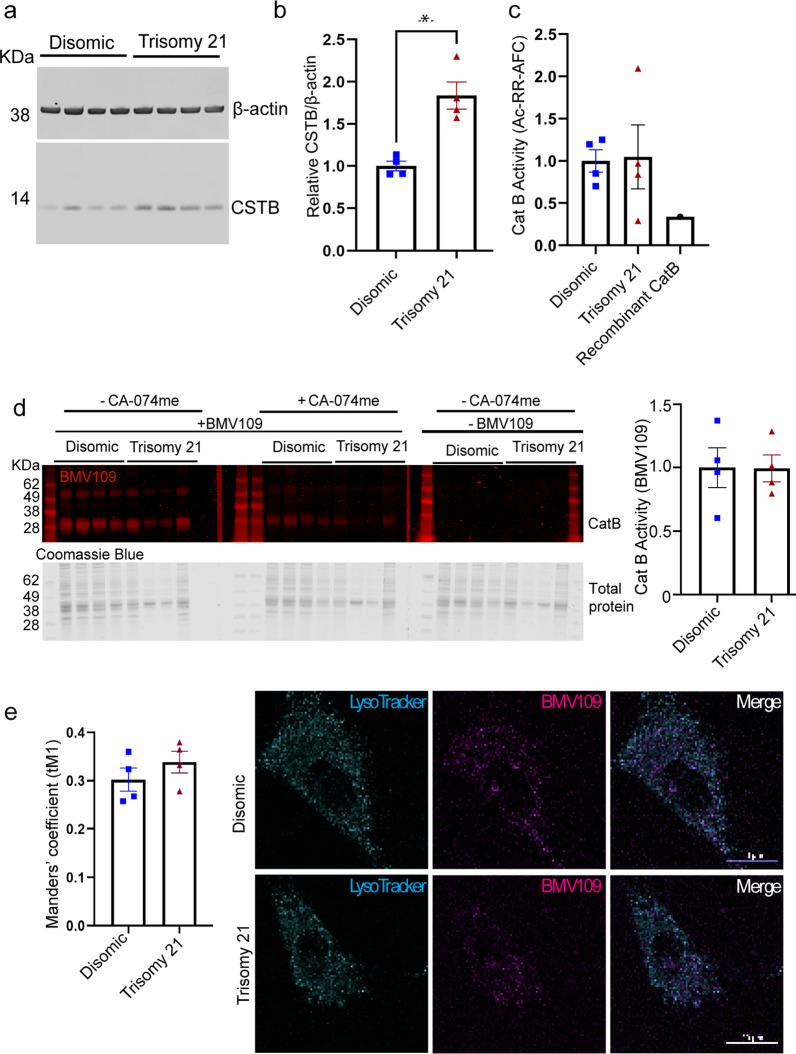
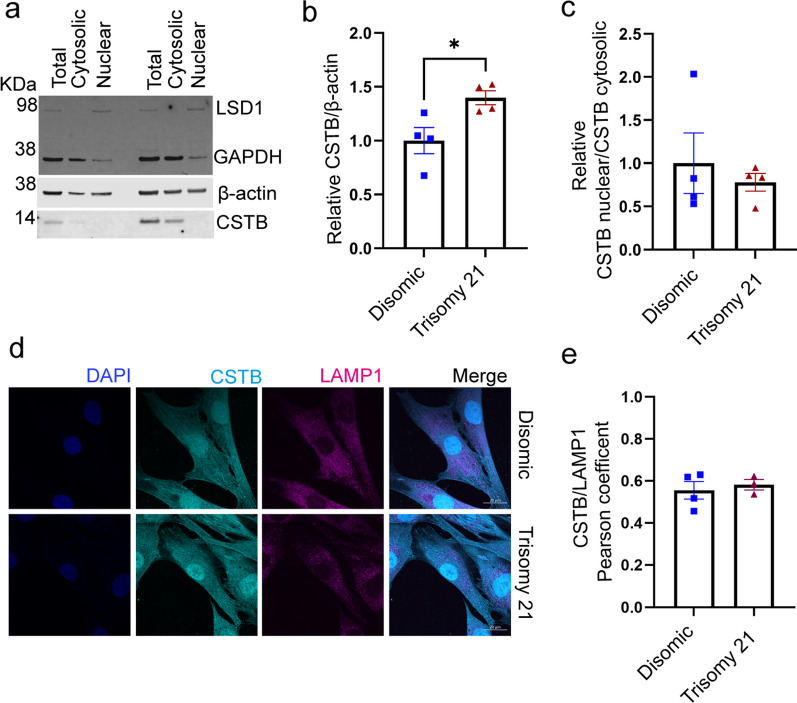
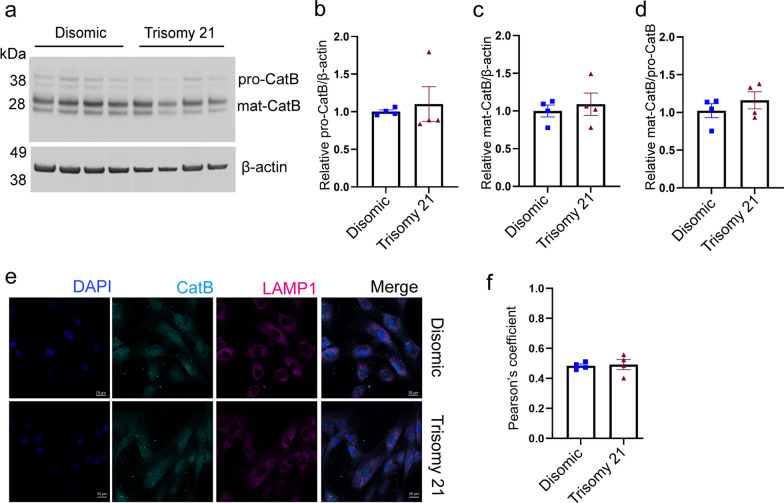
Cathepsin B is a cysteine protease that is implicated in multiple aspects of Alzheimer's disease pathogenesis. The endogenous inhibitor of this enzyme, cystatin B (CSTB) is encoded on chromosome 21. Thus, individuals who have Down syndrome, a genetic condition caused by having an additional copy of chromosome 21, have an extra copy of an endogenous inhibitor of the enzyme. Individuals who have Down syndrome are also at significantly increased risk of developing early-onset Alzheimer's disease (EOAD). The impact of the additional copy of CSTB on Alzheimer's disease development in people who have Down syndrome is not well understood. Here we compared the biology of cathepsin B and CSTB in individuals who had Down syndrome and Alzheimer's disease, with disomic individuals who had Alzheimer's disease or were ageing healthily. We find that the activity of cathepsin B enzyme is decreased in the brain of people who had Down syndrome and Alzheimer's disease compared with disomic individuals who had Alzheimer's disease. This change occurs independently of an alteration in the abundance of the mature enzyme or the number of cathepsin B cells. We find that the abundance of CSTB is significantly increased in the brains of individuals who have Down syndrome and Alzheimer's disease compared to disomic individuals both with and without Alzheimer's disease. In mouse and human cellular preclinical models of Down syndrome, three-copies of CSTB increases CSTB protein abundance but this is not sufficient to modulate cathepsin B activity. EOAD and Alzheimer's disease-Down syndrome share many overlapping mechanisms but differences in disease occur in individuals who have trisomy 21. Understanding this biology will ensure that people who have Down syndrome access the most appropriate Alzheimer's disease therapeutics and moreover will provide unique insight into disease pathogenesis more broadly.
组织蛋白酶 B 是一种半胱氨酸蛋白酶,涉及阿尔茨海默病发病机制的多个方面。该酶的内源性抑制剂胱抑素 B(CSTB)编码在 21 号染色体上。因此,患有唐氏综合征(一种由于 21 号染色体额外复制而导致的遗传疾病)的个体,其体内存在该酶的内源性抑制剂的额外副本。唐氏综合征患者患早发性阿尔茨海默病(EOAD)的风险显著增加。额外的 CSTB 拷贝对唐氏综合征患者阿尔茨海默病发展的影响尚未得到充分理解。在这里,我们比较了唐氏综合征和阿尔茨海默病患者与二倍体阿尔茨海默病或健康衰老个体中组织蛋白酶 B 和 CSTB 的生物学特性。我们发现,唐氏综合征和阿尔茨海默病患者的大脑中组织蛋白酶 B 酶的活性降低,而二倍体阿尔茨海默病患者则没有。这种变化独立于成熟酶的丰度或组织蛋白酶 B 细胞数量的改变而发生。我们发现,唐氏综合征和阿尔茨海默病患者大脑中的 CSTB 丰度明显高于二倍体阿尔茨海默病患者。在唐氏综合征的小鼠和人类细胞临床前模型中,CSTB 的三倍体增加 CSTB 蛋白丰度,但不足以调节组织蛋白酶 B 的活性。EOAD 和唐氏综合征合并阿尔茨海默病共享许多重叠的机制,但在三体 21 个体中,疾病存在差异。了解这种生物学将确保唐氏综合征患者获得最合适的阿尔茨海默病治疗方法,并且更广泛地为疾病发病机制提供独特的见解。