Department of Human Biology, NUTRIM School of Nutrition and Translational Research in Metabolism, Maastricht University Medical Center+, P.O. Box 616, 6200 MD, Maastricht, The Netherlands.
Rev Endocr Metab Disord. 2023 Oct;24(5):825-838. doi: 10.1007/s11154-023-09830-4. Epub 2023 Aug 15.
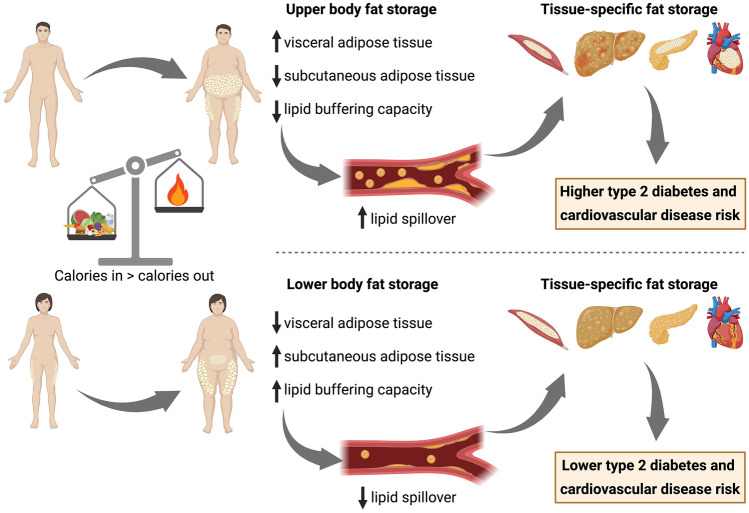
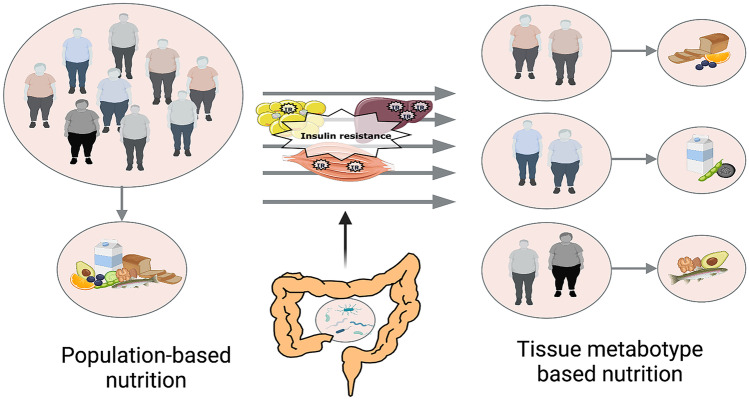
Given the increasing number of people living with obesity and related chronic metabolic disease, precision nutrition approaches are required to increase the effectiveness of prevention strategies. This review addresses these approaches in different metabolic phenotypes (metabotypes) in obesity. Although obesity is typically associated with an increased cardiometabolic disease risk, some people with obesity are relatively protected against the detrimental effects of excess adiposity on cardiometabolic health, also referred to as 'metabolically healthy obesity' (MHO). Underlying mechanisms, the extent to which MHO is a transient state as well as lifestyle strategies to counteract the transition from MHO to metabolically unhealthy obesity (MUO) are discussed. Based on the limited resources that are available for dietary lifestyle interventions, it may be reasonable to prioritize interventions for people with MUO, since targeting high-risk patients for specific nutritional, lifestyle or weight-loss strategies may enhance the cost-effectiveness of these interventions. Additionally, the concept of tissue insulin resistant (IR) metabotypes is discussed, representing distinct etiologies towards type 2 diabetes (T2D) as well as cardiovascular disease (CVD). Recent evidence indicates that these tissue IR metabotypes, already present in individuals with obesity with a normal glucose homeostasis, respond differentially to diet. Modulation of dietary macronutrient composition according to these metabotypes may considerably improve cardiometabolic health benefits. Thus, nutritional or lifestyle intervention may improve cardiometabolic health, even with only minor or no weight loss, which stresses the importance of focusing on a healthy lifestyle and not on weight loss only. Targeting different metabotypes towards T2D and cardiometabolic diseases may lead to more effective lifestyle prevention and treatment strategies. Age and sex-related differences in tissue metabotypes and related microbial composition and functionality (fermentation), as important drivers and/or mediators of dietary intervention response, have to be taken into account. For the implementation of these approaches, more prospective trials are required to provide the knowledge base for precision nutrition in the prevention of chronic metabolic diseases.
鉴于肥胖症和相关慢性代谢性疾病患者人数不断增加,需要采用精准营养方法来提高预防策略的效果。本综述探讨了肥胖症不同代谢表型(代谢类型)中的这些方法。尽管肥胖症通常与心血管代谢疾病风险增加相关,但一些肥胖症患者相对免受多余脂肪对心血管代谢健康的不利影响,也称为“代谢健康型肥胖症”(MHO)。本文讨论了潜在机制、MHO 是暂时状态的程度以及对抗从 MHO 向代谢不健康肥胖症(MUO)转变的生活方式策略。鉴于饮食生活方式干预的可用资源有限,对于 MUO 患者进行干预可能是合理的,因为针对特定营养、生活方式或减肥策略的高危患者可能会提高这些干预措施的成本效益。此外,还讨论了组织胰岛素抵抗(IR)代谢类型的概念,代表了 2 型糖尿病(T2D)和心血管疾病(CVD)的不同病因。最近的证据表明,这些组织 IR 代谢类型已经存在于葡萄糖稳态正常的肥胖症患者中,对饮食的反应不同。根据这些代谢类型来调节饮食宏量营养素组成可能会极大地改善心血管代谢健康益处。因此,营养或生活方式干预可能会改善心血管代谢健康,即使体重仅略有减轻或没有减轻,这强调了关注健康生活方式而不仅仅是减轻体重的重要性。针对不同的代谢类型来预防 T2D 和心血管疾病可能会导致更有效的生活方式预防和治疗策略。必须考虑组织代谢类型以及相关微生物组成和功能(发酵)的年龄和性别差异,这些差异是饮食干预反应的重要驱动因素和/或调节剂。为了实施这些方法,需要进行更多的前瞻性试验,为预防慢性代谢性疾病的精准营养提供知识基础。