Stead Family Department of Pediatrics and Pappajohn Biomedical Institute, Roy J. and Lucille A. Carver College of Medicine.
Department of Internal Medicine and Pappajohn Biomedical Institute, Roy J. and Lucille A. Carver College of Medicine.
J Clin Invest. 2023 Oct 16;133(20):e171268. doi: 10.1172/JCI171268.
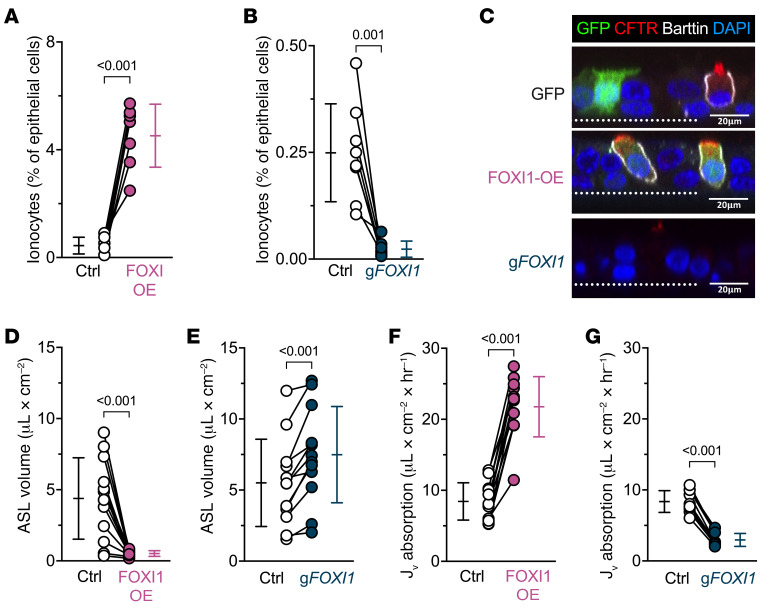
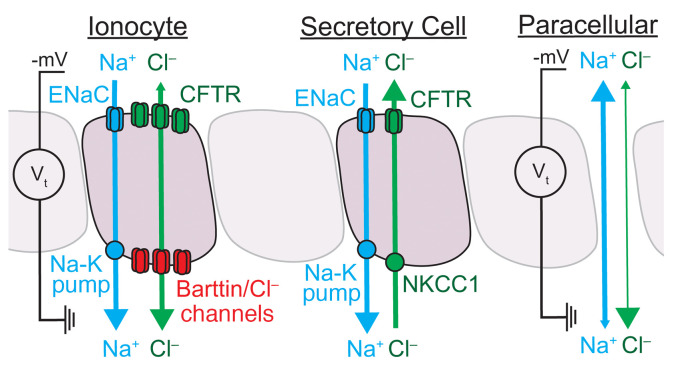
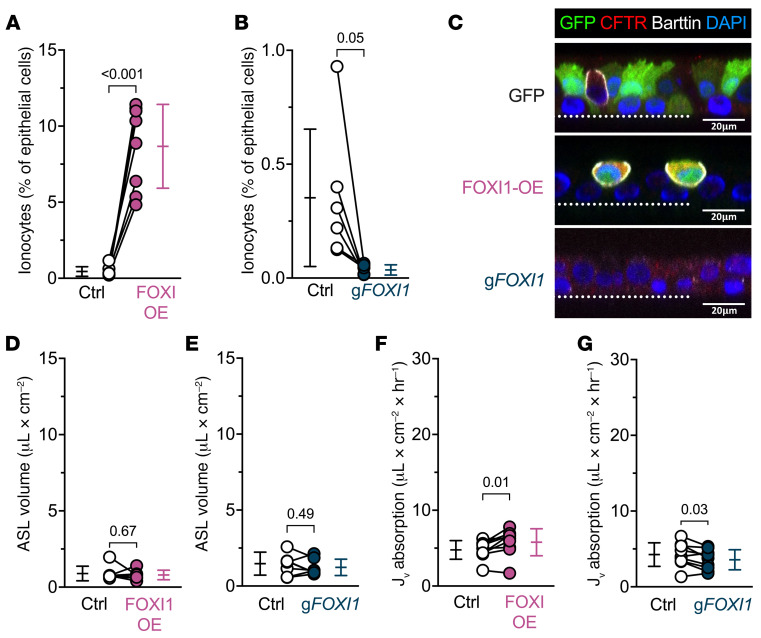
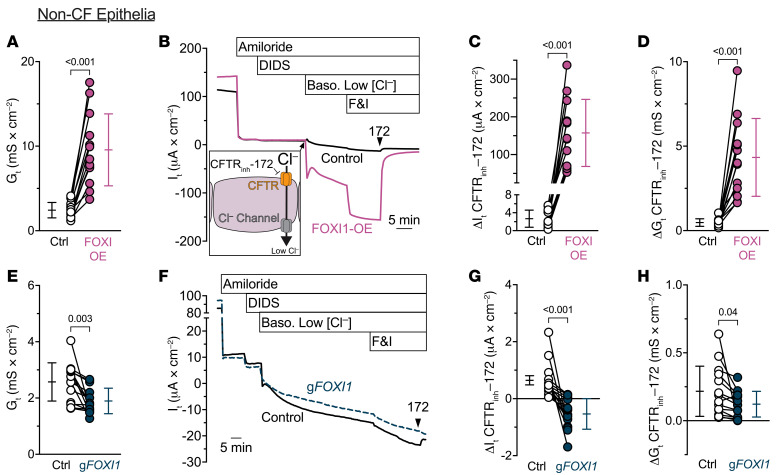
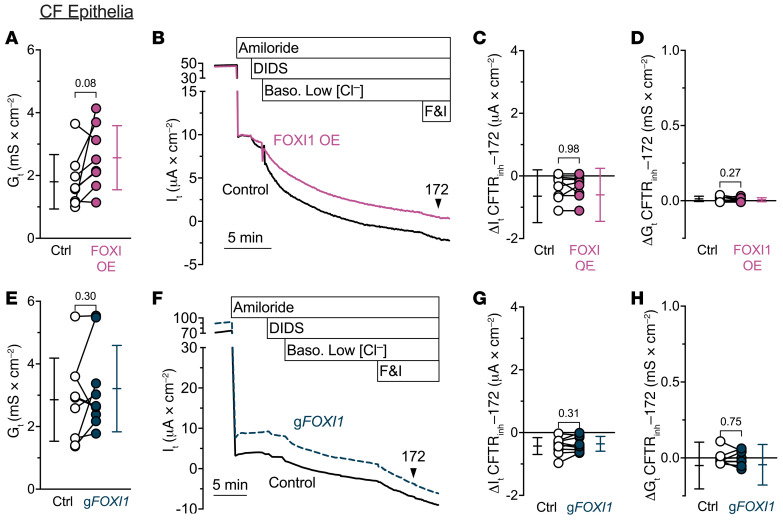
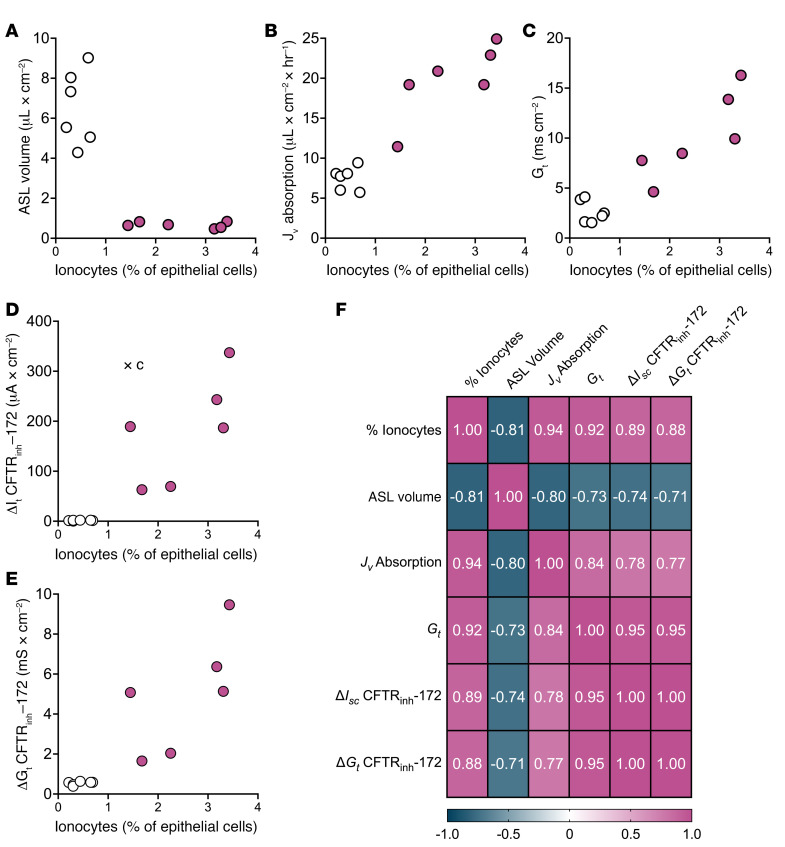
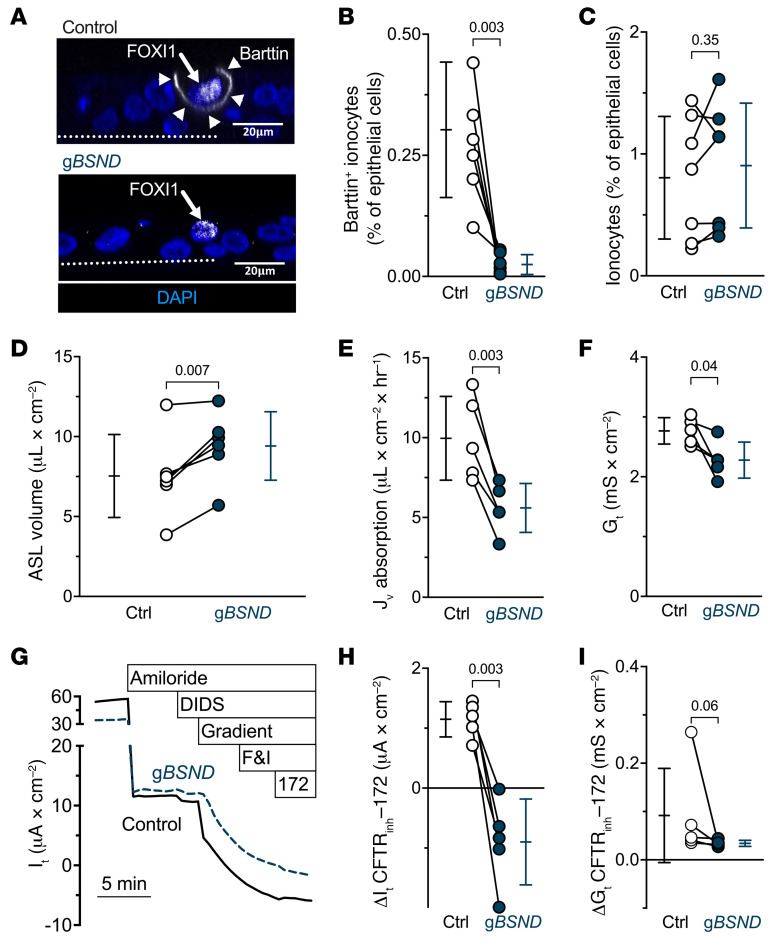
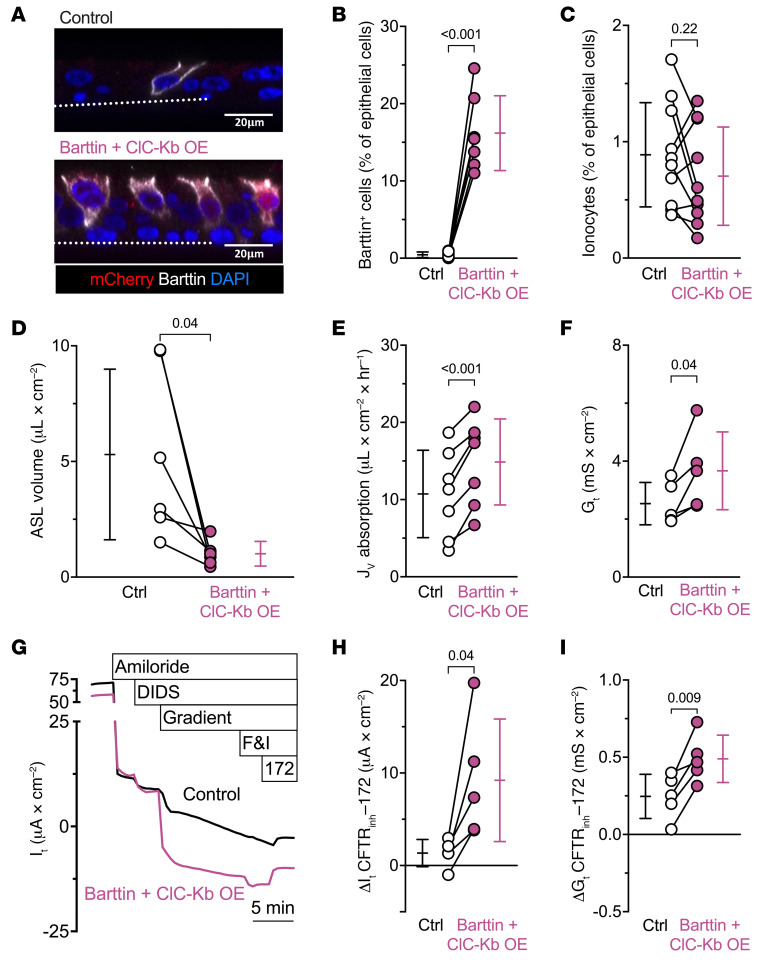
The volume and composition of a thin layer of liquid covering the airway surface defend the lung from inhaled pathogens and debris. Airway epithelia secrete Cl- into the airway surface liquid through cystic fibrosis transmembrane conductance regulator (CFTR) channels, thereby increasing the volume of airway surface liquid. The discovery that pulmonary ionocytes contain high levels of CFTR led us to predict that ionocytes drive secretion. However, we found the opposite. Elevating ionocyte abundance increased liquid absorption, whereas reducing ionocyte abundance increased secretion. In contrast to other airway epithelial cells, ionocytes contained barttin/Cl- channels in their basolateral membrane. Disrupting barttin/Cl- channel function impaired liquid absorption, and overexpressing barttin/Cl- channels increased absorption. Together, apical CFTR and basolateral barttin/Cl- channels provide an electrically conductive pathway for Cl- flow through ionocytes, and the transepithelial voltage generated by apical Na+ channels drives absorption. These findings indicate that ionocytes mediate liquid absorption, and secretory cells mediate liquid secretion. Segregating these counteracting activities to distinct cell types enables epithelia to precisely control the airway surface. Moreover, the divergent role of CFTR in ionocytes and secretory cells suggests that cystic fibrosis disrupts both liquid secretion and absorption.
覆盖在气道表面的薄薄一层液体的容量和组成可保护肺部免受吸入的病原体和碎片的侵害。气道上皮细胞通过囊性纤维化跨膜电导调节剂 (CFTR) 通道将 Cl-分泌到气道表面液体中,从而增加气道表面液体的容量。肺离子细胞含有高水平 CFTR 的发现使我们预测离子细胞会驱动分泌。然而,我们发现的情况恰恰相反。增加离子细胞的丰度会增加液体吸收,而减少离子细胞的丰度会增加分泌。与其他气道上皮细胞不同,离子细胞在其基底外侧膜中含有 barttin/Cl-通道。破坏 barttin/Cl-通道功能会损害液体吸收,而过表达 barttin/Cl-通道会增加吸收。顶膜 CFTR 和基底外侧 barttin/Cl-通道共同为 Cl-通过离子细胞的流动提供了一个导电途径,而顶膜 Na+通道产生的跨上皮电压则驱动吸收。这些发现表明离子细胞介导液体吸收,而分泌细胞介导液体分泌。将这些相互抵消的活动分离到不同的细胞类型中,使上皮细胞能够精确控制气道表面。此外,CFTR 在离子细胞和分泌细胞中的不同作用表明囊性纤维化会破坏液体分泌和吸收。