Department of Genetics, University of Groningen, University Medical Center Groningen, Groningen, Netherlands.
Department of Pediatrics, University of Groningen, University Medical Center Groningen, Groningen, Netherlands.
Front Cell Infect Microbiol. 2023 Jul 31;13:1202035. doi: 10.3389/fcimb.2023.1202035. eCollection 2023.
People living with human immunodeficiency virus (PLHIV) are exposed to chronic immune dysregulation, even when virus replication is suppressed by antiretroviral therapy (ART). Given the emerging role of the gut microbiome in immunity, we hypothesized that the gut microbiome may be related to the cytokine production capacity of PLHIV.
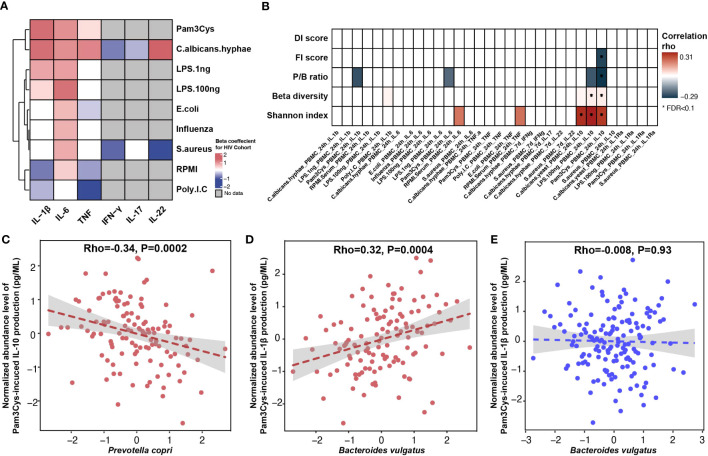
To test this hypothesis, we collected metagenomic data from 143 ART-treated PLHIV and assessed the production capacity of eight different cytokines [interleukin-1β (IL-1β), IL-6, IL-1Ra, IL-10, IL-17, IL-22, tumor necrosis factor, and interferon-γ] in response to different stimuli. We also characterized CD4 T-cell counts, HIV reservoir, and other clinical parameters.
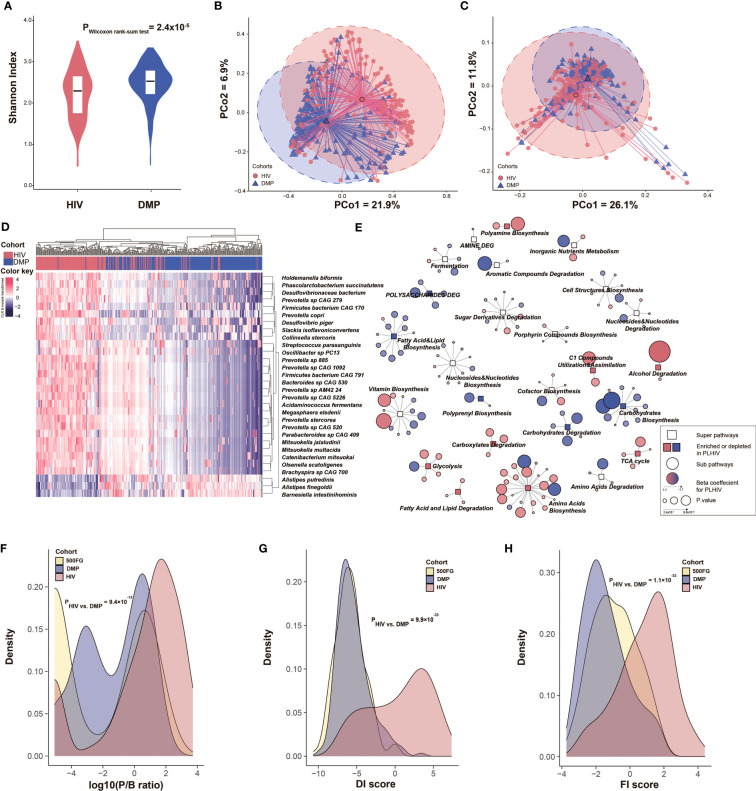
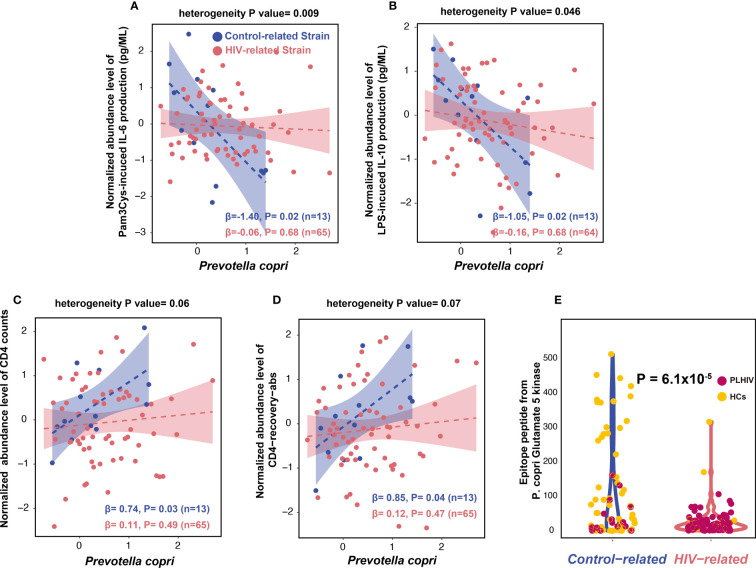
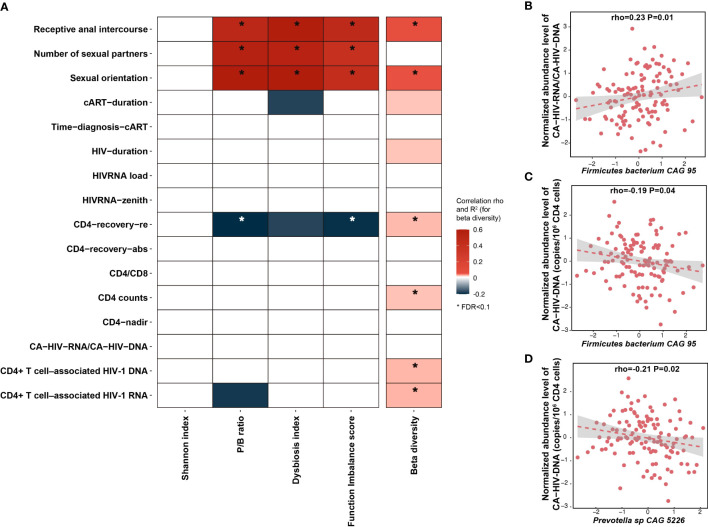
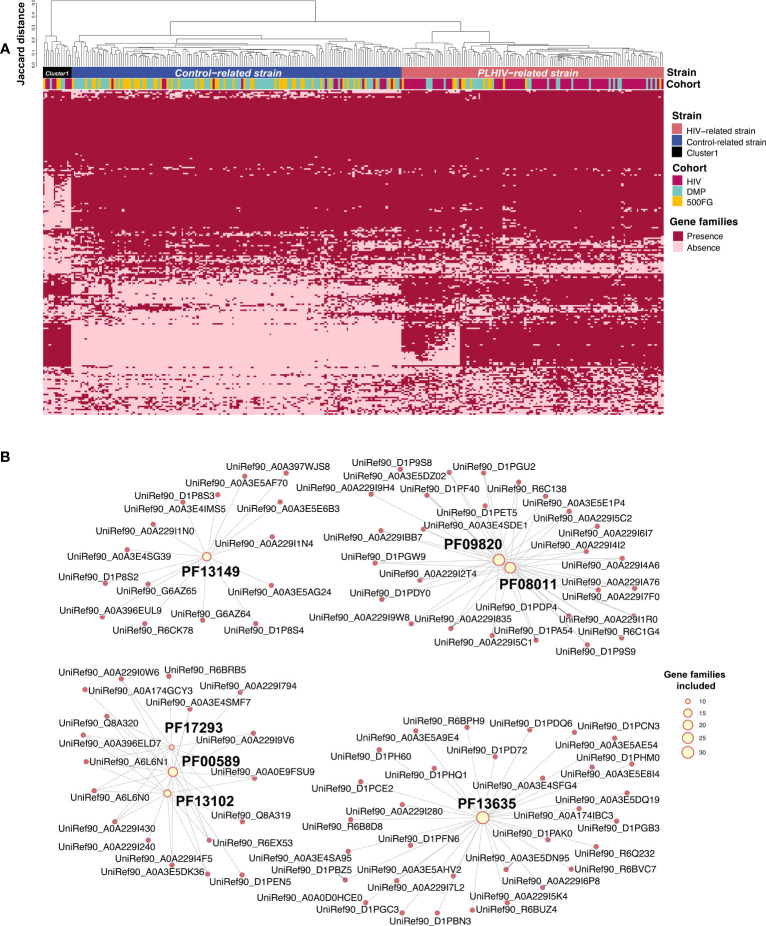
Compared with 190 age- and sex-matched controls and a second independent control cohort, PLHIV showed microbial dysbiosis that was correlated with viral reservoir levels (CD4 T-cell-associated HIV-1 DNA), cytokine production capacity, and sexual behavior. Notably, we identified two genetically different strains that were enriched in either PLHIV or healthy controls. The control-related strain showed a stronger negative association with cytokine production capacity than the PLHIV-related strain, particularly for Pam3Cys-incuded IL-6 and IL-10 production. The control-related strain is also positively associated with CD4 T-cell level.
Our findings suggest that modulating the gut microbiome may be a strategy to modulate immune response in PLHIV.
人类免疫缺陷病毒(HIV)感染者(PLHIV)即使接受抗逆转录病毒疗法(ART)抑制病毒复制,仍会持续面临慢性免疫失调。鉴于肠道微生物组在免疫中的新兴作用,我们假设肠道微生物组可能与 PLHIV 的细胞因子产生能力有关。
为了验证这一假设,我们从 143 名接受 ART 治疗的 PLHIV 中收集了宏基因组数据,并评估了对不同刺激物的八种不同细胞因子(白细胞介素-1β(IL-1β)、IL-6、IL-1Ra、IL-10、IL-17、IL-22、肿瘤坏死因子和干扰素-γ)的产生能力。我们还描述了 CD4 T 细胞计数、HIV 储存库和其他临床参数。
与 190 名年龄和性别匹配的对照者和第二个独立的对照队列相比,PLHIV 表现出与病毒储存库水平(CD4 T 细胞相关的 HIV-1 DNA)、细胞因子产生能力和性行为相关的微生物失调。值得注意的是,我们鉴定出两种在 PLHIV 或健康对照者中富集的遗传上不同的菌株。与 PLHIV 相关的菌株与细胞因子产生能力的负相关性更强,尤其是在 Pam3Cys 诱导的 IL-6 和 IL-10 产生方面。与 PLHIV 相关的菌株与 CD4 T 细胞水平呈正相关。
我们的研究结果表明,调节肠道微生物组可能是调节 PLHIV 免疫反应的一种策略。