Deng Fengyi, Wu Wenyan, Fan Xingyu, Zhong Xing, Wang Nuojin, Wang Yue, Pan Tianrong, Du Yijun
Department of Endocrinology, The Second Affiliated Hospital of Anhui Medical University, Hefei 230061, China.
Research Center for Translational Medicine, The Second Affiliated Hospital of Anhui Medical University, Hefei 230061, China.
Int J Endocrinol. 2023 Aug 7;2023:9926462. doi: 10.1155/2023/9926462. eCollection 2023.
Type 2 diabetes mellitus increases the risk of sarcopenia, which is characterized by decreased muscle mass, strength, and function. However, there are no effective drugs to treat diabetic sarcopenia, and its underlying mechanism remains unknown. Here, we aimed to determine whether the GLP-1 receptor agonist (GLP-1RA) dulaglutide (Dul) affects the progression of diabetic sarcopenia.
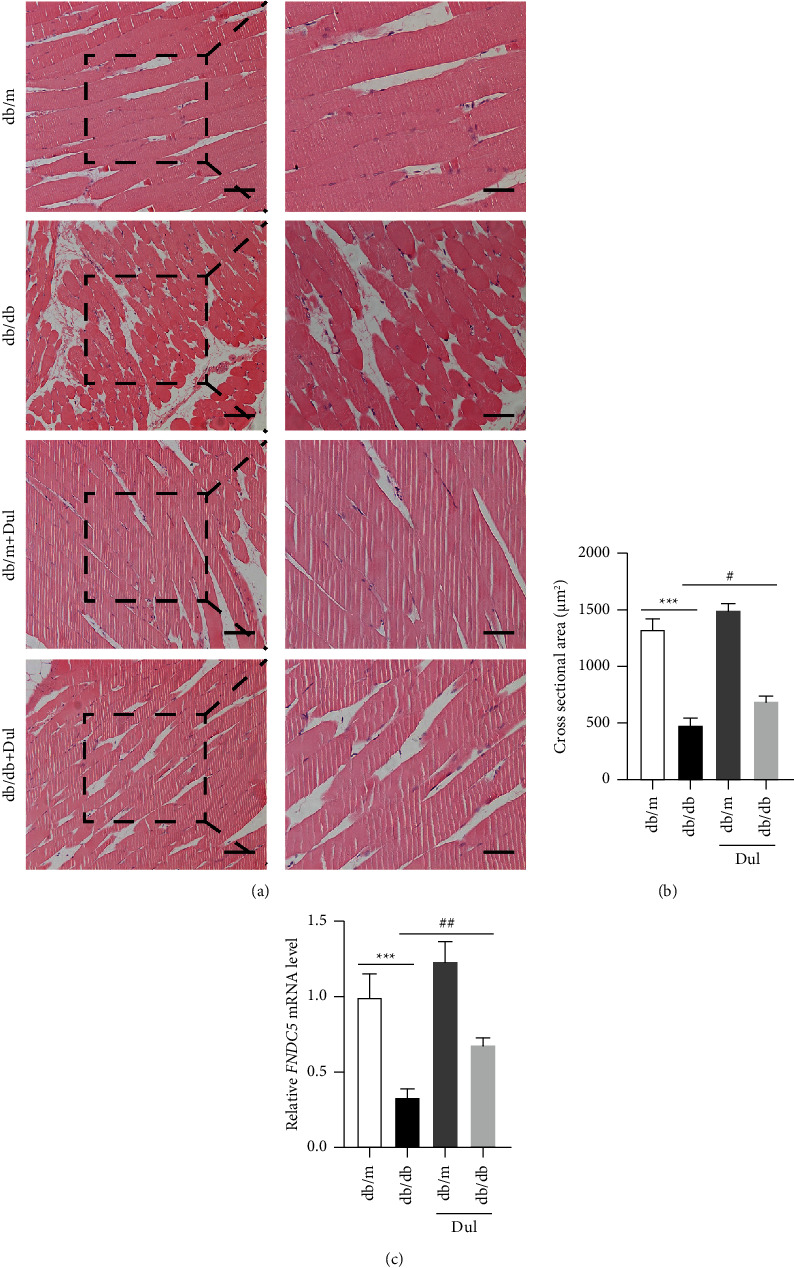
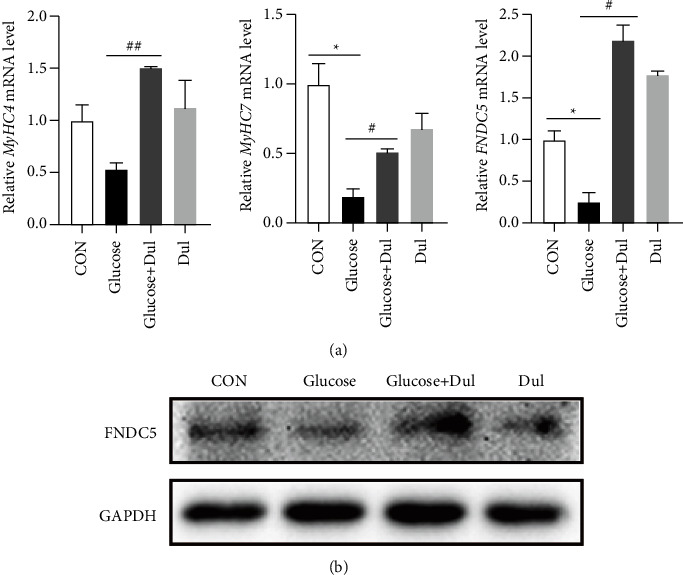
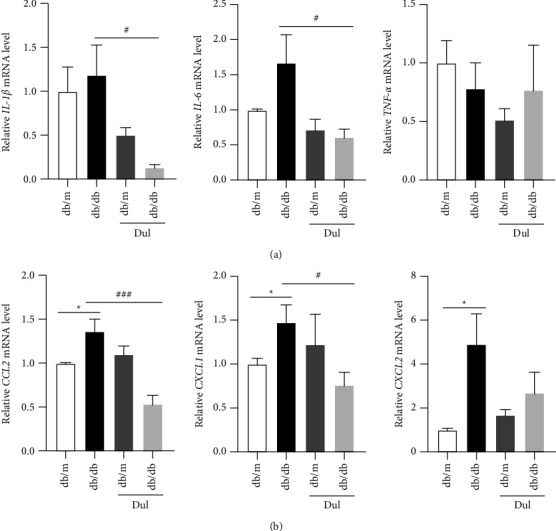
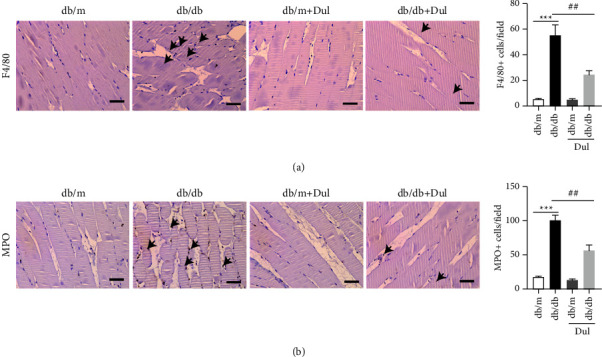
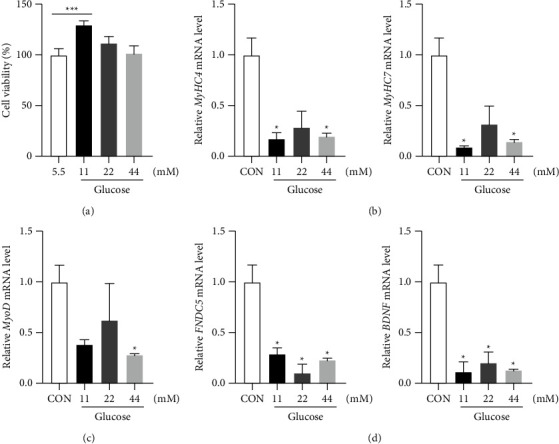
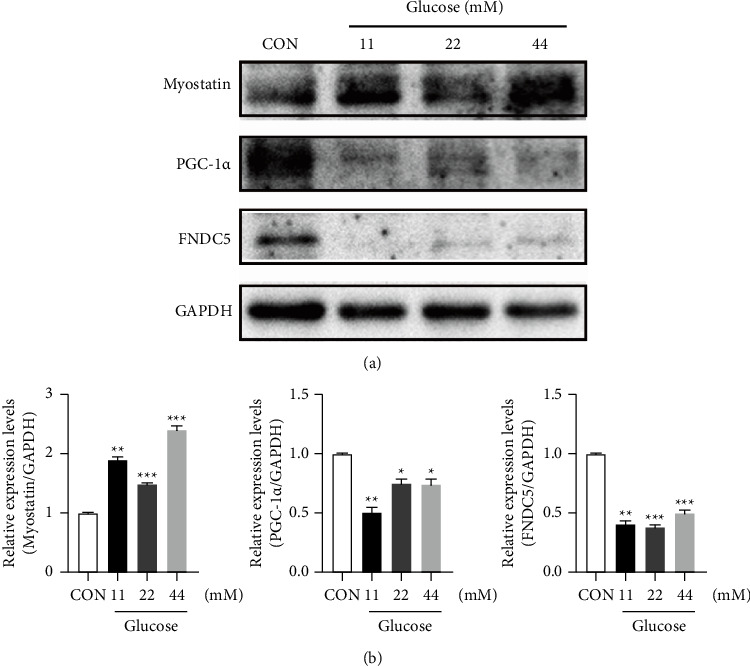
db/db mice were injected intraperitoneally with 0.6 mg/kg dulaglutide for 10 weeks. Mouse muscle tissues were then pathologically evaluated and stained with F4/80 or MPO to detect macrophages and neutrophils, respectively. In addition, inflammatory factors and FNDC5 in the muscle tissues were detected using qRT-PCR. Moreover, C2C12 cells were induced to enable their differentiation into skeletal muscle cells, and muscle factor levels were then detected. Furthermore, changes in muscle factor levels were detected at various glucose concentrations (11 mM, 22 mM, and 44 mM).
In vivo, dulaglutide alleviated muscle tissue injury; reduced levels of the inflammatory factors, IL-1, IL-6, CCL2, and CXCL1; and reversed the level of FNDC5 in the muscle tissues of db/db mice. In vitro, a C2C12 cell differentiation model was established through the observation of cell morphology and determination of myokine levels. Upon stimulation with high glucose, the differentiation of C2C12 cells was inhibited. Dulaglutide improved this inhibitory state by upregulating the levels of both FNDC5 mRNA and protein.
Treatment with the GLP-1RA dulaglutide protects db/db mice against skeletal muscle injury by inhibiting inflammation and regulating the differentiation of myoblasts. High glucose inhibited the differentiation of C2C12 cells and decreased the mRNA and protein levels of myokines. Dulaglutide could reverse the differentiation state induced in C2C12 cells by high glucose.
2型糖尿病会增加肌少症的风险,其特征是肌肉质量、力量和功能下降。然而,目前尚无有效的药物治疗糖尿病性肌少症,其潜在机制仍不清楚。在此,我们旨在确定胰高血糖素样肽-1受体激动剂(GLP-1RA)度拉糖肽(Dul)是否会影响糖尿病性肌少症的进展。
给db/db小鼠腹腔注射0.6mg/kg度拉糖肽,持续10周。然后对小鼠肌肉组织进行病理评估,并用F4/80或MPO染色,分别检测巨噬细胞和中性粒细胞。此外,使用qRT-PCR检测肌肉组织中的炎症因子和FNDC5。此外,诱导C2C12细胞分化为骨骼肌细胞,然后检测肌肉因子水平。此外,在不同葡萄糖浓度(11mM、22mM和44mM)下检测肌肉因子水平的变化。
在体内,度拉糖肽减轻了肌肉组织损伤;降低了炎症因子IL-1、IL-6、CCL2和CXCL1的水平;并逆转了db/db小鼠肌肉组织中FNDC5的水平。在体外,通过观察细胞形态和测定肌动蛋白水平建立了C2C12细胞分化模型。高糖刺激后,C2C12细胞的分化受到抑制。度拉糖肽通过上调FNDC5 mRNA和蛋白水平改善了这种抑制状态。
GLP-1RA度拉糖肽治疗可通过抑制炎症和调节成肌细胞分化来保护db/db小鼠免受骨骼肌损伤。高糖抑制了C2C12细胞的分化,并降低了肌动蛋白的mRNA和蛋白水平。度拉糖肽可以逆转高糖诱导的C2C12细胞分化状态。