Wang Qiang, Zhang Wei, Deng Chao, Lin Shicheng, Zhou Yejiang
Department of Gastrointestinal Surgery, The Affiliated Hospital of Southwest Medical University, Luzhou, China.
Department of General Surgery, Jianyang People's Hospital, Jianyang, China.
Front Oncol. 2022 Oct 31;12:1030825. doi: 10.3389/fonc.2022.1030825. eCollection 2022.
HOXA cluster antisense RNA 2 (lncRNA ) is a long noncoding RNA (lncRNA) that aberrantly expressed in various cancers and is closely associated with cancer progression. To overcome the limitation of small sample sizes that are inherent to single studies, a meta-analysis was conducted to explore the relationship between the expression level of and cancer prognosis.
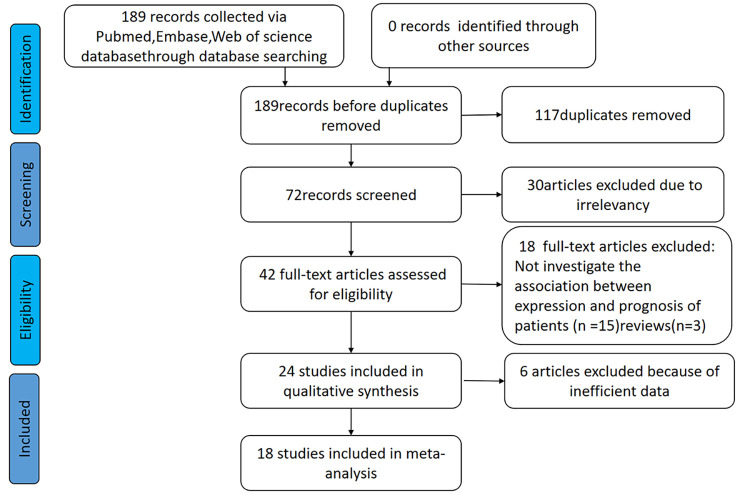
Correlational studies were retrieved by searching the databases of PubMed, Embase and Web of Science (up to August 10, 2022). The survival and prognosis data included overall survival (OS), and clinical parameters were gathered and analyzed.
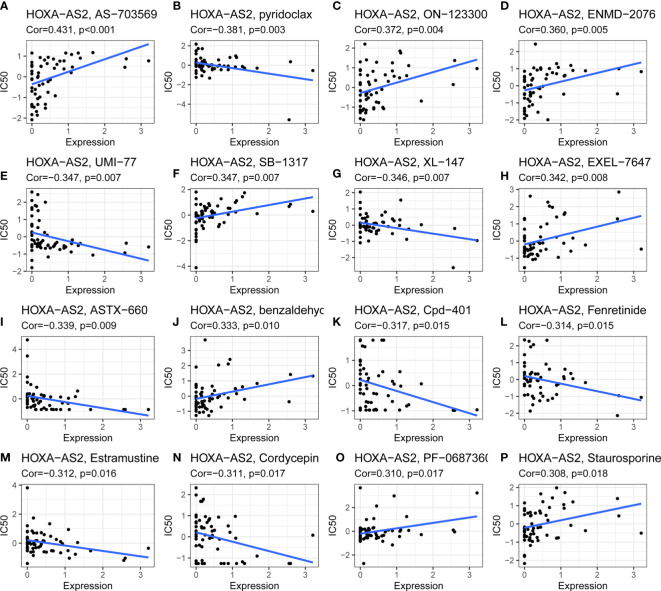
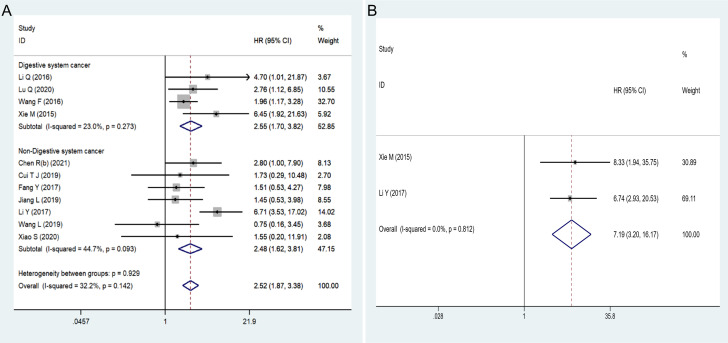
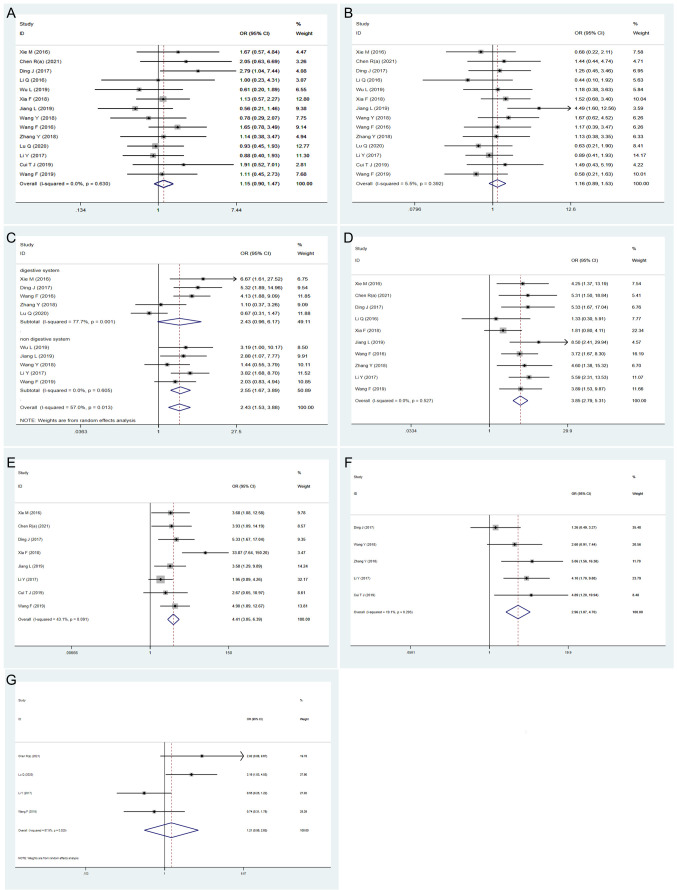
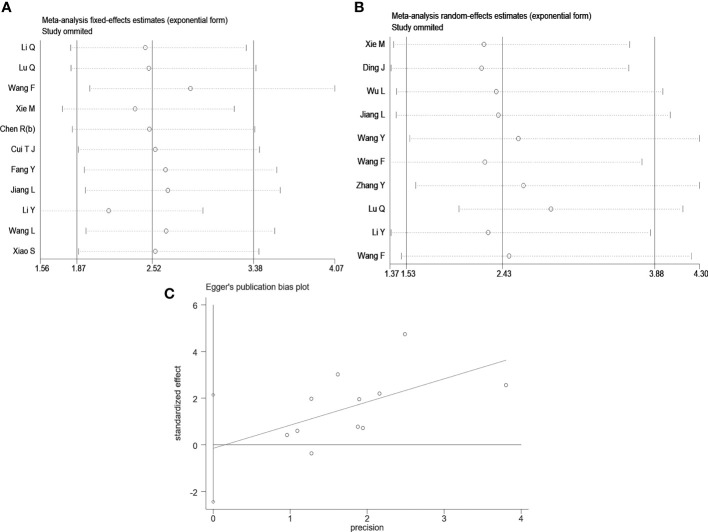
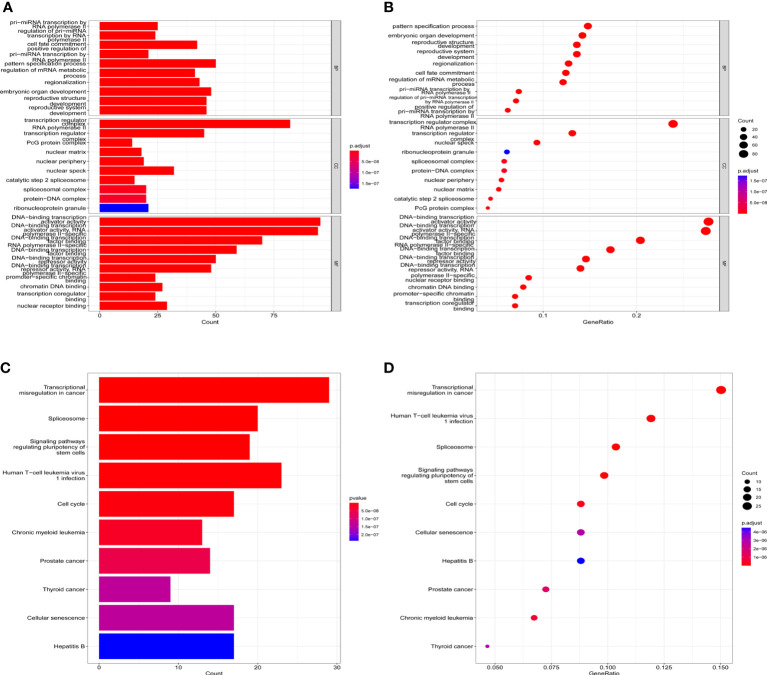
Eighteen publications with 1181 patients who were diagnosed with solid tumors were ultimately included. The results showed that, compared with patients with low expression, patients with high expression tended to have poorer overall survival (OS) (HR= 2.52, 95% CI 1.87-3.38, P < 0.01) and shorter disease-free survival (DFS) (HR=7.19, 95% CI 3.20-16.17, P < 0.01). In addition, elevated expression indicated a larger tumor size (OR =2.43, 95% CI 1.53-3.88,P < 0.01), more advanced TNM stage (OR=3.85, 95% CI 2.79-5.31, P < 0.01), earlier lymph node metastasis (LNM) (OR = 4.41, 95% CI 3.05-6.39, P < 0.01) and distant metastasis (DM) (OR= 2.96, 95% CI 1.87-4.7, P < 0.01). Furthermore, expression was notassociated with age (OR=1.15, 95% CI 0.90-1.47), gender (OR=1.16, 95% CI 0.89-1.53), or tumor differentiation (OR=1.21, 95% CI 0.56-2.63). Moreover, aberrant expression was related to drug sensitivity in various types of cancers.
The overexpression of predicted poor cancer prognosis in the Chinese population, including poor OS, DFS, TNM, LNM, and DM. could serve as a promising prognostic biomarker and therapeutic target.
https://www.crd.york.ac.uk/prospero/, identifier CRD42022352604.
HOXA基因簇反义RNA2(lncRNA)是一种长链非编码RNA,在多种癌症中异常表达,且与癌症进展密切相关。为克服单个研究样本量小的局限性,进行了一项荟萃分析,以探讨HOXA基因簇反义RNA2(lncRNA)表达水平与癌症预后之间的关系。
通过检索PubMed、Embase和Web of Science数据库(截至2022年8月10日)获取相关性研究。收集并分析生存和预后数据,包括总生存期(OS),以及临床参数。
最终纳入18篇文献,共1181例被诊断为实体瘤的患者。结果显示,与低HOXA基因簇反义RNA2(lncRNA)表达的患者相比,高HOXA基因簇反义RNA2(lncRNA)表达的患者总生存期(OS)往往较差(HR=2.52,95%CI 1.87-3.38,P<0.01),无病生存期(DFS)较短(HR=7.19,95%CI 3.20-16.17,P<0.01)。此外,HOXA基因簇反义RNA2(lncRNA)表达升高表明肿瘤体积较大(OR=2.43,95%CI 1.53-3.88,P<0.01)、TNM分期更晚(OR=3.85,95%CI 2.79-5.31,P<0.01)、更早出现淋巴结转移(LNM)(OR=4.41,95%CI 3.05-6.39,P<0.01)和远处转移(DM)(OR=2.96,95%CI 1.87-4.7,P<0.01)。此外,HOXA基因簇反义RNA2(lncRNA)表达与年龄(OR=1.15,95%CI 0.90-1.47)、性别(OR=1.16,95%CI 0.89-1.53)或肿瘤分化(OR=1.21,95%CI 0.56-2.63)无关。此外,HOXA基因簇反义RNA2(lncRNA)异常表达与多种癌症的药物敏感性相关。
HOXA基因簇反义RNA2(lncRNA)的过表达预示着中国人群癌症预后不良,包括总生存期、无病生存期、TNM分期、淋巴结转移和远处转移较差。HOXA基因簇反义RNA2(lncRNA)可作为一种有前景的预后生物标志物和治疗靶点。
https://www.crd.york.ac.uk/prospero/,标识符CRD42**022352604**。 (注:原文此处“CRD42022352604”最后一位数字疑似有误,译文保留原文形式)