Division of Information and Computing Technology, College of Science and Engineering, Hamad Bin Khalifa University, Doha, Qatar.
Department of Industrial Engineering, Faculty of Engineering and Natural Sciences, KTO Karatay University, Konya, Turkey.
Sci Rep. 2023 Aug 16;13(1):13303. doi: 10.1038/s41598-023-39790-3.
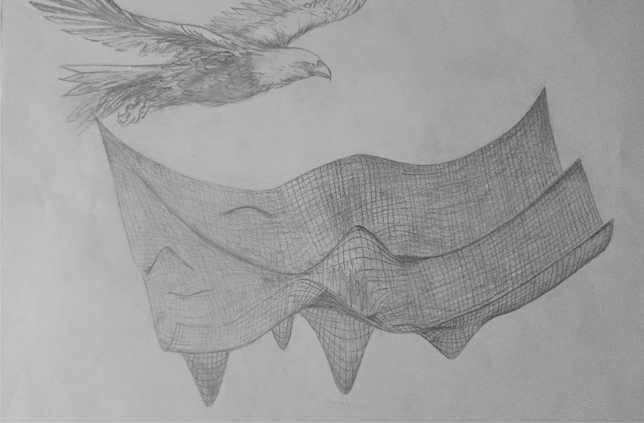
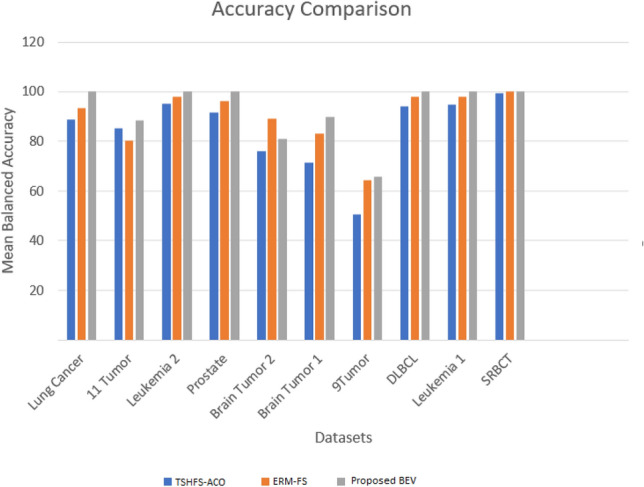
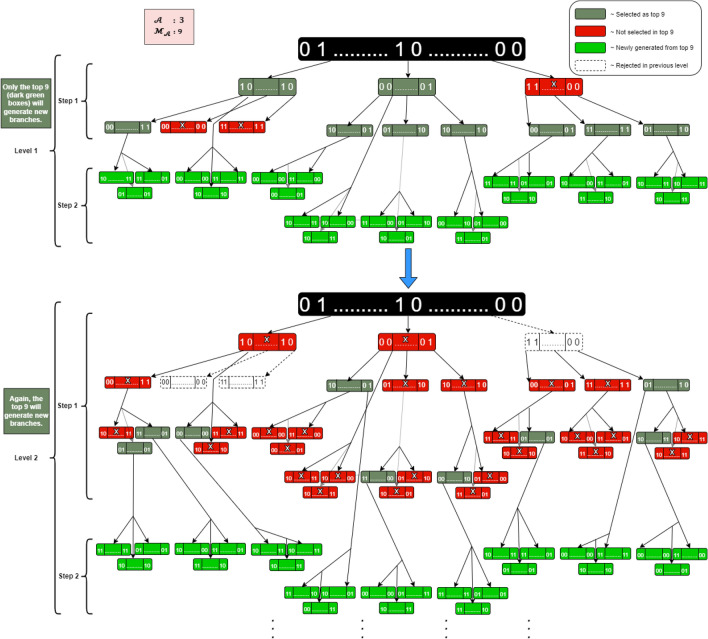
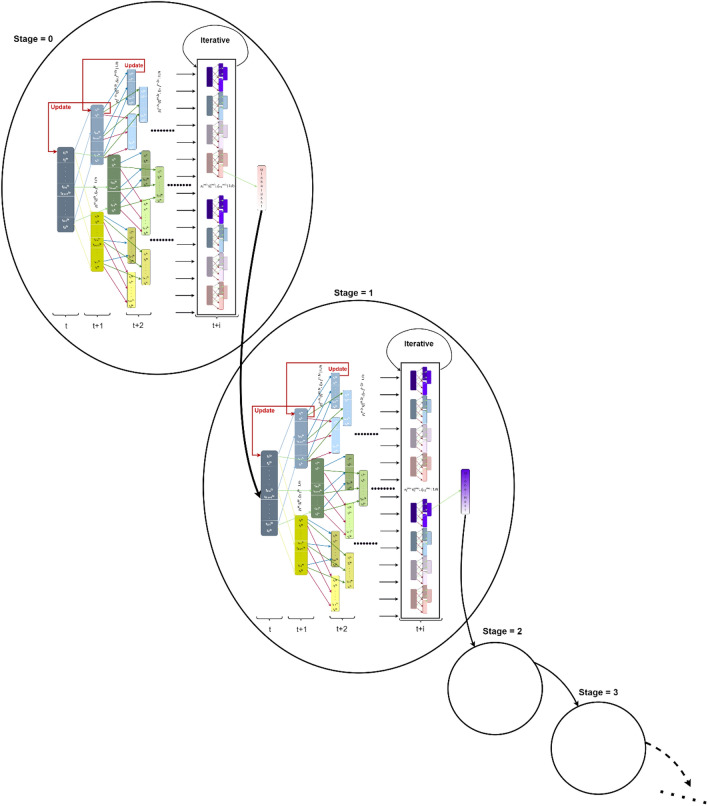
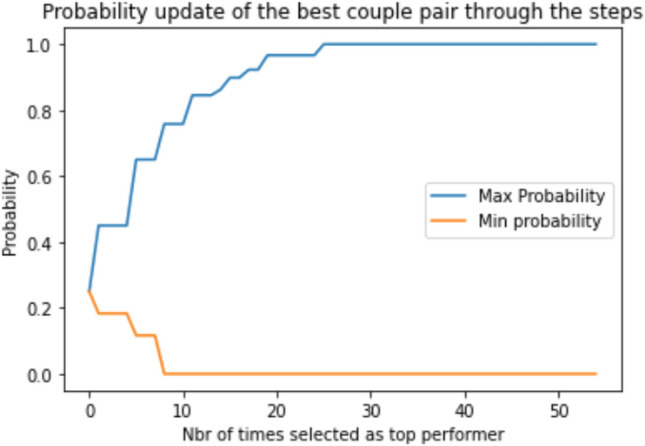
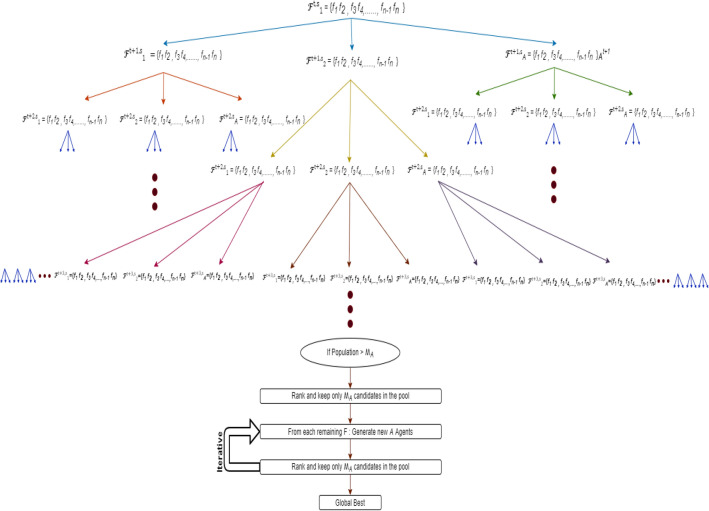
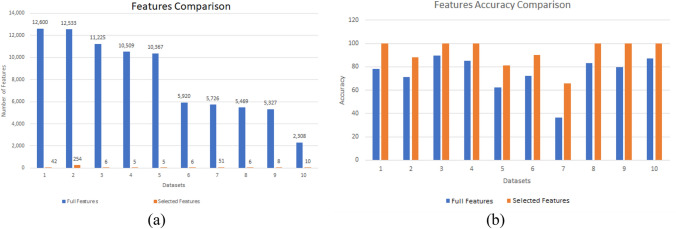
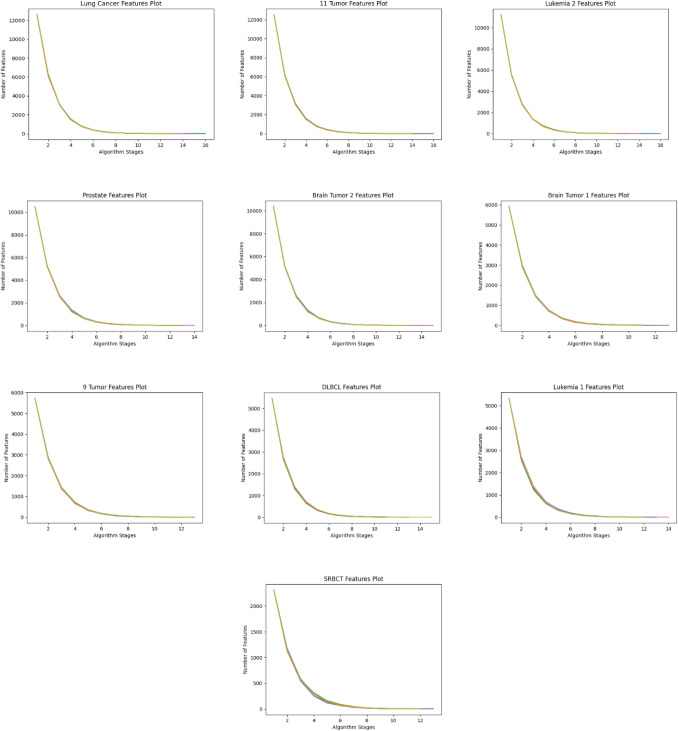
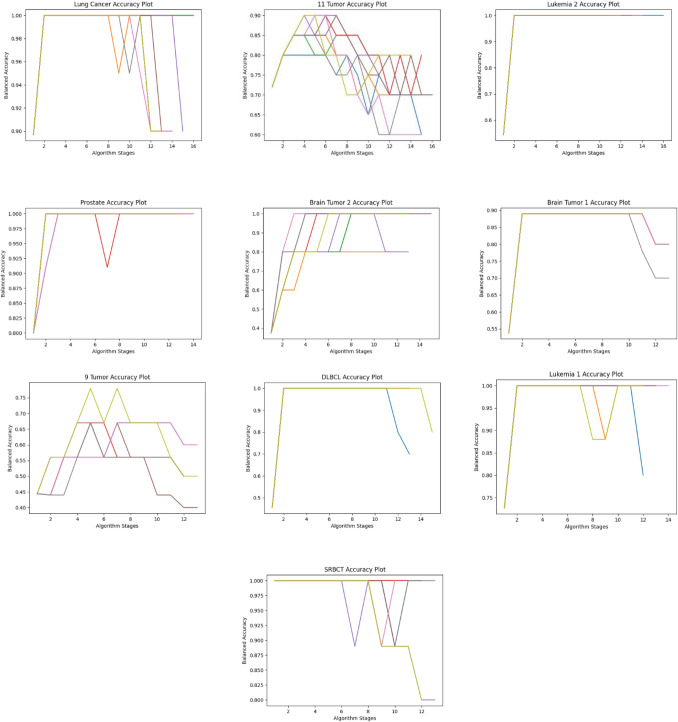
In machine learning, an informative dataset is crucial for accurate predictions. However, high dimensional data often contains irrelevant features, outliers, and noise, which can negatively impact model performance and consume computational resources. To tackle this challenge, the Bird's Eye View (BEV) feature selection technique is introduced. This approach is inspired by the natural world, where a bird searches for important features in a sparse dataset, similar to how a bird search for sustenance in a sprawling jungle. BEV incorporates elements of Evolutionary Algorithms with a Genetic Algorithm to maintain a population of top-performing agents, Dynamic Markov Chain to steer the movement of agents in the search space, and Reinforcement Learning to reward and penalize agents based on their progress. The proposed strategy in this paper leads to improved classification performance and a reduced number of features compared to conventional methods, as demonstrated by outperforming state-of-the-art feature selection techniques across multiple benchmark datasets.
在机器学习中,信息丰富的数据集对于准确的预测至关重要。然而,高维数据通常包含不相关的特征、异常值和噪声,这会对模型性能和计算资源产生负面影响。为了解决这个挑战,引入了鸟瞰图(Bird's Eye View,BEV)特征选择技术。这种方法受到自然界的启发,鸟类在稀疏的数据集中寻找重要的特征,类似于鸟类在广阔的丛林中寻找食物。BEV 将进化算法与遗传算法相结合,以维持表现最佳的个体群体,使用动态马尔可夫链来引导个体在搜索空间中的移动,并使用强化学习根据个体的进展进行奖励和惩罚。与传统方法相比,本文提出的策略在多个基准数据集上优于最先进的特征选择技术,从而提高了分类性能并减少了特征数量。