School of Medicine and School of Environmental and Chemical Engineering, Shanghai University, Shanghai, 200444, People's Republic of China.
Key Laboratory of Tropical Translational Medicine of Ministry of Education, International Associated Research Center for Intelligent Human Computer Collaboration on Tumor Precision Medicine, School of Pharmacy and The First Affiliated Hospital, Hainan Medical University, Haikou, 571199, Hainan, China.
Sci Rep. 2023 Aug 16;13(1):13278. doi: 10.1038/s41598-023-39279-z.
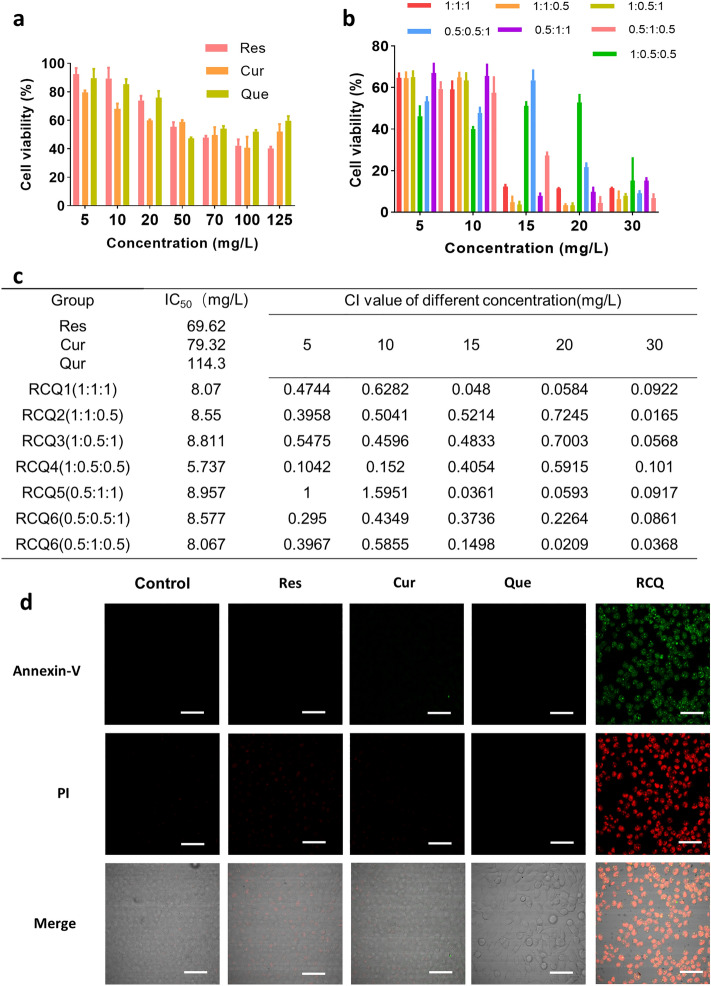
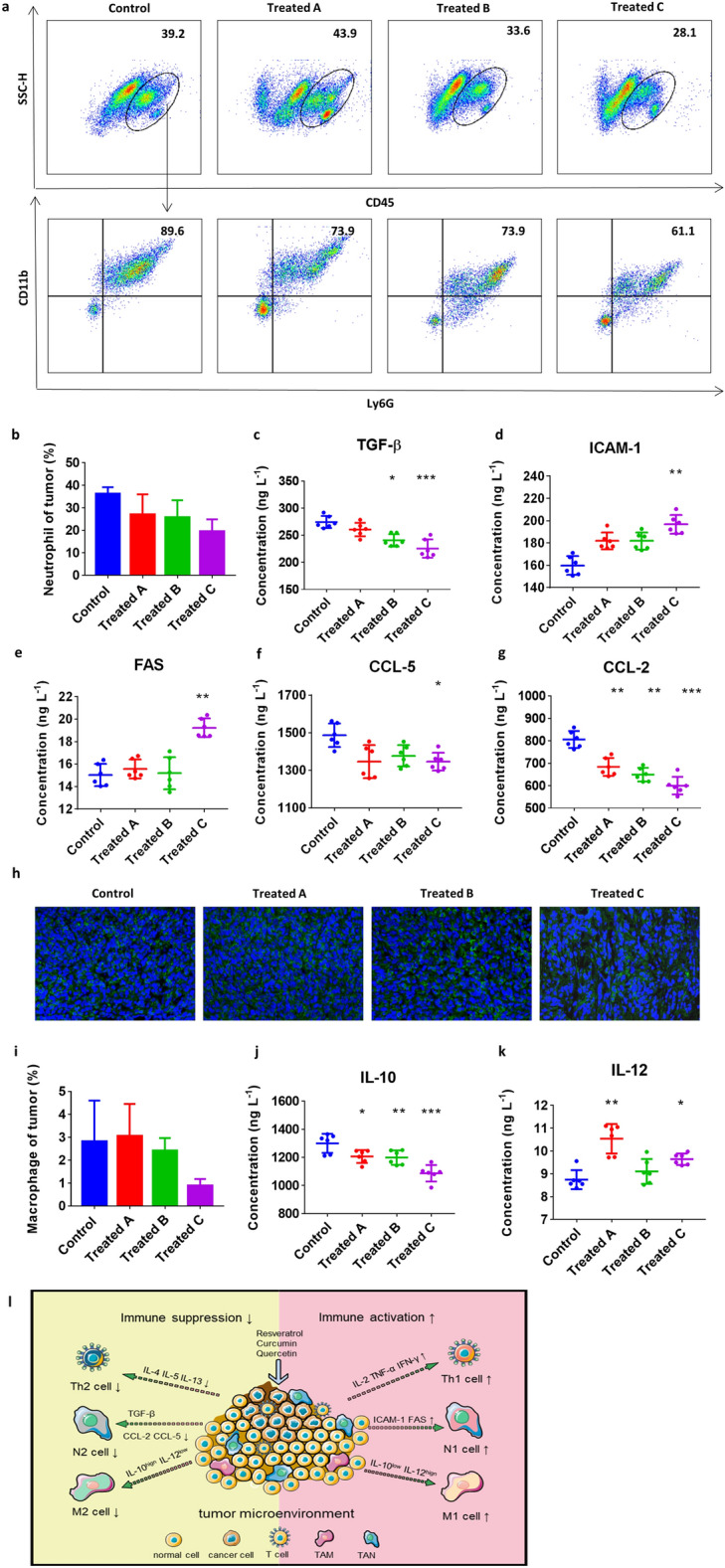
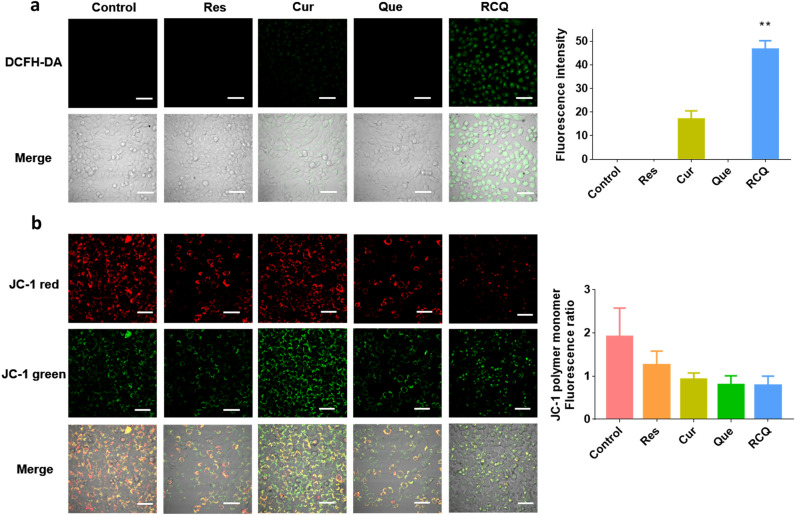
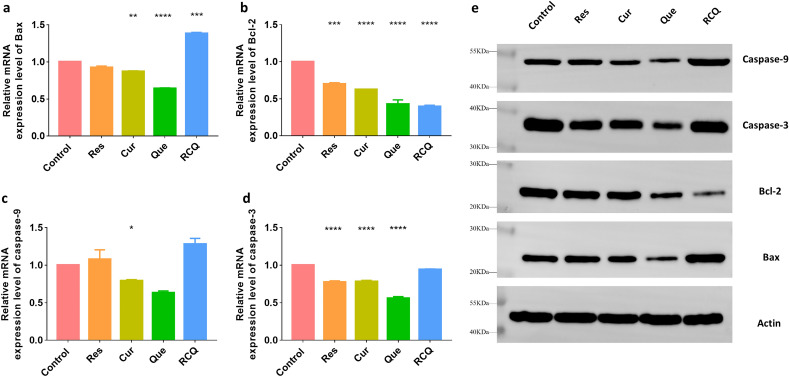
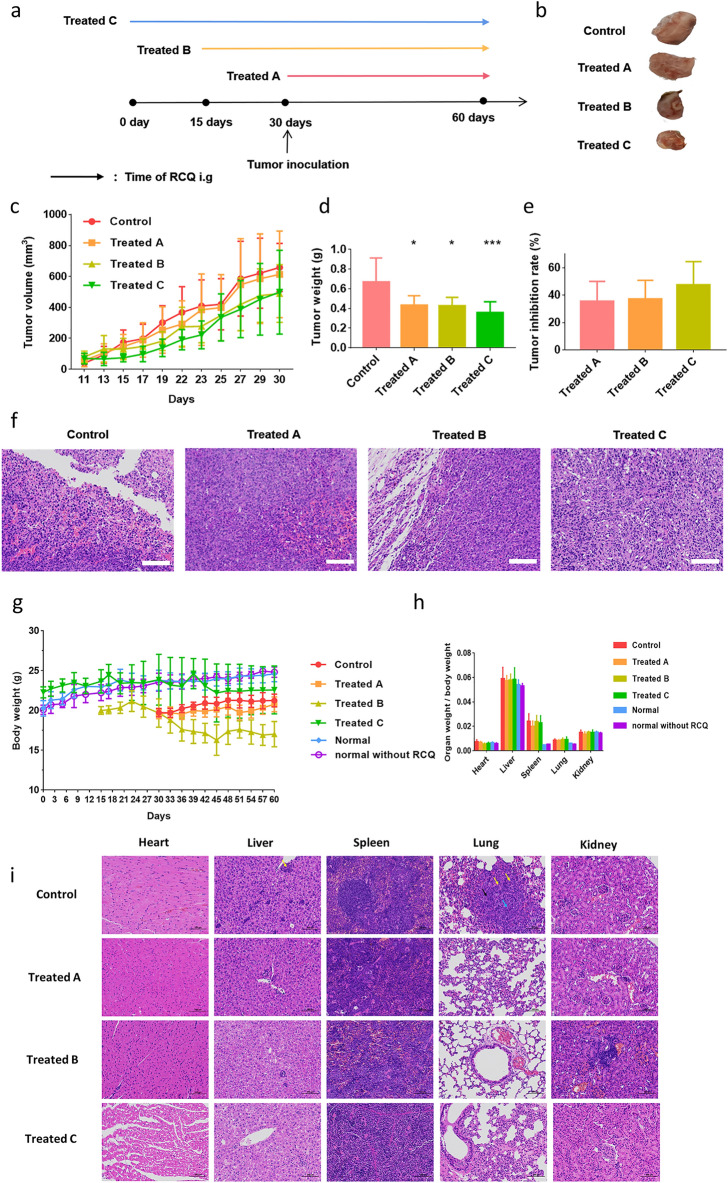
Resveratrol, curcumin, and quercetin are the secondary metabolites from medicinal food homology plants, that have been proven their potency in cancer treatment. However, the antitumor effect of a single component is weak. So, herein, we designed an antitumor compound named RCQ composed of resveratrol, curcumin, and quercetin. This study examined the effect on tumorigenesis and development of 4T1 breast cancer-bearing mice following administering RCQ by intragastric administration. RCQ increased the recruitment of T cells and reduced the accumulation of neutrophils and macrophages in the tumor microenvironment. Meanwhile, RCQ suppressed the development of tumor-infiltrating lymphocytes into immunosuppressive cell subpopulations, including CD4 T cells to T helper Type 2 type (Th2), tumor-associated neutrophils (TANs) to the N2 TANs, and tumor-associated macrophages (TAMs) cells to M2 TAMs. RCQ reversed the predominance of immunosuppressive infiltrating cells in the tumor microenvironment and tipped the immune balance toward an immune activation state. In vitro the study showed that RCQ significantly increased reactive oxygen species (ROS), reduce mitochondrial membrane potentials in cancer cells, and modulate pro-apoptotic Bcl-2 family members. In conclusion, RCQ can promote the ROS apoptosis mechanism of tumor cells and alleviate immunosuppression of the tumor microenvironment to enhance the anti-tumor effect.
白藜芦醇、姜黄素和槲皮素是药用同源植物的次生代谢物,已被证明在癌症治疗中有疗效。然而,单一成分的抗肿瘤效果较弱。因此,本研究设计了一种由白藜芦醇、姜黄素和槲皮素组成的抗肿瘤化合物 RCQ。本研究通过灌胃给药,研究了 RCQ 对荷 4T1 乳腺癌小鼠肿瘤发生和发展的影响。RCQ 增加了 T 细胞的募集,并减少了肿瘤微环境中中性粒细胞和巨噬细胞的积累。同时,RCQ 抑制了肿瘤浸润淋巴细胞向免疫抑制细胞亚群的发展,包括 CD4 T 细胞向 Th2 型、肿瘤相关中性粒细胞(TANs)向 N2 TANs 以及肿瘤相关巨噬细胞(TAMs)向 M2 TAMs 的转化。RCQ 逆转了肿瘤微环境中免疫抑制浸润细胞的优势,使免疫平衡向免疫激活状态倾斜。体外研究表明,RCQ 显著增加了活性氧(ROS),降低了癌细胞中线粒体膜电位,并调节了促凋亡 Bcl-2 家族成员。综上所述,RCQ 可以促进肿瘤细胞的 ROS 凋亡机制,减轻肿瘤微环境的免疫抑制作用,从而增强抗肿瘤作用。