Department of Psychiatry and Psychotherapy, Jena University Hospital, Philosophenweg 3, 07743, Jena, Germany.
Clinical Affective Neuroimaging Laboratory (CANLAB), Magdeburg, Germany.
Sci Rep. 2023 Aug 16;13(1):13323. doi: 10.1038/s41598-023-40099-4.
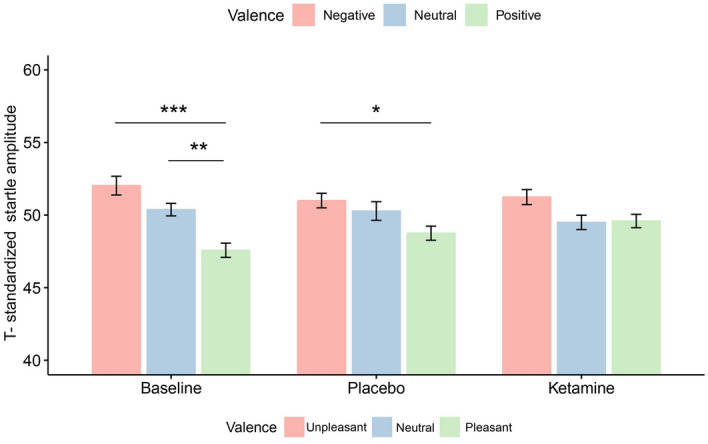
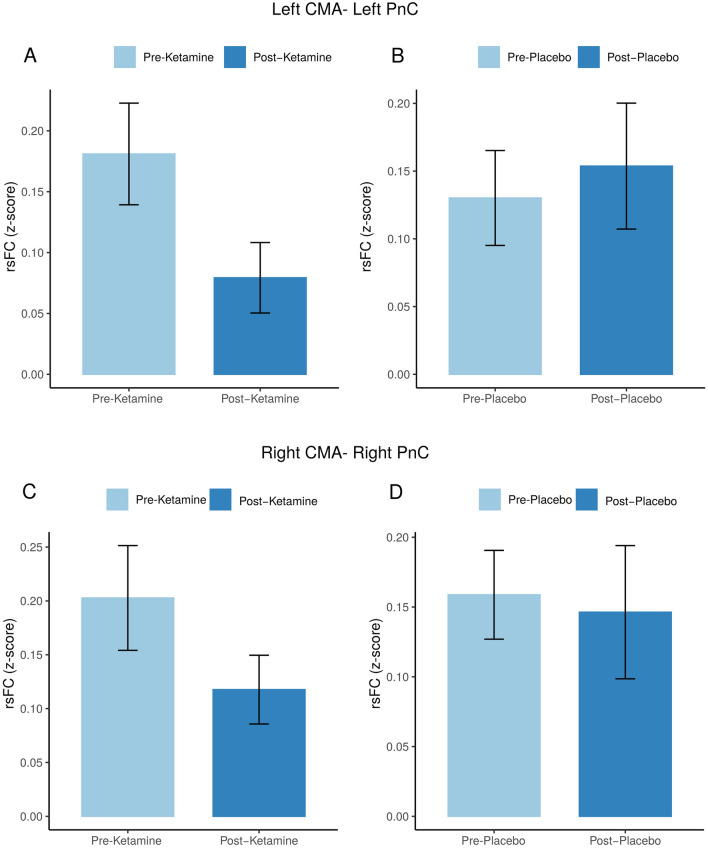
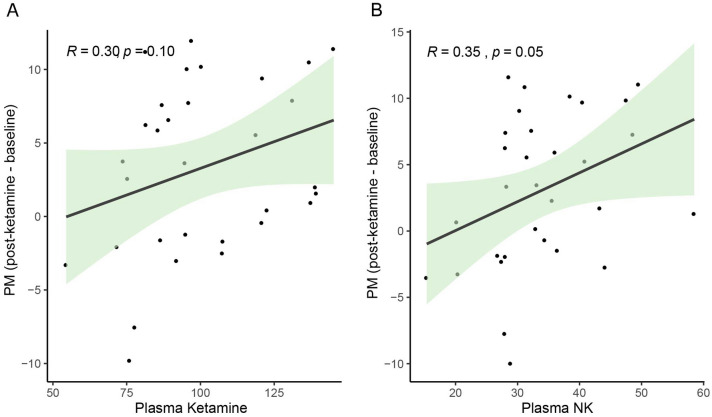
Ketamine is a rapid-acting antidepressant that also influences neural reactivity to affective stimuli. However, the effect of ketamine on behavioral affective reactivity is yet to be elucidated. The affect-modulated startle reflex paradigm (AMSR) allows examining the valence-specific aspects of behavioral affective reactivity. We hypothesized that ketamine alters the modulation of the startle reflex during processing of unpleasant and pleasant stimuli and weakens the resting-state functional connectivity (rsFC) within the modulatory pathway, namely between the centromedial nucleus of the amygdala and nucleus reticularis pontis caudalis. In a randomized, double-blind, placebo-controlled, cross-over study, thirty-two healthy male participants underwent ultra-high field resting-state functional magnetic resonance imaging at 7 T before and 24 h after placebo and S-ketamine infusions. Participants completed the AMSR task at baseline and one day after each infusion. In contrast to our hypothesis, ketamine infusion did not impact startle potentiation during processing of unpleasant stimuli but resulted in diminished startle attenuation during processing of pleasant stimuli. This diminishment significantly correlated with end-of-infusion plasma levels of ketamine and norketamine. Furthermore, ketamine induced a decrease in rsFC within the modulatory startle reflex pathway. The results of this first study on the effect of ketamine on the AMSR suggest that ketamine might attenuate the motivational significance of pleasant stimuli in healthy participants one day after infusion.
氯胺酮是一种快速起效的抗抑郁药,也会影响神经对情感刺激的反应。然而,氯胺酮对行为情感反应的影响尚未阐明。情绪调节性惊跳反射范式(AMSR)允许检查行为情感反应的效价特异性方面。我们假设氯胺酮改变了在处理不愉快和愉快刺激时惊跳反射的调制,并削弱了调节通路内的静息状态功能连接(rsFC),即杏仁中央核和桥脑尾侧网状核之间的连接。在一项随机、双盲、安慰剂对照、交叉研究中,32 名健康男性参与者在接受安慰剂和 S-氯胺酮输注前和输注后 24 小时在 7T 超高场进行了静息状态功能磁共振成像。参与者在基线和每次输注后一天完成 AMSR 任务。与我们的假设相反,氯胺酮输注并没有影响处理不愉快刺激时的惊跳增强,但导致处理愉快刺激时的惊跳抑制减弱。这种减弱与输注结束时氯胺酮和去甲氯胺酮的血浆水平显著相关。此外,氯胺酮诱导了调节性惊跳反射通路内的 rsFC 降低。这项关于氯胺酮对 AMSR 影响的首次研究结果表明,氯胺酮可能会在输注后一天降低健康参与者对愉快刺激的动机意义。